
Join Low Voltage Nation — Find project opportunities and showcase your company to thousands of industry professionals
Microsoft Wellington enters federal permit review as groundwater work shapes planning. See the sources, companies and prospective low-voltage scope.
Microsoft's proposed Wellington data center campus in Gainesville, Virginia, has entered a new federal permit-comment period while the owner is explaining how future development would coexist with a legacy groundwater cleanup. For contractors, the immediate opportunity is to understand the site constraints and prepare for eventual procurement. Microsoft says data center development has not begun, and a construction start remains distant.
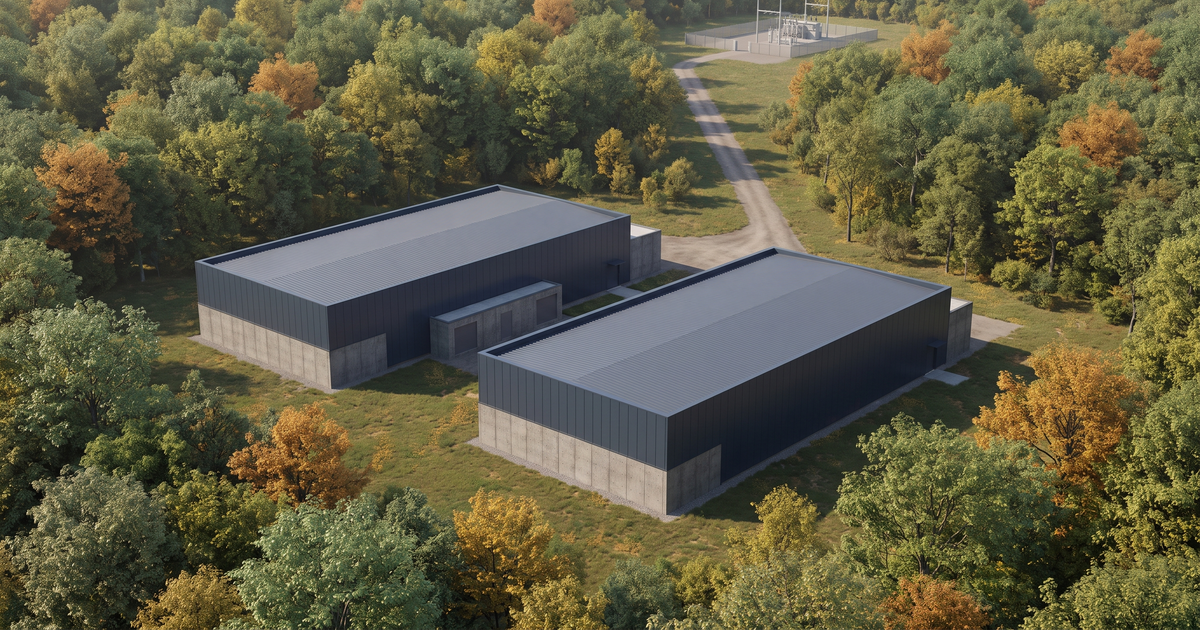
The September 15 notice from the U.S. Army Corps of Engineers Norfolk District identifies MNZ07 Wellington under NAO-2005-01547 / VMRC 26-0872. Comments close October 15, 2026. The proposal covers two one-story buildings on approximately 123 acres, an electrical substation, fiber and electrical conduit, and supporting water, wastewater, access and stormwater infrastructure. The notice concerns a permit application; final authorization and construction awards remain unverified.
This follows LVN's August Wellington coverage. The new reporting adds a federal review milestone and Microsoft's environmental explanation to the same campus story. It does not establish another Microsoft campus or a new construction budget.
What is established about Wellington
| Item | Current evidence | Limit |
|---|---|---|
| Location | Gainesville, Prince William County | University Boulevard / Wellington Road area |
| Development stage | Planning and permitting | Owner says development has not started |
| Federal review | Comments through October 15 | Permit decision pending |
| Capacity and cost | Undisclosed in reviewed project evidence | No verified MW or construction capex |
| Procurement | Owner identified | GC, designers and trade awards unverified |
The county planning record connects the project family to ARC Wellington, site-plan reference SPR2023-00349 and GPIN 7497-43-7416. Its 117.21-acre parcel entry has a different basis from the approximately 123-acre federal review area and Microsoft's approximately 124-acre property description. Those figures should stay attached to their respective records. A parcel entry alone does not settle the final campus boundary or approved building area.
Likewise, DatacenterDynamics' historical acquisition report put the 2024 land purchase at $465.5 million. That is a reported land transaction. It cannot serve as a construction estimate, specialty-contract value or indication of money available for the current proposed buildings. The earlier density request also cannot be substituted for today's building scope.
The groundwater system shapes the construction discussion
In its September 17 environmental update, Microsoft describes a treatment and monitoring system that predates its ownership. The company says the consent-order owner remains responsible for the historic cleanup. Microsoft is providing funding and technical support to relocate and modernize portions of that infrastructure as development planning advances. The current update does not name the consent-order owner.
Microsoft attributes commercial or industrial reuse eligibility to a 2020 EPA determination, while saying treatment, monitoring and use restrictions continue. LVN has not independently retrieved that underlying determination. The EPA's Atlantic Research document index provides historical corrective-action records, including a 1991 remedy decision and 2012 environmental indicators. Those records establish a cleanup history. They do not establish completed remediation or unrestricted use today.
The practical construction question is how a future site team would protect ongoing environmental operations while building new infrastructure. An OSP contractor would want the current utility survey, controlled work areas, approved crossing details and escalation contacts before preparing a route or excavation method. Monitoring points, active treatment assets and access for their operators could affect sequencing. These are due-diligence questions raised by the site context; the reviewed evidence does not provide a Wellington construction method statement.
Contractors should also distinguish an environmental service assignment from a campus construction appointment. Supporting the treatment system does not identify the future general contractor, electrical contractor or low-voltage integrator. Any public update about activity on the property needs enough detail to establish which workstream is actually moving.
What the federal notice adds
The Corps notice lists proposed permanent impacts of 955 linear feet of intermittent stream, 1.82 acres of emergent wetlands and 0.13 acre of forested wetlands. The applicant proposes 2.08 wetland mitigation credits and 1,030 stream credits. These are application quantities, with final requirements subject to review. No credit purchase is established. The notice also reports that Virginia DEQ concurred with the coastal-zone consistency certification. That specific concurrence does not establish completion of every required review.
For a bidder, the useful distinction is between a public review milestone and a released construction package. A comment deadline tells the market when one stage of public participation closes. It does not provide a subcontract bid date, site mobilization date or notice to proceed. Commercial schedules should come from the party authorized to buy the work and should identify their dependencies.
This also changes how early opportunities should be staffed. A small amount of qualification and relationship research can be appropriate while major facts remain open. Assigning a large estimating team or reserving field crews would require substantially more information about procurement, scope maturity and timing.
Named organizations and the open contractor map
| Organization | Supported role | Scope limit |
|---|---|---|
| Microsoft Corporation | Owner and applicant | Campus still in planning |
| USACE Norfolk District | Federal permit review | No final permit verified |
| Virginia DEQ | State environmental review | Specific concurrence is not blanket approval |
| Prince William County | Land use and site-plan authority | Final construction permissions need checking |
| U.S. EPA | Legacy cleanup oversight | Historical index is not a current clearance |
The owner update and public records support these organizational roles. The reviewed sources do not name a general contractor, construction manager, architect, current design-engineering appointment or awarded specialty installer. Atlantic Research is the historical facility identity associated with EPA's records; that does not establish the identity of today's consent-order owner.
The next useful company announcement would identify an actual responsibility: design leadership, site preparation, electrical distribution, fiber infrastructure, security integration or commissioning. A firm's work on another Microsoft campus does not establish its role here. A regional job posting also needs a clear Wellington connection before it can support a project-specific hiring claim.
Where low-voltage work could develop
Fiber conduit is explicit in the proposal. Most downstream systems remain prospective because Wellington's detailed specifications, quantities and package boundaries have not been verified. The table below distinguishes the documented infrastructure from trade opportunities inferred from the proposed facility use.
| System | Evidence or opportunity | Next useful detail |
|---|---|---|
| Fiber / OSP | Fiber conduit proposed | Routes, crossings and package owner |
| Cabling / networking | Prospective building connectivity | Standards, quantities and demarcations |
| Access control / CCTV | Prospective site security | Device design and integrator |
| Fire alarm | Prospective life-safety interfaces | Approved design and installer |
| BMS / controls | Prospective facility monitoring | Points, protocols and scope split |
| Commissioning | Prospective testing and turnover | Acceptance plan and accountable team |
For fiber firms, useful preparation includes documenting installation and testing capabilities, examining how civil and electrical scopes are usually divided, and preparing questions about entrances and pathway ownership. The current record does not establish a carrier commitment, diverse routes, cable count, splice plan or network-room layout. A campus announcement alone cannot supply a responsible material takeoff.
Security and controls firms face a similar boundary. Future access control may involve doors, gates, visitor handling and network coordination; controls may involve operational equipment and alarms. Those are general mission-critical interfaces. Product selection, device quantities and software responsibility should remain open until a design or procurement document establishes them.
Wellington also has an environmental coordination layer. Any eventual pathway plan would need to account for the operating site systems and applicable work restrictions. A capable team should be ready to ask how access, temporary protection, interruptions and acceptance will be managed across contractors. The value lies in identifying these interfaces early enough for the responsible designers and buyers to resolve them.
Jobs, trades and skills to prepare
No Wellington-specific construction headcount, permanent staffing total or current vacancy count was verified in the reviewed material. Regional Microsoft employment and workforce programs should not be represented as campus hiring. The work discussed here is a prospective skills map, with demand dependent on approvals, design and procurement.
For technicians, practical preparation includes clean fiber inspection and testing, consistent labels, accurate test records, pathway coordination, grounding and bonding, and disciplined turnover documentation. The Fiber Optic Association's workforce resources offer a starting point for fiber training. BICSI's training catalog provides installation and related learning options. These are general resources, with no verified Wellington mandate or endorsement.
Site safety preparation is equally useful. OSHA's Outreach Training Program provides general construction-safety education, but course completion does not replace an employer's task-specific training or a project's access requirements. For this site, contractors should request the applicable environmental briefing and work controls from the responsible site team before mobilizing.
Owners of low-voltage businesses can prepare a concise qualification package covering relevant project experience, field supervision, test equipment, quality records and the capacity they could actually support. The aim is a credible response when a procurement route becomes public. Wellington's present evidence does not establish an open bid invitation.
What to watch next
The next material evidence includes the federal disposition after the comment period, current application drawings, county permissions, and a clearer development schedule. Utility-service documentation would help establish power capacity and delivery timing. A named project team would make the contractor map more actionable. None of those milestones should be inferred from a rendering or an unrelated regional announcement.
On the environmental side, the underlying reuse determination and current cleanup-party identification would help readers understand the ongoing obligations more precisely. Public updates describing treatment-system work should specify its relationship to future development. Approved scope and actual construction status will matter more to field planning than a broad investment headline.
Explore LVN Signal for source-linked construction intelligence and the companies behind emerging opportunities. Wellington is an early planning lead with explicit fiber infrastructure and meaningful site constraints. The practical next step for contractors is to prepare qualifications and verify procurement responsibility as more definitive documents appear.
Reporting reviewed September 18, 2026. Featured and social artwork are AI-generated conceptual illustrations, not site photographs or approved designs. Public-source review has not established an AI-specific tenant or workload, delivered power, a construction budget, job totals or specialty awards.
Join 35,000+ Low Voltage Pros
Get weekly permit updates, tool deals, job opportunities, and industry news. No spam, unsubscribe anytime.