
Join Low Voltage Nation — Find project opportunities and showcase your company to thousands of industry professionals
Google’s Ohio campus points firms to Holder. Review the separate owner and federal scopes, proposed river logistics, workforce evidence and prospective low-voltage work.
Google’s Project Dazzler in Franklin Furnace, Ohio, has a useful lead for construction firms: the owner directs inquiries to Holder Construction. The project also has two published descriptions of its size, a multiyear schedule and a federal application covering wetland impacts and river deliveries. Those details give contractors a starting point for evaluating potential work, while the names of specialty subcontractors and current bid packages remain unverified.
This report separates the documented participants, proposed construction and practical low-voltage opportunities. Research was checked October 17, 2026. Dazzler is in Green Township, Scioto County; it is separate from the PORTS-Pike development in neighboring Pike County and Google’s Lima project.
Two published scopes need separate labels
Google’s project website describes a $1 billion, 500,000-square-foot complex on Gallia Pike, with supporting buildings. The owner’s estimate establishes an announced investment scale. The reviewed material does not establish a financing close, a construction contract value or spending to date.
A September 2 USACE revised public notice describes 1.7 million square feet of proposed data-center buildings on a 792-acre site. That document also includes office/support buildings, roads, stormwater facilities, a substation and secure entrances. Tilted Gate LLC is the permit applicant. The document is authored by the Army Corps of Engineers and available here through a Circle of Blue mirror.
The reviewed sources do not reconcile the two floor-area descriptions into a confirmed phase plan. Adding them would overstate the disclosed proposal. Applying the $1 billion figure to every building in the federal application would also go beyond the evidence. A firm assessing potential workload should request the relevant building, phase and drawing revision before estimating quantities.
| Item | Published information | Qualification |
|---|---|---|
| Location | Franklin Furnace, Ohio | Gallia Pike area |
| Owner description | $1B; 500,000 sq ft | Announced complex |
| Federal proposal | 1.7M sq ft; 792 acres | Proposed campus scope |
| Construction | Early site work reported | Vertical start unverified |
| Schedule | Activities through 2029 | Owner planning forecast |
| Power capacity | Undisclosed | No MW estimate assigned |
Construction sequence and the river-delivery proposal
The owner’s construction schedule shows setup in 2026, site work across 2026–2027, foundations and shell work in 2027, and interior, mechanical and electrical-yard activities extending into 2029. These are planning windows. A later published completion commitment or documented commissioning milestone would be needed to turn the graphic into a firm delivery forecast.
The owner-linked phasing drawings help orient readers to the planned site. Their base aerial and future layouts should be used with their original labels. They do not establish what equipment or structures are on the ground today.
The September federal revision adds temporary river logistics. It describes a 140-by-45-foot barge, a separate 54-by-8-foot floating jetty and movement of construction materials, including limestone, through a ramp and conveyor. The application also proposes permanent fill in 3.12 acres of jurisdictional wetland. These details matter because a delivery arrangement can affect access, staging and coordination before building interiors become available to specialty crews.
The original April USACE notice provides the earlier application baseline. The revised notice records conditional Ohio Section 401 certification granted June 10 and an August 18 determination that the river modification needed no additional state action. Federal issuance under the application was not located in this review. The September 17 comment deadline has passed, but that date alone does not establish a permit decision.
For construction planning, the next useful document is the later federal decision and its conditions, if issued. Teams should then establish which work areas and activities it covers. Early site activity elsewhere on a large property cannot settle the authorization status of each wetland or river activity described in an application.
Google, Holder, Tilted Gate and AEP: the named roles
Google’s construction-opportunities link provides a direct route to Holder. An October 12 Scioto Valley Guardian report, attributed to the Green Township fire chief, also identifies Holder as the project’s construction contractor. The reviewed sources do not disclose the executed prime agreement or the boundaries of individual trade contracts.
| Organization | Documented role | Evidence |
|---|---|---|
| Owner/operator | Project website | |
| Holder Construction | Construction contact | Trade-partner route |
| Tilted Gate LLC | Federal permit applicant | USACE notice |
| American Electric Power | Supporting substation | Owner attribution |
The owner assigns the supporting substation to AEP. Campus building work and utility delivery should therefore be qualified separately when seeking a buyer or defining an interface. Service capacity, critical IT load, interconnection terms and an energization commitment were not disclosed in the reviewed project sources. A building-area figure cannot supply those missing electrical specifications.
No source reviewed names the electrical subcontractor, structured-cabling installer, security integrator, controls contractor or commissioning provider. A company’s appearance in a general supplier directory would require additional evidence before it could be described as a Dazzler award recipient.
Where low-voltage firms can prepare
The following work areas are prospective analysis based on the proposed facility and its documented access and utility infrastructure. They describe useful qualification questions. They are not an issued scope of work, an equipment schedule or evidence of an available subcontract.
| Work area | Potential interface | Confirm before pricing |
|---|---|---|
| Fiber / outside plant | Campus entrances and routes | Carrier, demarcation, buyer |
| Structured cabling | Pathways and facility networks | Design, quantities, tests |
| Access / video | Secure entrances and perimeter | Platform and integrator |
| Fire interfaces | Monitoring and acceptance | Responsibilities and sequence |
| Controls / OT | Equipment communications | Network ownership and turnover |
| Commissioning | Integrated system tests | Authority and documentation |
For a fiber contractor, an early conversation should establish who owns the route design, where the carrier handoff ends and whether building connectivity sits in the same package as outside plant. Those decisions shape survey needs, material purchasing and the test plan. Preparing sample loss-test records, labeling schedules and an explanation of restoration capability makes the inquiry more useful than sending a general brochure.
Security firms can focus on the proposed secure entrances without assuming a particular camera, reader or software brand. Ask how gate controls, door hardware, network connections and emergency access will be divided among trades. The useful deliverable is a clear interface list with named responsibilities and an agreed acceptance process.
Controls and commissioning firms should establish the split between facility systems, utility equipment and owner networks. Proposed responsibilities could include point verification, alarm checks, trend records and turnover documentation, but the actual contract must define them. No percentage-based low-voltage value is assigned here because the public cost and phase descriptions do not provide a reliable package budget.
Business prequalification and individual job searches
Holder’s trade-partner page is a business entry point. Its Columbus prequalification page distinguishes contractor intake from individual employment searches, directing tradespeople toward employer listings and other applicants toward careers information. Confirm the responsible project office before investing time in a submission.
A contractor can prepare a concise capability package: service territory, relevant completed work, available supervision, testing equipment and a realistic mobilization window. Ask which qualifications and commercial documents the buyer requires. Submission to an intake form does not establish an invitation to bid, and a completed prequalification does not establish an award. The page’s corporate exclusions for certain service categories also should not be read as a complete description of campus purchasing.
A Regional Build Briefing listing advertised an August 27 event involving Holder and local business participation. That event is now historical. It supports the existence of a local engagement effort, but supplies no current bid deadline.
Scioto County Daily News reported in August that Commissioner Merit Smith described 150–200 workers on site, mainly operators and truck drivers, and relayed a possible peak near 3,500. Those are attributed observations and forecasts from that reporting period. This review did not verify today’s headcount, a permanent employment total or a currently open project-specific position.
Skills that make a project inquiry useful
Technicians preparing for potential campus work can build evidence of competence in fiber cleaning and testing, termination, pathway installation, grounding and bonding coordination, drawing interpretation and accurate labeling. FOA’s workforce resources provide general fiber-training context. Google’s Ohio data-center page offers broader workforce context; it does not establish a Dazzler-specific training cohort or hiring promise.
For crew leaders, useful preparation includes inspection records, material tracking, change documentation and a repeatable handover process. For entry-level applicants, a clear account of completed training and supervised field experience helps employers assess fit. Confirm site safety, lift access, licensing and employer requirements against the actual role. This report establishes no project-specific certification prerequisite.
What would make the opportunity more actionable
The strongest next evidence would be an owner explanation connecting the floor-area descriptions to specific phases; a later federal permit decision; documented building progress; a utility service schedule; and named specialty packages with buyers and bid dates. Each would answer a different commercial question. Together they would let a firm compare the opportunity with its crew capacity and existing commitments.
Until then, Dazzler offers a documented construction contact and a substantial proposed development with unresolved package details. Use the published routes to verify relevance, keep proposals tied to an identified scope and confirm current hiring directly with the employer.
Explore LVN Signal for source-backed construction intelligence and low-voltage opportunity research. Follow Project Dazzler alongside other projects in your service territory, and use the linked primary documents to prepare focused conversations with potential project partners.
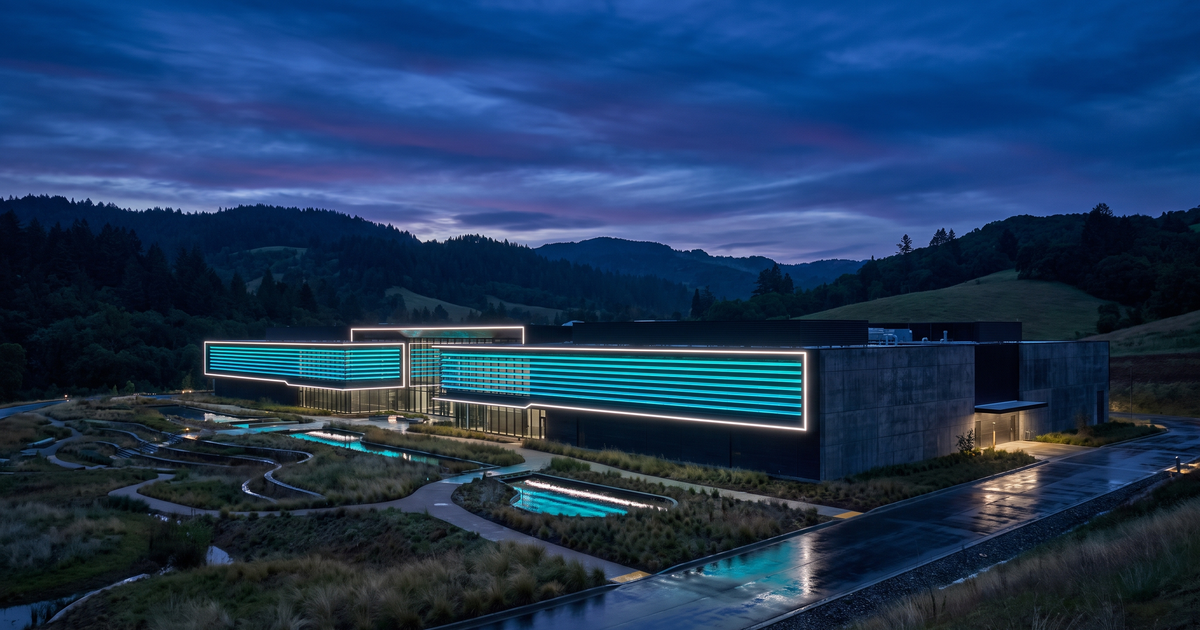
Featured and social artwork are AI-generated editorial illustrations. They do not depict the actual design or current construction progress.
Join 35,000+ Low Voltage Pros
Get weekly permit updates, tool deals, job opportunities, and industry news. No spam, unsubscribe anytime.