
Join Low Voltage Nation — Find project opportunities and showcase your company to thousands of industry professionals
EverWind’s Point Tupper campus has a reported Anthropic lease and a conditional 95 MW first phase. Review the companies, power plan and prospective low-voltage work.
Anthropic has signed a capacity lease at EverWind’s planned Point Tupper data centre campus in Nova Scotia, according to Reuters reporting citing a company executive. The announcement puts a named AI customer behind a substantial Canadian development. For contractors, the useful next questions concern the first building’s delivery team, power arrangements and procurement schedule.
EverWind’s October 16 announcement sets out a 95 MW initial phase targeted for late 2027 and an additional 325 MW targeted for 2028. Delivery remains subject to commercial, technical and regulatory conditions. This is a planned campus; the reviewed evidence does not establish an actual data-hall construction start.
What the first phase establishes
The owner’s announcement leaves the AI customer unnamed. Reuters identifies Anthropic, while The Canadian Press, republished by Pipeline Online, reports a 20-year lease covering an 18,600-square-metre first-phase facility. LVN has not reviewed the executed lease. Its pricing, delivery remedies and precise division of landlord and tenant work remain undisclosed in the reviewed material.
| Item | Published plan | Qualification |
|---|---|---|
| Location | Point Tupper, Nova Scotia | Existing industrial site |
| Initial phase | 95 MW; late 2027 target | Critical IT load unverified |
| Expansion | Additional 325 MW; 2028 target | Conditions and approvals remain |
| Campus investment | More than C$8 billion | Announced development plan |
| Wind portfolio | Separate C$2 billion | Separate generation projects |
| Construction team | Not publicly established | GC and trade awards unverified |
The MW figures describe the announced campus phases. They do not establish energized capacity or a verified critical IT load. Likewise, the reported first-phase floor area should stay attached to that phase. Applying it to the full campus would create a misleading density comparison.
A capacity lease can support a developer’s commercial case, but contractors still need to identify who purchases each package. Base-building infrastructure, tenant equipment installation and operational networks can have different buyers. A published tenant name alone does not settle those interfaces. Firms evaluating Point Tupper should establish the contracting entity and package boundary before preparing a detailed price or reserving crews.
Keep the campus budget and power portfolio separate
The announcement combines more than C$8 billion for the campus with C$2 billion for wind development. All amounts here are Canadian dollars. No conversion or low-voltage percentage estimate has been applied. The budget does not provide enough package detail to calculate an addressable cabling, security or controls contract.
Canadian Press reports that EverWind intends to use its own capital and pursue banks and pension plans after securing the lease. That describes a financing strategy; a completed financing close was not established. For a prospective supplier, useful subsequent evidence would include a funded construction authorization, a named purchasing organization and a release schedule for relevant packages.
Power timing deserves the same scrutiny as building timing. Canadian Press reports initial reliance on existing electricity infrastructure because the wind farms would not be ready for the planned opening. The owner describes battery storage and flexible grid demand, with expansion connection dependent on completed system studies and approvals. A renewable-energy portfolio announcement therefore cannot establish continuous renewable supply to an operating campus.
These interfaces matter to controls and commissioning teams. Before sizing an opportunity, establish the boundary between utility equipment, owner facilities and tenant systems. Identify who owns alarm definitions, communications links, operating sequences and acceptance records. Those are preparation questions for a future design review, with the actual Point Tupper architecture still unverified.
Who is named, and what each role means
Four organizations have distinct roles in the current evidence. The owner’s release is the project source for EverWind, prospective Indigenous equity participation and the economic-impact consultant; the tenant identification comes from the attributed wire reporting. Corporate links below help identify the organizations.
| Organization | Supported role | Boundary |
|---|---|---|
| EverWind Fuels | Developer and owner | Procurement team undisclosed |
| Anthropic | Reported tenant/customer | Executed lease not reviewed |
| Membertou Development Corporation | Prospective equity-consortium lead | Agreements under negotiation |
| Davis Pier | Economic-impact consultant | No construction role established |
Membertou’s proposed participation remains subject to agreements. Its corporate page also describes a separate Membertou Data Centre business; that business should not be merged with the Point Tupper development. Davis Pier’s economic analysis similarly provides no basis for naming the firm as the campus architect, engineer or commissioning agent.
No general contractor, construction manager, design firm, electrical contractor or low-voltage integrator was verified for this campus. Contractors associated with EverWind’s other energy developments cannot automatically be assigned here. A useful award announcement would identify the buyer, facility, phase and scope, allowing firms to distinguish a campus package from work elsewhere in the portfolio.
Where low voltage could enter the project
The following opportunities are LVN’s prospective analysis. They are not advertised bid packages or awarded scopes. The purpose is to help firms prepare focused questions as the construction team becomes public.
| Work area | Potential interface | Evidence still needed |
|---|---|---|
| Fiber and outside plant | Carrier entrances and campus routes | Routes, demarcation and buyer |
| Structured cabling | Facility networks and pathways | Design, quantities and installer |
| Access control and video | Buildings and perimeter | Security design and integrator |
| Fire interfaces | Monitoring and acceptance | Responsibilities and equipment |
| Controls and OT | Power and cooling systems | Network and commissioning team |
| Testing and turnover | Integrated acceptance records | Acceptance plan and provider |
For fiber firms, the first useful deliverable would be a route and responsibility drawing. It should identify carrier demarcations, building entrances, underground pathways and the division between civil and communications work. Site geography alone cannot prove diverse routes. Any proposal should make its assumptions visible and identify who supplies the final route information.
Cabling and security firms should look for equipment-room boundaries, pathway ownership, labeling conventions and test-report requirements. Access control and video introduce further interfaces with doors, gates, power and network administration. Before treating these as a single package, confirm which party approves devices and which party accepts the completed system.
An existing industrial property also raises practical coordination questions. Prospective crews should ask how access, deliveries, temporary services and any work near operating facilities will be managed. Survey information and approved work areas should come from the project team. The terminal’s existing operations cannot establish which spaces a future construction contract will include, or which legacy services will remain in use.
The owner’s planned cooling and storage systems make controls coordination worth watching. Potential tasks include network interfaces, point lists, time synchronization, alarm routing and documented failure scenarios. Final design and vendor selection will determine the actual requirements. Firms can prepare examples of clean commissioning documentation without assuming a particular platform, protocol or equipment award.
In-building wireless also deserves a later design question. Radio surveys, local requirements and the owner’s operating needs should determine whether a DAS package is required. No such package has been established here. Grounding, bonding, lift access and site onboarding should likewise be confirmed against the actual contract documents.
Jobs, trades and useful preparation
EverWind forecasts approximately 2,000 construction positions and 215 permanent operating positions across the combined campus and wind portfolio. Those totals do not identify campus-only employment or current vacancies. The EverWind careers page displayed no openings when checked on October 18.
Workers should look for a named employer, location, start window and application route before treating a projected position as an available job. A hiring advertisement should also clarify whether the work belongs to the campus, a wind project or another industrial activity. That distinction affects travel, scheduling and the experience a crew needs.
The Fiber Optic Association’s workforce resources provide general training material for people evaluating fiber careers. They do not establish Point Tupper certification requirements. Relevant preparation topics include connector inspection and cleaning, test-result interpretation, installation records and disciplined labeling. Technicians can build a portfolio showing how they document completed work and resolve failed tests.
For firms, an updated capability package can include comparable completed projects, available supervision, testing equipment, quality procedures and references. Keep any certification, insurance or safety claims accurate and current. Ask the eventual procurement team which requirements apply before paying for project-specific training or assuming a prequalification submission is open.
The next milestones to watch
Campus-specific approvals, financing commitments and named delivery teams would make this opportunity more concrete. Canada’s responsible data-centre principles complement existing regulatory processes. Participation does not demonstrate that a building permit, environmental authorization or utility connection approval has been issued.
Location information also has limits. EverWind’s contact page places its terminal office at 4090 Industrial Park Road. The owner’s announcement-event advisory identifies the industrial-site security gate. That address is a useful site reference; it does not establish a future data-hall footprint, contractor entrance or permission to visit.
A stronger construction update would pair a dated activity with a defined building or phase. A stronger procurement update would name an authorized buyer and package release. A stronger power update would explain the relevant service stage and delivery conditions. Each would help contractors decide when to move from research into estimating.
Point Tupper now has a named AI tenant in published reporting and an owner-defined first phase. Follow the project through LVN Signal for source-linked construction intelligence, company roles and prospective low-voltage scope. Use those records to identify the next verifiable milestone and prepare for the work your team can actually deliver.
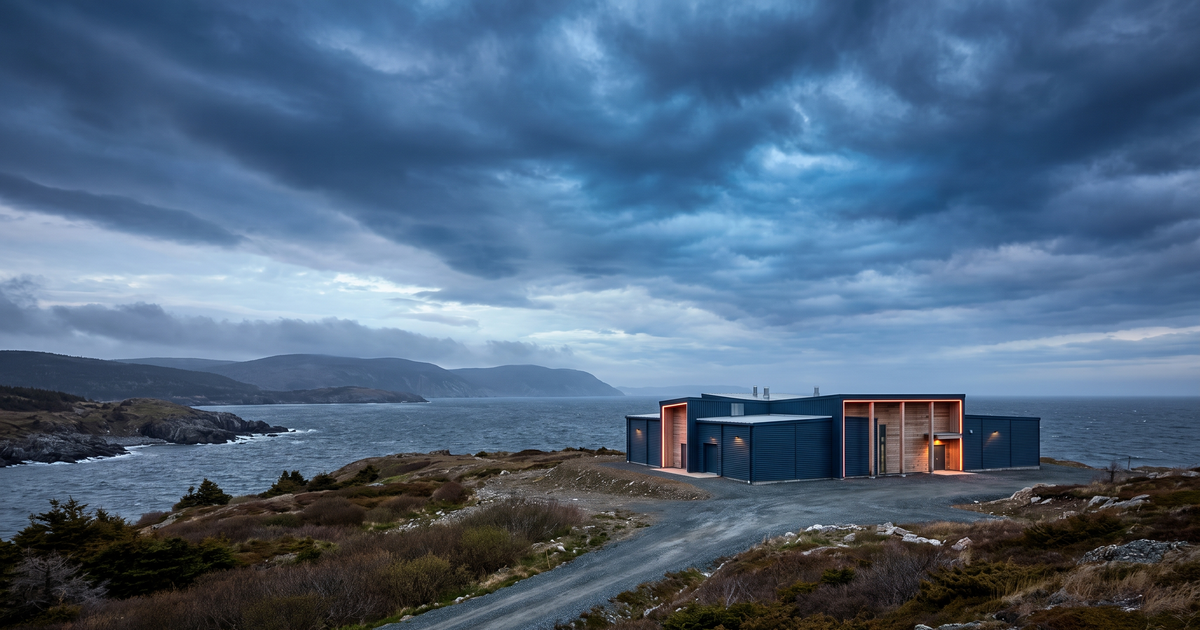
Reporting checked October 18, 2026. Featured and social artwork are AI-generated editorial illustrations; actual campus architecture and construction progress are unverified.
Join 35,000+ Low Voltage Pros
Get weekly permit updates, tool deals, job opportunities, and industry news. No spam, unsubscribe anytime.