
Join Low Voltage Nation — Find project opportunities and showcase your company to thousands of industry professionals
The City of Irvine is adding a third 50-meter competition pool, covered bleachers, a splash pad and a NinjaCross obstacle course at the William Woollett Jr. Aquatics Center — while hosting the 2026 Pan Pacific Swimming Championships on the same site this week. Seven low voltage systems, an estimated $2.2M-$2.5M in LV work, and a code article most commercial contractors have never opened.
This week the William Woollett Jr. Aquatics Center in Irvine, California is hosting the 2026 Pan Pacific Swimming Championships — August 12 through 15. National teams, international broadcast, packed decks.
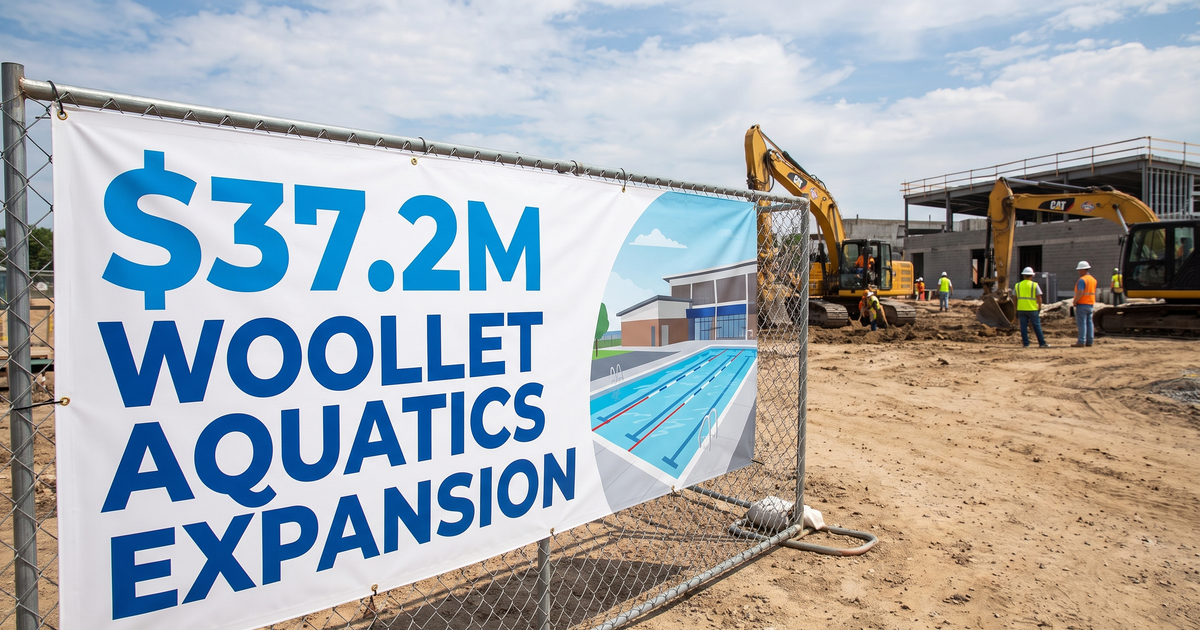
It is also an active construction site. S.J. Amoroso Construction broke ground on a $42 million expansion here on June 29, and the city's direction was explicit: Irvine High School and the aquatics center remain open and continue normal operations throughout construction, straight through to completion in spring 2028.
An international championship meet, swum inside a live jobsite. If you want a single sentence that explains why aquatics work is its own trade, that is it.
What Is Actually Being Built
Signal carries the construction value at $37,230,000; the city's published program figure is $42 million. The difference is design, the Heritage Park parking lot package, and contingency. Scope includes:
- A new 50-meter Olympic-size competition pool — the site's third 50-meter and fourth pool overall
- Covered spectator bleachers
- A new training and locker room building
- A pool equipment building
- A children's splash pad
- NinjaCross — a suspended obstacle run over the water
- Sports lighting, utility upgrades, and a new parking lot along Walnut Avenue
The driver is demand, not prestige. The center already puts more than 10,000 kids a year through swim and water safety classes and still leaves hundreds on waitlists.
The Seven Systems
Signal scores this a 9 out of 10 and lists a system set you will not see on an office building:
- Scoreboard and timing systems
- Public address
- CCTV
- Structured cabling
- Wireless networking
- Access control
- Fire alarm
Timing and PA leading the list is the tell. On a competition aquatics venue those are not amenities bolted on at the end — they are the reason the facility exists, and they drive rough-in decisions made months before anyone thinks about a cable.
Article 680 Is The Whole Job
If you take one thing from this spotlight, take this: NEC Article 680 governs pools, fountains and similar installations, and it changes your materials list before it changes anything else.
680.14 Corrosive Environment. Chemical storage and handling areas, confined spaces under decks adjacent to them, circulation pump and automatic chlorinator rooms, filter areas, and open areas under decks abutting the pool structure are all classified corrosive. Wiring methods there must be suitable for a corrosive environment — rigid metal conduit, intermediate metal conduit, PVC, reinforced thermosetting resin conduit, and liquidtight flexible nonmetallic conduit. Aluminum conduit and tubing are not permitted. If your standard yard stock is aluminum, you have a submittal problem and a rejected-install problem waiting for you.
Equipotential bonding. The bonded parts are tied together with insulated, covered or bare solid copper no smaller than 8 AWG, or with rigid metal conduit of brass or another identified corrosion-resistant metal. This is not the building's grounding electrode system and it is not optional.
Chloramine is the quiet killer. It attacks terminations, enclosures, connectors and fasteners continuously. Stainless hardware, sealed enclosures with the right NEMA rating, gasketed device boxes, and corrosion-rated cable jackets are the difference between a system that survives ten years and one that starts throwing intermittent faults in season three — in a building where nobody can take the pool down to troubleshoot it.
The Deck Conduit Is Unforgiving
Here is where aquatics jobs get won and lost, and it happens during concrete, not during trim.
A competition pool needs a conduit stub and a junction box at the head of every lane for touchpad and backup-button cabling, plus pathway to the timing console, the starting system, and the scoreboard. Those positions are fixed by the lane geometry and the touchpad mounting — and they get cast into a concrete deck.
Get a stub in the wrong place on a competition deck and the fix is coring a finished pool deck in a facility that never closes. Coordinate the timing vendor's shop drawings against the pool contractor's deck layout before the pour, not after. That coordination meeting is the single highest-leverage hour on the entire project.
Know What You Are Not Buying
The recurring lesson across verticals, again. On aquatics work the timing system itself is usually owner-furnished, purchased directly from the aquatics timing vendor — Colorado Time Systems or Daktronics are the two names you will encounter — often bundled with the scoreboard or video display and commissioned by that vendor's technicians.
Your construction package is the infrastructure around it: deck conduit and boxes at every lane, backbone to the timing room, power and data to the display, PA distribution and speaker placement, the network the whole thing rides on, and the pathway that lets the vendor land their gear. Establish that boundary in writing at bid time. On a job with an owner-furnished centerpiece, the fastest way to lose money is to assume somebody else is pulling the cable to it — or to price the head end and discover the owner already bought it.
Outdoors Changes The Spec
This is Southern California, and the competition venue is open-air. That reshapes several systems:
- PA has to be weather-rated and aimed for an outdoor deck with covered bleachers — intelligibility over water and hard surfaces is a real acoustic problem, and start commands have to be unambiguous
- Cameras need outdoor-rated housings, and they are looking at high-glare water and full sun. Sightlines have to serve both security and competition
- Displays take direct sun and thermal cycling — an indoor-spec scoreboard fails here
- Wi-Fi has to cover open deck and bleachers at meet density, which is a very different design problem from covering offices
- Sports lighting controls tie into the schedule and event system
Also worth pricing: NinjaCross is an obstacle run suspended over water. Anything with participants above a pool implies camera coverage, supervision positions, and an emergency stop and communications path. Ask how the city wants it monitored.
The Phasing Is The Risk
A facility that hosts Pan Pacs, serves 10,000 youth in classes, and shares a site with Irvine High School does not hand you dark windows. It hands you a meet calendar.
Every energized-work window, every deck penetration, every system cutover has to fit between programs, and the venue's competition season is when the existing timing and PA systems absolutely cannot go down. Price demobilization and remobilization honestly. Assume protection of installed work in an environment full of chlorine, water and public traffic. Assume re-testing after any shutdown. And put your schedule assumptions in your qualifications, because "the facility remains open throughout construction" is a sentence that costs money.
Who To Call
S.J. Amoroso Construction Co., LLC holds the contract, awarded as lowest responsive and responsible bidder through the City of Irvine's public works process. That is your buyout conversation.
The City of Irvine Public Works & Sustainability Department is the owner. Municipal procurement means the usual gates: registration with California's DIR, prevailing wage and certified payroll, bonding, and bids through the city's electronic vendor portal. None of that is difficult, but all of it is disqualifying if it is not already in place when the sub-bid is due.
Completion is spring 2028, which means the systems buyout is a 2026-2027 conversation. If you want the aquatics vertical on your resume, this is a marquee reference in a market — Orange County — with a lot of municipal pool stock and a lot of aging timing infrastructure behind it.
Track projects like this before the bid drops. LVN Signal monitors permits, bids, and construction news across the country and scores every project for low voltage opportunity. See what is in your market.
Join 35,000+ Low Voltage Pros
Get weekly permit updates, tool deals, job opportunities, and industry news. No spam, unsubscribe anytime.