
Join Low Voltage Nation — Find project opportunities and showcase your company to thousands of industry professionals
WhiteFiber signed a $60 million agreement for two Yadkinville industrial sites planned as the NC-2 and NC-3 AI data-center campuses, with power, parcels, approvals, customers, and construction awards still conditional.
WhiteFiber has put two Yadkinville, North Carolina, industrial properties on the AI data-center map, but the most useful construction signal is in the conditions attached to the deal. Through its Enovum Data Centers subsidiary, WhiteFiber signed an agreement to acquire two Unifi Manufacturing properties for $60 million and convert them into the NC-2 and NC-3 campuses. The transaction is signed, yet the acquisition, energy study, power confirmation, property separation, municipal approvals, customer commitments, and construction team remain open.
The August 17 Form 8-K is the controlling source for the transaction mechanics. It says each property is expected to have at least 30 megawatts of gross electrical supply, subject to confirmation before closing. It also describes the possibility of adding up to 69 megawatts of gross supply at each property within seven years after closing. That creates a potential 198-megawatt combined ceiling. Those figures describe expected gross electrical supply. They do not establish critical IT load, leased capacity, simultaneous campus demand, or energized power.
| Project fact | Current evidence | Important limit |
|---|---|---|
| Sites | Two Yadkinville industrial properties | Exact parcels and addresses undisclosed |
| Transaction | $60M cash purchase agreement | Property price, not construction capex |
| Initial power | At least 30 MW gross supply per site | Subject to confirmation before closing |
| Long-term power | Up to 198 MW combined potential | Seven-year path, not delivered IT load |
| Schedule | Q4 2026 closing; Q3 2027 first service target | Both remain forward-looking |
| Stage | Planned brownfield retrofit | No verified construction start |
The closing conditions are the near-term project clock
The purchase agreement gives contractors and suppliers a more practical timeline than a broad corporate announcement. The inspection period runs through September 15, 2026, unless Enovum extends it. Without an extension, closing is scheduled 45 days after the inspection period ends. The buyer is required to place $2.25 million into escrow, and $1 million can become non-refundable if it takes the extension.
Closing still depends on several project-specific items. WhiteFiber must confirm the energy capacity available to the properties and obtain an energy study verifying potential capacity. The parties also need property-separation approvals and documents, post-closing occupancy arrangements, and a partial leaseback. These conditions matter because Unifi currently operates an industrial footprint in Yadkinville. Its fiscal 2025 Form 10-K lists multiple manufacturing facilities and warehouses in the area, but the transaction filing does not identify which two parcels are covered.
That gap prevents a reliable address-level project map. Local public-radio reporting describes the two properties as roughly 120 acres combined, while the WUNC/WFDD report also highlights the fast-moving zoning discussion. The acreage is useful context, but no reviewed primary transaction document discloses individual site acreage, building area, retained manufacturing space, demolition scope, or the split between NC-2 and NC-3.
Power is the central diligence item
WhiteFiber's SEC-filed NC-2 and NC-3 announcement describes a 60-megawatt combined initial gross utility expectation and approximately 200 megawatts of long-term potential. The Form 8-K is more precise: at least 30 megawatts expected at each property, plus as much as 69 additional megawatts per property within seven years. Every part of that capacity statement remains tied to confirmation.
The serving utility is not named in the reviewed sources. There is no disclosed interconnection agreement, service voltage, substation plan, transmission package, energization date, or power-quality specification. Protection and controls, SCADA, EPMS, grounding, testing, and integrated commissioning roles are also open. For the market, the first high-value signals will be the completed energy study, utility identification, closing confirmation, and any substation or transmission procurement connected to the two sites.
The capacity language should also stay separate from customer demand. WhiteFiber says it has non-binding letters of intent from prospective customers with investment-grade credit support. It does not name a customer or disclose a binding lease, committed megawatts, delivery schedule, or contracted revenue. The Q3 2027 ready-for-service target therefore remains a development goal rather than proof of an operating data hall.
Yadkin County's moratorium requires a jurisdiction check
Yadkin County adopted a temporary data-center moratorium on August 17. The official county ordinance packet says the pause lasts through August 17, 2027, or until replacement zoning language is approved. Its findings describe the covered area as the county's unincorporated jurisdiction outside municipal extraterritorial jurisdictions.
Current local reporting places the two campuses in Yadkinville and says the county moratorium does not stop them. That makes parcel jurisdiction decisive. Until the properties are identified in a deed, site plan, zoning application, or permit, the public record does not establish the applicable zoning district or approval path. The Town of Yadkinville Planning Department handles zoning, subdivision review, code enforcement, economic development, and interagency coordination. Municipal site-plan review, use classification, conditional approvals, building permits, and fire review remain unconfirmed.
For local firms, this is a records-driven watch. A Town agenda, zoning interpretation, fire review, building permit, or utility filing would materially improve the picture. County rulemaking remains relevant to the regional market, but it should not be applied to these campuses without parcel-level evidence.
The named project organizations
| Organization | Verified role | Current project evidence |
|---|---|---|
| WhiteFiber | Prospective owner/operator and retrofit developer | SEC filing and company announcement |
| Enovum Data Centers | Contract buyer and development subsidiary | Named buyer in the Form 8-K |
| Unifi Manufacturing | Seller and current industrial owner | Named seller in the agreement |
| Yadkin County | Unincorporated zoning authority | Adopted moratorium ordinance |
| Town of Yadkinville | Municipal planning authority to watch | Official department responsibilities |
No reviewed source identifies a general contractor, EPCM, construction manager, architect, civil engineer, MEP engineer, electrical contractor, fiber contractor, security integrator, fire-alarm integrator, controls vendor, carrier, equipment supplier, or commissioning authority for NC-2 or NC-3. WhiteFiber's enterprise data-center page describes platform capabilities around high-density power, cooling, fiber, security, monitoring, and fire protection. Those capabilities are useful context for the company's operating model. They are not evidence of an NC-2 or NC-3 design specification or subcontract award.
Where low voltage enters a brownfield conversion
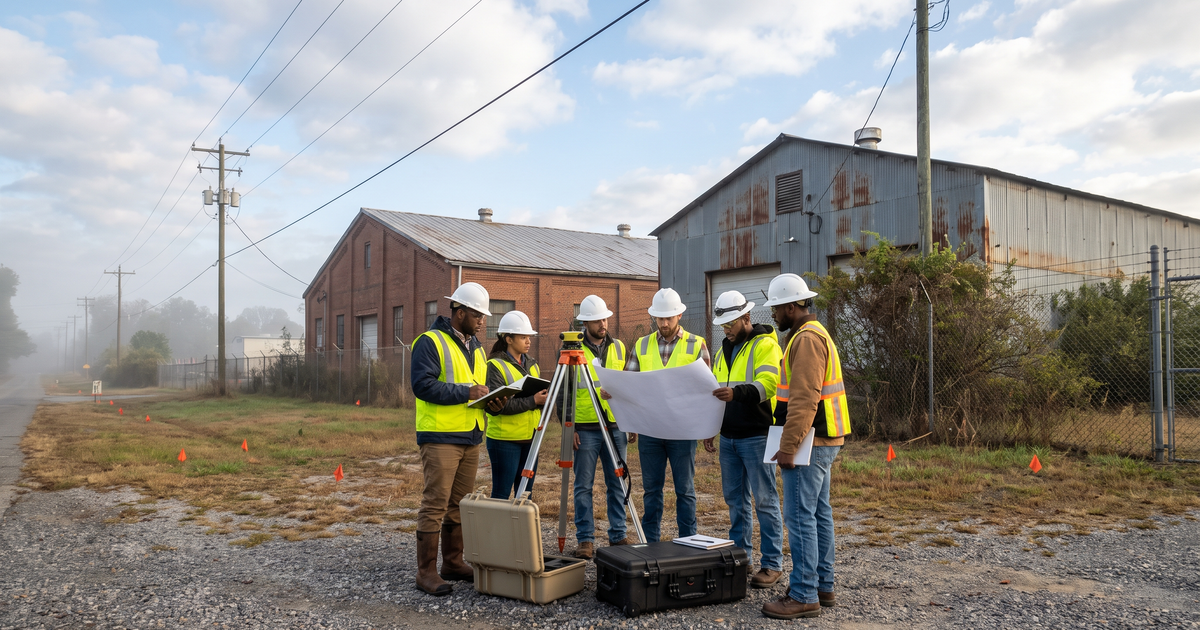
Retrofitting active or recently active industrial properties creates different coordination risk than building on a greenfield pad. Existing structure, utilities, fire separations, pathways, loading access, and retained operations must be reconciled with mission-critical redundancy and turnover standards. The property-separation and leaseback conditions suggest that phasing and access control could matter early, although no site-specific design has been released.
| Low-voltage lane | Likely conversion need | Evidence to watch |
|---|---|---|
| OSP and fiber | Diverse entrances, carrier paths, campus backbone | Utility plans, carrier filings, civil packages |
| Structured cabling | Data-hall pathways, MMR/IDF buildout, labeling | Rack, tray, pathway, and test scopes |
| Security | Perimeter, CCTV, access control, secure zones | Site plan and integrator award |
| Life safety | Fire alarm and suppression interfaces | Fire review, permit, acceptance testing |
| BMS and EPMS | Cooling, power monitoring, alarms, controls | MEP design and controls package |
| Grounding | Bonding for pathways, racks, telecom rooms | Electrical specifications and QA plan |
| DAS | Indoor and public-safety radio coverage | Code review and carrier coordination |
| Commissioning | Integrated testing and turnover records | Cx authority and test scripts |
These are opportunity categories, not awarded scopes. The highest-confidence entry points will arrive through the design team, utility package, permit set, contractor prequalification, and project-specific hiring. WhiteFiber maintains an official data-center contact route, but it is not a public bid invitation or vendor-registration portal.
How contractors can prepare before packages surface
Mission-critical retrofit work rewards crews that can document existing conditions, coordinate shutdowns, protect live operations, test cleanly, and turn over traceable records. Fiber teams should be ready for OSP and inside-plant splicing, cleaning, OTDR and insertion-loss testing, polarity control, labeling, and restoration. Cabling teams need pathway, bonding, firestopping, rack/row, and as-built discipline. Security, fire, and controls firms should expect extensive interfaces with electrical, mechanical, network, and commissioning teams.
Brownfield due diligence can also expose scope before a formal construction award. Existing-condition surveys may need telecom-room inventories, pathway capacity checks, fiber characterization, radio coverage testing, fire-alarm documentation, camera and access-control audits, controls-point mapping, and grounding inspections. If Unifi retains space through a leaseback, separation between manufacturing and data-center operations could drive temporary security zones, segregated networks, phased life-safety changes, and carefully scheduled cutovers. These are reasonable preparation categories based on the transaction structure, but the public record does not show that WhiteFiber has released any of them for pricing.
Training resources include BICSI education and certification for ICT design, installation, testing, documentation, and project management; Fiber Optic Association programs for fiber installation and testing; and NFPA professional training for life-safety and electrical coordination. Site-specific prequalification rules have not been published, so firms should keep safety records, insurance, licensing, workforce capacity, QA procedures, test-equipment calibration, and mission-critical references current.
The next decisive milestones
The September 15 inspection deadline is the first transaction checkpoint. After that, watch for an extension, termination, escrow change, or a closing roughly 45 days later. A closed acquisition would strengthen the development case, but it would still leave design, permitting, power delivery, customer conversion, and construction mobilization to prove.
The strongest next records will identify the parcels, confirm Town jurisdiction and zoning, name the utility, document the energy study, and show whether the expected 30 megawatts per site can be delivered on the target schedule. Contractor announcements, permit applications, job postings, equipment orders, carrier work, and commissioning procurement would then turn a corporate development plan into a visible construction pipeline.
Firms evaluating the opportunity should keep the two campuses distinct even though current announcements present them together. The properties may carry different existing buildings, utility conditions, permitting paths, retained operations, and conversion schedules. A combined corporate capacity figure cannot substitute for site-level scope. The first parcel-specific filing should make it possible to separate NC-2 from NC-3 and identify which campus moves first.
LVN Signal will keep following NC-2 and NC-3 as those records surface. For integrators, installers, suppliers, and workforce partners, the value is timing: understanding the conditions now, then moving when the project exposes a verified package, contact, permit, or hiring need.
Join 35,000+ Low Voltage Pros
Get weekly permit updates, tool deals, job opportunities, and industry news. No spam, unsubscribe anytime.