
Join Low Voltage Nation — Find project opportunities and showcase your company to thousands of industry professionals
The new Enterprise Firewall Core delivers 100 Gbps routing, 79 Gbps IDS/IPS, and 22,500+ client capacity. Here's what LV contractors need to know about UniFi's enterprise push.
Gallery
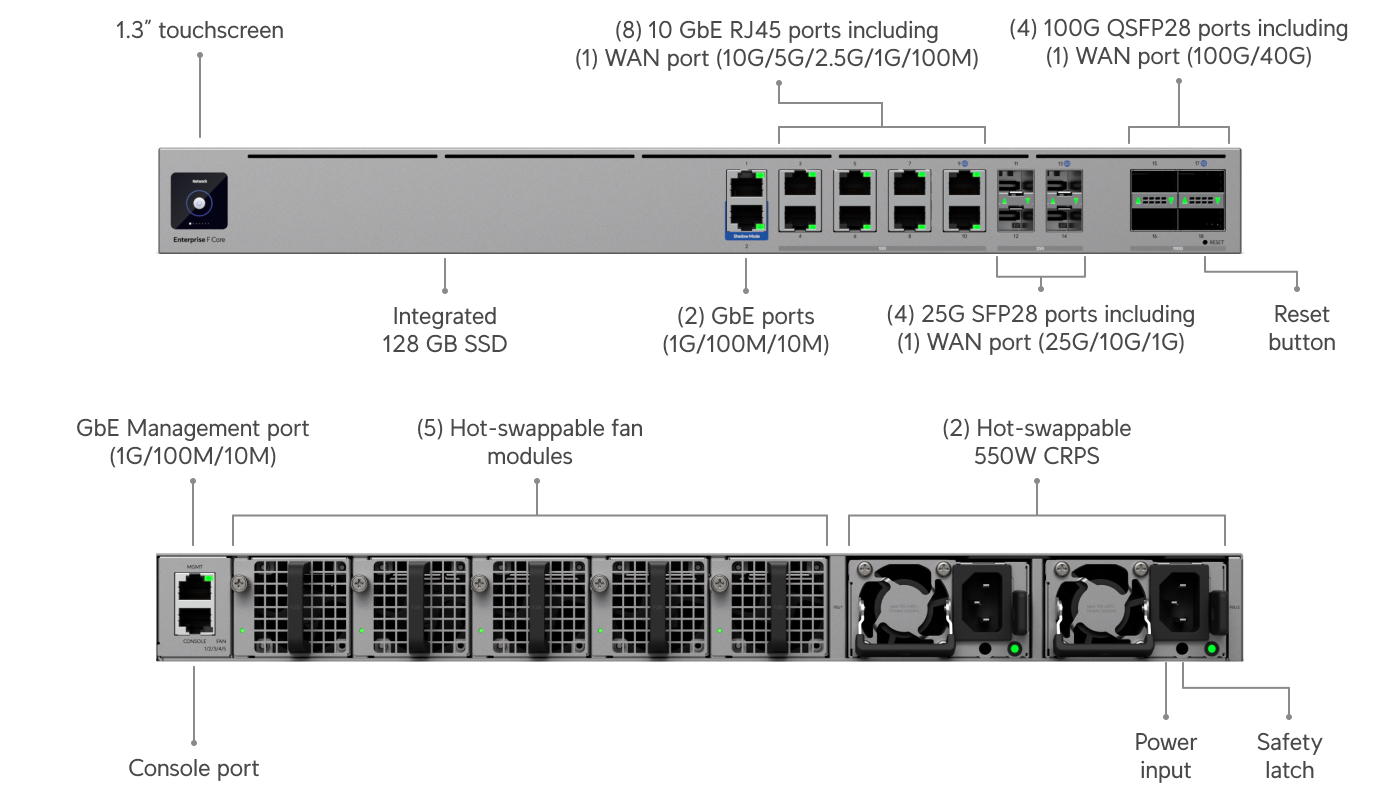
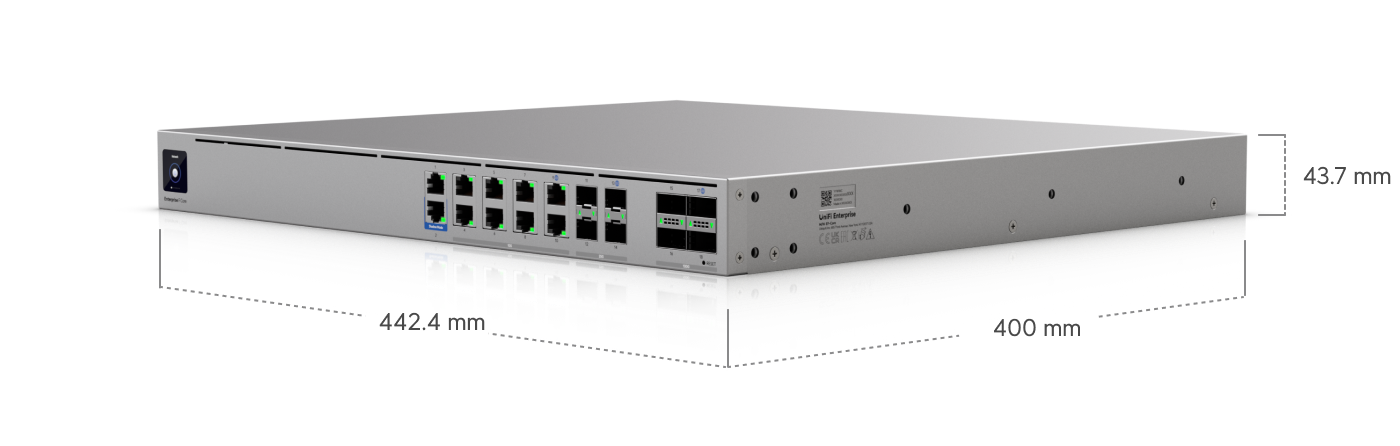
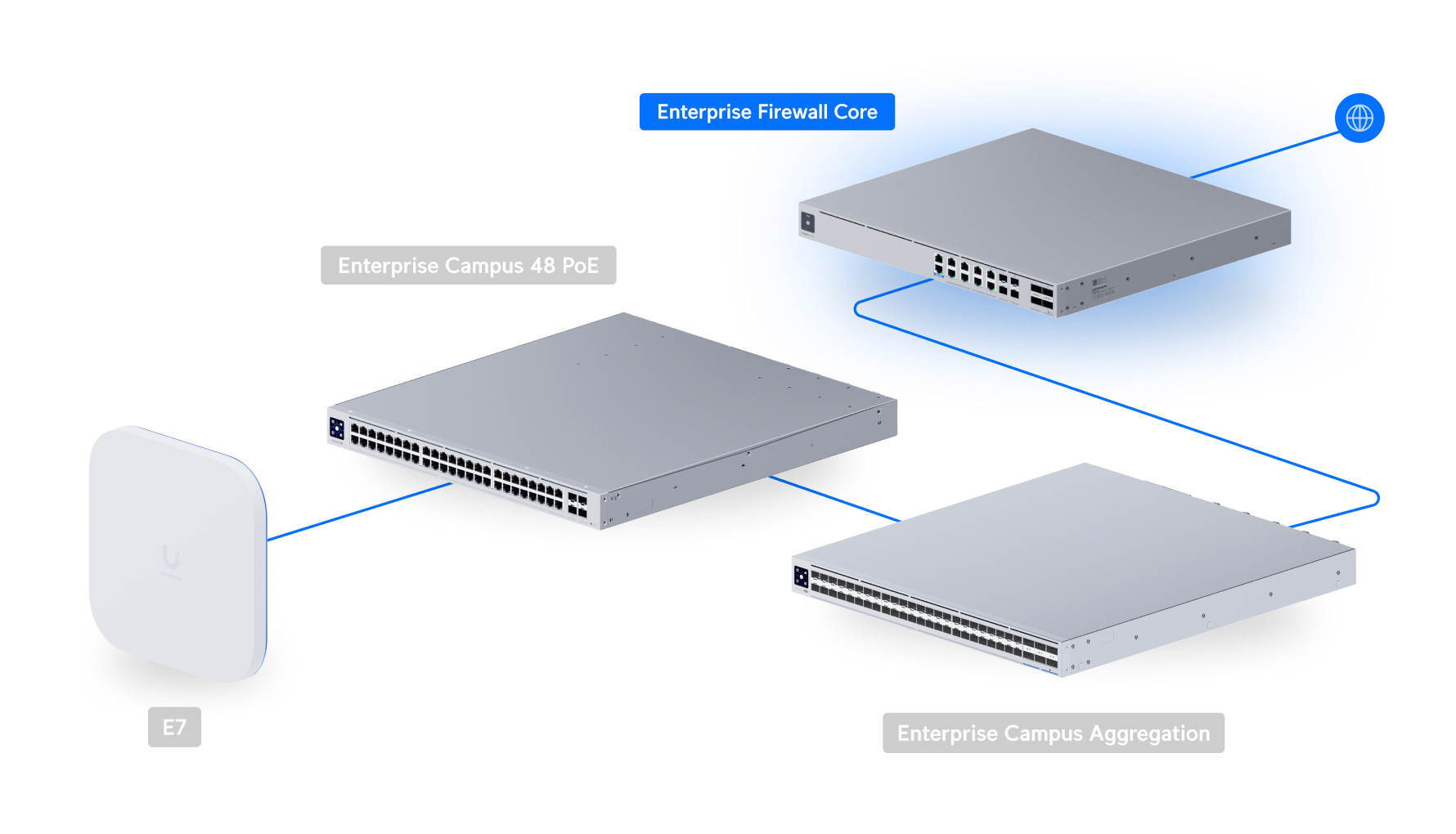
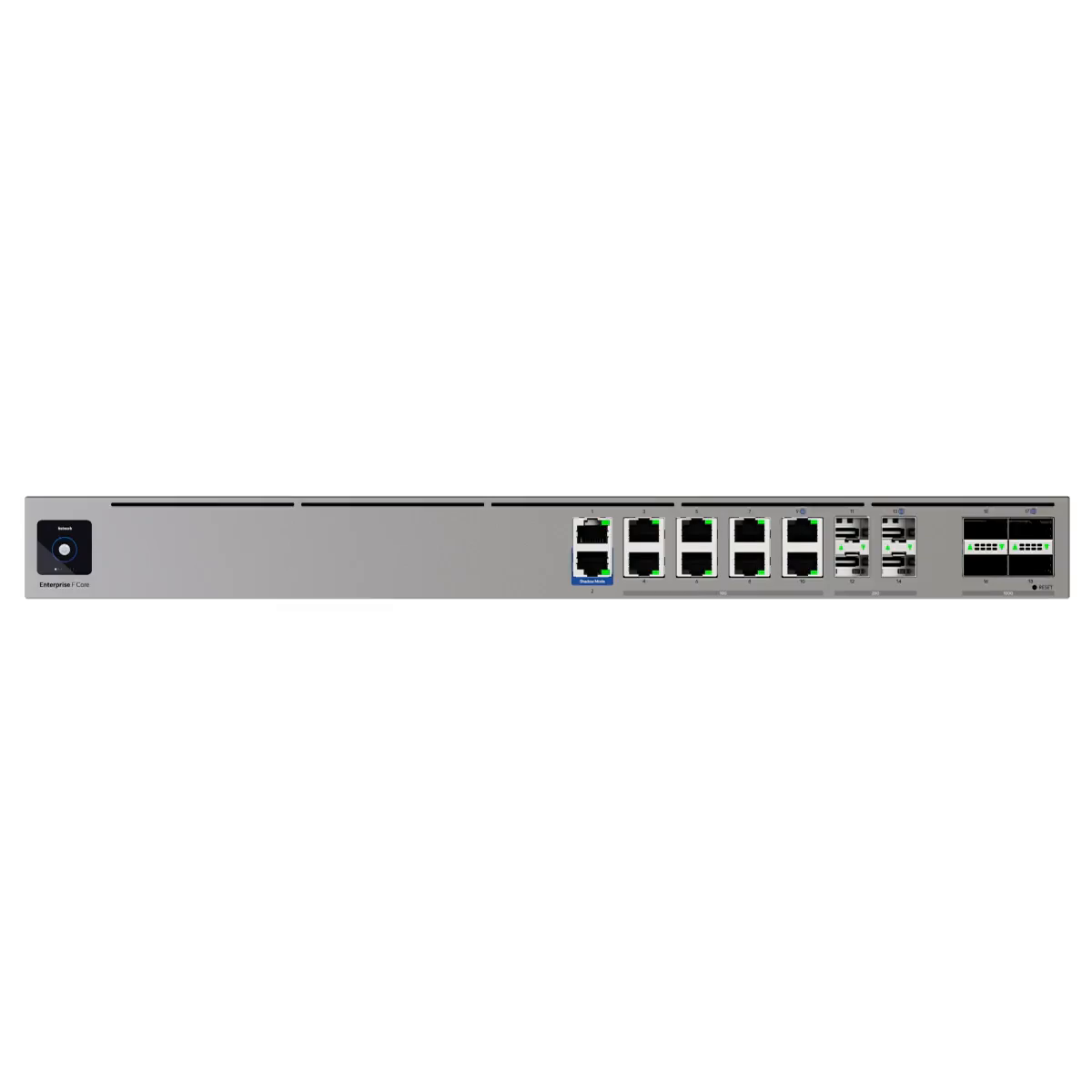
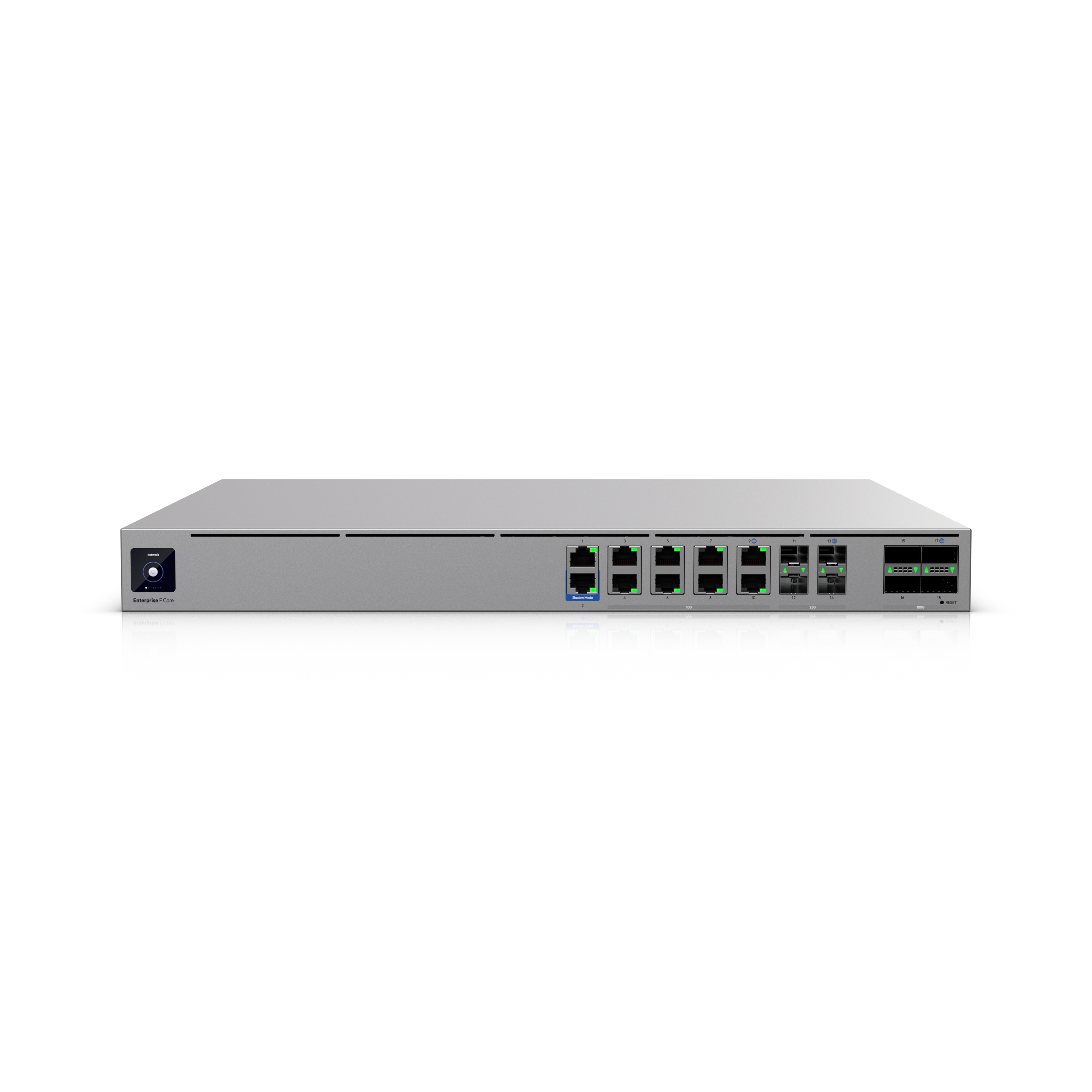
Ubiquiti has officially entered the enterprise-grade routing conversation with the Enterprise Firewall Core, a 100 Gbps UniFi cloud gateway that fundamentally changes the scale at which low voltage contractors can deploy UniFi infrastructure. Listed at $3,499, this 1U rack-mount appliance is designed for campus networks, high-density environments, and enterprise-scale deployments where fiber uplinks, redundant power, and intrusion detection aren't optional—they're baseline requirements.
What Is the Enterprise Firewall Core?
The Enterprise Firewall Core (model EF-Core) is Ubiquiti's flagship UniFi cloud gateway, purpose-built for installations that have outgrown traditional SMB-class routers. It delivers 100 Gbps of routing throughput, supports 22,500+ concurrent clients, and can handle more than 5,000 simultaneous IPsec VPN tunnels. For context, that's enough capacity to serve a mid-sized university campus, a multi-building corporate headquarters, or a high-density residential complex with fiber-to-the-unit service.
Unlike consumer-grade gateways that might ship with RJ45 uplinks, the Enterprise Firewall Core is designed around fiber connectivity. Ubiquiti lists compatible accessories including 100G Direct Attach Cables, 100G PSM4 single-mode optical modules, and 25G multi-mode optical modules—signaling that this device is intended for network cores where copper handoffs are no longer sufficient.
Key Specifications for Low Voltage Professionals
When you're scoping a project around the Enterprise Firewall Core, these are the numbers that matter:
- Routing throughput: 100 Gbps
- IDS/IPS throughput: 79 Gbps with intrusion detection and prevention enabled
- Client capacity: 22,500+ concurrent devices
- VPN capacity: 5,000+ concurrent IPsec tunnels
- Form factor: 1U rackmount
- Price: $3,499 USD
The 79 Gbps IDS/IPS throughput is particularly significant. Many enterprise firewalls experience dramatic performance degradation when deep packet inspection is enabled. The fact that Ubiquiti specifies near-line-rate threat detection means you can actually use the security features without bottlenecking your fiber uplinks.
Installation Considerations for LV Contractors
Deploying 100 Gbps network infrastructure is fundamentally different from running Cat6 to a Dream Machine Pro. Here's what changes when you're installing the Enterprise Firewall Core:
Fiber Handoff and Uplink Planning
This device assumes fiber connectivity at the edge. You'll need to coordinate with ISPs or carrier providers on fiber termination, test single-mode or multi-mode runs depending on distance, and potentially stock 100G or 25G optics. If you're used to plugging an RJ45 into a cable modem, this is a different conversation entirely—one that involves demarcation points, fiber patch panels, and optical loss budgets.
Rack Power and Redundancy
Enterprise-class gateways typically ship with redundant power supplies, and customers deploying at this scale expect them. Verify your rack has adequate PDU capacity, consider dual-circuit power for true redundancy, and plan UPS runtime based on the full load of the gateway plus any adjacent switches or storage. A 100 Gbps edge router going offline takes the entire site down, so power planning isn't optional.
High Availability and Failover
With support for 5,000+ IPsec tunnels and 22,500+ clients, this gateway is likely serving mission-critical infrastructure. Many deployments at this scale will require high availability pairs. While Ubiquiti hasn't published detailed HA specifications for the Enterprise Firewall Core, contractors should anticipate customer requests for failover configurations, which means planning for two units, synchronized configs via UniFi Network, and potentially VRRP or similar protocols for seamless cutover.
Security Handoff and Compliance
At the enterprise level, firewall administration often shifts from the IT generalist to a dedicated security team. The 79 Gbps IDS/IPS throughput suggests this device is intended for environments where threat detection, logging, and compliance reporting matter. As an installer, you may need to coordinate with security consultants, ensure proper syslog forwarding to SIEM platforms, and document network segmentation for audit purposes.
Where UniFi Competes—and Where It Doesn't
The Enterprise Firewall Core puts Ubiquiti in direct competition with vendors like Fortinet, Palo Alto Networks, and Cisco in the mid-market enterprise space. For low voltage contractors, this creates an interesting dynamic:
UniFi's advantages: Unified management through UniFi Network, significantly lower upfront cost compared to traditional enterprise firewalls, no per-feature licensing for basic routing and VPN, and a single-pane-of-glass approach that includes switching, wireless, and access control.
Traditional firewall advantages: Mature support contracts, deeper third-party integrations, more granular policy controls, and established relationships with enterprise procurement and security teams.
For contractors, the value proposition is clear: customers who are already invested in UniFi infrastructure can now scale to enterprise throughput without switching ecosystems. But you'll need to set expectations carefully—UniFi is not a drop-in replacement for a Palo Alto PA-5450, and customers with strict compliance requirements may still need vendor-backed support SLAs that Ubiquiti doesn't traditionally offer.
What This Means for Low Voltage Projects
The Enterprise Firewall Core signals that UniFi is no longer just for small offices and prosumer installs. It's a credible option for campus networks, multi-tenant buildings, and high-throughput environments. For low voltage professionals, that means:
- Fiber termination and testing become standard skills, not specialty services
- Rack design needs to account for enterprise-class power, cooling, and cable management
- Network segmentation and security architecture become part of the pre-sale conversation
- You're competing (or partnering) with IT consultants who previously wouldn't have considered UniFi
If you've been installing Dream Machine Pros and wondering when UniFi would be ready for larger projects, the Enterprise Firewall Core is Ubiquiti's answer. It won't replace Cisco in the Fortune 500, but it absolutely changes what's possible in the mid-market—and what your customers will expect you to deliver.
Final Takeaway
The Enterprise Firewall Core is a legitimate enterprise edge appliance with the throughput, client capacity, and security features to support serious network deployments. At $3,499, it undercuts traditional enterprise firewalls by a significant margin while maintaining the UniFi ecosystem's unified management model. For low voltage contractors, it's an opportunity to expand into higher-value projects—but only if you're prepared to handle fiber infrastructure, redundant power, and the security conversations that come with enterprise-scale networking.
Join 35,000+ Low Voltage Pros
Get weekly permit updates, tool deals, job opportunities, and industry news. No spam, unsubscribe anytime.