
Terminal Crimper vs Modular Crimper: Which Low Voltage Tool Do You Need?
Join Low Voltage Nation — Find project opportunities and showcase your company to thousands of industry professionals
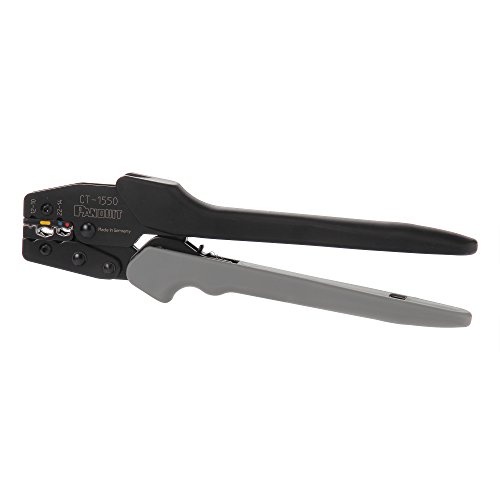
Panduit Panduit CT-1550 Contour Crimp Controlled Cycle Tool
Manual ratchet crimper for use with conductors from #22 to #10 AWG (0.5 to 6 sq. mm) and matching insulated terminals, splices, and disconnects Ratchet mechanism for proper crimp force with each operation Two color-coded crimp pockets for use with a range of wire sizes Steel frame with black oxide finish for strength, durability, and resistance to corrosion Manual release lever for opening jaws before full crimp cycle when necessary
Comparing terminal crimpers and modular crimpers for low voltage work: Panduit CT-1550 vs Klein VDV226-011. Learn when you need each type and why ratcheting mechanisms matter.

Panduit
60 YEARS OF SMARTER INFRASTRUCTURE SOLUTIONSWith experience across a wide spectrum of industries, Panduit’s strategic network infrastructure and industrial electrical wiring solutions turn connectivity into a competitive advantage.
Terminal Crimper vs Modular Crimper: Which Low Voltage Tool Do You Need?
Walk onto any low voltage job site and you'll find at least two crimping tools in every tech's bag: one for wire terminals and one for modular connectors. But if you're building your toolkit or upgrading from entry-level gear, understanding the difference between these tools—and when premium options justify their price—can save you time, frustration, and callback headaches.
In this comparison, we're examining two industry standards: the Panduit CT-1550 Contour Crimp terminal crimper ($329) and the Klein Tools VDV226-011 modular crimper/stripper ($89). These aren't direct competitors—they serve completely different functions. But understanding both is essential for any serious low voltage installer.
Quick Comparison Table
| Feature | Panduit CT-1550 | Klein VDV226-011 |
|---|---|---|
| Primary Use | Insulated terminals & splices | RJ45/RJ11/RJ12 connectors |
| Wire Range | 22-10 AWG | 28-22 AWG |
| Ratchet Mechanism | Controlled-cycle full ratchet | Full-cycle ratchet |
| Length | 10.8 inches | 7.5 inches |
| Weight | 27.2 oz (1.7 lbs) | 10 oz |
| Price | $329.99 | $89.99 |
| Best For | Access control, fire alarm, power connections | Network cabling, phone systems |
| Our Rating | 4.7/5 | 4.5/5 |
The Quick Verdict
You probably need both. The Panduit CT-1550 handles every wire-to-terminal connection on a job—door strikes, motion sensors, panel connections, and power supplies. The Klein VDV226-011 terminates all your data and phone cables. These tools complement each other in your kit.
If budget is tight, start with the Klein for network work (you'll use it constantly), then upgrade to a quality terminal crimper when inconsistent crimps start costing you callbacks.
What Is a Terminal Crimper?
Terminal crimpers connect wires to ring terminals, spade connectors, butt splices, and insulated disconnects. When you're wiring a door strike to an access control panel, connecting a motion sensor to an alarm system, or splicing wires at a junction box, you're using a terminal crimper.
Panduit CT-1550 Overview
The Panduit CT-1550 is a controlled-cycle terminal crimper designed for high-volume professional use. At $329, it's a serious investment—roughly four times the price of budget ratcheting crimpers.
Why professionals pay the premium: The controlled-cycle mechanism physically prevents releasing the handles until you've achieved a complete, properly-formed crimp. After terminating 200+ connections on a commercial access control installation, my hands weren't cramping like they would with cheaper tools. The locator guide positions the terminal perfectly every time—no more eyeballing and hoping.
When you're making connections in a cramped electrical room at 4 PM, trying to finish before the building locks you out, the difference between "close enough" and "certified crimp" matters. One contractor summed it up: "you can get a perfect crimp every time, just make sure you use compatible Panduit terminals."
CT-1550 Key Specifications
| Specification | Value |
|---|---|
| Wire Range | 22-10 AWG (0.5-6 sq mm) |
| Crimp Pockets | 2 color-coded (Red/Blue closest to pivot) |
| Compatible Terminals | Pan-Term insulated terminals, splices, disconnects |
| Handle Material | Polypropylene (chemical resistant) |
| Frame | Steel with black oxide finish |
| Overall Length | 10.8 inches |
| Weight | 27.2 oz (0.77 kg) |
| Special Features | Manual release lever, locator guide |
What Is a Modular Crimper?
Modular crimpers terminate RJ45 (Ethernet), RJ11/RJ12 (phone), and similar connectors. Every Cat5e/Cat6 patch cable, every phone jack termination, every network drop—all done with a modular crimper.
Klein Tools VDV226-011 Overview
The Klein VDV226-011 is a ratcheting modular crimper/stripper that handles the holy trinity of modular connectors: RJ45, RJ11, and RJ12. At $89, it sits in the professional sweet spot—significantly better than hardware store tools, but not breaking the bank.
What makes it work: The full-cycle ratchet mechanism won't release until you've applied full compression. After a long day of terminating a 48-drop office buildout, the consistent crimps mean you're not re-doing half your work when testing. The built-in stripper and cutter eliminate reaching for extra tools—which matters when you're balanced on a ladder in a drop ceiling.
The steel body with black oxide finish has held up through years of being dropped into tool pouches, kicked across floors, and generally abused. The precision-ground crimping dies still produce clean crimps after thousands of terminations.
VDV226-011 Key Specifications
| Specification | Value |
|---|---|
| Connector Types | RJ45 (8P), RJ11/RJ12 (6P), RJ22 (4P) |
| Wire Range | 28-22 AWG |
| Cable Types | Cat3, Cat5e, Cat6/6A (solid or stranded) |
| Built-in Functions | Crimper, stripper, cutter |
| Die Material | High-carbon steel (precision ground) |
| Overall Length | 7.5 inches |
| Weight | 10 oz |
| Connector Style | WE/SS type (NOT AMP) |
Why Ratcheting Mechanisms Matter
Both tools feature ratcheting mechanisms, but this isn't a marketing gimmick—it's the difference between professional-grade and amateur results.
Without a ratchet: You're relying on "feel" to know when a crimp is complete. On your first 10 terminations of the day, you might be fine. By termination 150, your hands are tired, your grip is inconsistent, and you're creating intermittent connections that won't show up until the customer calls you back.
With a ratchet: The mechanism physically prevents releasing until full compression. One installer shared the reality: "I was wedged under a lifted cab fixing a broken wire—frustrating until someone handed me a ratcheting crimper. I got it first try. The second click held the connector, freeing up the third hand I don't have."
The Panduit CT-1550 takes this further with its "controlled-cycle" design—the tool forms a guide for easy wire insertion and won't release until the crimp meets specification. No guessing, no inconsistency.
Real-World Performance: Terminal Crimping
Terminal crimping shows up constantly in low voltage work:
- Access Control: Door strikes, maglocks, request-to-exit sensors, card readers
- Fire Alarm: Smoke detector wiring, panel connections, notification appliances
- Security: Motion sensors, glass break detectors, siren connections
- Audio/Video: Speaker terminals, power supply connections
When you're terminating a 24V power supply to a door strike controller, a weak crimp means the door fails during a fire drill. When you're connecting smoke detectors to a fire alarm panel, an intermittent connection means false alarms—or worse, no alarm when it matters.
The CT-1550's locator feature positions the terminal precisely in the crimp pocket. After six months of daily use, the consistency is noticeable: every ring terminal sits flush, every butt splice passes a pull test. The polypropylene handles resist the solvents and cleaners you encounter in commercial environments.
Real-World Performance: Modular Crimping
Modular crimping is the bread and butter of structured cabling:
- Network Drops: Every Cat6 run to a workstation
- Patch Panels: Rack terminations in telecom closets
- Phone Systems: VoIP handsets, analog lines
- Security Cameras: IP cameras using PoE
The VDV226-011 handles the reality of network installation: cramped telecom closets where you're terminating 48 cables in a row, drop ceilings where you need one tool to strip, cut, and crimp, and service calls where you're making a quick patch cable to test a connection.
The integrated stripper works well on both solid and stranded cable—pull the jacket into the blade opening, rotate, and the jacket comes off cleanly without nicking conductors. The cutter is adequate for trimming conductors flush before crimping, though I still prefer dedicated flush cutters for cleaner work.
Pros and Cons
Panduit CT-1550
Pros:
- Controlled-cycle mechanism guarantees complete, consistent crimps every time
- Locator guide positions terminals perfectly—no more guessing placement
- Color-coded crimp pockets with red/blue closest to pivot reduces hand fatigue
- Chemical-resistant polypropylene handles survive harsh commercial environments
- Manual release lever for repositioning without completing a bad crimp
- Steel frame with black oxide finish resists corrosion from years of use
Cons:
- $329 price is significant—3-4x budget ratcheting crimpers
- Works best with Panduit Pan-Term terminals (generic terminals may not seat perfectly)
- At 27 oz, noticeably heavier than compact crimpers for pouch carry
- 10.8-inch length can be awkward in tight junction boxes
Klein Tools VDV226-011
Pros:
- All-in-one design eliminates carrying separate stripper and cutter
- Full-cycle ratchet prevents under-crimped connections that cause callbacks
- Precision-ground high-carbon steel dies maintain accuracy over thousands of crimps
- Compact 7.5-inch length fits easily in tool pouches and tight spaces
- Black oxide finish has proven durability through drops and daily abuse
- $89 price point accessible for apprentices and small contractors
Cons:
- NOT compatible with AMP-style connectors—verify your connector brand
- Built-in cutter adequate but not as clean as dedicated flush cutters
- Stripper blade eventually dulls and requires replacement (VDV999-064)
- Only handles standard modular connectors—no pass-through compatibility (see VDV226-110 for that)
Which Should You Buy?
For structured cabling focus: Start with the Klein VDV226-011. You'll use it on every network job, and the $89 investment pays for itself on your first commercial buildout. Add a quality terminal crimper later when your work expands into access control or fire alarm.
For security/access control focus: The Panduit CT-1550 investment makes sense if you're doing high-volume terminations. At $329, it costs roughly what you'd charge for 2-3 hours of labor—and it prevents the callbacks that eat into your profit margin. Pair it with a basic modular crimper for occasional network work.
For general low voltage work: You need both. Budget approximately $420 total ($330 + $90) for professional-grade versions of each. If cash flow is tight, start with the Klein and a budget terminal crimper, then upgrade the terminal tool when you're doing regular access control installations.
When Premium Terminal Crimping Pays Off
The CT-1550's price is justified when:
- You're terminating 50+ connections per job (access control, fire alarm panels)
- Callbacks for connection failures are costing you money and reputation
- You're working in commercial environments where liability matters
- Hand fatigue from cheaper tools is affecting your work quality
The Bottom Line
The Panduit CT-1550 and Klein VDV226-011 aren't competitors—they're teammates in a professional low voltage toolkit. The CT-1550 handles every wire-to-terminal connection with industrial-grade consistency, while the VDV226-011 terminates network and phone cables with reliable precision.
Understanding the difference between terminal crimping and modular crimping—and investing in quality tools for each—separates professionals from handymen. Your customers can't see the quality of a crimp hidden behind a wall plate, but they'll definitely notice when connections fail.
Buy the Panduit CT-1550 on Amazon: Check Current Price →
Buy the Klein VDV226-011 on Amazon: Check Current Price →
Disclosure: Low Voltage Nation earns a commission on qualifying purchases through the Amazon links above. This doesn't affect our recommendations—we only feature tools we'd use ourselves.
Find Projects That Need These Tools
Looking for commercial jobs where quality crimping tools pay for themselves?
LVN Signal surfaces access control installations, security system projects, and structured cabling jobs from permit data before they hit bid boards.
Frequently Asked Questions
Can I use the same crimper for terminals and RJ45 connectors?
No. Terminal crimpers and modular crimpers use completely different die shapes. Terminal crimpers create barrel crimps on ring terminals and splices, while modular crimpers press pins into RJ45/RJ11 connectors. Attempting to use the wrong tool will damage both the tool and your connectors.
Is a ratcheting crimper worth the extra cost over a basic crimper?
Yes, especially for professional work. Ratcheting mechanisms ensure consistent crimp force regardless of hand fatigue or technique variation. One experienced installer put it bluntly: "I don't recommend the non-ratcheting versions at all—more can go wrong due to operator error/inconsistency." The extra $20-40 prevents callbacks.
Why does the Panduit CT-1550 cost so much more than other terminal crimpers?
The CT-1550's controlled-cycle mechanism goes beyond basic ratcheting—it forms a guide for wire insertion and physically prevents release until the crimp meets specification. For high-volume professional use (50+ terminations per job), this consistency and reduced hand fatigue justify the investment. For occasional use, a quality $80-100 ratcheting crimper may suffice.
Will the Klein VDV226-011 work with pass-through RJ45 connectors?
No. The VDV226-011 is designed for standard modular connectors only. For pass-through connectors (where wires extend through the front), you'll need the Klein VDV226-110 or a similar pass-through compatible tool. Pass-through connectors make termination faster but require the specific die geometry.
Join 35,000+ Low Voltage Pros
Get weekly permit updates, tool deals, job opportunities, and industry news. No spam, unsubscribe anytime.