
Join Low Voltage Nation — Find project opportunities and showcase your company to thousands of industry professionals
TeraWulf and Kentucky Power describe 1 GW of conditional utility demand at Muskie. Review the transmission plan, delivery targets and prospective low-voltage work.
TeraWulf’s Muskie AI data campus in eastern Kentucky has a larger power agreement and a faster second-phase target. The company and Kentucky Power describe 1 gigawatt of contracted electric demand, with the first 500 megawatts targeted to begin ramping in 2028 and another 500 megawatts planned for 2029. Regulatory approval and utility construction remain material conditions.
For low-voltage contractors, the useful development is the increasingly specific infrastructure plan around the proposed campus. Kentucky Power has identified the Venator Substation and new transmission connections serving EastPark Industrial Park. Those disclosures help explain the dependencies ahead of future building, networking, security and controls work. A general contractor, specialty awards and open low-voltage solicitations remain unverified.
What the power agreement establishes
TeraWulf’s October 5 SEC filing identifies DB Long Hunts Data LLC as the wholly owned subsidiary that executed amended transmission infrastructure and energy-service agreements on October 1. The filing raises contracted capacity from 500 MW to 1 GW and advances the second phase from its earlier 2030 target.
The accompanying owner disclosure also describes evaluation of eventual expansion to as much as 2 GW. That remains an exploratory possibility. The disclosed agreement covers 1 GW, and neither announcement supplies a verified current energized load or a critical IT load for Muskie.
| Item | Disclosed position | Qualification |
|---|---|---|
| Location | EastPark, eastern Kentucky | Grayson locality in utility release |
| Contracted demand | 1 GW | Approval and delivery conditions |
| First power phase | 500 MW; 2028 ramp target | Actual energization unverified |
| Second power phase | 500 MW; 2029 target | Advanced from 2030 |
| Campus land | About 285 acres | Owned and controlled land |
| Budget and workforce | Undisclosed in reviewed sources | No project estimates assigned |
A utility-demand figure describes the electrical service being arranged. Translating it into usable computing capacity would require project-specific design information, including facility overhead, redundancy and operating assumptions. Those inputs are unavailable in the reviewed disclosures. Similarly, a utility ramp year cannot establish the completion date of a particular data hall or an accepted customer installation.
The transmission work now has a defined outline
Kentucky Power’s Muskie Transmission Improvements project page identifies a proposed 765-kV Venator Substation in western Boyd County. Two proposed 765-kV lines would total approximately 2.5 miles. Two parallel 345-kV lines, approximately three miles each, would run toward TeraWulf’s EastPark facility. The final routes remain subject to public input and further analysis.
The utility’s October 2 announcement gives a conditional schedule: substation construction beginning in early 2027, transmission-line construction beginning in November 2027, and the new facilities entering service in October 2028. It anticipates substation and line applications on separate timetables, with a commission decision expected in spring 2027. These are utility forecasts, and an issued approval was not established in this review.
The same announcement schedules an October 15 public open house and requests feedback by October 29. These are opportunities to examine proposed routes and land impacts. They do not demonstrate that construction has started. The meeting venue in Catlettsburg is an event location; it should not be used as the campus address.
For contractors, this creates a useful sequencing question: which facilities must be ready before the first service ramp, and who controls each interface? Utility transmission, campus electrical distribution, building systems and customer IT installations can have different buyers and acceptance criteria. LVN’s practical reading is to qualify those boundaries before investing in a project-specific estimate.
Land, participants and the missing construction team
The May acquisition announcement identifies Industrial Equity Partners as the seller and describes approximately 285 acres of owned and controlled land inside the roughly 1,000-acre EastPark Industrial Park. Optional adjacent acreage is a separate expansion possibility. The park’s full acreage should not be treated as TeraWulf’s acquired footprint.
TeraWulf said the site was zoned for its intended use and permitting was underway at acquisition. Current facility permits, a parcel boundary and a verified construction entrance were not retrieved for this article. Kentucky Power uses Grayson as the campus locality while locating the transmission project in western Boyd County. A city-level map marker provides regional orientation only.
| Organization | Documented role | Evidence |
|---|---|---|
| TeraWulf | Owner and developer | Acquisition and October disclosures |
| Kentucky Power | Electric utility | Demand and transmission announcements |
| DB Long Hunts Data LLC | Contracting subsidiary | October 5 SEC filing |
| Industrial Equity Partners | Acquisition seller | May owner announcement |
| GC and specialty trades | Unverified | No award established |
None of these named roles establishes a low-voltage package buyer. A seller is not automatically a continuing development partner, and the utility is not automatically responsible for campus cabling or security procurement. Architectural, engineering, construction-management and specialty contracting appointments remain evidence gaps.
Keep the financial and generation figures separate
Kentucky Power’s October 5 statement describes a conditional $100 million in residential winter bill credits over ten years, expected to begin in 2029. It also says TeraWulf will pay estimated financing costs associated with the utility’s planned 760-MW combined-cycle facility at Big Sandy. Both commitments have specific purposes; Muskie’s campus construction budget remains undisclosed.
Big Sandy is a separate generation project. Its nameplate capacity cannot be added to Muskie’s contracted demand to produce a campus computing figure. The reviewed announcements also do not establish the full generation, transmission and procurement arrangements necessary to meet every phase of demand.
The October SEC filing discusses intended expansion of corporate borrowing capacity and additional secured debt for utility-related letter-of-credit needs. It gives no assurance of additional financing. A closed Muskie construction-financing package was not verified. Tenant identity and project-specific employment totals also remain unknown. TeraWulf’s separate Hawesville campus and its customer arrangements should be kept separate when evaluating Muskie.
Where low-voltage work could emerge
The following scope is LVN analysis of prospective work at an AI/HPC campus. It is not a bill of quantities, awarded subcontract or invitation to bid. The disclosures support the development context; they do not identify installed platforms, cable counts, specified products or approved specialty buyers.
| Work area | Potential relevance | Evidence needed |
|---|---|---|
| Fiber and outside plant | Campus backbone and carrier entrances | Routes, demarcations and buyer |
| Structured cabling | Facility connectivity and pathways | Design, quantities and package scope |
| Security | Access control and video coverage | Integrator and platform selection |
| Fire-system interfaces | Monitoring and coordinated acceptance | Approved design and responsibilities |
| Controls and monitoring | Equipment status and alarm integration | Controls ownership and test plan |
| Operational networking | Security and facility-system connections | IT/OT boundaries and turnover rules |
A fiber contractor’s first useful questions concern entrances, route diversity, ownership at each handoff and acceptance documentation. A security integrator needs the access policy, door schedule, camera design and network responsibilities before choosing equipment. A controls specialist needs an agreed point list and a clear division between equipment vendors, the electrical team and the commissioning authority.
Turnover deserves attention before installation begins. Agreeing file names, test-result formats, labeling conventions and responsibility for resolving failed tests can prevent expensive ambiguity at acceptance. These are general project-delivery considerations; Muskie’s actual specifications and commissioning procedures remain to be established from the responsible project team.
For an estimator, the missing information matters as much as the scale. Utility megawatts alone cannot support a defensible cable quantity, device count or low-voltage contract value. The practical commercial milestone is a named buyer releasing a defined package with drawings, specifications, exclusions and a procurement schedule. Until then, Muskie is a prospect for qualification and monitoring.
Jobs, trades and preparation
Kentucky Power anticipates construction activity and permanent employment, but the reviewed project disclosures do not provide verified job totals. No Muskie hiring campaign or training partnership was established. Relevant prospective trades include fiber installation and testing, communications cabling, security integration, fire-system coordination, controls and commissioning support. Actual staffing will depend on final design, contracting and execution.
For technicians preparing for this type of work, the Fiber Optic Association’s workforce resources offer a general training reference. Useful preparation includes connector inspection and cleaning, termination discipline, test interpretation, labeling and organized turnover records. Employers should confirm which methods, instruments and qualifications apply to their actual package.
OSHA Outreach provides general safety-awareness education. Its course completion card is not a professional certification or a replacement for employer and site-specific training. Lift access, excavation interfaces, restricted areas, grounding and bonding coordination, and work near electrical infrastructure require the appropriate supervision and project procedures.
Contractors can prepare a concise qualifications package now: comparable projects, available crews, insurance and bonding information, quality-control practices, test-equipment capabilities and sample closeout documentation. That preparation has value across prospective projects. Any Muskie-specific prequalification requirements still need to come from the confirmed owner or procurement team.
What to watch next
The next useful evidence is specific: commission filings and decisions, selected transmission routes, issued facility permits, a tenant commitment, financing close and named construction buyers. Later milestones should distinguish actual utility energization, building completion, customer fit-out and accepted commissioning. Each answers a different question about when a prospective opportunity becomes executable work.
For LVN readers, Muskie offers an early view of a large planned AI campus whose power infrastructure is becoming more defined. Follow the project, its participants and new source-backed developments through LVN Signal. Use the linked primary disclosures to qualify timing and responsibilities before making staffing or bidding commitments.
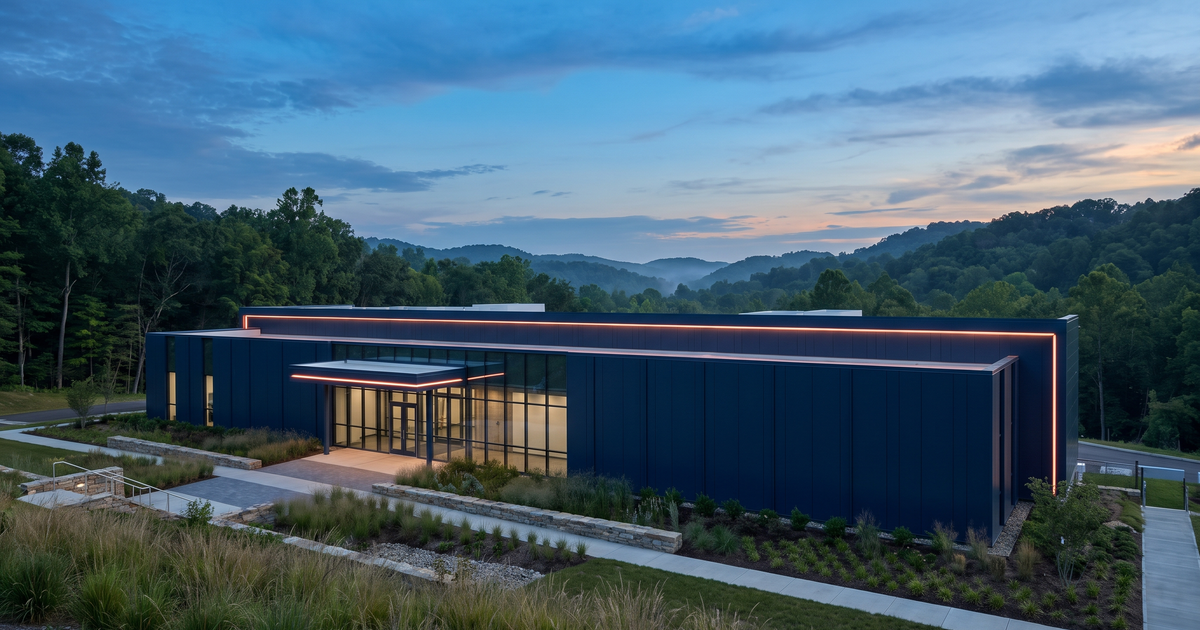
Reporting reviewed October 15, 2026. Featured and social images are generated editorial illustrations; they do not depict a verified Muskie design or construction progress.
Join 35,000+ Low Voltage Pros
Get weekly permit updates, tool deals, job opportunities, and industry news. No spam, unsubscribe anytime.