
Join Low Voltage Nation — Find project opportunities and showcase your company to thousands of industry professionals
T5 proposes a 312,000-square-foot Chantilly data center with onsite fuel cells. Review the county filing, conflicting power figures, named consultants and prospective low-voltage work.
T5 has submitted a plan for a 312,000-square-foot data center in Chantilly, Virginia, pairing a two-story building with onsite natural-gas fuel cells. Project Charlie offers an early look at the organizations, infrastructure interfaces and potential specialty work behind a new Northern Virginia facility. Its construction schedule and procurement path remain open.
As checked October 12, Fairfax County's SE-2026-SU-00038 application record carries a Waiting for Information status. That establishes a live proposal. It does not establish final approval, a construction start or an available bid package. No specific AI tenant or workload is disclosed in the documents reviewed.
The site and building in the filing
The applicant's September 18 statement of justification describes approximately 18.64 acres northeast of Lee Road and Stonecroft Boulevard. It identifies T5 Data Centers, LLC as contract purchaser. The county lists T5 Properties (GA), LLC, also known as T5 Properties, LLC. Those names belong to the project's documented application history; a completed acquisition has not been independently verified.
| Item | Filed proposal | Qualification |
|---|---|---|
| Location | Chantilly, Fairfax County | Lee Road / Stonecroft Boulevard |
| Site | About 18.64 acres | Contract-purchaser description |
| Building | 312,000 square feet | Two stories; up to 75 feet |
| Office component | About 30,000 square feet | Included in building total |
| Critical load | 50 MW design input | Preliminary acoustic study |
| County status | Waiting for Information | Checked October 12 |
| Capital budget | Undisclosed | Financing also unverified |
| Delivery | Dates unverified | No confirmed construction start |
The office area is part of the 312,000-square-foot building. Adding it again would overstate the development. The planning documents describe a building and its supporting equipment areas, without establishing how future tenant fit-out packages would be purchased or divided.
Location discipline matters here. FFXnow's October 9 reporting distinguishes this application from another proposal at 3721 Stonecroft Boulevard involving former police-training land. The shared road name is insufficient to combine their parcels, approvals or contractors. The Chantilly map reference available for this report is locality-level; a verified site entrance is still needed for logistics.
Four power figures with different meanings
The September 18 letter proposes approximately 48 MW of fuel-cell electricity and up to 27 MW from Dominion Energy. Emergency generators form a third supply component. The applicant expects Washington Gas to provide fuel through an offsite extension. These are proposed arrangements; executed service agreements and delivery dates were not established in the reviewed material.
A separate September 17 environmental noise study from Trinity Consultants references a Corgan campus plan dated July 30. Its page-seven model table lists 50 MW of critical load and a 60 MW fuel-cell yard containing 24 units. The later applicant letter uses 48 MW for fuel-cell supply. The available documents do not explain the difference.
Both figures therefore need their dates and definitions attached. Redundancy, a revision, or a gross-versus-net distinction could conceivably account for different values, but none is verified here. Likewise, adding the proposed 48 MW and 27 MW supplies does not establish 75 MW of IT capacity. Supply components, modeled critical load and equipment-yard ratings answer different questions.
For prospective contractors, the practical issue is the final operating sequence. A controls or commissioning buyer would need to define which system handles alarms, which networks connect equipment, who owns failure testing, and how utility and onsite-power interfaces are accepted. Those are questions to resolve during procurement. The current figures cannot support a cable count, equipment bill or firm labor estimate.
The named team and the limits of each role
The filings identify a useful group of development and consulting organizations. Their documented roles vary considerably. The applicant letter supports the plat, transportation and legal roles; the acoustic report supplies the reference to Corgan's campus plan. Corporate websites verify identities and provide starting points for company research.
| Organization | Documented role | Evidence boundary |
|---|---|---|
| T5 Data Centers | Developer / contract purchaser | Land closing unverified |
| Urban Ltd. | Special-exception plat | September 18 applicant letter |
| Trinity Consultants | Preliminary acoustic study | Modeled equipment and sound |
| Corgan | Campus plan designer | July 30 plan cited by Trinity |
| Wells & Associates | Transportation consultant | Applicant's stated role |
| Walsh, Colucci, Lubeley & Walsh | Land-use counsel | Applicant letter by Allison Reynolds |
| Dominion Energy | Proposed grid supplier | Service commitment unverified |
| Washington Gas | Proposed gas utility / extension owner | Applicant expectation |
No general contractor, electrical contractor, fiber contractor, security integrator or commissioning provider is established for Project Charlie. No fuel-cell vendor is confirmed. Corgan's credited plan does not independently establish the final architect-of-record contract, and Urban's plat work does not establish responsibility for every engineering discipline.
This distinction makes outreach more useful. A development or entitlement contact may be able to identify the delivery team or explain the next milestone. It should not automatically be treated as the buyer for structured cabling. Before investing estimating time, a specialty firm should establish the contracting entity, procurement contact, design maturity and package boundary.
Where low-voltage work could emerge
The following opportunities are LVN's analysis of the proposed facility. They are prospective work categories, with no verified trade awards or open solicitations. The building, office component and multiple equipment systems provide a basis for asking focused questions about pathways, connectivity and integration.
| System | Potential work | What needs confirmation |
|---|---|---|
| Fiber / outside plant | Entrances, duct banks, splicing, testing | Carriers, routes and package buyer |
| Structured cabling | Pathways, labeling, support networks | Specifications and fit-out boundary |
| Security | Access control and video coverage | Integrator, design and hardware |
| Fire alarm | Monitoring and equipment interfaces | Design, acceptance and scope owner |
| Controls / networking | Power and cooling telemetry | OEM interfaces and IT/OT boundary |
| Commissioning support | Network tests and turnover records | Test plan and responsibility matrix |
For outside-plant firms, an early review would ask where diverse entrances can be accommodated and how telecom routes interact with utility work. The proposed gas extension raises coordination questions about civil sequencing and crossings. No route, easement, carrier commitment or detailed underground configuration is verified, so these remain subjects for design review.
For cabling and security firms, the office and data-center portions could have different standards, acceptance processes and purchasing owners. A useful capability package would show relevant testing, labeling, pathway coordination and handover experience. Quantities and staffing should follow issued scope documents, especially if the eventual tenant controls part of the fit-out.
The power concept also warrants clear controls responsibilities. Equipment telemetry, alarm routing, operational networks and integrated testing can cross several subcontract boundaries. A bidder should ask who supplies interface information, who configures it, and who proves the complete sequence. Project Charlie's public documents do not settle those commercial or technical responsibilities.
Cooling and acoustics still depend on design
The applicant describes closed-loop chilled-water cooling with dry heat rejection. That description does not mean every water use disappears: filling, makeup, offices and other facility functions still need consideration. Environmental benefits described by the applicant should be evaluated against the eventual equipment, operating profile and supporting permits.
Trinity's preliminary study is useful evidence of a design process. Its modeled outcome depends on equipment assumptions and mitigation, and later field verification remains material. An acoustic prediction cannot establish the sound of an operating facility that has not yet been built.
For specialty contractors, enclosure geometry and equipment placement can affect access, pathways and installation sequencing. Changes intended to address sound or screening can also change where an installer can work. The commercially useful milestone is a coordinated design with clear responsibility for revisions, testing and closeout.
Jobs, trades and preparation
The applicant forecasts up to 50 full-time-equivalent operating positions. That figure is a planning expectation. Construction headcount, actual openings and trade-by-trade demand remain unknown. A permanent staffing estimate should not be used to calculate a construction crew requirement or promise employment.
Technicians interested in this category of work can prepare around demonstrable skills: fiber inspection and cleaning, splicing and acceptance testing, pathway installation, grounding and bonding, labeling, as-built records, controls networking and commissioning support. The useful evidence is the ability to complete and document work to the eventual buyer's requirements.
The Fiber Optic Association's workforce resources provide a starting point for fiber training. OSHA's Outreach Training information explains general safety education. Neither resource establishes a Project Charlie credential mandate, hiring relationship or site-access entitlement. Employer onboarding, lift qualifications and project-specific rules would need separate confirmation.
Milestones that would make the opportunity more concrete
The next useful evidence is an application update explaining the outstanding information and subsequent review milestones. Land control, tenant commitments and financing would sharpen the commercial picture. Final utility arrangements and a reconciled fuel-cell design would improve confidence in the infrastructure schedule.
For subcontractors, named delivery leadership and actual package buyers are especially valuable. Issued drawings, solicitation dates, prequalification instructions and award notices would turn a documented proposal into a more actionable sales opportunity. Until those appear, a measured approach is to research the named organizations and prepare a relevant capability statement.
Use LVN Signal to research construction projects, follow named companies and assess where fiber, cabling, security and controls capabilities fit. Project Charlie currently offers a credible early-stage lead, with the capacity discrepancy and procurement gaps visible alongside the opportunity.
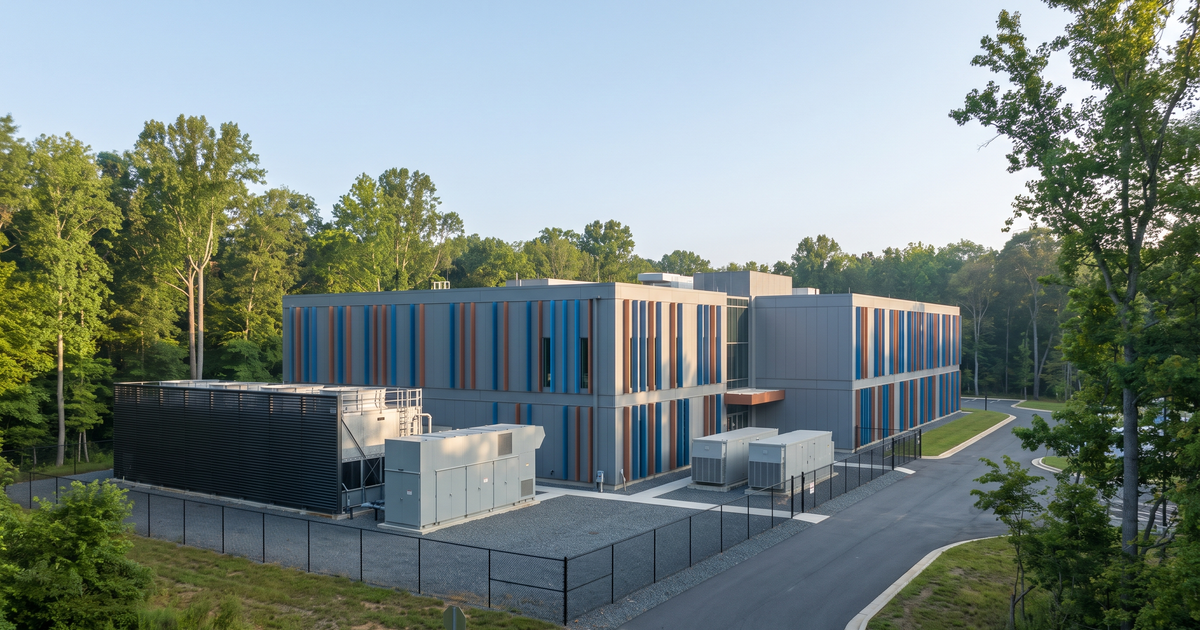
Source note: the county application was independently checked. The applicant and consultant PDFs linked above are copies hosted by FFXnow; county-hosted attachments and the original Corgan plan were not independently retrieved. Featured artwork is an AI-generated editorial illustration, not an approved project rendering or a construction photograph.
Join 35,000+ Low Voltage Pros
Get weekly permit updates, tool deals, job opportunities, and industry news. No spam, unsubscribe anytime.