
Southwire 240 ft Steel Fish Tape Review: Built for Long Commercial Runs
Join Low Voltage Nation — Find project opportunities and showcase your company to thousands of industry professionals
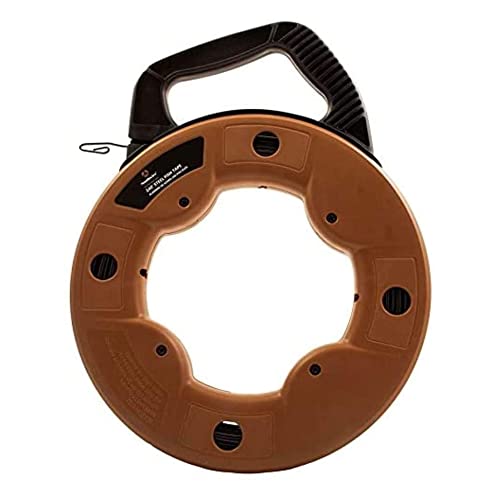
Southwire Southwire 58279840 1/8 in. 240 ft. Steel Fish Tape
BUILD AND DESIGN: Our 1/8""-wide tempered spring steel Fish tapes provide excellent fishing performance The rugged case is impact resistant and jobsite tough FLAT STEEL FISH TAPE: The 1/8""-wide tempered spring steel fish tape was designed to avoid it from coiling up during use LONG LASTING DURABILITY: High impact case and carrying handle ensures it will be durable enough for the worksite EFFICIENT DESIGN: The fish tape conveniently unwinds and rewinds easily for fast and efficient storage NOTE: To pay out the fish tape; pull on the actual fish tape itself (gloves are recommended) To reel it back in; rotate the case in reverse while holding the handle The rotating case should not be used to pay out the fish tape; doing so could result in a jam
A hands-on review of the Southwire 240 ft steel fish tape, covering its tempered spring steel construction and laser-etched footage markings for commercial pulls.
Southwire 240 ft Steel Fish Tape Review: Built for Long Commercial Runs
When you're pulling wire through 200+ feet of conduit, a short fish tape means splicing, delays, and frustration. The Southwire 58279840 delivers 240 feet of tempered spring steel in a rugged case that handles commercial-scale pulls. Here's what low voltage techs and electricians need to know about this workhorse fish tape.
Quick Verdict
At around $67, the Southwire 240 ft steel fish tape offers serious capacity for long conduit runs at a competitive price. The tempered spring steel pushes through obstacles without buckling, the laser-etched footage markings eliminate guesswork, and the impact-resistant case survives job site abuse. At 7.5+ pounds, it's hefty—this is a tool for when you need the length, not for quick residential pulls. For commercial low voltage work with extended conduit runs, it earns its place in the van.
Who This Is For (And Who Should Skip It)
Ideal for:
- Commercial installers pulling wire through long conduit runs
- Low voltage techs working in warehouses, office buildings, and industrial facilities
- Electricians who need accurate length measurement during pulls
- Anyone tired of coming up short with 100-foot tapes
Skip it if:
- You primarily do residential work—a 50-100 ft tape is lighter and sufficient
- You work near live circuits often—consider a non-conductive fiberglass tape
- Weight is a major concern—at 7.5 lbs, it's heavy for ladder work
Key Features That Actually Matter
240 feet of tempered spring steel: The 1/8" wide steel is heat-treated for the right balance of stiffness and flexibility. It pushes through conduit with authority, navigating bends and past minor obstructions without buckling. The flat profile slides easily through conduit walls.
Laser-etched footage markings: Every 12 inches, the tape displays permanent markings that tell you exactly how much tape you've deployed. When you hit an obstruction at 180 feet, you know it immediately. When measuring conduit runs for planning, the markings eliminate guesswork.
Impact-resistant case: The rugged housing protects the coiled tape and survives drops onto concrete. The comfortable carrying handle makes transport manageable despite the weight. The case design allows smooth payout and retrieval without binding.
Formed hook end: The tape's end features a formed hook that grips wire securely for the pull back. The hook design resists bending out of shape even after repeated heavy pulls.
Real-World Performance
The tempered spring steel delivers exactly what you need for long pulls—enough stiffness to push through conduit without collapsing, enough flexibility to navigate bends. On a recent 200-foot EMT run through a commercial ceiling, the tape fed smoothly to the far end, navigated three 90-degree bends, and pulled back with a 12/2 bundle without drama.
The laser-etched markings are genuinely useful. When the tape stops unexpectedly at 175 feet, you know immediately whether you've hit your target box or encountered an obstruction. For troubleshooting underground or concealed conduit, the markings help pinpoint problems. Other fish tapes require guessing or measuring separately—the Southwire eliminates that step.
The weight is noticeable. At 7.5+ pounds, you won't want to carry this up a ladder repeatedly. It's a "set it at the starting point" tool rather than something you'll toss in a tool pouch. For long commercial runs, that's fine—the capacity justifies the heft. For residential work, grab a shorter, lighter tape.
Payout and retrieval work smoothly when you follow the instructions: pull the tape directly (gloves recommended) rather than rotating the case to deploy. To retrieve, rotate the case while holding the handle. This design prevents jams that plague cheaper fish tapes.
The steel construction does mean this tape is conductive. For any work near potentially live circuits, a fiberglass or SIMpull tape is the safer choice. The Southwire excels on new construction and clearly de-energized conduit runs.
What I Like (Pros)
- 240 feet handles even the longest commercial conduit runs
- Tempered spring steel pushes through bends without buckling
- Laser-etched footage markings provide accurate length measurement
- Impact-resistant case survives job site drops
- Formed hook end grips wire securely without deforming
- Smooth payout and retrieval mechanism prevents jams
- Comfortable carrying handle manages the weight
What Could Be Better (Cons)
- Heavy at 7.5+ lbs—not ideal for ladder work or frequent carrying
- Steel is conductive—unsafe near live circuits
- Overkill for residential work where 50-100 ft suffices
- Requires two people for some applications due to weight
- Steel can rust if stored in damp conditions
- Learning curve for proper payout technique to avoid jams
Specifications
| Specification | Value |
|---|---|
| Model Number | 58279840 (FTS1/8-240) |
| Length | 240 feet |
| Width | 1/8 inch |
| Material | Tempered spring steel |
| Markings | Laser-etched every 12 inches |
| Weight | ~7.5 lbs |
| Case | High-impact resistant plastic |
| End Type | Formed hook |
| Conductivity | Conductive (steel) |
Steel vs. Fiberglass: Which Fish Tape Do You Need?
The choice depends on your typical work environment:
Choose steel (like this Southwire) when:
- You need maximum push strength for long, straight runs
- You're working on new construction with clearly de-energized conduit
- The environment is dry and rust isn't a concern
- You need the tape to handle heavy pulling loads
Choose fiberglass when:
- You work near potentially live circuits regularly
- The conduit has multiple tight bends requiring flexibility
- Corrosion is a concern in humid or outdoor environments
- You need a lighter weight option
Many pros carry both—steel for heavy-duty new construction pulls, fiberglass for service work where safety around live circuits matters.
How Does the Southwire Compare?
The Klein 56008 offers similar 240-foot capacity with stainless steel construction that resists rust better than standard steel. Klein's Depth Finder features also include laser-etched markings. It typically costs more but offers corrosion resistance.
The Southwire SIMpull non-conductive series uses a polymer construction that's lighter, non-conductive, and virtually unbreakable. For the same length, SIMpull costs more but offers safety advantages near live circuits.
Budget steel tapes from generic brands cost less but often lack the tempered steel quality and laser markings. The Southwire's durability and measurement features justify its price for professional use.
The Bottom Line
The Southwire 58279840 delivers what commercial electricians and low voltage installers need: 240 feet of robust steel fish tape with accurate footage markings and a case that handles job site conditions. The weight is substantial but justified by the capacity. For long conduit runs in commercial and industrial settings, it's a reliable tool that handles serious pulls.
For residential work or situations near live circuits, look at shorter tapes or non-conductive options. But when you need to reach the far end of a 200-foot conduit run with confidence, the Southwire 240 delivers.
Check Current Price on Amazon →
Find Projects That Need This Tool
Looking for commercial low voltage projects where a serious fish tape earns its keep?
LVN Signal surfaces low voltage installation projects from permit data before they hit bid boards.
Join 35,000+ Low Voltage Pros
Get weekly permit updates, tool deals, job opportunities, and industry news. No spam, unsubscribe anytime.