
Join Low Voltage Nation — Find project opportunities and showcase your company to thousands of industry professionals
A Texas filing identifies Kati 2 Building 1, HKS and a 112 MW critical IT design. Review the development team, power questions and prospective low-voltage work.
A new Texas registration puts a $471.8 million construction estimate on Building 1 at Project Kati 2, the AI data-center development associated with Soluna and Metrobloks in Willacy County. The filing describes a single-story, 471,884-square-foot building designed for approximately 112 megawatts of critical IT load. It also identifies HKS as the design firm, giving contractors a documented building scope and a named design organization to research.
The opportunity remains at the development stage in the evidence reviewed October 10. Soluna has reported selecting a general contractor, but has not identified that firm in the reviewed disclosures. A definitive tenant agreement, closed construction financing and actual construction start remain unverified. For low-voltage businesses, Kati 2 merits qualification work around fiber, pathways, security and controls, with procurement timing tied to those unresolved delivery milestones.
What the Building 1 registration establishes
The Texas Department of Licensing and Regulation record TABS2027003019 identifies the facility as MFE-A-Kati2 — Building 1. The address text is 1392 FM 1420, Santa Monica, with Willacy County listed explicitly. The form's separate city field says Unknown; Santa Monica comes from the address text. The owner's Albany, New York mailing address belongs to the company office.
| Building 1 item | Filed detail | Reading the figure |
|---|---|---|
| Construction estimate | $471.8 million | Registered building scope |
| Floor area | 471,884 square feet | Single-story building |
| Design load | Approximately 112 MW | Critical IT capacity |
| Scheduled start | October 8, 2026 | Actual start unverified |
| Scheduled completion | October 8, 2027 | Filed target |
| Current evidence | Project registered | Development-stage reporting |
The registration provides an unusually specific cost-and-area anchor for this building. Its $471.8 million estimate does not price every future Kati 2 phase, establish an executed construction contract, or disclose a low-voltage subcontract allowance. Applying a flat percentage to that total would create false precision while tenant standards, package boundaries and equipment responsibilities are still unknown.
TDLR's architectural-barriers registration is a limited administrative milestone. A scheduled start entered on the form does not independently demonstrate mobilization, a notice to proceed or construction permitting. Before reserving crews, a contractor would need the current issued drawings, authorized schedule and contracting entity. A site visit also requires an agreed access point: the available map reference resolves to FM 1420 at road level, rather than a verified building entrance.
The named team and the missing contractor name
Soluna's June 9 business update reported a definitive joint venture with Metrobloks and a request for proposals covering Phase I design development and construction. The state registration supplies two additional role definitions: Soluna KK Energy Service Co LLC is the registered owner, and HKS, Inc. is the design firm.
| Organization | Documented role | Source |
|---|---|---|
| Soluna Holdings | Developer | June company update |
| Soluna KK Energy Service Co LLC | Registered owner | TDLR registration |
| Metrobloks | Co-development partner | Definitive JV disclosure |
| HKS, Inc. | Design firm | TDLR registration |
| General contractor | Selection reported; unnamed | July company update |
The July 14 update said a general contractor had been selected and was being onboarded to lead the design-build process. At that time, Soluna described detailed design documentation as about halfway complete and reported letters of intent with a potential tenant and electrical-equipment providers. The public update does not name those counterparties.
That sequence matters for business development. An earlier RFP announcement cannot establish that bidding remains open today. HKS's design role and Metrobloks' development role also do not identify either company as the construction buyer. The next useful procurement information is the GC's legal name, its approved subcontractor process, and the package manager responsible for each specialty. Until those are disclosed, company research can prepare an approach without promising an available bid.
Building design, campus phases and power carry different meanings
The Q2 results announcement describes a joint-venture plan with approximately 100 MW of critical IT load in Phase I and another 250 MW in Phase II. Those are broader development phases. The October building registration's approximately 112 MW design belongs to a specific facility.
Soluna's Form 10-Q for the period ended June 30 contains both descriptions: an initial 112 MW-plus development discussion and the 100/250 MW phase structure in the joint-venture terms. That establishes a need for scope reconciliation before combining the numbers. It does not establish that Building 1 is an additional 112 MW on top of the planned first phase.
A separate September 8 company announcement describes completed 83 MW Bitcoin operations at Kati 1, a planned 83 MW Kati 2 addition, and conditional Base Load treatment for a 166 MW combined campus in ERCOT's process. The company explicitly says verification remains. These statements leave the relationship between the power figures, building IT design and future campus expansion unresolved.
For delivery teams, the practical question is how the issued electrical design supports each commissioned stage. Computing demand, supporting cooling and electrical systems, and approved utility arrangements need a common boundary before capacity can be used for estimating. The reviewed evidence does not prove that the AI building is energized or that its complete design load has firm supply. Kati 1's operating milestones and Bitcoin customers belong to that separate facility.
Prospective low-voltage work and the information needed to price it
The following packages are analyst assessments of potential work associated with the disclosed building and AI use. No specialty low-voltage contractor, released package, installation quantity or bid deadline was verified. Each opportunity therefore comes with a specific information request that an estimator or project manager can use during qualification.
| Potential package | Work to prepare for | First question |
|---|---|---|
| Fiber and outside plant | Entrances, splicing, testing | Which routes and carriers? |
| Structured cabling | Pathways, links, labeling | Who owns tenant fit-out? |
| Access control and CCTV | Doors, perimeter, integration | Which security standard? |
| Fire-alarm interfaces | Monitoring and coordination | Where are scope boundaries? |
| Controls and networks | Plant links, alarms, tests | Who owns integration? |
Fiber and outside plant: begin with route diversity, entrance locations, civil crossings and ownership of the carrier handoff. Soluna's investor Q&A says the two Kati projects have different fiber routes and bandwidth requirements. That limits any assumption that an operating connection at Kati 1 is ready for Kati 2. An estimate needs route drawings, duct and vault details, splice responsibilities and acceptance criteria. Fiber counts and test limits remain design questions.
Structured cabling: clarify the division between building infrastructure and tenant equipment deployment. Pathways, telecom rooms, administration areas, security devices and controls endpoints may arrive in separate packages. Useful preparation includes a documented labeling convention, a sample test-results index and a turnover process that connects installed links to drawings. Rack layouts, connector selections and installation quantities require the actual tenant design.
Security and life safety: seek a responsibility matrix covering perimeter systems, doors, credential management, video networks and fire-related interfaces. A camera allowance is incomplete without the power, pathway, network and commissioning responsibilities around it. Fire-alarm coordination depends on the issued design and the authority having jurisdiction. None of the reviewed sources names the selected integrator or establishes a specific product standard.
Controls and commissioning: determine who supplies plant controllers, network switches, supervisory software and integration labor. A low-voltage team can prepare for point-to-point verification, cable identification, test documentation and witnessed handover. Specific protocols, redundancy arrangements and acceptance sequences remain unverified. Coordination with electrical and mechanical contractors will determine where one package ends and another begins.
Jobs, trades and useful preparation
No verified Kati 2 construction-job count, permanent-job count or current project hiring campaign was identified. The building estimate cannot supply those numbers. Workers evaluating this development should look for an actual employer, position, work location and onboarding date before treating a corporate announcement as a job opportunity.
The prospective work makes several capabilities relevant: fiber cleaning and inspection, splicing and testing, pathway installation, grounding and bonding coordination, cable labeling, security integration, controls networking and commissioning records. Foremen also need to coordinate access, lifts, material staging and work around other trades. These are practical preparation areas, with the employer and project specifications determining the final requirements.
The Fiber Optic Association workforce resources provide a starting point for fiber training. OSHA's Outreach Training Program provides general safety education information. Neither resource establishes a Kati 2 credential requirement or a placement guarantee. Firms can prepare supervisor experience summaries, relevant project references and sample quality records while waiting for a verified prequalification route.
Delivery milestones worth watching
Soluna's Q&A links a firmer schedule to design progress and a definitive tenant agreement, and describes intended financing after a lease. Its publication date was not verified during this review. The statements explain the company's planned sequence; they do not demonstrate an October funding close. The June-quarter SEC filing is similarly dated evidence, rather than a current financing certificate.
The next meaningful evidence would be a named GC with a procurement contact, released construction documents, a definitive tenant announcement, project financing, reconciled power arrangements and an authorized start. A documented phased handover would also help installers understand when outside plant, building systems and tenant deployment need to converge. Each milestone can narrow the scope and improve the reliability of a labor or materials commitment.
Kati 2 now has a specific building record, an identified design firm and a documented development partnership. Those facts make it a useful project to research before specialty procurement becomes widely visible. Explore LVN Signal to follow construction opportunities and build a prospect list around the companies, systems and project stages that fit your business.
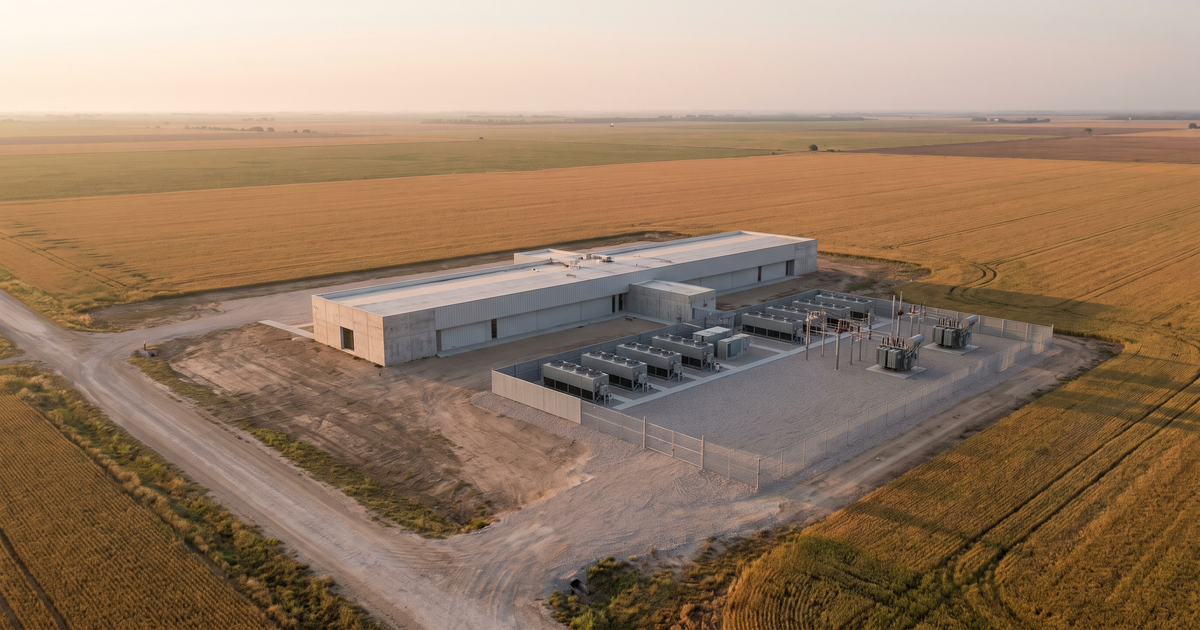
Featured and social artwork: AI-generated editorial concepts, not actual project renderings or construction photographs.
Join 35,000+ Low Voltage Pros
Get weekly permit updates, tool deals, job opportunities, and industry news. No spam, unsubscribe anytime.