
Join Low Voltage Nation — Find project opportunities and showcase your company to thousands of industry professionals
SOAR reports equipment installation at its Chillicothe mill conversion. Owner materials name CK Construction and outline compute-inclusive budgets, with funding and IT-load caveats.
SOAR AI is converting part of a former paper mill in Chillicothe, Ohio, into an AI compute facility. Its October 20 construction update reports transformer and cooling-equipment installation, with first customer service targeted for December 31. For low-voltage contractors, the useful signals are the active conversion, a newly identified construction manager and operator recruiting that explicitly describes fiber, cabling and controls work.
The project also needs careful separation of its headline numbers. A corporate equity facility, customer orders, a deployment budget that includes computers and site power all describe different parts of the business. None establishes an available cabling subcontract. This report follows the owner’s construction update, its public investor materials and local reporting, then identifies the practical questions a trade partner should resolve.
Project snapshot
| Item | Reported position | Qualification |
|---|---|---|
| Location | Chillicothe, Ohio | Existing industrial conversion |
| Construction | Power and cooling installation | Owner report, October 20 |
| First service | December 31, 2026 target | Delivery and acceptance pending |
| Site power | 154 MW; 480 MW roadmap | Owner claims; IT load unverified |
| Construction manager | CK Construction | Named in owner presentation |
| Construction-only cost | Undisclosed | Compute-inclusive budgets differ |
An industrial conversion with several boundaries
The Chillicothe Ross Chamber’s September public-meeting recap describes approximately 6.5 leased acres within a roughly 490-acre former Pixelle industrial property owned by US Paper Mill. It identifies a data hall alongside electronics manufacturing. Those figures describe the lease and wider property respectively; the entire mill should not be presented as a completed AI campus.
Alignment Engine’s North Canton headquarters is separate from the Chillicothe project location. Current parcel boundaries and the precise hall street address remain unverified in this review. That matters when connecting permits, utility documents and contractor references: a headquarters address can produce a convincing but incorrect location match.
The Chamber separately reported an 8–1 vote lifting the city’s moratorium in September. That report establishes a change in local policy. Individual building, electrical, environmental and occupancy approvals still require their own records. Contractors should obtain the applicable permit set and approved work boundaries before treating the policy decision as clearance for a particular installation.
What the newer investor presentation adds
SOAR’s investor-relations website links an October presentation dated October 21 on its landing page. The publicly linked deck identifies Building 285 and names CK Construction as construction manager at risk. It also says the owner procures major equipment, with Supermicro server systems and DDN storage named elsewhere in the presentation.
The deck describes a 25 MW Phase I design block, 49 MW of lease power by February 2027 and approximately $730 million for Phase I including compute. Its capital table shows about $1.326 billion of initial Phase I and II uses. These are management planning disclosures. Construction-only capex and completed financing remain unverified.
Its GPU totals and phase labels also differ from the deployment counts in the October 20 release. The deck uses a 9,216-GPU Phase I configuration and 4,000-GPU customer orders; the release describes deployments of 4,096 MI355X and 4,032 MI455X GPUs. Their configuration, contracted and installed meanings require reconciliation. We therefore retain the source labels instead of merging them into one supposed delivered total.
Who is named, and what each role means
| Organization | Documented role | Evidence boundary |
|---|---|---|
| SOAR AI | Developer/operator parent | Formerly Volato |
| Alignment Engine | Compute/manufacturing operator | Distinct from Aligned Data Centers |
| US Paper Mill | Industrial landlord | Chamber meeting account |
| CK Construction | Construction manager at risk | Owner deck; packages undisclosed |
| AMD | Named GPU platform | No construction award implied |
| Supermicro | Server systems | Owner-described supply chain |
| DDN | Storage systems | Owner-described supply chain |
A construction-manager identification gives contractors a useful starting point for procurement research. It does not settle who buys every system, especially where the owner supplies major equipment. Network components, facility cabling, controls integration, electrical work and commissioning can have different commercial boundaries. The electrical, fiber, security, fire-alarm and controls subcontractors have not been identified in the reviewed evidence.
The company links above are identity and resource links. Project involvement comes from the cited owner and local documents. A corporate homepage by itself is insufficient proof of an awarded project role. Likewise, a named equipment brand should not be treated as a bid contact for unrelated building systems.
Power and equipment installation are separate milestones
SOAR says existing substation, medium-voltage distribution and turbine-backup systems are commissioned. Its 154 MW available-power claim and 480 MW roadmap concern the wider site. Neither figure establishes present customer-serving IT load. The phase-design and lease figures in the investor deck add useful context, but cannot be summed into a larger operating-capacity number.
The owner targets December 31 for the initial GPU deployment and June 30, 2027 for the next contractual service milestone. Customer acceptance remains consequential. For a trade contractor, an equipment delivery, installation completion, tested circuit and accepted customer service are separate events, with separate handoff responsibilities.
One terminology trap deserves attention: the release’s reference to low-voltage transformers concerns electrical power distribution. In LVN’s trade context, low voltage commonly covers communications, security and controls. The transformer installation is a construction-progress signal; it does not establish a structured-cabling award or justify a cable-quantity estimate.
Financing: retain the conditions and the scope
The October 12 financing announcement describes an optional equity facility with a ceiling of $1 billion. Share sales depend on registration and are constrained by trading volume, ownership and issuance limits. The company controls whether it draws, and the stated growth plan includes Ohio and potential additional sites. The maximum facility size is not an Ohio construction appropriation or evidence that cash has arrived.
The same announcement describes $1.17 billion of aggregate four-year customer orders and approximately $133 million of contractual prepayments. Those categories must remain separate from recognized revenue, received cash and construction expenditure. The investor deck’s proposed debt, equity and customer-funding mix likewise requires closing and receipt evidence before it can be described as fully funded.
For estimating, the practical consequence is straightforward: obtain the actual package scope, buying entity, commercial terms and release schedule. Applying a low-voltage percentage to the equity ceiling, order value or computer-inclusive deployment budget would mix unrelated categories and produce an unsupported opportunity value. No such estimate is assigned here.
Where low-voltage work becomes relevant
| System | Evidence or relevance | Question to resolve |
|---|---|---|
| Fiber/networking | Operator lists testing and handoffs | Who buys installation? |
| Structured cabling | Technician duties include copper/fiber | What is the approved design? |
| Controls/BMS | Operator lists controls technicians | Who owns each interface? |
| Access/CCTV | Prospective facility systems | Which integrator and scope? |
| Fire/life safety | Prospective conversion interfaces | What does the AHJ require? |
| OSP/commissioning | Potential routes and acceptance | Which tests and boundaries? |
The first three rows have support in the operator’s job descriptions. They establish relevant work disciplines, while quantities and subcontract awards remain unverified. The other rows are practical areas to investigate in an industrial conversion. They are not confirmed procurement packages.
Our contractor-readiness assessment starts with interfaces. Establish the carrier demarcation, facility-network boundary, equipment-supplier responsibilities and owner acceptance process. Ask who provides pathways, patching, labeling, test limits and final drawings. A team can be technically capable and still price the wrong responsibility if those boundaries remain implicit.
Existing industrial infrastructure also makes current drawings and field verification valuable. Verify usable pathways, access restrictions, work sequencing and coordination with neighboring operations. Any proposed route should be checked against the actual building conditions and approved design. These are due-diligence questions for the project team, rather than claims that a specific deficiency exists at Chillicothe.
Jobs, trades and preparation
Alignment Engine’s current careers page advertises 240 positions across 73 roles on a rolling basis across computing and electronics manufacturing. Selected listings include four network technicians, eighteen data-center technicians, three controls/BMS technicians and four network engineers. The page confirms recruitment activity; this review did not verify remaining vacancies or actual hires. No construction-job total is established.
For technicians, the relevant preparation includes fiber inspection and testing, copper/fiber installation, accurate labels, network turn-ups, documented troubleshooting and controlled changes. Controls candidates should understand how field devices, sequences, alarms and operator handoffs fit together. Applicants should check the individual posting for qualifications and ask whether hiring is immediate or tied to a future phase.
The Fiber Optic Association’s workforce resources offer a general starting point for training and certification. CK’s careers and apprenticeship page is another company resource, but it does not establish a Chillicothe assignment or a current seat in a particular program. Confirm site onboarding, safety training, lift access, supervision and any required credentials with the actual employer.
What would strengthen this opportunity
The next useful evidence is specific: an approved building address and permit set; confirmed package buyers and bid dates; identified electrical and low-voltage trade partners; equipment delivery and acceptance records; and financing disclosures that establish actual funding. Reconciliation of the owner’s phase and GPU counts would also make the commercial schedule easier to evaluate.
Chillicothe already offers a substantive construction and workforce story. The strongest contractor approach is to connect the documented project team to a clearly defined scope and delivery milestone. Follow this project and other source-backed construction opportunities through LVN Signal, then verify procurement details with the responsible organization before committing estimating time.
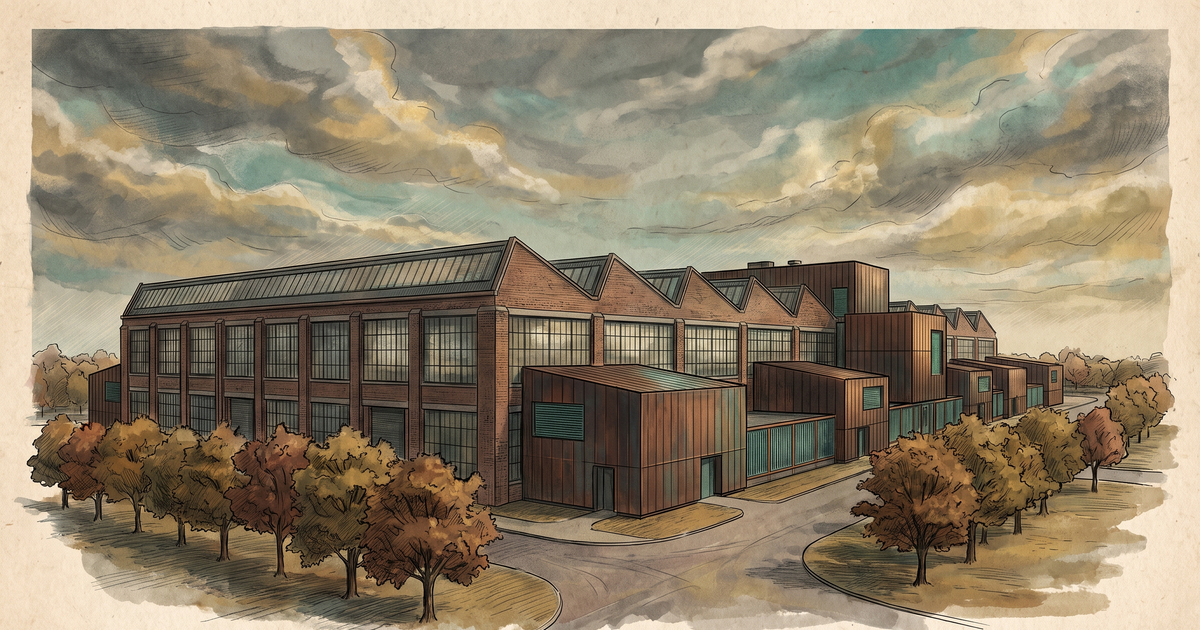
Reporting checked October 22, 2026. Featured and social artwork is AI-generated illustration; it does not depict a verified site layout or current construction photograph.
Join 35,000+ Low Voltage Pros
Get weekly permit updates, tool deals, job opportunities, and industry news. No spam, unsubscribe anytime.