Join Low Voltage Nation — Find project opportunities and showcase your company to thousands of industry professionals
The Saline Township AI data center is now a $16B, 1 GW-plus Signal record with named developers, Walbridge as GC, trade partners, jobs, skills, and low-voltage scopes worth watching.
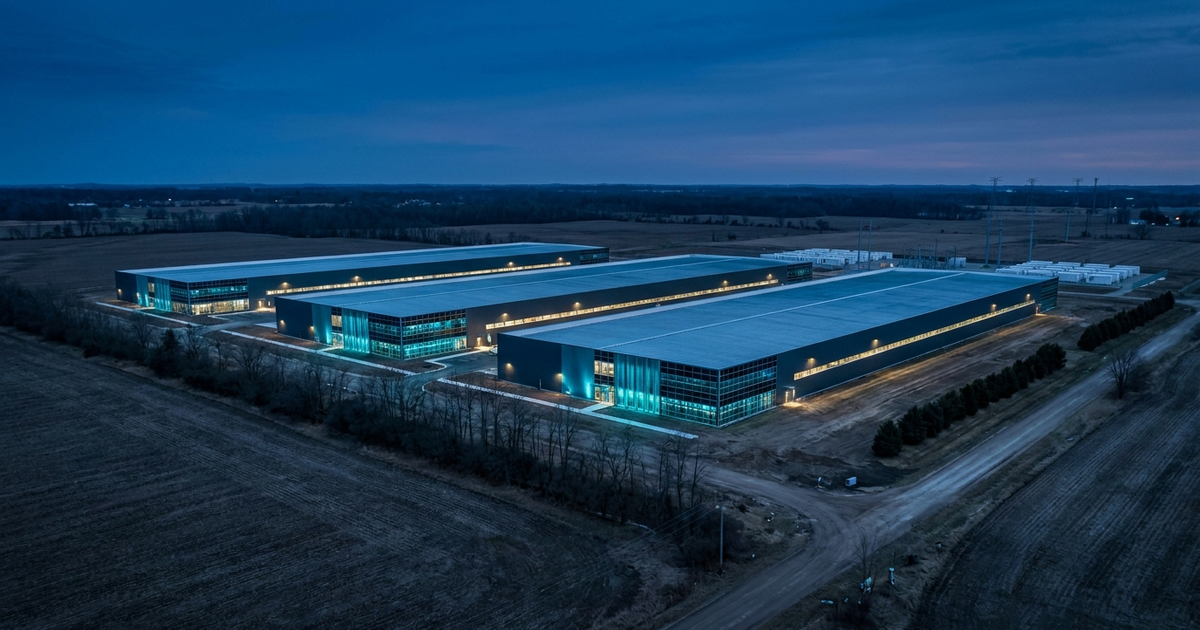
AI infrastructure is not an abstract software story anymore. In Saline Township, Michigan, it is a construction site, a power problem, a workforce story, and a real low-voltage opportunity. Related Digital's project known as The Barn gives Low Voltage Nation a clean example of how AI data centers turn into work for contractors, techs, vendors, and training partners.
The public source stack is strong. Walbridge says it is serving as general contractor. Kirkland and Ellis describes a $16 billion lease and financing package. Related Digital's Michigan project page describes the 250-acre campus, more than 1 GW of capacity, three 550,000-square-foot buildings, and the job counts. Michigan Public reports that major construction is underway and adds local context around financing, power, and community questions.
Project Snapshot
| Item | Public Detail |
|---|---|
| Project | Related Digital The Barn, Saline Township, Michigan |
| Use | Hyperscale AI data-center campus |
| Scale | More than 1 GW of planned capacity across three large data halls |
| Investment | About $16 billion, according to the financing announcement |
| Jobs | 2,500-plus union construction jobs and 450-plus on-site permanent jobs |
| Power | DTE Energy supply, with battery storage and infrastructure commitments described by Related Digital |
For LVN, the headline is not only the dollar amount. The signal is that a regional builder is calling this the largest project in its 110-year history, and the project is tied directly to AI infrastructure. That means data centers are no longer a niche mission-critical market that only a few national players need to watch. They are becoming regional construction ecosystems.
Named Companies And Contractors
The named-company list is useful because it shows the full stack: developer, GC, utility, capital, AI customer demand, and trade partners. We should be careful not to overstate any contractor's scope unless a source says it directly, but the public names still matter. They tell contractors and vendors which companies are already near the work.
| Company | Public Role | Link |
|---|---|---|
| Related Digital | Developer / data-center platform | Project page |
| Walbridge | General contractor | Announcement |
| DTE Energy | Power utility | DTE |
| Oracle / OpenAI | AI compute demand tied to the campus | Financing source |
| Kais-Air | Skid assemblies and hot aisle containment, according to Walbridge | Kais-Air |
| Motor City Electric | Named local trade partner | Motor City Electric |
| Superior Electric Great Lakes | Named local trade partner | SEGLC |
Walbridge also names Progressive Mechanical, John E. Green, Shaw / E-J Electric, Triangle Electric, and Universal Piping Industries as local trade partners. Even when the exact low-voltage package is not public yet, those names are worth watching because electrical, mechanical, piping, containment, security, controls, and commissioning timelines usually create downstream work for LV techs and vendors.
Where Low Voltage Shows Up
A gigawatt-scale data-center campus is not just racks and generators. It is a high-coordination low-voltage environment spread across fiber, security, life safety, controls, communications, pathways, testing, documentation, and commissioning.
| Scope | Why It Matters |
|---|---|
| Outside plant fiber | Multiple data halls need campus backbone, carrier entrances, utility coordination, testing, labeling, and protection. |
| Structured cabling | Data halls, support spaces, security rooms, controls closets, and operations areas all need clean, documented cabling. |
| Access control and CCTV | Perimeter, gates, mantraps, critical rooms, loading areas, and operations spaces create major security integration work. |
| Fire alarm and life safety | Large data halls, battery systems, mechanical spaces, and egress paths require clean AHJ coordination and closeout. |
| BMS/BAS and controls | Cooling, containment, power monitoring, environmental sensors, and alarms all depend on controls wiring and commissioning discipline. |
| DAS / radio coverage | Large buildings and dense equipment environments can drive public-safety radio coverage and RF coordination needs. |
| Commissioning support | Data centers punish sloppy documentation. Test reports, labels, redlines, photos, and turnover packages become part of the job. |
Jobs And Skills Angle
The jobs story is not generic AI hype. Walbridge says more than 200,000 union trade hours have already been logged and describes a Safety and Quality Center on the campus to support electrical apprentice training. Related Digital says the project will create more than 2,500 union construction jobs, more than 450 on-site jobs, and 1,500 county-wide jobs.
For low-voltage techs, the practical skill path is clear: fiber termination and testing, structured cabling, access control, CCTV, fire alarm coordination, BMS/BAS exposure, cable tray and pathway literacy, print reading, grounding and bonding basics, safety readiness, and clean closeout documentation. The useful links to start with are BICSI Installer 2, Optical Fiber, BICSI Installer 2, Copper, BICSI data center and ICT courses, FOA fiber workforce resources, and the OSHA Outreach Training Program.
Contractors should read this as a prequalification story. A crew that can show clean QA, safety readiness, fiber testing discipline, camera/access control experience, fire alarm coordination, and commissioning etiquette is easier to trust on a mission-critical site. Vendors should read it as a training and product-packaging story. The winning pitch is not just parts. It is fewer field mistakes, cleaner documentation, faster closeout, and techs who understand the environment.
What To Watch Next
The public record does not yet name every low-voltage subcontractor or every package. That is normal this early in a large build. The next useful signals are contractor hiring posts, trade partner updates, electrical package movement, utility filings, security-system references, controls vendor mentions, fiber-provider activity, site photos, and local permit or inspection milestones.
For the broader LVN audience, the takeaway is simple: AI data centers are becoming a construction market, not just a tech headline. Every large campus creates real demand for cabling, fiber, security, life safety, controls, documentation, commissioning, and trained field labor. The companies that prepare before the bid invite goes out will be in a better position than the ones who wait until the project is already staffed.
Contractor Takeaway
If you are a contractor, tighten your data-center resume now. If you are a tech, start documenting the systems you have touched and the test results you can produce. If you are a vendor, build training and sales material around the actual field problems these sites create: speed, documentation, repeatability, safety, testing, labeling, and commissioning.
LVN Signal is building a dedicated AI data-center intelligence layer so contractors, techs, vendors, and the broader LVN audience can see projects like this earlier, understand the companies involved, and turn infrastructure news into pipeline. Track projects like this at Low Voltage Nation Signal.
Join 35,000+ Low Voltage Pros
Get weekly permit updates, tool deals, job opportunities, and industry news. No spam, unsubscribe anytime.