
Join Low Voltage Nation — Find project opportunities and showcase your company to thousands of industry professionals
RB Inyokern proposes two fiber networks and a 99 MW generator output limit. Explore the named teams, forecast jobs and unresolved permits.
A proposed AI data center in Inyokern, California, puts two separate fiber networks and a generator-control problem into public view. R&L Capital's RB Inyokern Data Center would bring six data halls to the western Mojave Desert. For low-voltage contractors, the useful detail is in the communications routes, equipment interfaces and review questions that could shape future packages.
As of October 2, 2026, the California Energy Commission project page lists the proposal as under review. The latest substantive staff request reviewed is dated September 25. A campus construction start, tenant commitment, project financing and installation awards remain unverified. This is an early opportunity to understand a proposed build and its constraints.
The proposed campus and its capacity figures
The May 8 application describes approximately 238,000 square feet across six data halls on about 50 acres near US-395 and State Route 178 in unincorporated Kern County. Those headline dimensions follow the main application and CEC summary; an older appendix drawing carries different floor-area and acreage figures.
| Item | Reported basis | Qualification |
|---|---|---|
| Stage | Proposed; CEC review | No verified construction start |
| Building | About 238,000 sf; six halls | Applicant design |
| IT load | About 70 MW | Conflicting wording elsewhere |
| Facility load | Up to 99 MW | Design demand |
| Generators | 120 MW nameplate | Proposed 99 MW output limit |
| Investment | Unverified | No defensible trade budget |
| Schedule | Conditional 2027 start | 2029/2031 targets conflict |
The main load breakdown assigns roughly 70 MW to IT equipment and 99 MW to the overall facility at full buildout. Section 4.6 also contains a sentence calling 99 MW IT capacity, while its adjoining phased-load table uses 70 MW IT. That inconsistency needs an applicant clarification. Neither number establishes an energized load today.
Backup generation uses another basis: forty generators rated at 3 MW each total 120 MW of nameplate capacity. The applicant proposes limiting their combined output to 99 MW. In its July response, R&L discusses that operating limit and revises an earlier operating assumption. CEC staff still seeks technical evidence showing how the limit would work. Contractors evaluating equipment or testing scope should keep those definitions attached to every capacity number.
Commercial fiber and utility fiber have different jobs
The application's communications section identifies Onward as the proposed commercial fiber provider and references an August 6, 2025 service confirmation letter. It describes Digital 395 as a 432-strand network in three conduits, with north/south route diversity. Onward's own network page supplies broader Digital 395 context. The described backbone configuration does not establish a campus fiber installation award or the number of strands a tenant will receive.
A second communications system belongs to Southern California Edison. The proposed SCE routes would use 48-strand single-mode fiber for protection and control between the existing Inyokern Substation and the project point of interconnection. The applicant gives approximate route lengths of 3,200 feet and 8,250 feet, with separate alignments for redundancy. These routes are independent of Onward's commercial network.
That separation changes the questions a contractor should ask. Commercial connectivity requires carrier handoff, entrance, pathway and service-boundary information. Utility protection communications require the utility's approved equipment interfaces, testing procedures and acceptance responsibilities. Treating all those feet and fibers as one campus cabling package would obscure who buys the work and who accepts it.
September staff questions also request geospatial information for the utility fiber routes, subtransmission lines, substation expansion, site boundary and staging areas. Final engineering and route permissions remain consequential. Upstream carriers named in the application describe network interconnections; the reviewed evidence does not establish them as campus tenants or direct construction partners.
The 99 MW limit creates a controls and commissioning question
In Data Requests Set 2, CEC staff asks for an electrical one-line showing the proposed power-limiting system. Requested detail includes measurement points, protective relays, breaker trip or interlock functions, and connections between generator yards and medium-voltage switchgear. Staff explains that this information is needed to assess the proposed physical generating limit.
For controls and commissioning firms, this is a concrete technical interface to follow. The installation package, responsible integrator and accepted functional-test protocol remain unresolved. A future package could require coordinated work across generator controls, switchgear protection and monitoring, but its procurement scope must come from issued documents.
The application specifies Caterpillar 3516E generators and Johnson Matthey CompactSCRT emissions treatment. Those are design references. Purchase orders and deliveries have not been verified. The applicant describes Tier 2 base engines with external treatment targeting Tier 4-equivalent stack emissions; that should not be presented as factory Tier 4 engine certification. September requests seek additional technical substantiation, including emissions calculations.
Who is named, and what their role actually establishes
The public filings identify a development and review team before they identify a construction procurement team. The application preparer list names R&L Capital, Valley Wide Engineering & Construction and Jun Y Lee LLC. Company capabilities provide context; a project-specific role requires project-specific evidence.
| Organization | Verified role | Evidence |
|---|---|---|
| R&L Capital | Owner/applicant | Application |
| Valley Wide | Preparer; project management | Preparer list |
| Jun Y Lee LLC | SPPE/CEQA preparer | Preparer list |
| Circle Mountain | Biological consultant | Survey supplement |
| Southern California Edison | Proposed power/utility fiber | Utility design |
| Onward | Proposed commercial fiber | Service-letter reference |
| Inyokern CSD | Conditional water service | Appended letter |
| McWhirter Steel | Project supporter | Support letter |
| Caterpillar | Specified generator model | Applicant design |
| Johnson Matthey | Specified emissions treatment | Staff questions |
Valley Wide's website describes its engineering and construction business; its evidenced RBIDC assignment is application preparation and project management. A campus GC award remains unverified. Circle Mountain Biological Consultants has stronger evidence of a specific completed assignment: the September supplement documents its R&L contract and field surveys conducted in July and September. Survey work establishes environmental-consultant activity.
McWhirter Steel submitted a supportive letter, dated May 28 and docketed September 8. It establishes the company's support for the proposal. It does not identify an awarded steel package. The same discipline applies to low-voltage firms: no cabling, security, fire alarm, BMS or commissioning installation award was verified in this review.
Where low voltage could become bid scope
| System | Evidence today | Next useful detail |
|---|---|---|
| Commercial fiber / OSP | Onward route concept | Campus handoff and installer |
| Utility fiber | SCE protection routes | Approved routes and acceptance |
| Power controls | CEC requests limit design | One-line and test protocol |
| Access / CCTV | Applicant security design | Device schedule and integrator |
| Structured cabling | Prospective trade scope | Issued layouts and quantities |
| BMS / fire interfaces | Prospective trade scope | Point lists and package owner |
The application explicitly describes controlled access and round-the-clock CCTV. Those statements support watching for security design and procurement. They do not establish camera quantities, a selected access-control platform or an integrator. Structured cabling, cooling-monitoring interfaces and life-safety integration are prospective LVN analysis based on the facility type; issued specifications must establish the actual packages.
A useful early contractor capability statement would explain fiber splicing and testing, pathway coordination, labeling, equipment integration and turnover documentation. It should separate commercial IT experience from utility or operational-technology experience. A shared location does not automatically create shared procurement, access rules or commissioning authority.
Jobs, trades and preparation
The applicant forecasts approximately 300 average and 600 peak construction workers, plus 30–60 permanent employees. September staff requests confirm that the 600-worker peak excludes SCE's subtransmission, utility fiber and substation workforce. The total combined construction peak therefore remains unresolved. These are planning forecasts, with no verified active hiring total or executed project labor agreement.
Potential work spans civil pathways, electrical coordination, single-mode fiber, security, controls and commissioning. General preparation can include FOA workforce training and BICSI communications training. Practical capabilities include clean fiber inspection, splicing, loss testing, OTDR records, route documentation, grounding and bonding coordination, and accurate as-built labeling. These are preparation areas, not published RBIDC credential requirements.
OSHA Outreach training provides general hazard-awareness education. Employer and site onboarding requirements would still need verification. Entry-level workers can build pathway, labeling and documentation skills under supervision; experienced technicians can prepare to handle testing, system integration and witnessed turnover. A forecast employment number should never be presented as an available vacancy.
Water, permissions and timing remain material
Indian Wells Valley Water District's August comments question the applicant's water-demand and supply assumptions. The filing includes a conditional April 2 will-serve letter from Inyokern Community Services District. These are separate agencies. The commenting district's concerns are attributed positions, while water-service and annexation questions remain unresolved; the record reviewed does not justify calling water secured.
The applicant proposes construction in 2027 after required approvals. Its narrative describes approximately 48 months and full operation in 2031, while Table 1-2 lists 2029. Temporary 20 MW service in mid-2028 is being evaluated. Those statements need reconciliation before a contractor relies on a mobilization or occupancy date. A CEC exemption decision would also leave other applicable permissions to be addressed.
The public docket is the next place to watch for revised engineering, staff analysis and applicant responses. The most useful milestones are an accepted power-limit design, clarified utility and water arrangements, aligned construction dates, and identifiable procurement contacts or bid packages. Project financing, tenant commitment and overall construction value still need evidence.
Research the opportunity in LVN Signal
RB Inyokern offers unusually specific early clues about commercial connectivity and utility communications. Its value to contractors is the ability to understand those interfaces while the project is still in review. A bid decision should follow clearer scope, approvals and purchasing responsibility.
Use LVN Signal to research construction projects, named organizations and low-voltage opportunities. For this campus, the map uses an Inyokern locality marker until a precise site point is verified. Read the sources, identify the package owner and verify the current stage before committing estimating time.
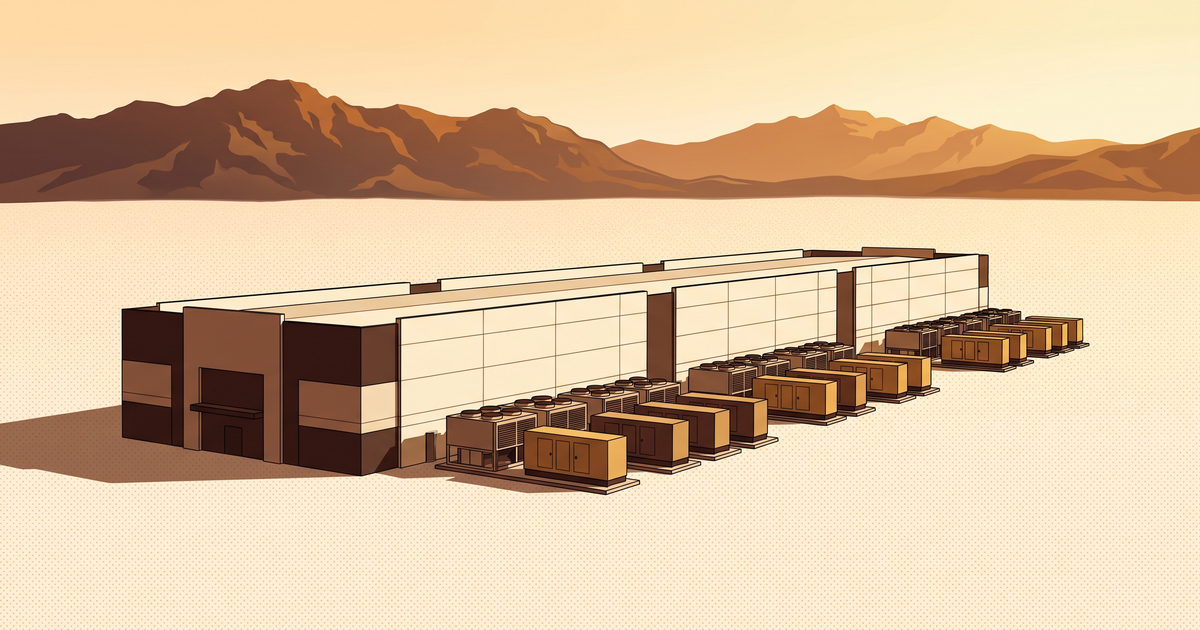
Featured and social artwork are AI concept illustrations, not photographs or an approved campus rendering. Reporting checked October 2, 2026.
Join 35,000+ Low Voltage Pros
Get weekly permit updates, tool deals, job opportunities, and industry news. No spam, unsubscribe anytime.