
Join Low Voltage Nation — Find project opportunities and showcase your company to thousands of industry professionals
A proposed 1.25 GW campus near Casper adds a prospective power partner. Read the permitting position, qualified company roles and potential low-voltage scope.
Prometheus Hyperscale and Mesa Power Solutions are exploring a proposed AI data-center campus at Falls Ranch near Casper, Wyoming. Their August 28 announcement gives contractors a named prospective power partner to follow. Executed equipment orders, financing and construction awards remain unverified.
The developer's current Casper project page forecasts 1.25 gigawatts of IT-ready capacity across multiple phases. Falls Ranch remains a planned development entering local review. That combination makes it an early relationship-building opportunity for electrical, fiber, controls and security firms, with substantial work still required before a trade contractor can price a defined package.
What is proposed near Casper
Cowboy State Daily's September 2 meeting report describes approximately 640 acres for data centers and 300 acres for power, south of Interstate 25 on Falls Ranch. It reports that the prospective tenant wants clarity on permitting before committing. Exact parcel boundaries, land control and a current delivery schedule remain unresolved in the evidence reviewed for this article.
| Project fact | Current position | Qualification |
|---|---|---|
| Location | Falls Ranch, Natrona County | Near Casper; parcel unverified |
| Stage | Planned campus | Introductory local review |
| IT capacity | 1.25 GW forecast | Multiple phases; developer claim |
| Land area | About 940 acres reported | Proposed layout |
| Investment | Current total unknown | Historical initial target below |
| Construction start | Unverified | No current date established |
The September 1 county agenda lists an introductory Prometheus discussion. That entry establishes a public review milestone. It does not establish permission to begin construction. WyoFile's account of the workshop describes a request to use an industrial-park review approach and reports that commissioners took no action. The eventual zoning and state-review pathway remains a key execution question.
As of September 14, the published main agenda for the September 15 county meeting contains no named Prometheus item. Agendas can change, and that limited check cannot settle the status of applications or decisions elsewhere. Contractors should look for an actual filed plan and decision before treating a public discussion as a procurement trigger.
Keep capacity, investment and power on their stated bases
The October 2025 partnership announcement described up to 1.5 GW of IT-ready capacity, a minimum $500 million initial investment and a first-power target in 2026. Those are historical targets. The current project page uses 1.25 GW, while the reviewed evidence does not verify delivery against the earlier schedule or establish a current total campus budget.
The older announcement also described a separate 1.5 GW Orchard Power generation concept. Generation capacity and computing capacity have different meanings. Adding those figures would misstate the development's scale. Phase-specific electrical loads, operating reserve, auxiliary demand and the final generation configuration would be needed to understand how power reaches each data hall.
Mesa's $70 million Evansville manufacturing investment, cited in the August announcement, belongs to its supplier facility. It cannot be counted as Falls Ranch construction spending. The public information also provides no defensible dollar estimate for the campus's low-voltage packages. A useful estimate would require quantities, boundaries, installation conditions and commercial terms for the actual work.
The named companies and their qualified roles
The companies below have source-backed relationships to the evolving Casper proposal. The available evidence does not identify an awarded general contractor, EPC, electrical contractor or low-voltage integrator for Falls Ranch.
| Organization | Public role | Scope boundary |
|---|---|---|
| Prometheus Hyperscale | Developer/operator | Proposed campus |
| Mesa Power Solutions | Prospective power partner | Exploratory collaboration |
| Spiritus | Announced power/carbon partner | Current interface unresolved |
| Casper Carbon Capture / Live Oak | Announced storage partner | Revised-site scope unverified |
| Natrona County | Local review authority | Approval unverified |
Spiritus' own release describes the historical integration of on-site generation, carbon capture and storage. Prometheus still names Spiritus and Casper Carbon Capture on its Casper page. Neither that listing nor the new Mesa announcement resolves how the parties would divide the revised project. Carbon-negative operation remains a design objective; measured performance and storage authorization for the revised site have not been established here.
Prometheus also has a separate Evanston project and Texas relationships. Contractor names associated with those developments should be verified specifically for Falls Ranch before entering a sales plan. A company portfolio relationship alone does not identify the buyer for a Casper fiber, security or commissioning package.
Where low voltage could enter the project
The following is LVN's prospective scope analysis. These are practical work areas to investigate as designs and procurement emerge; quantities, bids and trade awards remain unverified.
| Potential work | Why it matters | Evidence to seek |
|---|---|---|
| Fiber and outside plant | Campus and carrier connectivity | Routes and handoff drawings |
| Cabling and pathways | Data-hall and facility networks | Tenant standards and quantities |
| Access control and CCTV | Perimeter and building security | Device plans and buyer |
| Fire-alarm interfaces | Life-safety coordination | Approved cause-and-effect plans |
| Controls and telemetry | Power and cooling visibility | Points list and integration scope |
| Testing and commissioning | Documented system acceptance | Test criteria and responsibility |
For outside-plant firms, the first useful questions concern campus entrances, carrier responsibilities, pathway ownership and interfaces with civil work. An issued route drawing could make a lead actionable long before a data hall is occupied. A marketing acreage figure cannot answer whether duct banks, vaults, splicing or restoration belong to one contractor's scope.
For structured-cabling firms, a capability statement should distinguish pathway installation, termination, testing and documentation. Tenant equipment choices and network architecture would affect the eventual bill of materials. Estimating fiber counts from the campus's announced megawatts would introduce unsupported precision.
Mesa describes generation, distribution equipment and telemetry capabilities. That creates a reasonable controls-and-monitoring angle to investigate. It does not prove that a particular system has been ordered for Falls Ranch. An integrator would need the equipment interfaces, communications protocols, alarm ownership and acceptance requirements before quoting an integration package.
Security and life-safety contractors face a similar boundary. A conceptual secure campus does not establish camera counts, reader counts, fire-alarm device requirements or emergency-radio coverage. Design teams and the authority having jurisdiction would determine those requirements. DAS or public-safety radio work should remain conditional until the design and coverage requirements are known.
Cooling and power claims need phase-specific documents
The developer's Casper-linked FAQ describes closed-loop PG-25 cooling and on-site gas generation. It separately discusses domestic and generation-related water uses and contemplates possible future grid connection. The document is undated and includes generic references, so it should be treated as developer design context rather than an issued engineering specification.
For trades, the useful documents would be the approved equipment schedules, cooling diagrams, electrical single lines, controls points lists and commissioning sequences. Those documents could show where electrical, mechanical, controls and network responsibilities meet. They would also help distinguish a vendor's factory commissioning from site integration and final owner acceptance.
Until those details are available, claims of zero campus-wide water use, permanent independence from the grid or verified carbon-negative performance would exceed the evidence. The immediate question is which designs, service agreements and permits support each proposed phase.
Jobs, skills and a real vendor-interest route
September meeting coverage attributes forecasts of 3,000 construction jobs and 150 operations jobs to the developer. The undated FAQ separately forecasts 3,800 construction workers at peak and a broader range of permanent roles. The definitions and revision dates are unresolved. These figures describe expected workforce demand; they are not verified openings, current headcount or a reason to reserve crews.
Prometheus' vendor and partner interest form explicitly offers Falls Ranch (Casper) as a project choice. It accepts company details, relevant experience and optional capability documents, while stating that submission guarantees no work. A focused introduction can identify the service territory, available supervision, relevant projects and the precise systems a firm can deliver.
Mesa's careers page is a separate company-wide resource. Applicants should verify the location, employer and project assignment of each vacancy. Supplier hiring can be useful regional context without establishing that a job belongs to this campus.
For fiber technicians, the Fiber Optic Association's installation guidance provides a practical preparation path covering planning, installation, testing and records. Connector inspection and cleaning, documented test methods, cable identification and accurate as-builts are useful skills to demonstrate. Project-specific acceptance criteria must still come from the buyer.
Controls and security teams can prepare examples of point-to-point verification, alarm testing, coordinated turnover and clear responsibility matrices. Grounding and bonding, cable-tray coordination, lift access and work around energized equipment require the appropriate trade competence and site procedures. OSHA Outreach is general safety education, not a certification or a replacement for required task-specific training. No Falls Ranch credential or prequalification list was verified.
The next milestones that would change the opportunity
A submitted site plan, land-control evidence and county/state decisions would clarify whether the project can proceed on its proposed footprint. Phase-specific power and gas agreements would clarify the delivery basis. A tenant commitment and financing disclosure would strengthen the commercial picture. Named construction leadership and released packages would finally identify who is buying each trade's work.
For now, contractors can make a measured introduction through the developer's published channel, then request procurement instructions when scopes are defined. Ask for the package name, contracting entity, drawing revision, bid deadline and qualification requirements before committing substantial estimating effort. Those details turn a large development announcement into a decision a business can act on.
Explore LVN Signal for construction opportunities and project intelligence. Use the linked sources to check the current stage and responsible companies, then verify the latest procurement documents before pursuing work. Falls Ranch is worth following because a named regional power supplier and a public vendor-interest route now accompany the campus proposal.
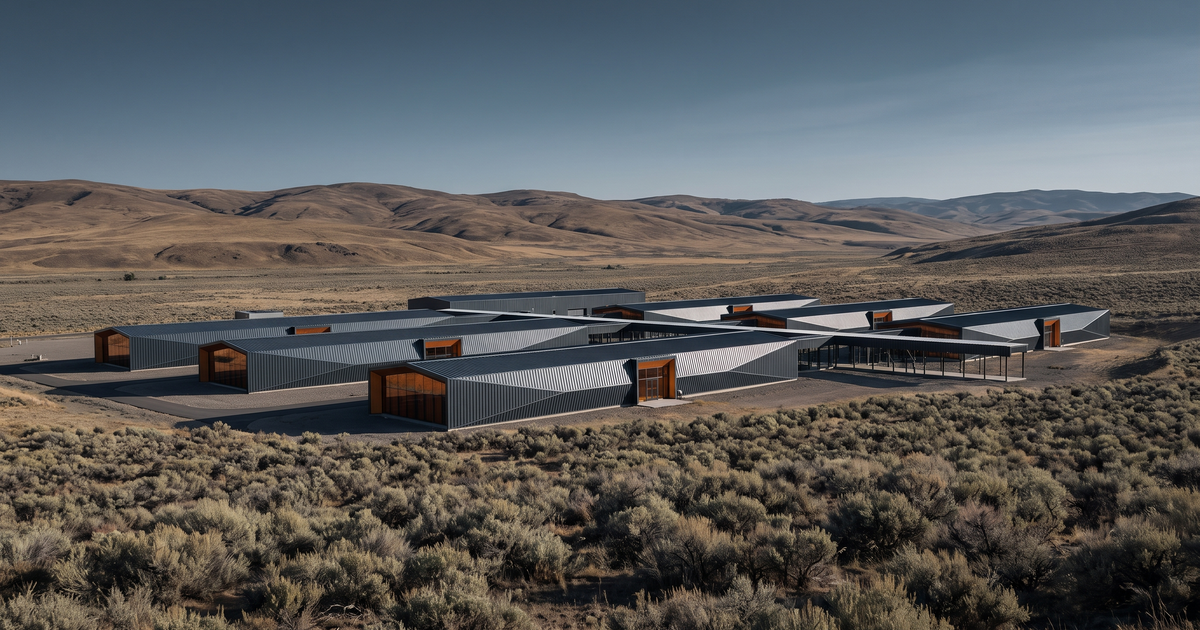
Reporting reviewed September 14, 2026. Featured and social artwork are AI-generated editorial illustrations; they do not depict an approved site layout or verified construction progress.
Join 35,000+ Low Voltage Pros
Get weekly permit updates, tool deals, job opportunities, and industry news. No spam, unsubscribe anytime.