
Join Low Voltage Nation — Find project opportunities and showcase your company to thousands of industry professionals
A $94,000 electrical permit at TierPoint's 2300 Locust data center identifies a focused VESDA early smoke detection package. The scope sits inside a newly available 3 MW critical-load facility, but contractors should verify current buyout status because Signal last tracked the permit in May.
A $94,000 VESDA fire-detection permit at TierPoint's 2300 Locust data center in St. Louis isolates a real low-voltage package inside a new high-density colocation facility. Unlike a percentage-based campus estimate, the selected permit is itself the specialty scope: aspirating smoke detection and the interfaces needed to make it work with the building's fire-alarm and pre-action systems.
Project Overview
Signal's St. Louis electrical-permit record identifies a VESDA installation at TierPoint's Locust Street data center with an estimated value of $94,000. The source row associates TierPoint with the facility and Sachs Electric Company with the permit. Because the source is an electrical-permit record rather than a public solicitation, it shows a tracked package and responsible parties; it does not prove that the work is still open for bid.
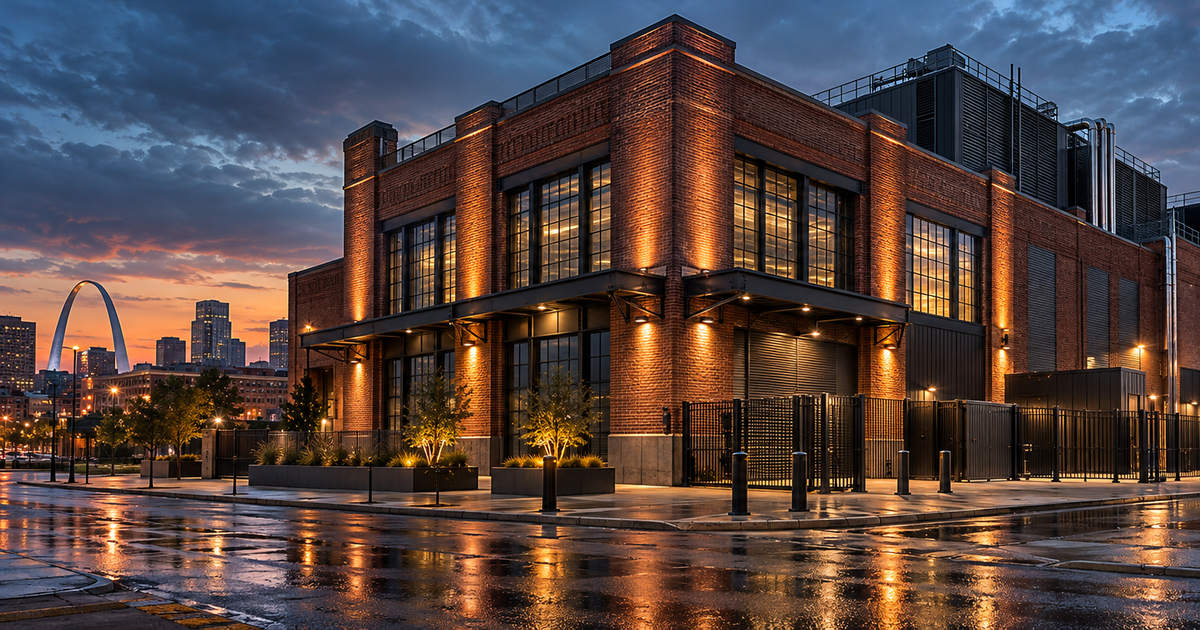
The surrounding facility is substantial. TierPoint acquired the 2300 Locust Street building in 2024 and announced an investment plan of up to $150 million. The building contains about 135,800 square feet. Phase one created roughly 22,600 square feet of production space with 5 megawatts of utility power and 3 megawatts of critical load.
TierPoint's current St. Louis–Locust facility page now marks the site available. It describes A/B power distribution, four 2-megawatt redundant generators, diverse fibre access, cabinets and cages, biometric access, 90-day CCTV retention and a 100% uptime service-level agreement. The company's facility material also identifies pre-action suppression, VESDA monitoring and BMS temperature-and-humidity monitoring.
| Selected Scope | VESDA aspirating smoke detection |
| Selected Permit Value | $94,000 |
| Facility | TierPoint St. Louis–Locust, 2300 Locust Street |
| Facility Program | Up to $150 million, reported separately from the selected permit |
| Phase-One Critical Load | 3 MW |
| Signal LV Score | 9/10 |
| Source | St. Louis City electrical-permit record |
Freshness note: Signal last tracked this permit on May 31, 2026, and the source row does not provide a filing, issue or inspection date. The facility is now marketed as available, so contractors should confirm the package's current status directly with the responsible team before treating it as bidable work.
Named Parties and Commercial Boundary
TierPoint is the source-backed owner and operator. The permit entity identifies Sachs Electric Company; Sachs now operates as ArchKey Sachs, a St. Louis-based electrical, technologies and specialty-services contractor. The record's generic “General Contractor” role should not be stretched into a claim that Sachs built the whole facility. For this article, Sachs is described only as the contractor associated with the selected electrical-permit row.
| Role | Party | What the Source Supports |
|---|---|---|
| Owner / Operator | TierPoint | Owns and operates the Locust Street data center. |
| Permit-Associated Contractor | Sachs Electric / ArchKey Sachs | Named on the selected electrical-permit record; exact subcontract and buyout structure are not public. |
| Permit Authority | City of St. Louis permit records | Source of the $94,000 VESDA package record. |
What the VESDA Package Actually Does
VESDA is a form of aspirating smoke detection. Instead of waiting for smoke to reach a conventional spot detector, a fan continuously draws air through a network of small sampling pipes into a highly sensitive detector. In a data center, that early warning can identify an overheating cable, power component or piece of equipment before smoke develops into a larger event.
The visible detector is only part of the package. The contractor must design sampling-hole size and spacing, route pipe through equipment-heavy rooms, calculate transport time, protect the network from damage, label every branch and test the installed system. Interfaces to the fire-alarm control unit, pre-action suppression sequence, BMS and operations workflow must be documented without creating nuisance alarms that undermine confidence in the system.
| Scope Element | Work Included | Primary Risk |
|---|---|---|
| Sampling Network | Pipe layout, supports, capillary drops, sampling holes and branch identification | Poor airflow or inaccessible maintenance points |
| Detector Equipment | Detector mounting, power, communications and zone configuration | Improper sensitivity or environmental compensation |
| Fire-Alarm Interface | Alarm, supervisory and trouble points; annunciation and sequence coordination | Ambiguous alarm levels or incomplete cause-and-effect logic |
| Pre-Action Interface | Coordination with suppression release logic and cross-zone requirements | Unwanted release or delayed response |
| Testing and Turnover | Airflow testing, transport-time verification, smoke testing, reports and as-builts | System passes visually but fails performance acceptance |
Seven Signal Systems: One Selected Scope
Signal lists seven low-voltage lanes because the facility uses a broader mission-critical stack. Only VESDA and its fire-alarm interfaces are selected by this permit. The other systems are valuable account context, but they must not be presented as part of the $94,000 package or as open awards.
| Signal System | Status for This Spotlight | Facility Context |
|---|---|---|
| VESDA | Selected permit scope | Aspirating smoke detection and performance testing |
| Fire Alarm | Direct interface scope | Alarm levels, annunciation, pre-action and sequence coordination |
| Structured Cabling | Context only | TierPoint advertises fibre and copper cross-connect capability |
| Access Control | Context only | Facility advertises secure two-factor and biometric access |
| CCTV | Context only | Facility advertises surveillance with at least 90 days of retention |
| Environmental Monitoring | Context only | BMS temperature and humidity monitoring are part of the facility stack |
| DAS / Radio Coverage | Unconfirmed context | No public package holder or facility specification was found |
Low-Voltage Value: $94,000, Not a Percentage
The correct value method is unusually simple. The selected construction record is already a low-voltage fire-detection project, so the full $94,000 permit value is the tracked specialty scope. Applying a generic data-center percentage to $94,000 would shrink a known LV package into a meaningless estimate.
| Selected Permit Value | $94,000 |
| Value Method | Direct scope value from electrical-permit record |
| Estimated LV Value | $94,000 |
| Facility Program Value | Up to $150 million, excluded from the selected-package calculation |
The $150 million facility investment provides scale context but is not added to the permit. It covers a broader conversion program with power, cooling, structure, network and tenant infrastructure. Likewise, the 3-megawatt critical-load figure is useful for understanding the site but unnecessary for valuing a permit whose specific LV amount is already known.
Skills and Certifications Required
This is a small package compared with a full data-center build, but it is not entry-level fire-alarm work. Aspirating detection succeeds or fails on design discipline, airflow math, interface logic and documented acceptance testing.
| Responsibility | Useful Credentials | Critical Skills |
|---|---|---|
| Design Oversight | NICET Fire Alarm Level III or IV; manufacturer design training | Sampling-network calculation, detector zoning, sequence-of-operations review |
| Installation Lead | NICET Level II+, Missouri/local licensing, manufacturer installation training | Pipe routing, device wiring, labeling, interface termination |
| Programming | Selected fire-alarm and aspirating-platform certification | Sensitivity levels, alarm thresholds, network communications, event mapping |
| Acceptance Testing | Manufacturer commissioning training; project-authority acceptance requirements | Airflow balance, transport-time tests, smoke tests, deficiency closure |
| Closeout | Mission-critical documentation experience | As-builts, test reports, point lists, change control and operator training |
Junior technicians can install supports, pipe and cable under supervision, but the contractor needs experienced leadership for calculations, programming and acceptance. Before mobilization, bidders should verify current City of St. Louis licensing, permit and inspection requirements and confirm which party owns the fire-alarm and suppression interfaces.
Contractor Playbook
The immediate commercial lesson is precision. A contractor calling TierPoint about “seven systems” would overstate the record. A better approach is to ask whether the Locust VESDA package has completed inspection, whether any phase-two expansion needs additional sampling zones and who owns service and testing after turnover.
ArchKey Sachs is the second route because the permit associates Sachs with the work and its local division markets electrical, technology and specialty capabilities. A qualified aspirating-detection subcontractor should lead with manufacturer credentials, testing equipment, data-center references and the ability to support phased or occupied-facility work without nuisance alarms.
The facility's current availability creates a longer account-development angle even if the selected permit is closed. New cages, density increases and customer fit-outs can change sampling layouts, fire-alarm zones, access permissions, camera coverage and environmental monitoring. That follow-on work must be verified as separate scope rather than assumed from the original permit.
Market Signal
TierPoint's Locust project is a useful counterweight to billion-dollar campus headlines. The opportunity here is a $94,000 specialty package with a named owner, a named permit-associated contractor and a specific performance outcome. For a regional life-safety integrator, that can be more actionable than a speculative campus value with no package holder.
The project also reinforces St. Louis as a connected regional data-center market. TierPoint links Locust to its Millpark and Olive facilities through DWDM, while the new site adds 3 megawatts of critical load and high-density capacity inside the city. That network of facilities creates recurring service, expansion and compliance work, but each opportunity still needs its own source-backed scope.
Most importantly, this spotlight separates facility capabilities from a selected permit. VESDA and fire-alarm interfaces are supported by the $94,000 record. Security, cabling, BMS monitoring and DAS are account context. That boundary keeps the contractor intelligence useful—and keeps a seven-system facility from turning into seven fictional awards.
Find Projects Like This on Signal
LVN Signal tracks construction permits and project intelligence with low-voltage systems, named parties and value context. Filter by city, system type and project value to find the next specialty package.
Join 35,000+ Low Voltage Pros
Get weekly permit updates, tool deals, job opportunities, and industry news. No spam, unsubscribe anytime.