
Join Low Voltage Nation — Find project opportunities and showcase your company to thousands of industry professionals
A $25 million tenant improvement at Prologis Rue Ferrari in San Jose is converting a 302,843 SF warehouse into an R&D facility requiring five low voltage systems including structured cabling, access control, and AV. DPR Construction leads the buildout, with an estimated $1.15 million in LV contract value.
A $25 million tenant improvement in San Jose is converting a 302,843-square-foot Prologis warehouse into a cutting-edge research and development facility, requiring five low voltage systems and creating an estimated $1.15 million opportunity for contractors in the Silicon Valley market.
Project Overview
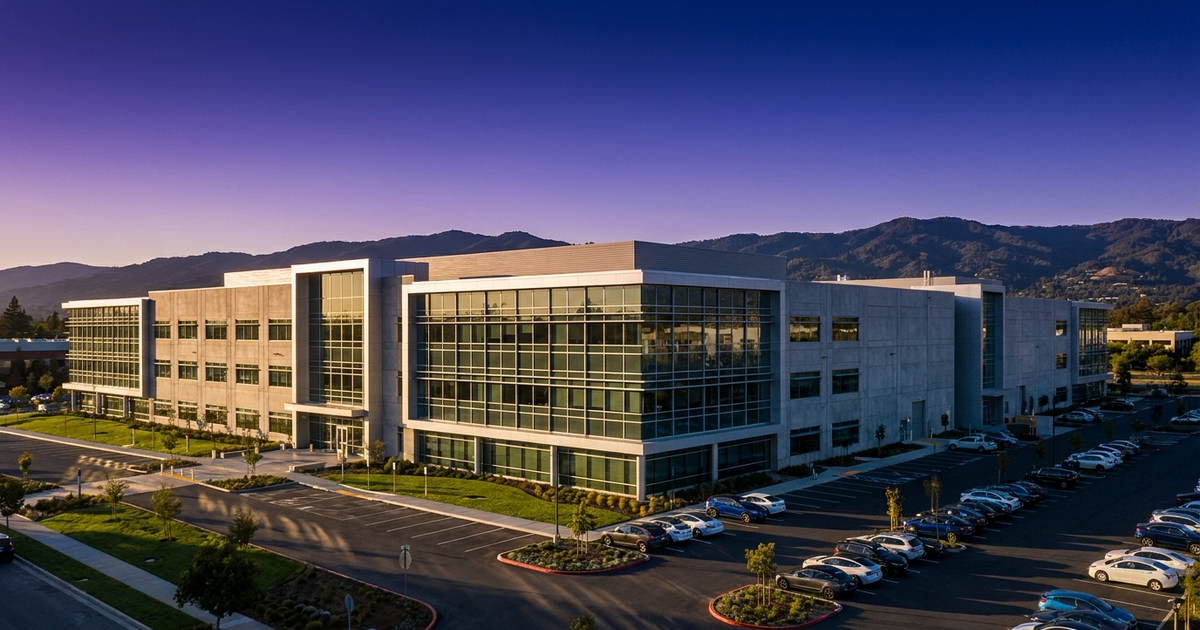
One of Silicon Valley's largest recent industrial-to-R&D conversions is underway at 5853 Rue Ferrari in San Jose, California. The $25 million tenant improvement project is transforming a massive Prologis-owned tilt-up warehouse — completed in 2024 on a 17.38-acre site — into a modern research and development facility capable of supporting advanced laboratory and technology operations.
The scope of work extends well beyond cosmetic renovation. According to permit records filed with the City of San Jose, the conversion includes the addition of backup generators, transformers, evaporative cooling chillers, and a step-down power transition yard to support research and laboratory uses. The facility boasts access to 99 megawatts of power, positioning it as a prime location for energy-intensive R&D tenants in sectors such as artificial intelligence, semiconductor testing, or advanced manufacturing.
With a current tax-assessed value of $132 million, the underlying real estate represents one of the most significant industrial assets in South San Jose. The tenant improvement permit signals that a major technology or life sciences tenant is preparing to occupy the facility, bringing substantial low voltage infrastructure requirements along with it.
| Project | Tenant Improvement - 5853 Rue Ferrari |
| Location | 5853 Rue Ferrari, San Jose, CA 95138 |
| Total Value | $25 million |
| Building Size | 302,843 SF on 17.38 acres |
| Project Type | Industrial-to-R&D Conversion |
| Status | Active |
| LV Score | 7/10 |
| Source | San Jose Building Permits |
Key Players
This project brings together a heavyweight roster of real estate and construction firms. Prologis, the world's largest industrial real estate company, owns the underlying property. DPR Construction — a nationally ranked ENR Top 20 general contractor headquartered in the Bay Area — is leading the tenant improvement buildout. Anna Purvis Architecture handled the building's design.
| Role | Company | Details |
|---|---|---|
| Owner | Prologis | World's largest industrial REIT. Owns 1.2 billion SF globally. Recently secured a 400MW data center campus on San Jose city-owned land. |
| General Contractor | DPR Construction | ENR Top 20 contractor. Just opened a new 113,702 SF Silicon Valley HQ and Prefabrication Facility in nearby Santa Clara in February 2026. |
| Architect | Anna Purvis Architecture | Bay Area architecture firm specializing in commercial and industrial design. Handled the original building design and site planning. |
Low Voltage Systems Breakdown
The conversion from warehouse to R&D facility requires five low voltage systems spanning data infrastructure, security, life safety, and collaboration technology. Converting a 302,843 SF open warehouse floor plan into a segmented, secure, and connected research environment demands extensive LV infrastructure that touches every corner of the facility.
| System | Category | Scope Description | Complexity |
|---|---|---|---|
| Structured Cabling | Data/Voice | The backbone of the conversion. A 302K SF R&D facility requires dense cabling infrastructure to support labs, offices, server rooms, and testing areas. Expect Cat6A throughout with fiber backbone runs connecting multiple IDFs to a centralized MDF. The 99MW power capacity suggests high-density computing environments that demand robust network infrastructure. | High |
| Access Control | Security | R&D facilities handling proprietary technology require multi-zone access control with card readers, biometric scanners at sensitive areas, and man-trap configurations for clean rooms or secure labs. Integration with visitor management systems and elevator controls is standard for facilities of this caliber. | High |
| CCTV / Video Surveillance | Security | Comprehensive IP camera coverage across the 17.38-acre campus including parking areas, loading docks, building perimeter, and interior corridors. R&D environments typically require higher-resolution cameras with analytics capabilities for monitoring restricted zones. | Medium |
| Audio/Visual | AV | Modern R&D facilities demand extensive AV systems for conference rooms, collaboration spaces, and presentation areas. Expect AV-over-IP distribution, wireless presentation systems, and video conferencing infrastructure throughout the office and lab areas. | Medium |
| Fire Alarm | Life Safety | The change of occupancy from warehouse to R&D triggers a complete fire alarm system redesign. Laboratory environments require specialized detection including early-warning smoke detection in server rooms, duct detectors for HVAC systems, and integration with suppression systems. NFPA 72 compliance with California amendments applies. | High |
Estimated Low Voltage Value
With no database-estimated LV value available, we applied industry benchmarks for commercial office and R&D tenant improvements to calculate the estimated contract value.
| Total Project Value | $25,000,000 |
| Estimated LV Percentage | 4.0% (Office/Commercial midpoint) |
| System Count Multiplier | 1.15x (5 systems) |
| Estimated LV Contract Value | $1,150,000 |
The estimated low voltage contract value for this project is approximately $1.15 million, based on industry benchmarks for commercial R&D tenant improvements with five integrated systems. The actual value could trend higher given the facility's scale — at 302,843 square feet, the sheer volume of cable runs, device counts, and infrastructure points drives material and labor costs well above what the percentage-based estimate might suggest for a typical office buildout.
The structured cabling scope alone, estimated at 20-30% of the LV budget ($230,000-$345,000), represents a significant subcontract opportunity. Access control and CCTV for a campus of this size could collectively account for another $250,000-$350,000. Firms positioned to self-perform multiple systems — particularly cabling combined with security — would be well-positioned to capture a larger share of the LV scope.
Skills and Certifications Required
This project's five LV systems require a workforce with both breadth and depth, particularly given the R&D facility's technical demands and the high expectations that come with a Prologis/DPR project.
| System | Key Certifications | Critical Skills |
|---|---|---|
| Structured Cabling | BICSI INST2, RCDD (design), Manufacturer (CommScope/Panduit) | Cat6A termination, fiber splicing, Fluke certification testing, pathway planning for 300K+ SF facilities |
| Access Control | PSP (ASIS), Manufacturer (Genetec/Lenel/HID) | IP networking, door hardware, biometric reader installation, multi-zone programming |
| CCTV | Manufacturer (Axis/Avigilon/Milestone) | IP camera deployment, PoE networking, VMS configuration, video analytics setup |
| Audio/Visual | CTS (AVIXA), CTS-I, Manufacturer (Crestron/Extron/QSC) | AV-over-IP, control system programming, conference room integration, display mounting |
| Fire Alarm | NICET Level II+, California State FA License | NFPA 72, SLC/NAC wiring, lab-specific detection, change-of-occupancy compliance |
Entry-level technicians with BICSI Installer 1 certification can contribute to cable pulling, device mounting, and basic terminations across the massive floor plate. Mid-level technicians with BICSI INSTC or NICET Level II will handle system wiring, testing, and commissioning. The project will require at least one RCDD for cabling design oversight and a NICET Level III+ for fire alarm system engineering given the change-of-occupancy complexity.
Contractors should verify their California C-7 (Low Voltage Systems) contractor license is current. California requires a C-7 license for any low voltage installation work, and the state's prevailing wage requirements may apply depending on project funding sources.
Market Signal
This $25 million tenant improvement is a strong indicator of continued demand for R&D-ready industrial space in Silicon Valley. While much of the Bay Area commercial real estate conversation has centered on data centers — Prologis itself recently secured a 400MW data center campus on San Jose city-owned land — this project signals that traditional R&D and laboratory tenants are also actively leasing and building out major facilities.
The fact that DPR Construction is the general contractor adds credibility to the project's scope and complexity. DPR, which just opened its new 113,702 SF Silicon Valley headquarters and prefabrication facility in Santa Clara in February 2026, is selective about the projects it takes on. Their involvement suggests a technically demanding buildout for a sophisticated end user.
For low voltage contractors in the San Jose and greater Bay Area market, this project represents a bellwether. The conversion of warehouse space to R&D facilities creates denser LV requirements than new-build industrial projects, as the existing infrastructure rarely meets the cabling, security, and life safety demands of laboratory and technology tenants. Contractors who have experience with similar conversions — and who hold relationships with DPR's subcontractor network — should be tracking this project closely.
Find Projects Like This on Signal
LVN Signal tracks thousands of construction projects with low voltage opportunities across the country. Filter by city, system type, and project value to find your next bid.
Join 35,000+ Low Voltage Pros
Get weekly permit updates, tool deals, job opportunities, and industry news. No spam, unsubscribe anytime.