
Join Low Voltage Nation — Find project opportunities and showcase your company to thousands of industry professionals
Riot Platforms is advancing a 191 MW Tier 3 build-to-suit at Rockdale with Yates Construction, a $2.1B-$2.3B new-construction program targeting phased delivery in December 2027 and June 2028. Signal maps 13 low-voltage and controls scopes and a $95.5M-$172.5M planning range, while specialty awards remain undisclosed.
Riot Platforms' $2.1 billion to $2.3 billion Rockdale AI data center buildout is designed to deliver 191 megawatts of critical IT capacity for an unnamed frontier AI lab. Signal maps 13 low-voltage, controls, and commissioning systems across the program, creating an estimated planning envelope of $95.5 million to $172.5 million before package boundaries, owner-furnished equipment, and tenant fit-out are resolved.
Project Overview
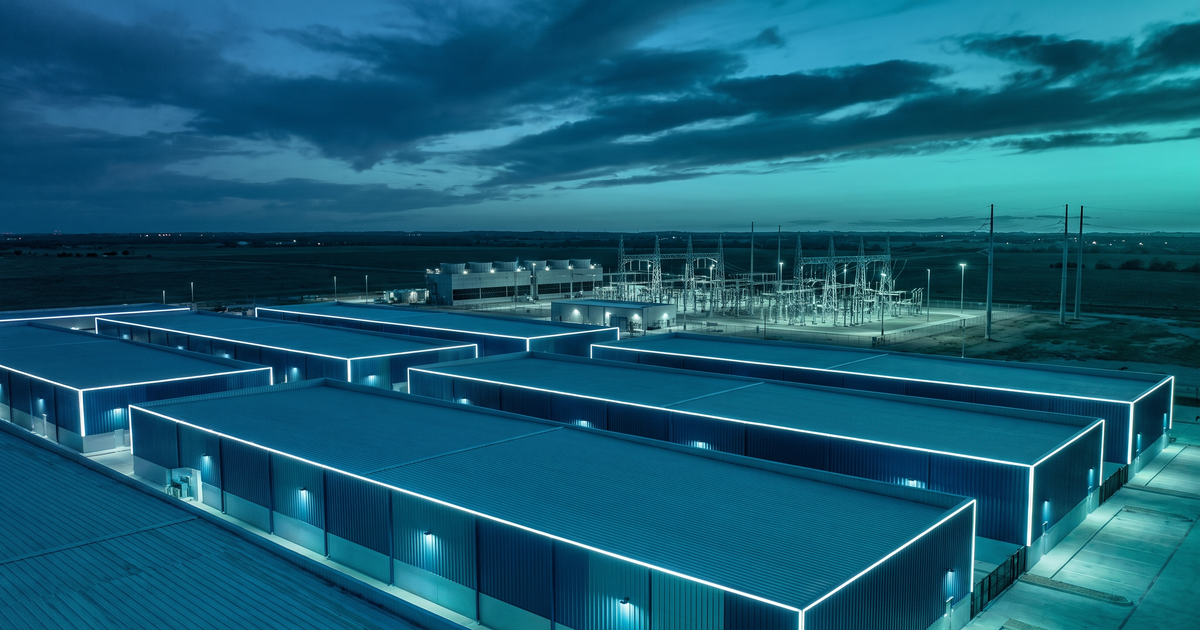
At 2721 Charles Martin Hall Road in Rockdale, Texas, Riot is converting an established high-power computing campus into a broader AI data center platform. The company has executed a 20-year lease for a custom Tier 3 build-to-suit serving 191 megawatts of critical IT load. The first 96 megawatts are targeted for delivery in December 2027, with the remaining 95 megawatts targeted for June 2028.
The financial denominator matters. Riot's August 2026 project disclosure identifies approximately $9.1 billion in base-term lease revenue, but that is not construction cost. The company's SEC-filed investor presentation separately gives an illustrative $11 million to $12 million per IT megawatt, or $2.1 billion to $2.3 billion of new-construction capital expenditure beyond existing infrastructure. It also states that the capex figure excludes tenant fit-out costs.
The 191-megawatt program must also remain separate from AMD's contracted 50-megawatt Rockdale deployment. Riot reports 241 megawatts across those two leases, while the underlying campus has 700 megawatts of developed power capacity. Those figures describe different scopes and cannot be substituted for one another when estimating a bid package.
| Project | Riot / Yates Rockdale Frontier AI Lab Buildout |
| Location | 2721 Charles Martin Hall Road, Rockdale, TX 76567 |
| Construction Basis | $2.1 billion-$2.3 billion, excluding tenant fit-out |
| Critical IT Load | 191 MW in two delivery phases |
| Delivery Targets | 96 MW in December 2027; full 191 MW in June 2028 |
| Status | Awarded / advanced development and procurement |
| LV Opportunity Score | 10/10 |
| Source | Riot company disclosures and SEC filings |
Key Players and Award Boundary
Riot's public materials name the owner-developer, general contractor, two vertically integrated power-delivery businesses, and the financing provider. They do not name an architect, building MEP engineer, electrical contractor, fiber carrier, structured-cabling integrator, fire-alarm contractor, security contractor, controls contractor, DAS provider, or independent commissioning authority for this 191-megawatt program. That distinction is the useful part of the opportunity: the prime delivery structure is taking shape, but the public specialty award chain is still incomplete.
| Role | Company | What the Record Establishes |
|---|---|---|
| Owner / Developer / Landlord | Riot Platforms | Executed the tenant lease, controls the Rockdale campus, and is funding and delivering the build-to-suit. |
| General Contractor | Yates Construction | Named by Riot management as GC. Yates also publishes current hyperscale and HPC-ready data center delivery experience. |
| Power Distribution | ESS Metron | Riot-owned manufacturer integrated into long-lead low- and medium-voltage switchgear and power-distribution execution. |
| Substation / Electrical Support | E4A Solutions | Integrated into the delivery plan for substation development and associated engineering, commissioning, and maintenance capability. |
| Serving Utility | Oncor Electric Delivery | Serves the existing Rockdale interconnection. Public sources do not disclose a new project-specific Oncor package for the 191 MW buildout. |
| Tenant | Unnamed frontier AI lab | Its basis of design has been incorporated, but Riot's primary disclosures do not identify the tenant. Secondary naming should not be treated as an award fact. |
Riot says the tenant basis of design has been incorporated, full internal architecture is complete, preferred delivery partners are engaged, and procurement has begun. Contractors should read that as a qualification signal, not proof that every LV package is awarded. The practical route is through Riot and Yates with a clear mission-critical resume, manpower plan, test-documentation standard, and willingness to work inside tenant confidentiality controls.
Low Voltage Systems Breakdown
Signal's 13-system map is an opportunity framework based on the facility type and disclosed delivery model; it is not a published subcontract list. The stack crosses information transport, physical security, life safety, building and power controls, outside plant, grounding, and integrated systems testing. On a 191-megawatt AI site, the interfaces between packages are as consequential as the device quantities.
| System | Category | Project-Specific Scope | Complexity |
|---|---|---|---|
| Fiber Optic | Data / Voice | High-count backbone, diverse paths, meet-me interfaces, and high-density testing records aligned with the tenant standard. | High |
| Outside Plant | Campus Infrastructure | Duct banks, handholes, entrance facilities, carrier demarcation, route diversity, and coordination with active campus utilities. | High |
| Structured Cabling | Data / Voice | Horizontal and backbone cabling, pathways, cabinets, labeling, and certification across phased data-hall and support spaces. | High |
| Networking | Digital Infrastructure | Management networks, out-of-band connectivity, segmented operational technology, and handoff to tenant-furnished compute networks. | High |
| Access Control | Security | Layered campus, building, room, and critical-equipment permissions with identity and visitor-management integration. | High |
| CCTV / Video Surveillance | Security | Perimeter, vehicle, loading, data-hall approach, and electrical-yard coverage with storage and analytics requirements. | High |
| Fire Alarm | Life Safety | Addressable detection and notification coordinated with suppression, air handling, pre-action interfaces, and phased turnover. | High |
| DAS | Wireless | Public-safety radio and possible carrier coverage designed around shielded, equipment-dense construction. | High |
| BMS Controls | Building Automation | Mechanical plant, environmental sensors, alarm routing, trend data, and sequences supporting mission-critical cooling. | High |
| EPMS / DCIM | Power and Operations | Electrical telemetry, capacity views, alarm hierarchy, asset data, and operational dashboards from utility edge to data hall. | Very High |
| Substation Controls | Power Automation | Protection, relay, SCADA, monitoring, and communications interfaces without assuming an undisclosed utility construction award. | Very High |
| Grounding and Bonding | Electrical Interface | Telecommunications bonding, equipment reference networks, test points, and coordination with the electrical grounding system. | High |
| Commissioning | Quality and Turnover | Point-to-point checks, functional testing, integrated systems testing, issue closure, and tenant-format evidence for both phases. | Very High |
Estimated Low Voltage Value
No public source identifies a low-voltage contract value, and one percentage would create false precision. The first method treats Riot's $2.1 billion to $2.3 billion figure as reported new-construction capex. Applying a 6% data center systems basis and a 1.25 complexity factor for 13 mapped systems produces approximately $157.5 million to $172.5 million. This broader envelope includes controls, monitoring, substation interfaces, grounding, and commissioning, not just conventional communications cabling.
The second method prices the disclosed 191 megawatts of critical IT capacity at a conservative national planning anchor of roughly $500,000 per IT megawatt. That produces approximately $95.5 million. The gap between the methods is itself useful: it shows how much depends on whether EPMS/DCIM, BMS, substation controls, owner-furnished switchgear interfaces, and commissioning sit inside or outside the contractor's package.
| Published New-Construction Capex | $2.1 billion-$2.3 billion |
| Construction-Value Method | 6% × 1.25 = $157.5 million-$172.5 million |
| Capacity Cross-Check | 191 IT MW × $500,000/MW = $95.5 million |
| Planning Range | $95.5 million-$172.5 million |
| Signal Anchor Value | $157.5 million on the conservative $2.1 billion capex basis |
This is a campus-wide planning range, not a promise that one integrator will receive a nine-figure award. A credible bid strategy breaks the work into OSP and carrier pathways, ICT, security, life safety, BMS, EPMS/DCIM, substation communications, and commissioning. It then defines every interface: who supplies controllers, who lands field wiring, who owns network switches, who writes graphics, who performs cause-and-effect testing, and whose format governs final documentation.
Skills and Certifications Required
| Discipline | Useful Credentials | Critical Skills |
|---|---|---|
| Fiber / Structured Cabling / OSP | BICSI RCDD, INSTC, INSTF, OSP; manufacturer training | Diverse-route design, high-count fiber splicing, pathway loading, loss budgets, Tier 1 and Tier 2 testing, and defensible test records. |
| Fire Alarm | NICET Fire Alarm Level II-III; applicable Texas licensing | NFPA 72, releasing and supervisory interfaces, phased acceptance, impairment planning, and AHJ coordination. |
| Security | ASIS PSP; access-control and VMS manufacturer certifications | Door hardware, secure-area zoning, PoE design, camera coverage, storage calculations, credential governance, and cyber-hardening. |
| BMS / EPMS / DCIM | BACnet, Tridium Niagara, platform-specific controls credentials | Points lists, alarm rationalization, protocol gateways, historian trends, graphics, network segmentation, and sequence validation. |
| DAS | RCDD, RF engineering, carrier or public-safety system training | Benchmark testing, antenna design, passive-component sweeps, fiber transport, interference control, and authority coordination. |
| Substation Controls | Protective-relay and SCADA platform training; qualified electrical personnel | Relay communications, time synchronization, protocol mapping, fiber protection, cyber controls, and utility-interface documentation. |
| Commissioning | Commissioning-provider credentials plus system-specific qualifications | Pre-functional checklists, functional performance tests, integrated systems testing, deficiency management, and evidence-based turnover. |
Entry-level technicians can contribute to pathway installation, cable placement, labeling, device mounting, and supervised terminations. Mid-level leads need repeatable testing and documentation discipline across hundreds of similar endpoints. Senior staff must own architecture, code, network segmentation, package interfaces, and integrated systems testing; a fast installation that cannot produce tenant-accepted evidence is not complete.
Contractors should verify current Texas and local licensing requirements for every discipline before bidding, particularly fire alarm, security, and work crossing into regulated electrical scope. They should also expect project-specific background screening, confidentiality controls, safety orientation, and commissioning documentation requirements from the owner, GC, and tenant.
Market Signal
Rockdale is a conversion story with a compressed delivery consequence. Riot is not starting with raw land and a speculative utility request; it is applying existing campus power, land, engineering, and operating infrastructure to a tenant-specific AI program. That can shorten early civil and interconnection paths, but it raises brownfield interface risk: live operations, legacy as-builts, reused pathways, cutover sequencing, and clear demarcation between existing campus systems and the new tenant environment.
The anonymous tenant is not a reason to wait. Riot says the tenant basis of design is already incorporated and preferred partners familiar with that customer are engaged. For specialty contractors, the commercial move is to qualify through Yates and Riot now, carry unknown tenant-standard scope as a defined allowance, and request the cabling standard, cybersecurity rules, test limits, naming convention, and turnover schema before final price. Treating the tenant identity as gossip adds no value; controlling the interface register does.
Riot's integration of ESS Metron and E4A also shows where the delivery model is heading. Long-lead power equipment, substation development, controls, and maintenance capability are being pulled closer to the developer. Independent LV firms are more likely to win by proving they can connect cleanly to that owner-controlled power stack—especially fiber, BMS, EPMS/DCIM, security, life safety, and commissioning—than by presenting a generic cable-installation resume.
What Contractors Should Watch
- Specialty award announcements: electrical, ICT, security, fire alarm, controls, DAS, and commissioning firms remain unnamed in the reviewed public record.
- Package boundaries: confirm owner-furnished versus contractor-furnished controllers, switchgear interfaces, network electronics, and tenant fit-out.
- Phase acceptance: the 96 MW December 2027 milestone needs its own test plan, turnover dataset, and temporary-condition strategy before the 95 MW second phase.
- Existing-campus interfaces: define outage windows, live-system protections, pathway reuse, and rollback plans at bid time.
- Tenant documentation: establish naming, labeling, test files, issue tracking, and as-built data formats before field production scales.
Find Projects Like This on Signal
LVN Signal tracks thousands of construction projects with low voltage opportunities across the country. Filter by city, system type, and project value to find your next bid.
Join 35,000+ Low Voltage Pros
Get weekly permit updates, tool deals, job opportunities, and industry news. No spam, unsubscribe anytime.