
Join Low Voltage Nation — Find project opportunities and showcase your company to thousands of industry professionals
The University of Oregon''s $25.88 million Acoustic Research Lab in Portland requires five low voltage systems including structured cabling, AV, and access control. This first-of-its-kind facility at the Port of Portland''s Terminal 2 represents an estimated $1.64 million LV opportunity.
A $25.88 million acoustic research laboratory in Portland requires five low voltage systems, creating an estimated $1.64 million opportunity for contractors in the Oregon market. The Oregon Acoustic Research Laboratory (OARL) — the first facility of its kind in North America — will advance mass timber construction by providing certified acoustic testing that the industry currently lacks.
Project Overview
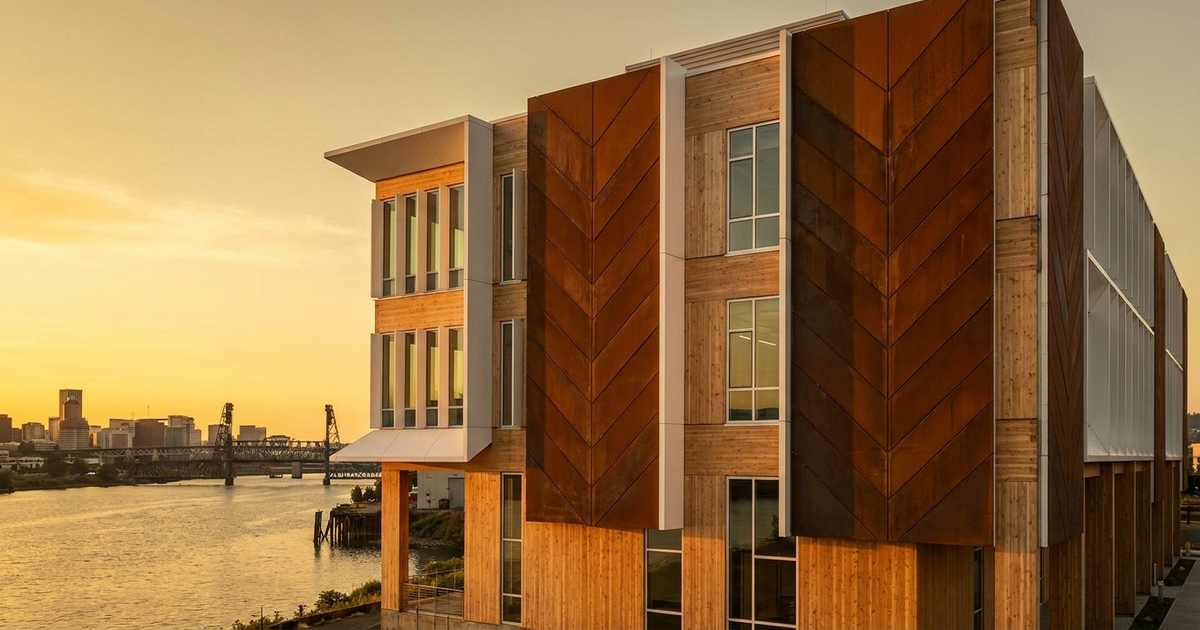
The Oregon Acoustic Research Laboratory is a 14,130-square-foot facility being built at the Port of Portland's Terminal 2, within the newly established Mass Timber and Housing Innovation Campus. The project represents a partnership between the University of Oregon, the Port of Portland, and the Oregon Mass Timber Coalition to address a critical gap in the construction industry: the lack of certified acoustic testing infrastructure for mass timber assemblies.
The facility will house state-of-the-art floor-to-ceiling testing chambers capable of delivering reliable and repeatable acoustical test results compliant with laboratory acoustic sound transmission, laboratory impact isolation, and in-room impact sound standards. The building itself is constructed with mass timber assemblies, serving as both a research facility and a demonstration of the very construction methods it will test.
The Design-Build team of Andersen Construction and LEVER Architecture was selected for the project. Permit records filed with Portland's Bureau of Development Services show a permit valuation of $12.9 million for the construction phase, while the total project cost including equipment, site work, and associated infrastructure is $25.88 million. Design and permitting are underway through 2025, with construction slated for 2026 and building completion targeted for 2027.
| Project | Oregon Acoustic Research Laboratory (OARL) |
| Location | Terminal 2, Port of Portland, Portland, OR |
| Total Value | $25.88 million |
| Building Size | 14,130 SF |
| Project Type | University Research Laboratory |
| Status | Active — Construction 2026 |
| LV Score | 8/10 |
| Source | Portland Commercial Construction Permits |
Key Players
This project brings together a notable team of Oregon-based institutions and firms, each contributing specialized expertise to what will become a landmark research facility for the mass timber industry.
| Role | Company | Details |
|---|---|---|
| Owner | University of Oregon | Oregon's flagship public research university, home to the Energy Studies in Buildings Laboratory and the Institute for Health in the Built Environment that will operate the facility |
| Developer | Port of Portland | Approved the lease at Terminal 2 and is developing the broader Mass Timber and Housing Innovation Campus at the former marine terminal site |
| General Contractor | Andersen Construction | Portland-based general contractor selected as the Design-Build partner, with extensive experience in mass timber and institutional projects across the Pacific Northwest |
| Architect | LEVER Architecture | Portland-based firm specializing in mass timber design; created the distinctive corten steel facade inspired by spectrograms — visual representations of sound frequency |
| Industry Partner | Oregon Mass Timber Coalition | Industry coalition supporting the expansion of mass timber construction; key partner in funding and advocacy for the OARL facility |
Low Voltage Systems Breakdown
The OARL requires five integrated low voltage systems spanning data infrastructure, security, audiovisual, and life safety. The specialized nature of the facility — precision acoustic testing chambers, sensitive measurement equipment, and controlled laboratory environments — elevates the complexity of each system beyond what a typical commercial building of this size would require.
| System | Category | Scope Description | Complexity |
|---|---|---|---|
| Structured Cabling | Data/Voice | High-performance cabling infrastructure connecting acoustic testing chambers to data acquisition systems, office areas, and storage spaces. The precision nature of acoustic measurement requires low-noise, shielded cabling runs to prevent electromagnetic interference with sensitive testing equipment. Cat6A minimum with fiber backbone between testing chambers and data collection points. | High |
| Access Control | Security | Multi-zone access control system securing research areas, testing chambers, equipment storage, and the exterior loading area. University research facilities require tiered credential management for faculty, students, visiting researchers, and maintenance staff. Integration with UO campus identity management systems is expected. | Medium |
| CCTV / Video Surveillance | Security | IP camera coverage of exterior loading areas, parking lot, building perimeter, and interior common spaces. The waterfront Terminal 2 location requires weather-rated exterior cameras. Interior cameras in equipment storage areas protect high-value testing apparatus. | Medium |
| Audio/Visual | AV | Specialized AV systems for the testing chambers including precision measurement microphones, speaker arrays for acoustic stimulation, and real-time monitoring displays. Office and conference spaces require standard presentation AV. The testing chamber AV is mission-critical — it is the primary function of the entire facility. | High |
| Fire Alarm | Life Safety | Addressable fire alarm system throughout the mass timber structure. Mass timber buildings require specific fire protection strategies per code. The testing chambers present unique detection challenges due to sound-dampening materials that may affect smoke detector performance. NFPA 72 compliant with AHJ coordination required. | High |
Estimated Low Voltage Value
With no database-recorded LV value for this project, the estimated low voltage contract value is calculated using industry benchmarks for university and campus construction with five integrated systems.
| Total Project Value | $25.88 million |
| Estimated LV Percentage | 5.5% (University/Campus midpoint) |
| System Count Multiplier | 1.15x (5 systems) |
| Estimated LV Contract Value | $1.64 million |
The estimated low voltage contract value for this project is approximately $1.64 million, based on industry benchmarks for university research construction with five integrated systems. The specialized nature of the acoustic testing equipment — particularly the precision AV and measurement systems in the testing chambers — could push the actual LV value higher than the benchmark estimate.
For a facility of this size, the LV budget is concentrated in fewer square feet than a typical university building, meaning higher per-square-foot LV density. At approximately $116 per square foot in LV work across 14,130 SF, this project commands premium rates driven by the precision requirements of acoustic testing infrastructure. Structured cabling and AV systems will likely account for 50-60% of the LV budget, with fire alarm and security splitting the remainder.
Skills and Certifications Required
This project demands a workforce with both standard commercial installation skills and specialized expertise in precision laboratory environments. The acoustic testing application adds complexity that goes beyond typical university construction.
| System | Key Certifications | Critical Skills |
|---|---|---|
| Structured Cabling | BICSI INST2, RCDD (design) | Shielded cable termination, EMI mitigation, fiber splicing, Fluke certification testing |
| Access Control | PSP, Manufacturer (Genetec/Lenel) | IP networking, credential management, campus system integration |
| CCTV | Manufacturer (Axis/Avigilon) | PoE networking, outdoor camera installation, VMS configuration |
| Audio/Visual | CTS-I, CTS-D (design), Manufacturer certs | Precision microphone placement, DSP configuration, acoustic measurement systems, AV-over-IP |
| Fire Alarm | NICET Level II+, Oregon State License | Mass timber fire protection, NFPA 72, addressable system programming, AHJ coordination |
Entry-level technicians with BICSI Installer 1 certification can contribute to cable pulling, conduit installation, and device mounting. Mid-level techs with NICET Level II or BICSI INSTC will handle system wiring, termination, and testing. The AV scope — particularly the acoustic testing chamber systems — will require senior technicians with AVIXA CTS-I certification and experience in precision measurement environments. A BICSI RCDD should oversee cabling design given the EMI sensitivity requirements.
Contractors should verify their Oregon low voltage contractor license is current before bidding. Oregon requires a Limited Energy Technician (LET) license for low voltage installation work.
Market Signal
The OARL project signals a significant shift in Portland's construction landscape. The city has long been a leader in mass timber innovation — it was home to some of the first cross-laminated timber buildings in the United States — and this facility cements that position by addressing the single biggest barrier to mass timber adoption in multifamily housing: acoustic performance certification.
The Port of Portland's decision to transform Terminal 2 into a Mass Timber and Housing Innovation Campus is a strategic bet on the future of construction. The OARL is the first building in what will become a hub for mass timber research, modular housing fabrication, and construction workforce development. For low voltage contractors in the Pacific Northwest, this signals a pipeline of innovation-driven construction projects where precision systems integration is a core requirement, not an afterthought.
Oregon's mass timber industry has been growing steadily, with the state producing more CLT panels than any other in the country. As the OARL enables faster acoustic certification of new timber assemblies, expect an acceleration of mass timber multifamily projects across Portland, Seattle, and the broader Pacific Northwest. Each of those buildings will need the same core LV systems — structured cabling, access control, fire alarm — creating a sustained demand curve for qualified low voltage contractors in the region.
Find Projects Like This on Signal
LVN Signal tracks thousands of construction projects with low voltage opportunities across the country. Filter by city, system type, and project value to find your next bid.
Join 35,000+ Low Voltage Pros
Get weekly permit updates, tool deals, job opportunities, and industry news. No spam, unsubscribe anytime.