
Join Low Voltage Nation — Find project opportunities and showcase your company to thousands of industry professionals
Hut 8's Beacon Point campus pairs a $17 billion data-center-and-compute program with 704 MW of contracted critical IT load in Nueces County. Capacity analysis points to a $350 million to $450 million building-LV market across ten tracked systems, excluding compute hardware and utility power scope.
Hut 8's Beacon Point AI data center campus in Nueces County is a $17 billion, two-phase data-center-and-compute program with 704 megawatts of contracted critical IT load. Across Fiber, Structured Cabling, Outside Plant, Access Control, CCTV, Fire Alarm, BMS Controls, Networking, DAS, and Grounding and Bonding, the building-level low-voltage market reasonably lands in the $350 million to $450 million range.
Project Overview
Beacon Point is moving from announcement to construction on a 525-acre site near Robstown in Nueces County, Texas. The official Hut 8 project page describes a multi-phase AI campus with 1,000 megawatts of secured utility capacity. Hut 8 assigns approximately $8.5 billion of data-center and compute infrastructure to each of the first two phases, for a combined $17 billion headline investment and roughly 1,900 construction jobs.
That headline is real, but it is not a clean construction-cost denominator. It bundles the buildings with compute infrastructure, while the campus also carries two 15-year leases whose combined base-term value reaches $19.6 billion. Lease revenue, GPUs, servers, owner-furnished compute, land, and financing are not interchangeable with installable building-LV scope. Contractors need to separate those figures before sizing the opportunity.
The construction evidence is now stronger than the original Signal record. A Hut 8 SEC filing says $4.25 billion of project notes will finance Phase 1: six data halls totaling 352 megawatts of critical IT capacity, plus the associated substation. A second company filing adds another 352 megawatts of contracted critical IT load for Phase 2, bringing the campus to 704 megawatts across the first two phases.
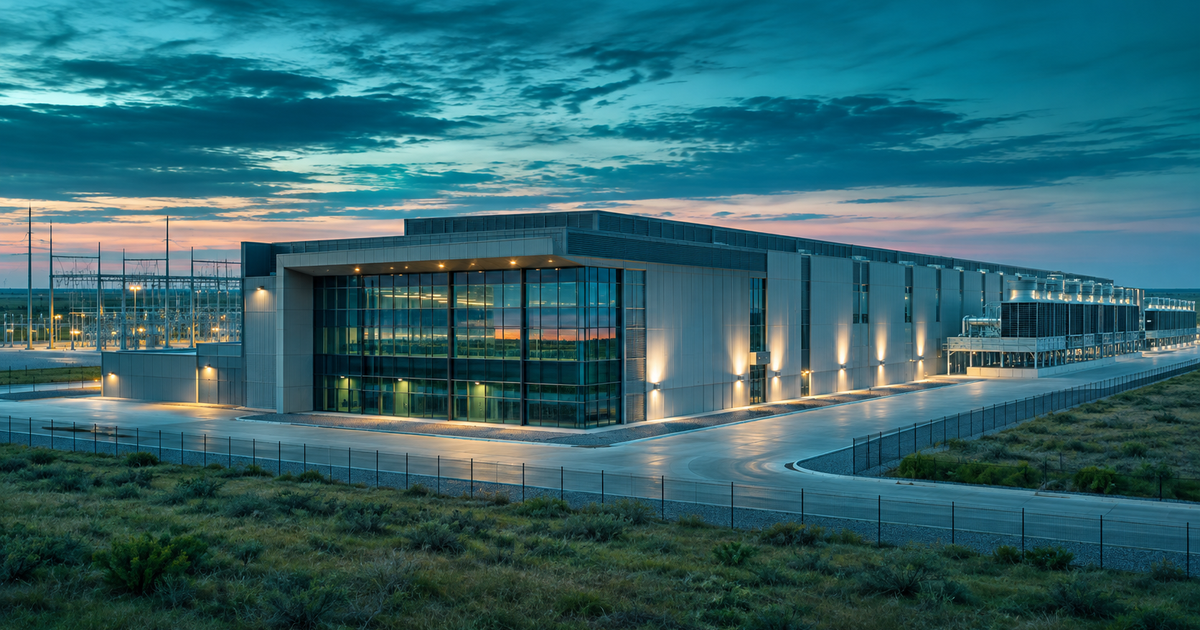
The Texas Department of Licensing and Regulation registration provides the most concrete building package: a 657,130-square-foot, Type IIB, fully sprinklered data center at 4650 FM 1694, with a guardhouse, fire-water tank and pump, and exterior mechanical and electrical support structures. The filing assigns that registered package an estimated cost of $398,985,153, with work scheduled from September 28, 2026 through November 5, 2027.
| Project | Hut 8 Beacon Point AI Data Center Campus |
| Location | 4650 FM 1694, Robstown, Nueces County, TX 78380 |
| Headline Investment | $17 billion across two phases, including data-center and compute infrastructure |
| Contracted Critical IT Load | 704 MW across Phase 1 and Phase 2 |
| Utility Capacity | 1,000 MW campus interconnection capacity |
| Site | 525 acres |
| Registered Building | 657,130 square feet; $398,985,153 TDLR estimated cost |
| Delivery | Initial energization and commissioning targeted for 2027; Phase 2 initial delivery targeted for Q2 2028 |
| LV Score | 10/10 |
Key Players and Contracting Doors
Beacon Point has a defined delivery stack. Hut 8 is the owner, operator, and developer. Beacon Point DC LLC is the project subsidiary named in the financing and state registration. Jacobs holds the sole-source engineering, procurement, and construction-management role, applying repeatable design elements and a digital twin to phased delivery. Hut 8's project page also names Vertiv and the Corpus Christi Regional Economic Development Corporation as delivery and regional partners.
| Role | Organization | Source-backed leverage |
|---|---|---|
| Owner / Developer | Hut 8 | Controls the campus development model, lease delivery, and long-term operations. |
| Project Entity | Beacon Point DC LLC | Hut 8 subsidiary issuing Phase 1 project financing and holding the project assets. |
| EPCM Lead | Jacobs | Advancing design, integrated procurement, construction management, and commissioning strategy. |
| Critical Infrastructure Partner | Vertiv | Named by Hut 8 for repeatable critical digital-infrastructure delivery. |
| Utility / Interconnection | AEP Texas | Electric-delivery interconnection for the 1,000 MW utility-capacity campus. |
| Regional Partner | Corpus Christi Regional EDC | Workforce, supplier, and regional-development connection point. |
The most useful business-development angle is repeatability. Jacobs is carrying lessons from Hut 8's River Bend campus into Beacon Point, and Vertiv is explicitly positioned around scaled deployment. A low-voltage contractor should approach the EPCM and major infrastructure packages with a repeatable mobilization plan: labor density, tested production rates, QA documentation, commissioning support, and the ability to reproduce the same standard across data halls without losing configuration control.
Low Voltage Systems Breakdown
Signal tracks ten lanes, but they should not be treated as ten isolated bids. Outside plant, Fiber, Grounding and Bonding, and Networking form the campus backbone. Structured Cabling, Access Control, CCTV, Fire Alarm, DAS, and BMS Controls repeat at the building and data-hall level. The commercial advantage belongs to teams that can package shared pathways, labeling, testing, and documentation while preserving system-specific acceptance requirements.
| System | Beacon Point scope | Primary execution risk | Complexity |
|---|---|---|---|
| Outside Plant | Campus duct banks, diverse entrances, handholes, inter-building pathways, and carrier demarcation routes. | Long distances, civil sequencing, utility conflicts, and protection of route diversity. | Very High |
| Fiber Optic | High-count backbone between meet-me rooms, network rooms, operations spaces, and data halls. | Splice quality, polarity, loss budgets, labeling, and high-volume certification records. | Very High |
| Structured Cabling | Copper and fiber distribution for operations, controls, security, wireless, and support spaces. | Production-scale installation without drifting from tenant standards or test requirements. | High |
| Networking | Pathways, racks, patching, management networks, out-of-band connectivity, and operational handoffs. | Separating contractor-furnished passive scope from owner-furnished active electronics. | Very High |
| Access Control | Perimeter, guardhouse, building, room, and critical-area credentialed access. | Door-hardware coordination, badging hierarchy, audit trails, and phased occupancy. | High |
| CCTV | Perimeter and interior IP surveillance, recording interfaces, and security-operations integration. | Coverage validation, bandwidth, retention, analytics, lighting, and cybersecurity. | High |
| Fire Alarm | Fully sprinklered building detection, releasing and supervisory interfaces, notification, and monitoring. | NFPA 72 sequences, fire-pump and suppression coordination, survivability, and AHJ acceptance. | Very High |
| BMS Controls | Environmental, cooling, leak, alarm, and equipment-status monitoring across phased data halls. | Point mapping, BACnet/IP integration, trend validation, and commissioning at scale. | Very High |
| DAS | In-building cellular and emergency-responder radio coverage through large hardened structures. | RF design, fiber distribution, donor and head-end coordination, and acceptance testing. | Very High |
| Grounding and Bonding | Telecommunications bonding infrastructure, racks, pathways, entrances, and equipment interfaces. | Single-point responsibility across electrical, telecom, IT, and manufacturer requirements. | Very High |
Estimated Low Voltage Value
The right denominator is critical IT load, not the campus's 1,000 megawatts of utility draw and not the $19.6 billion lease value. The first two leases cover 704 megawatts of critical IT capacity. Applying the national hyperscale planning benchmark of approximately $500,000 in building low voltage per critical IT megawatt produces a $352 million capacity-based floor.
| Contracted Critical IT Capacity | 704 MW |
| National Capacity Benchmark | Approximately $500,000 per critical IT MW |
| Capacity-Based Floor | $352 million |
| Published Building-LV Range | $350 million to $450 million |
| Headline Cross-Check | 4% of $17 billion = $680 million, rejected as the primary basis because compute infrastructure is bundled |
The $350 million to $450 million range keeps the capacity result as the floor and allows for the campus's unusually broad Outside Plant, DAS, controls, security, and grounding requirements. It remains an estimate across two phases, not a single subcontract award. Phase packaging, tenant standards, equipment ownership, and design maturity will determine how much lands with LV integrators versus electrical, controls, security, OEM, or owner teams.
The exclusion boundary matters. This estimate does not count GPUs, servers, storage, active tenant network hardware, lease revenue, land, medium- and high-voltage utility distribution, the substation, generation, or general mechanical plant. It includes the passive and integrated building systems that low-voltage contractors can plausibly furnish, install, test, document, commission, or support. Ask who owns the handoff at every rack, controller, fire interface, radio head end, security server, and carrier demarcation before carrying an allowance.
Skills and Certifications Required
A campus of this scale needs industrialized field execution. Entry-level technicians can contribute to pathway installation, cable pulling, device mounting, labeling, and basic terminations. Mid-level technicians need to own testing, fiber splicing, rack quality, fire-alarm circuits, controller wiring, and security commissioning. Senior leads must coordinate standards across data halls and turn millions of test points into usable turnover evidence.
| Discipline | Relevant credentials | Critical skills |
|---|---|---|
| Fiber and Structured Cabling | BICSI INSTC/INSTF, TECH, RCDD oversight, manufacturer certification | High-count fiber, fusion splicing, polarity, OTDR and Tier 1 testing, Cat 6A certification, administration. |
| Fire Alarm | NICET Fire Alarm Level II or higher, Texas fire-alarm licensing | NFPA 72, SLC/NAC design, suppression interfaces, sequence testing, AHJ coordination. |
| Access Control and CCTV | Platform-specific credentials, Network+, PSP for senior design | Door hardware, PoE, VMS, retention, credential management, perimeter analytics, cybersecurity. |
| BMS Controls | BACnet training, Tridium Niagara or named-platform credentials | DDC controllers, sensor validation, BACnet/IP, point-to-point checks, trends, integrated commissioning. |
| DAS | RCDD, RF engineering experience, carrier and public-safety-radio training | RF modeling, antenna placement, fiber distribution, signal testing, carrier and AHJ coordination. |
| Grounding and Bonding | BICSI grounding knowledge, electrical coordination experience | TBB/TGB/TMGB installation, pathway bonding, entrance protection, test documentation. |
Texas licensing is scope-dependent. Fire Alarm work requires the applicable state credentials, while electrical and alarm contracting boundaries affect who may offer, supervise, and perform portions of the work. Contractors should verify current state and local requirements before bidding and make sure any manufacturer warranties align with the exact products and tenant standards ultimately specified.
Market Signal
Beacon Point is not a generic “AI boom” story. It is a fully contracted, project-financed campus moving into phased physical delivery with a named EPCM, critical-infrastructure partner, utility agreement, and state-registered building. That moves the opportunity from speculative owner outreach toward package mapping, procurement qualification, labor planning, and second-tier support.
The unnamed high-investment-grade tenant creates a familiar hyperscale sales condition: the tenant standard may drive materials, cyber requirements, test formats, badging, and approved-vendor lists even when Hut 8 and Jacobs control delivery. Contractors should assume NDA-gated standards and sell their ability to execute a prescribed design repeatedly. The fastest path is often through a named package holder that needs regional labor and commissioning depth, not a cold pitch to the tenant.
The small-town megaproject problem is labor logistics. Roughly 1,900 construction jobs across the first two phases will compete for supervision, specialty testing, fire-alarm talent, fiber splicers, controls technicians, and security programmers. Firms that can document travel strategy, per diem, local recruiting, training throughput, tool calibration, shift coverage, and first-pass test yield have a more credible offer than firms that quote only cable and labor units.
Outside plant is the lead-list multiplier. A 525-acre campus with repeated data halls, a substation, carrier entrances, perimeter systems, and utility interfaces creates work beyond the building shell. Regional contractors should track road, duct-bank, utility, guardhouse, carrier, and phased occupancy packages, because those scopes reveal the real procurement sequence before interior device counts are public.
The closed-loop cooling design also matters operationally. Hut 8 says the campus will not use municipal water for cooling and will pre-fund the infrastructure needed to serve its load. For LV teams, that translates into controls, leak detection, environmental monitoring, alarms, trend data, and commissioning interfaces that must remain consistent across facilities. The sales message is resilient integration and evidence, not just device installation.
Find Projects Like This on Signal
LVN Signal tracks thousands of construction projects with low voltage opportunities across the country. Filter by city, system type, and project value to find your next bid.
Join 35,000+ Low Voltage Pros
Get weekly permit updates, tool deals, job opportunities, and industry news. No spam, unsubscribe anytime.