
Join Low Voltage Nation — Find project opportunities and showcase your company to thousands of industry professionals
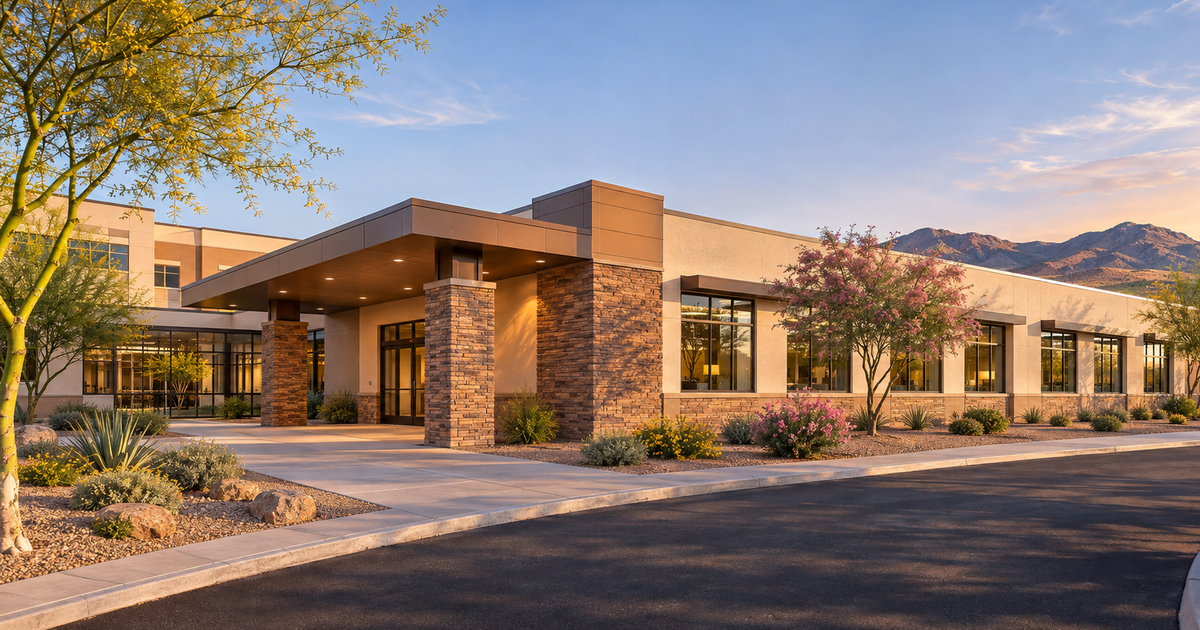
Banner Rehabilitation Hospital East has an issued $6.03 million permit for a 20-bed patient-care addition in Mesa. Fire alarm and access control are explicitly deferred, while Signal tracks five low-voltage systems and an estimated $350,000-$500,000 addressable scope.
A $6.03 million, 20-bed patient-care addition at Banner Rehabilitation Hospital East in Mesa puts five low-voltage systems on the contractor watchlist. The City of Mesa permit explicitly defers Fire Alarm and Access Control, and Signal intelligence identifies Structured Cabling, Nurse Call, and CCTV coordination around the new rooms and support spaces. Taken together, the addressable low-voltage scope is estimated at $350,000 to $500,000.
Project Overview
The City of Mesa issued permit PMT26-10466 on October 19, 2026, for a 13,233-square-foot addition at 1702 S. Pierpont Drive. The one-story expansion adds 20 patient rooms and ancillary support space to the existing inpatient rehabilitation hospital. The permit carries a reported job value of $6,026,043.54 and remains listed as issued in the city record.
This is not a vague campus announcement. The official permit scope identifies a new smoke compartment, smoke-barrier construction, life-safety modifications, structural work, MEP systems, medical gas, and civil work. It also names Fire Alarm and Access Control as deferred submittals, which matters to low-voltage contractors: those packages have not disappeared just because the main building permit moved first. They remain coordination-heavy systems that must fit the approved life-safety and egress strategy.
The existing hospital opened in 2022 with 56 private patient rooms. Its official facility page describes Banner Rehabilitation Hospital East as a joint venture between Banner Health and Select Medical. Adding 20 rooms would increase the campus's stated inpatient room count by roughly 36%, so this is a meaningful operating expansion rather than a cosmetic remodel.
| Project | Banner Rehabilitation Hospital East patient-care addition |
| Location | 1702 S. Pierpont Drive, Mesa, Arizona |
| Permit | PMT26-10466, issued October 19, 2026 |
| Reported Value | $6,026,043.54 |
| Scale | 13,233 square feet; 20 new patient rooms |
| Occupancy | Group I-2, Condition 2 rehabilitation hospital |
| General Contractor | Brasfield & Gorrie, LLC |
| LV Score | 10/10 |
| Source | City of Mesa building permit data |
Key Players and the Real Bid Path
Banner Rehabilitation Hospital East is operated through the Banner Health and Select Medical joint venture. The ownership structure matters because clinical technology standards, cybersecurity rules, approved product lists, and commissioning procedures may flow from more than one organization. A contractor should clarify early which standards are campus-specific, which come from Banner, and which come from Select Medical's inpatient rehabilitation network.
The city permit names Brasfield & Gorrie as general contractor. The same firm built the original Mesa rehabilitation hospital under the 2020-2022 permit sequence, so the addition is a repeat-team project. That creates a practical business-development route: the most useful conversation is not a generic sales pitch to the hospital. It is a package-specific discussion with the GC and the electrical/technology trade chain about deferred submittals, existing-system tie-ins, shutdown windows, testing, and closeout.
There is also an incumbent signal in the permit history. A 2024 City of Mesa permit shows Johnson Controls Security installing an intercom and lockdown system tied to the existing Access Control platform at this address. That does not prove the incumbent owns the addition, but it does establish an existing integration point. Challengers need a credible migration or interoperability plan; partners and specialty subcontractors should position around pathway, cabling, device installation, testing, documentation, and schedule support rather than assuming a greenfield platform replacement.
Low-Voltage Systems Breakdown
Signal tracks five systems for the addition. Fire Alarm and Access Control are directly supported by the permit's deferred-submittal language. Structured Cabling, Nurse Call, and CCTV are high-probability extensions for 20 new inpatient rooms and associated support areas, but the public permit does not award those packages or identify their vendors. Contractors should treat the latter three as coordination targets to qualify, not as guaranteed open bids.
| System | Public Evidence | Likely Addition Scope | Complexity |
|---|---|---|---|
| Fire Alarm | Explicit deferred submittal | Notification and initiating devices, smoke-compartment interfaces, door releases, monitoring, programming, testing, and AHJ acceptance under the revised life-safety plan. | High |
| Access Control | Explicit deferred submittal; existing campus system documented | Controlled staff and service doors, badge-reader extensions, lockdown and egress coordination, credential database work, and integration with existing security controls. | High |
| Nurse Call | Signal-inferred for 20 new patient rooms | Room stations, corridor annunciation, staff workflow, code-call functions, pillow-speaker or patient controls, and integration with clinical communications. | High |
| Structured Cabling | Technology discipline included in the addition record | Copper and fiber pathways, outlets for clinical and administrative devices, wireless backhaul, room drops, labeling, certification, and telecom-room capacity checks. | Medium-High |
| CCTV / Video Surveillance | Signal-inferred security extension | Coverage for new corridors, entrances, service areas, and exterior approaches, with VMS licensing, storage, privacy, and retention requirements verified against owner standards. | Medium |
The hospital remains occupied while the new wing is connected. That shifts risk toward infection-control boundaries, carefully sequenced outages, temporary life-safety coverage, noise controls, and clean turnover. Low-voltage teams that can document method-of-procedure plans and complete off-hours cutovers will be more useful than crews that only price devices and cable.
Estimated Low-Voltage Value
The $350,000-$500,000 range is an industry estimate, not a disclosed subcontract value. It is scoped to the $6.03 million addition permit and does not reuse the original hospital's $19.1 million construction value. A healthcare addition with five coordinated systems normally carries a higher systems density than a basic commercial shell, but this is still a 13,233-square-foot wing rather than a new hospital campus.
| Permit Value | $6.03 million |
| Planning Range | Approximately 5.8% to 8.3% of the permit value |
| Estimated LV Scope | $350,000 to $500,000 |
| Midpoint for Pipeline Planning | Approximately $425,000 |
Fire Alarm, Access Control, Nurse Call, and Structured Cabling should carry most of the labor and integration exposure. CCTV may be smaller in device count, but licensing, storage, and owner-standard requirements can move the package. Shared pathways, power coordination, penetrations, labeling, commissioning, and record documentation should be priced as real work rather than buried in device allowances.
The estimate excludes medical gas, clinical rehabilitation equipment, medical devices, active network switches, servers, owner software subscriptions, and other owner-furnished technology unless a bid package specifically assigns them. It also excludes the value of the original 56-bed hospital. Keeping those boundaries visible prevents a plausible LV estimate from turning into a fake percentage of unrelated equipment and prior construction.
Skills and Certifications Required
This addition rewards teams that can cross life-safety, security, network, and clinical-communications boundaries without losing documentation discipline. Arizona contractors should confirm the license classifications required for each package and the exact division of responsibility between the electrical contractor, specialty integrators, and owner vendors.
| System | Useful Credentials | Critical Skills |
|---|---|---|
| Fire Alarm | NICET Fire Alarm Level II or higher; manufacturer training | NFPA 72 testing, SLC/NAC work, smoke-control and door interfaces, impairment planning, AHJ coordination |
| Access Control | Platform-specific certification; ASIS PSP for design leadership | Door hardware, free-egress logic, lockdown integration, database work, cutover and acceptance testing |
| Nurse Call | Manufacturer certification for the installed platform | Patient-room wiring, code-call workflow, annunciation, clinical coordination, device testing, staff turnover support |
| Structured Cabling | BICSI INSTC/INSTF; RCDD oversight; manufacturer warranty credentials | Healthcare pathways, copper and fiber termination, Fluke certification, labeling, infection-control work practices |
| CCTV | VMS and camera-manufacturer certifications; Network+ | PoE design, camera placement, privacy zones, storage calculations, VMS integration, owner-standard commissioning |
Entry-level technicians can contribute to pathway preparation, cable placement, device backboxes, labeling, and supervised termination. Mid-level technicians should own certification testing, panel and controller wiring, and deficiency closeout. Senior leads need to coordinate the deferred packages with the fire-rated assemblies, smoke barriers, door schedule, clinical workflow, existing system capacity, and occupied-facility phasing.
Market Signal and Contractor Playbook
Mesa's rehabilitation capacity is expanding through an addition to a relatively new hospital, not through replacement of an obsolete building. That is a useful market signal. The campus opened in 2022, added Access Control and lockdown work in 2024, and now has an issued permit for 20 more rooms. Contractors should watch newer healthcare campuses for fast follow-on additions, because growing patient volume can create systems work before the original technology stack reaches midlife.
The repeat GC and documented security incumbent narrow the path. First, confirm the deferred Fire Alarm and Access Control package holders with Brasfield & Gorrie's trade team. Second, ask whether the 2024 Johnson Controls platform remains the basis of design and whether the addition uses the same head-end. Third, qualify the Nurse Call, cabling, and CCTV scopes against the owner matrix instead of assuming they sit in one Division 27 or 28 package. Finally, lead with occupied-healthcare execution: infection-control compliance, outage planning, clean testing records, and fast deficiency closure.
The public record does not publish a bid deadline, award list, or low-voltage subcontractor. That means timing must be verified directly. The building permit is issued and the at-risk grading permit was issued in September, so a contractor approaching this project now should be specific about packages and schedule capacity. The useful question is not whether the job exists. It is which deferred and owner-standard scopes are still assignable, and where the incumbent team needs qualified labor or specialty support.
Find Projects Like This on Signal
LVN Signal tracks thousands of construction projects with low voltage opportunities across the country. Filter by city, system type, and project value to find your next bid.
Join 35,000+ Low Voltage Pros
Get weekly permit updates, tool deals, job opportunities, and industry news. No spam, unsubscribe anytime.