
Join Low Voltage Nation — Find project opportunities and showcase your company to thousands of industry professionals
A $120 million, 10-story research facility at Cedars-Sinai Medical Center in Los Angeles requires six low voltage systems. The estimated LV contract value exceeds $7.2 million.
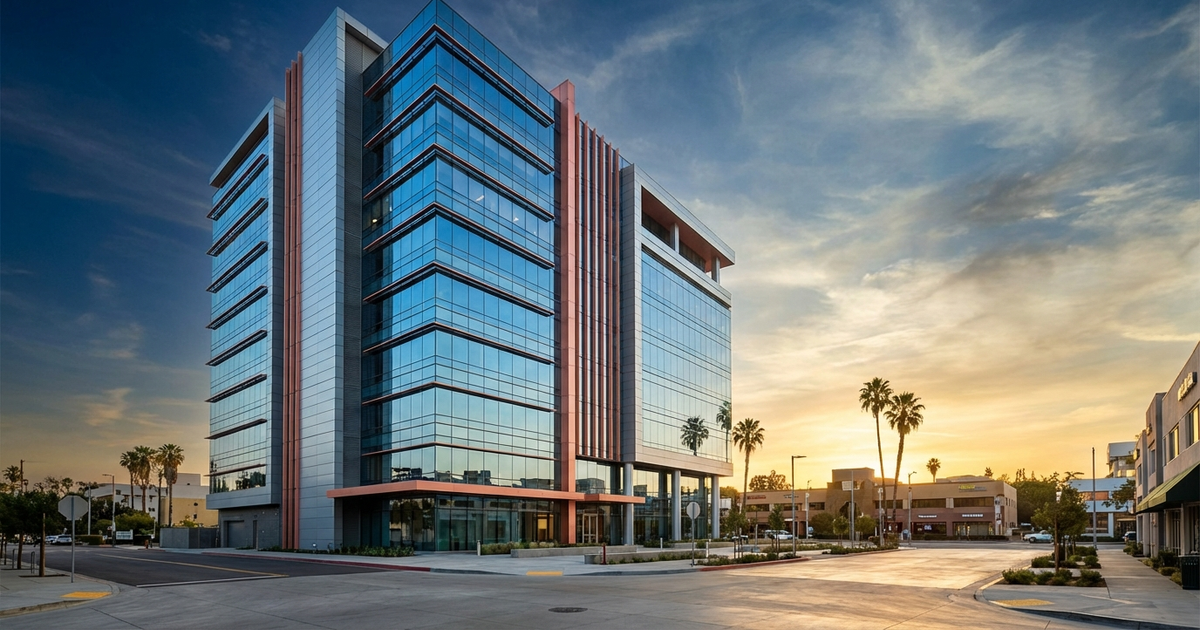
A $120 million, 10-story research facility is moving through permits at one of the nation's most prominent medical campuses. Located at 8730 W Alden Drive in the heart of Los Angeles' Beverly Grove medical corridor, this Cedars-Sinai Medical Center project represents one of the largest institutional construction opportunities in Southern California — and it needs six distinct low voltage systems to operate.
Project Overview
Permit records filed with the Los Angeles Department of Building and Safety reveal a new Type IA construction, 10-story research facility at 8730 W Alden Drive. The project carries an estimated value of $120 million, placing it firmly in mega-project territory for the LA market.
The address sits within Cedars-Sinai Medical Center's main campus footprint — a 35-acre complex in Beverly Grove that has undergone continuous expansion over the past decade. Cedars-Sinai, ranked among the top 3 hospitals nationally by U.S. News & World Report, has been aggressively investing in research infrastructure. The medical center's existing campus includes the Advanced Health Sciences Pavilion (completed 2013) and the recently approved West Tower expansion, which will add 100 inpatient beds across 460,650 square feet.
This research facility represents the next phase of that growth — a dedicated building designed to house laboratory, clinical research, and biomedical innovation programs. Type IA construction (the highest fire-resistance rating) signals a steel-framed, fully sprinklered structure built to institutional standards.
Source: Los Angeles Building Permits
The Cedars-Sinai Campus
Cedars-Sinai Medical Center is a nonprofit academic healthcare organization headquartered in Los Angeles. With nearly 900 licensed beds, over 4,500 physicians, and a $5+ billion annual operating budget, it ranks as one of the largest and most research-intensive medical centers on the West Coast.
The medical center has been on a sustained capital expansion trajectory. Recent and ongoing projects include:
- The West Tower Project — a 460,650 SF inpatient facility adding 100 beds, approved through the LA City Council environmental review process
- The Marina del Rey Hospital Replacement — a nine-story, $500M+ tower built by Rudolph and Sletten Inc., scheduled to open in 2026
- The Advanced Health Sciences Pavilion — completed in 2013, built by Hathaway Dinwiddie Construction
This pattern of investment signals a campus that demands — and funds — top-tier low voltage infrastructure.
LV Systems Breakdown
The project requires six low voltage systems, each representing a significant subcontracting opportunity. For a 10-story research facility at this budget level, each system will require specialized design, installation, and commissioning.
| System | Scope | Complexity |
|---|---|---|
| Structured Cabling | Cat6A/fiber backbone across 10 floors, high-density lab zones requiring 2-4x standard drop counts, redundant MDF/IDF closets per floor | High |
| Access Control | Multi-tier credentialing for research labs, BSL-rated areas, visitor management, integration with campus-wide system | High |
| CCTV / Video Surveillance | IP camera coverage for corridors, entrances, parking, lab access points, research asset monitoring, integration with campus SOC | Medium-High |
| Audio/Visual | Conference rooms, auditoriums, telepresence suites for clinical research collaboration, digital signage throughout | Medium-High |
| Fire Alarm | Addressable fire alarm with lab-specific detection (fume hoods, chemical storage), integration with building automation, Type IA compliance | High |
| DAS (Distributed Antenna System) | In-building cellular coverage across all 10 floors, critical for research staff and emergency communications in steel-frame construction | High |
Estimated LV Contract Value
With no database-sourced LV estimate available, we calculate from industry benchmarks for institutional research facilities:
| System | % of Project Value | Estimated Value |
|---|---|---|
| Structured Cabling | 1.5% | $1,800,000 |
| Access Control | 0.8% | $960,000 |
| CCTV | 0.7% | $840,000 |
| Audio/Visual | 1.0% | $1,200,000 |
| Fire Alarm | 0.8% | $960,000 |
| DAS | 1.2% | $1,440,000 |
| Total Estimated LV | 6.0% | $7,200,000 |
Estimated based on industry benchmarks for institutional research facilities. Actual values may vary based on design specifications, campus integration requirements, and prevailing wage rates in the Los Angeles market.
Skills & Certifications
Contractors pursuing LV work on a Cedars-Sinai project of this scale should hold or be pursuing the following credentials:
- BICSI RCDD — Required for structured cabling design on institutional projects of this complexity
- NICET Fire Alarm Level III/IV — Essential for the addressable fire alarm system with lab-specific detection requirements
- C-7 Low Voltage Contractor License — California state requirement for all LV installation work
- OSHA 30 — Standard for commercial construction sites in the LA market
- CTS (Certified Technology Specialist) — For AV system design and integration in conference and telepresence environments
- DAS certification from carrier partners — Required for in-building cellular deployment, typically through carriers like AT&T FirstNet for healthcare facilities
- ASIS CPP — Valued for integrated security system design (access control + CCTV)
Given Cedars-Sinai's institutional procurement process, contractors should also expect prevailing wage requirements and Project Labor Agreement (PLA) compliance, consistent with prior campus construction.
Market Signal: LA's Medical Corridor Keeps Building
This $120M research facility is not an isolated data point. Los Angeles' Westside medical corridor — anchored by Cedars-Sinai, UCLA Health, and the VA Greater Los Angeles — has seen sustained capital investment exceeding $2 billion in the past five years.
For low voltage contractors in the Southern California market, the signal is clear:
- Healthcare-specialized LV firms have a structural advantage. Projects of this complexity require teams with OSHPD/HCAI experience and medical facility credentials.
- DAS is becoming non-negotiable. Every new multi-story medical building in California now requires in-building wireless coverage. Firms with carrier relationships should be tracking these permits early.
- Research facilities demand higher cabling density. Lab buildings require 2-4x the data drops of standard office construction, inflating the structured cabling scope significantly.
- Prevailing wage markets reward established firms. The LA market's PLA requirements and compliance overhead favor contractors with experience navigating public and institutional procurement.
Cedars-Sinai's ongoing campus expansion — with the West Tower, Marina del Rey replacement, and now this research facility — represents a multi-year pipeline for LV contractors who can position early and build relationships with the facility's engineering team.
Find Projects Like This on Signal
LVN Signal tracks thousands of construction projects with low voltage opportunities across the country. Filter by city, system type, and project value to find your next bid.
Join 35,000+ Low Voltage Pros
Get weekly permit updates, tool deals, job opportunities, and industry news. No spam, unsubscribe anytime.