
Join Low Voltage Nation — Find project opportunities and showcase your company to thousands of industry professionals
T5 Chicago IV has moved its first 800,000-square-foot data-center building into permitted construction inside Grayslake's $18 billion campus plan. Signal tracks 13 systems and a modeled $600 million full-campus low-voltage opportunity, while the first building's MW, tenant, and package values remain undisclosed.
T5 Chicago IV's first 800,000-square-foot data-center building in Grayslake, Illinois, is permitted for construction inside a campus program described at up to $18 billion. Signal tracks 13 low-voltage systems across the development and supports a conservative $600 million full-campus LV planning model based on 1.2 GW of announced IT capacity. That is a program-scale estimate, not the value of the first permit or a single available contract.
Project Overview
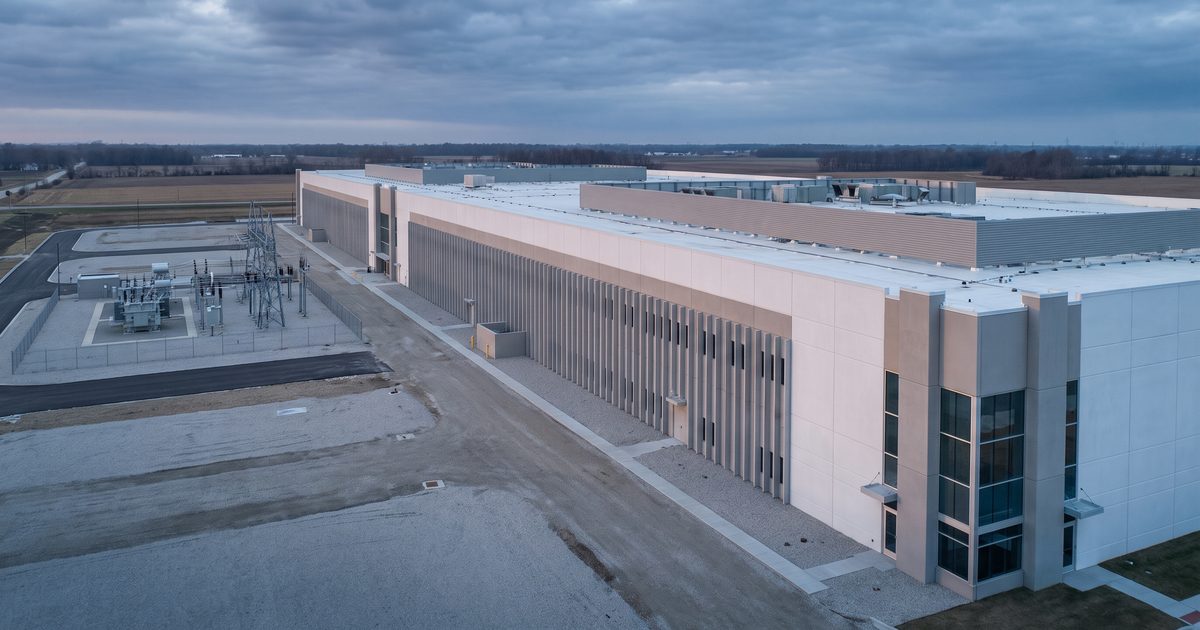
The Village of Grayslake issued the first building permit for T5 Chicago IV on September 1, 2026. Local reporting based on the Village announcement identifies one 800,000-square-foot facility at the Cornerstone development near Peterson Road and Alleghany Road and says site work could begin immediately. That makes this more than a land or power announcement: at least one building has crossed into an executable construction phase.
The permitted building sits inside a much larger and still evolving program. The Village's current project packet describes 11 buildings, 6.75 million square feet, 473 acres, a seven-to-ten-year buildout, and an estimated $18 billion of private investment. Earlier owner and trade announcements described different land and building counts as the plan expanded. Contractors should treat the current municipal plan, the long-term power envelope, and the first permitted building as three related but separate scopes.
T5's original Chicago IV announcement identified 480 MW of critical IT capacity and a first 60 MW target in the fourth quarter of 2027. Later direct statements reported by Data Center Dynamics expanded the vision to 1.2 GW of IT capacity, 1.6 GW of secured utility power, and three 60 MW Phase 1 buildings. Public sources still do not connect the first 800,000-square-foot permit to a specific MW allocation or tenant.
| Project | T5 Chicago IV |
| Location | Peterson Road and Alleghany Road, Grayslake, Illinois 60030 |
| First Permitted Building | 800,000 square feet; site work authorized September 1, 2026 |
| Current Campus Plan | 11 buildings; 6.75 million square feet; 473 acres |
| Program Investment | Up to $18 billion; not the first-building permit valuation |
| Capacity | Up to 1.2 GW IT; 1.6 GW secured utility power |
| Status | First building permitted; campus buildout expected over seven to ten years |
| LV Score | 10/10 |
Key Players and the Award Chain
T5 Data Centers is the source-backed owner, operator, and campus developer. Its structure matters to bidders because T5 has historically combined development with internal construction and operations capability. On September 1, 2026, the former T5 Construction business became EverOn Data Center Services, an independent mission-critical construction company. Neither the owner material nor the permit reporting reviewed for this spotlight confirms that EverOn holds the project-specific general-contractor role on the first Chicago IV building.
Alter Asset Management is identified in local reporting as the Cornerstone master developer and landowner affiliate. The Village of Grayslake is the building and land-use authority. ComEd is the serving utility under developer-funded infrastructure agreements, while PJM is the regional transmission organization behind the wholesale supply. The public record does not name the building architect, MEP engineer, external GC/CM, electrical contractor, fiber or low-voltage contractor, controls integrator, or commissioning authority.
| Role | Organization | What Is Confirmed |
|---|---|---|
| Owner / Developer | T5 Data Centers | Campus developer and operator; project-specific delivery model remains partly undisclosed. |
| Construction Platform | EverOn Data Center Services | Former T5 Construction organization; no public first-building GC award found. |
| Master Development | Alter Asset Management / Cornerstone | Master developer and land context identified in local reporting. |
| Permitting Authority | Village of Grayslake | Issued the first building permit and administers local building review. |
| Utility / Transmission | ComEd / PJM | Serving utility and regional grid framework; developer funds campus supply infrastructure. |
Low Voltage Systems Breakdown
The opportunity is not one cabling package. It is a layered campus program that begins outside the building, crosses the substation and secure perimeter, enters the white space, and ends in integrated testing. The 13 tracked systems below are planning lanes inferred from the verified project type and infrastructure, not proof that bid packages have been released.
| System | Scope to Watch | Complexity |
|---|---|---|
| Fiber Optic | Carrier entrances, meet-me pathways, backbone strands, high-count splicing, OTDR testing, and diverse routing between buildings. | High |
| Outside Plant | Campus duct banks, handholes, maintenance holes, route markers, building entrances, and spare pathway planning across 473 acres. | High |
| Structured Cabling | Operations, support, security, controls, and tenant areas with disciplined labeling, separation, certification, and turnover records. | High |
| Access Control | Layered perimeter, vehicle, lobby, mantrap, loading, and critical-room credentials tied to the operator's security standard. | High |
| CCTV | Perimeter analytics, gates, yards, loading areas, interior circulation, retention, and VMS integration. | High |
| Fire Alarm | Networked detection and notification coordinated with suppression, smoke control, generator rooms, and phased occupancy. | High |
| BMS Controls | Cooling, leak detection, environmental sensing, alarms, trends, sequences, and closed-loop mechanical system interfaces. | High |
| Networking | Secure operational networks for building systems, facilities teams, vendors, and segmented OT management. | High |
| DAS | Public-safety radio and cellular coverage design for large, hardened buildings, subject to AHJ and carrier requirements. | High |
| Grounding and Bonding | Telecommunications bonding backbone, racks, pathways, equipment, and coordination with the electrical grounding system. | High |
| EPMS / DCIM | Power monitoring, capacity data, alarms, dashboards, metering, and interfaces from utility delivery through critical loads. | Very High |
| Substation Controls | Protective-relay communications, SCADA, control fiber, time synchronization, secure OT networks, and utility handoffs. | Very High |
| Commissioning | Point-to-point checks, sequence testing, integrated systems testing, failure-mode validation, evidence capture, and turnover. | Very High |
Estimated Low Voltage Value
A percentage applied blindly to $18 billion would blur land, utility infrastructure, shell construction, IT hardware, and other program costs. For a hyperscale campus with a published compute figure, capacity is the cleaner denominator. Using a conservative national benchmark of approximately $500,000 of low-voltage scope per MW of IT capacity produces a $600 million full-campus model at 1,200 MW.
A separate 4% check against the announced $18 billion program yields $720 million. The two methods land in the same broad order of magnitude, so a practical planning range is $500 million to $720 million across the completed campus. This range excludes servers, GPUs, primary electrical equipment, generation, and other non-LV capital. It also should not be represented as an awarded contract.
| Published IT Capacity | Up to 1,200 MW |
| Capacity Benchmark | Approximately $500,000 per IT MW |
| Modeled Full-Campus LV Value | Approximately $600 million |
| Capital Cross-Check | 4% of $18 billion = $720 million |
| First-Building LV Value | Not defensibly calculable until MW or building valuation is disclosed |
The first building is still the immediate commercial signal. Contractors should watch for the building's MW allocation, design release, tenant standard, GC/CM confirmation, subcontractor prequalification, and separate awards for electrical, OSP fiber, security, fire alarm, BAS/BMS, EPMS/DCIM, substation controls, and commissioning. Those facts will convert a campus estimate into package-level opportunity.
Skills and Certifications Required
| Discipline | Useful Credentials | Critical Skills |
|---|---|---|
| Fiber / OSP / Cabling | BICSI INSTC, INSTF, TECH, RCDD; manufacturer training | High-count fiber, OTDR, diverse pathways, bonding, labeling, and DSX-style documentation. |
| Fire Alarm | NICET Fire Alarm Level II+; applicable state and local licensing | NFPA 72, networked panels, sequence interfaces, AHJ testing, and phased acceptance. |
| Security | PSP or CPP; platform manufacturer certification | Door hardware, perimeter analytics, VMS, credential databases, and network segmentation. |
| BMS / EPMS / DCIM | BACnet or Niagara training; vendor-specific platform credentials | DDC, Modbus/BACnet integration, power telemetry, alarm rationalization, and trend validation. |
| Networking / OT | Network+ or equivalent; vendor routing and switching credentials | Redundancy, VLANs, secure OT architecture, QoS, monitoring, and configuration control. |
| Commissioning | CxA or commissioning experience; system-specific senior credentials | Functional scripts, integrated systems tests, failure scenarios, issue tracking, and evidence packages. |
Entry-level technicians can contribute to pathway installation, cable placement, device mounting, labeling, and supervised terminations. Mid-level technicians will own fiber splicing, copper and fiber certification, device checkout, and subsystem troubleshooting. Senior leads must coordinate across electrical, mechanical, fire/life safety, security, networking, controls, and utility teams while maintaining a clean commissioning record.
Contractors should verify Illinois and local licensing requirements before bidding, particularly for alarm, fire/life-safety, and regulated electrical work. The winning teams will also need mission-critical safety performance, BIM coordination, documented QA/QC, secure-site procedures, and enough supervision to repeat the standard across multiple buildings without allowing field quality to drift.
What Contractors Should Qualify Now
The tenant remains unnamed, so the final technology standard may arrive under confidentiality controls after early awards. Base-building bidders should separate owner infrastructure from tenant fit-out, carry tenant-driven scope as an explicit allowance where appropriate, and ask who owns the fiber topology, cabling product standard, labeling schema, cybersecurity baseline, test limits, and turnover format.
The campus also creates boundary risk. OSP-to-building transitions, substation-to-EPMS interfaces, fire-alarm-to-BMS points, access-control-to-elevator or gate controls, public-safety radio coverage, and commissioning responsibility can fall between packages. A bidder should map every interface, name the party responsible for programming and final acceptance, and price retesting after upstream changes.
There is also an active legal challenge to the earlier development approvals. The filed lawsuit seeks to invalidate approvals and restrict further permits, while the Village proceeded with the first building permit. Contractors should treat entitlement and future-permit timing as a schedule risk, not assume the current first-building authorization automatically de-risks every later phase.
Market Signal
Chicago IV is a direct signal that northern Illinois is moving from individual facilities toward multi-building, gigawatt-scale programs. T5 already has operating and active construction experience in the Chicago market, and this campus adds a long-duration pipeline for contractors that can prove repeatability. A prequalification earned on the first building could matter across later facilities, but only if the contractor can scale labor, documentation, commissioning, and material planning with the program.
The Village forecasts 750 to 1,000 construction jobs per year during the multi-year build. For low-voltage firms, the scarce capability will not be cable pulling alone. It will be leading coordinated OSP, secure OT networking, integrated controls, and commissioning under compressed data-center schedules while preserving a record clean enough for owner and tenant acceptance.
The immediate watch list is concrete: first-building MW, tenant identity, design team, project-specific GC/CM, utility and substation contractors, bid-package release, subcontractor onboarding, and commissioning authority. Until those names appear, the correct action is preparation and qualification—not pretending a $600 million model is sitting on the street as one contract.
Find Projects Like This on Signal
LVN Signal tracks thousands of construction projects with low voltage opportunities across the country. Filter by city, system type, and project value to find your next bid.
Join 35,000+ Low Voltage Pros
Get weekly permit updates, tool deals, job opportunities, and industry news. No spam, unsubscribe anytime.