
Join Low Voltage Nation — Find project opportunities and showcase your company to thousands of industry professionals
Digital Realty's $7.52 billion Project Jayhawk north campus in De Soto, Kansas, has an approved first-building site plan, a named GC/design team, and 10 Signal low-voltage planning lanes. LVN estimates a $250M-$350M addressable range while excluding the separately reported $475M land acquisition and refusing to price unconfirmed critical IT load.
A $7.52 billion data center plan in De Soto, Kansas, has moved from a speculative campus concept into a defined first-building program. The city-approved Project Jayhawk site plan covers a 450,000-square-foot, two-story facility, two substations, and supporting infrastructure. Signal tracks 10 low-voltage planning lanes across the wider Digital Realty campus, with an estimated $250 million to $350 million addressable range. That estimate is not an award, and it deliberately excludes the separately reported $475 million land acquisition.
Project Overview
Digital Realty is developing Project Jayhawk, also called Digital Astra North, at Astra Enterprise Park near West 103rd Street and Lexington Avenue in De Soto. The property is part of the former Sunflower Army Ammunition Plant redevelopment, next to the Panasonic Energy battery campus. The City of De Soto describes Astra North as the first phase of a much larger long-term data center vision and says the private investment will be measured in billions of dollars.
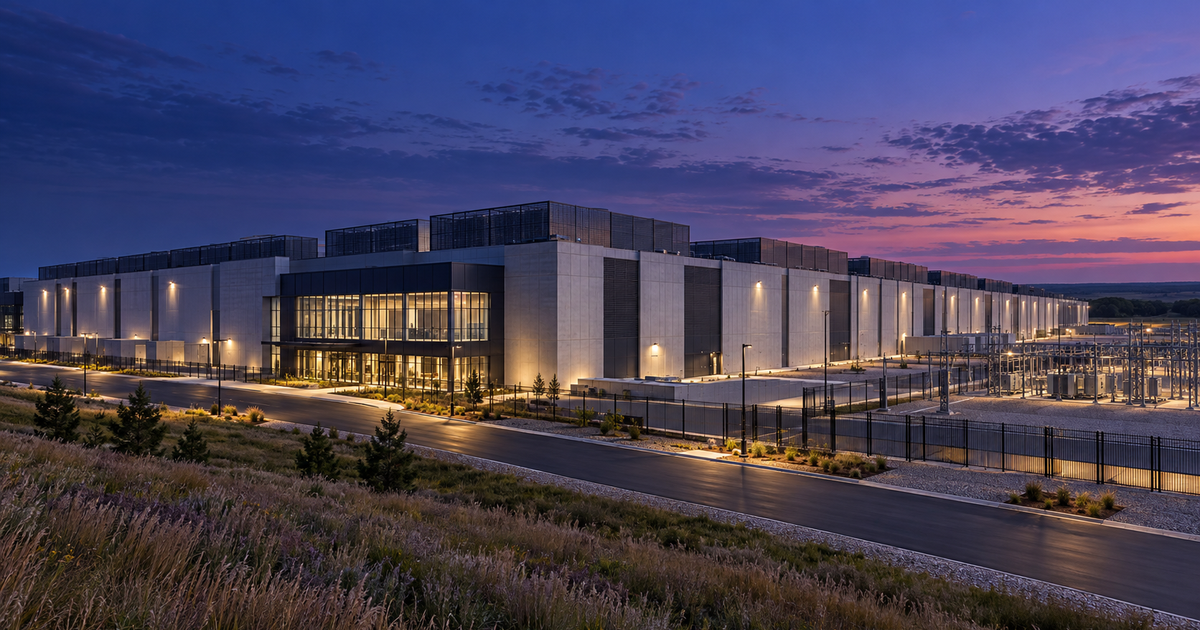
The first package is no longer just a map pin. The September 22 city site-plan packet identifies one two-story data center with approximately 225,000 square feet on each floor, for 450,000 square feet total. It also shows a private Digital Realty substation, Evergy's planned Polaris substation, temporary construction facilities, cooling equipment, generators, access roads, stormwater work, and extensive utility coordination. The De Soto Planning Commission approved that site plan on September 22, with construction expected to begin in 2027.
Current public records also show why contractors must price the latest package rather than repeat an early master-plan number. The city's overview still describes an earlier nine-building, roughly 3-million-square-foot concept on about 280 acres. Newer reporting on the north-site tax increment financing request describes two data center buildings totaling roughly 1.4 million square feet and a $7.52 billion total project cost. A build-to-suit customer reportedly fell through before the approved first building was resized. The practical scope is therefore the approved 450,000-square-foot first building and its live enabling work, not every box in the original concept plan.
| Project | Project Jayhawk / Digital Astra North |
| Location | W. 103rd Street and Lexington Avenue, De Soto, Kansas |
| Current North-Site Cost | $7.52 billion in the TIF request |
| First Building | 450,000 square feet, two stories |
| Status | Phase One site plan approved; construction expected in 2027 |
| Signal LV Score | 9/10 |
| Signal Systems | 10 planning lanes |
| Next Public Gate | TIF public hearing scheduled for November 19, 2026 |
Key Players
Digital Realty is the owner and developer. The city application lists Digital Realty as the owner, BHC LLC as the applicant representative, and Westwood Professional Services as the civil plan preparer. Current Kansas City reporting names Turner Construction as general contractor and Ghafari Associates as architect. No electrical, fiber, security, fire alarm, controls, DAS, or commissioning subcontractor has been publicly named in the records reviewed.
| Role | Company | Why It Matters |
|---|---|---|
| Owner / Developer | Digital Realty | Sets campus standards, tenant interfaces, resilience requirements, and approved technology stacks. |
| General Contractor | Turner Construction | The principal route into trade buyout, bidder qualification, BIM coordination, and construction sequencing. |
| Architect | Ghafari Associates | Owns architectural coordination for the approved first-building design and interfaces with technology spaces. |
| Civil Engineer | Westwood Professional Services | Prepared the development-plan set; a key door for site utilities, diverse duct-bank routes, and entry-facility coordination. |
| Utility | Evergy | Planning the Polaris 345-kV substation and grid delivery serving the campus. |
LVN's contractor-company directory does not contain an exact, source-backed Digital Realty, Turner Construction, Ghafari, or Westwood account match. The post therefore leaves company_id null and records those companies as unresolved Content Graph accounts instead of attaching the article to a look-alike contractor. That is boring database hygiene, which is precisely why it matters.
Low Voltage Systems Breakdown
Signal identifies 10 systems for opportunity planning. None is presented as a publicly awarded contract. Large data center programs routinely divide these systems between core-and-shell construction, owner-furnished technology, tenant fit-out, utility work, and specialized commissioning vendors. Contractors should use the list to map package ownership, not assume one giant combined low-voltage subcontract.
| System | Likely Scope | Bid Question |
|---|---|---|
| Fiber Optic | Diverse backbone routes, building entrances, inter-building trunks, splice enclosures, testing, and turnover records. | Who owns dark fiber, lit services, and tenant cross-connects? |
| Structured Cabling | Telecom rooms, copper horizontal cabling, support spaces, operations networks, labeling, and certification. | Where does base building stop and tenant cabling begin? |
| Outside Plant | Conduit banks, handholes, route diversity, campus rings, carrier entries, and spare-path planning. | Are north and south routes physically diverse through every civil phase? |
| Access Control | Perimeter gates, credentialed entries, mantraps, critical rooms, visitor workflows, and life-safety interfaces. | Which owner standard and identity platform governs the site? |
| CCTV | Perimeter, loading, entry, circulation, substation, and critical-room coverage with resilient recording. | Who owns retention policy, analytics, and security-network switching? |
| Fire Alarm | Detection, releasing interfaces, mass notification, monitoring, survivability, and phased acceptance. | Is the package held by electrical, fire protection, or a dedicated life-safety contractor? |
| BMS / Controls | Mechanical controls, environmental monitoring, alarming, trend data, and interfaces to owner operations. | How are BMS, EPMS, leak detection, and tenant monitoring separated? |
| Networking | Operations-network pathways, racks, edge switching coordination, out-of-band access, and secure handoff. | Which active electronics are owner-furnished, and who commissions them? |
| DAS | Emergency responder radio coverage and, if separately funded, commercial cellular coverage. | Is the scope AHJ-driven ERRCS, carrier cellular, or both? |
| Grounding / Bonding | Telecommunications grounding, equipment bonding, pathway continuity, and test documentation. | Who owns the boundary between electrical grounding and telecom bonding? |
Estimated Low Voltage Value
LVN applies a four-percent planning allowance to announced data center capital programs when the public headline may bundle land, shell construction, infrastructure, tenant equipment, and other non-trade costs. Four percent of the $7.52 billion north-site cost is approximately $300.8 million. We publish a practical $250 million to $350 million range across the north-campus program to reflect package splits, phasing, owner-furnished equipment, and uncertainty in the TIF cost composition.
| North-Site Project Cost | $7.52 billion |
| Planning Factor | 4% flat for announced data center capex |
| Calculated Midpoint | $300.8 million |
| Published Range | $250 million-$350 million |
| Stored $475M Figure | Land acquisition; excluded from the LV calculation |
The $475 million in Digital Realty's June transaction disclosure is the acquisition price for roughly 1,440 acres, not a first-building construction permit and not an LV denominator. It is preserved in metadata as land context only. The publicly announced 600 MW by early 2028 and 2 GW at full delivery are utility-service figures. They are not confirmed critical IT load, so LVN does not multiply them by a per-megawatt benchmark. Using grid delivery as if it were IT load would create a confident-looking fiction.
The range excludes land, utility transmission, substations, generators, major mechanical and electrical equipment, servers, storage, GPUs, network switches, optical transceivers, software, carrier recurring charges, and other owner-furnished technology. It includes planning room for pathways, cable and fiber infrastructure, physical security, life safety, controls interfaces, radio coverage, telecom grounding, testing, documentation, and commissioning where those items land in construction or integration packages.
What Contractors Should Pursue
The near-term door is Turner, not a mystery tenant. Digital Realty told the city that construction contracts would be competitively bid through general contractors, with local subcontractors and suppliers considered where possible. The TIF hearing scheduled for November 19 creates a public milestone, but the approved first-building plan and 2027 construction target mean qualification, bonding, workforce planning, and preconstruction coordination should happen before the hearing becomes old news.
Outside plant deserves first attention because it becomes difficult to repair after roads, secure fencing, drainage, and substations lock the campus geometry. The civil plan, private substation, Evergy substation, two-story building, and future expansion all compete for corridors. A bidder who can show route-diversity diagrams, duct-bank capacity, handhole standards, carrier-entry strategy, and tested spare-path documentation is selling schedule protection—not just conduit and glass.
The second angle is scope discipline. Mission-critical owners often furnish active network electronics, security platforms, servers, racks, and software while construction teams provide pathways, passive cabling, field devices, power, and commissioning labor. Fire alarm may sit with electrical or fire protection. BMS may sit with the mechanical controls vendor. ERRCS may be an allowance until testing proves it is required. Every one of those boundaries must be written into the bid.
Contractors should also watch the project's community and infrastructure commitments. Digital Realty committed $20 million toward utility and property-tax credits for De Soto households while seeking project incentives. The city is reviewing noise, water, traffic, and tax impacts closely. Low-voltage teams will not decide those debates, but site access, work hours, commissioning noise, security procedures, and public-safety coverage can all be affected by the resulting conditions.
Skills and Certifications Required
Competitive teams will need data center references, strong BIM participation, documented quality control, and technicians who can produce clean test evidence at scale. Useful credentials include BICSI RCDD for design leadership, BICSI Installer or Technician credentials for structured cabling, manufacturer certifications for fiber and security platforms, NICET credentials where fire-alarm responsibilities require them, and RF experience for emergency responder coverage. Credentials are not a substitute for package-specific licensing; bidders should verify Kansas and local requirements with the authority having jurisdiction before accepting scope.
Field capability matters more than brochure density. Fiber teams need repeatable OLTS and OTDR workflows, polarity control, splice documentation, and the throughput to turn over thousands of strands without losing traceability. Security teams need door-hardware coordination, controller-network discipline, camera storage calculations, and secure commissioning. Controls teams need point-list ownership and clean interface definitions. Senior staff must be able to defend as-built records, test exceptions, cybersecurity handoff, and change control during integrated systems testing.
Market Signal
This is LVN's first Kansas project spotlight and the first Digital Realty headline in the catalog. The location matters. De Soto is no longer a single-megaproject story: Panasonic's battery plant, another hyperscale data center under development, new substations, water infrastructure, and highway access are turning the former ammunition-plant land into a major advanced-manufacturing and digital-infrastructure district.
For low-voltage contractors, the strongest signal is the combination of an approved first building, a named GC and design team, a current financing request, and no publicly named LV subcontractors. The work is real enough to qualify for, early enough for package boundaries to move, and large enough that workforce logistics will shape the award. De Soto has fewer than 7,000 residents; Digital Realty estimates more than 1,000 workers at peak construction. Kansas City labor depth, travel plans, prefab capacity, and commissioning staffing belong in the pursuit strategy now.
Find Projects Like This on Signal
LVN Signal tracks thousands of construction projects with low voltage opportunities across the country. Filter by city, system type, and project value to find your next bid.
Join 35,000+ Low Voltage Pros
Get weekly permit updates, tool deals, job opportunities, and industry news. No spam, unsubscribe anytime.