
Join Low Voltage Nation — Find project opportunities and showcase your company to thousands of industry professionals
Permit records show a $30M interior build-out of D'Youville University's new College of Osteopathic Medicine at 285 Delaware Avenue in downtown Buffalo — an AV-heavy, simulation-driven low voltage opportunity estimated at $2.1M. Here's what low voltage and AV integrators need to know.
Buffalo is getting a brand-new medical school, and it is one of the most audiovisual-intensive low voltage projects Signal is tracking in the Northeast. Permit records show a $30 million interior renovation for D’Youville University’s College of Osteopathic Medicine at 285 Delaware Avenue — a build-out anchored by three core low voltage systems with an estimated $2.1 million in low voltage and AV work.
Project Overview
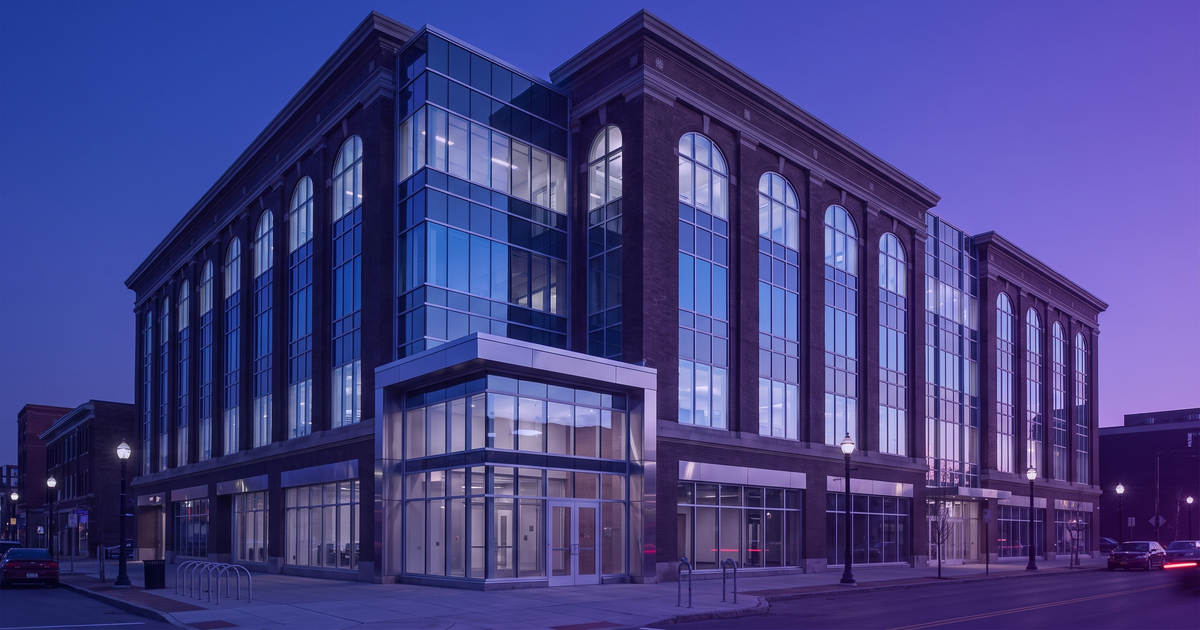
Building permit data from the City of Buffalo shows a $30 million interior renovation and change of occupancy at 285 Delaware Avenue to suit a new higher-education tenant. Public sources confirm the tenant is D’Youville University’s College of Osteopathic Medicine (DYU-COM), which will operate from the 125,000-square-foot downtown facility beginning in Fall 2027. The renovation reconfigures the existing structure with expanded stairs, new mechanical shafts, and a full technology fit-out.
- Project value: $30 million (permit-estimated construction value)
- Location: 285 Delaware Avenue, Downtown Buffalo, NY
- Facility: 125,000 sq ft permanent home for a new osteopathic medical school
- Program spaces: Cadaveric anatomy and OMM labs, advanced simulation and standardized-patient suites, OSCE and clinical-skills labs, a full-cohort lecture hall
- Timeline: Renovation underway; operational Fall 2027 (inaugural class already enrolled)
- Source: Buffalo open building-permit records
The Signal record carries an LV opportunity score of 8 out of 10. The system count is low — but that undersells the opportunity, because a medical simulation facility concentrates an enormous amount of value into its audiovisual and technology scope.
Why This Project Matters
A college of osteopathic medicine is not a standard classroom fit-out. Simulation and standardized-patient suites require synchronized audiovisual capture, recording, and debrief systems in every room; OSCE (Objective Structured Clinical Examination) labs need multi-camera exam-room recording tied to assessment software; cadaveric anatomy and OMM labs need specialized power, cabling, and camera systems; and a full-cohort lecture hall needs lecture-capture and distributed AV. For AV-forward low voltage integrators, this is exactly the kind of specialized, high-margin work that rewards clinical-education experience.
Low Voltage Systems Breakdown
Signal identifies three core low voltage systems — but the audiovisual scope in a medical simulation environment is deep:
| System | Scope | Complexity |
|---|---|---|
| Audiovisual (AV) | Simulation and standardized-patient capture/debrief, OSCE multi-camera exam recording, lecture-capture, and distributed classroom AV | Very High |
| Structured Cabling | 125,000 sq ft network backbone and dense horizontal cabling to labs, sim suites, and lecture spaces | High |
| Security (Access Control & CCTV) | Credentialed access to cadaver labs and controlled areas, after-hours student access, and campus video surveillance | High |
Estimated Low Voltage Value
Signal estimates the low voltage and AV opportunity at approximately $2.1 million — roughly 7% of the $30 million renovation, above the typical higher-education benchmark because medical-simulation AV and clinical-recording systems carry a premium share of the technology budget.
That is an estimate derived from industry benchmarks. The AV and simulation scope alone — capture systems, exam-room recording, debrief rooms, and lecture-capture across dozens of spaces — can dominate the low voltage package on a project like this.
Skills & Certifications
Medical-education AV is a specialist niche. Expect owners and design teams to require:
- AVIXA CTS (and CTS-I / CTS-D) for design and integration of simulation, OSCE, and lecture-capture AV
- Experience with medical-simulation capture platforms (e.g., SimCapture / Level 3 Healthcare-class systems) and standardized-patient recording
- BICSI structured cabling competency (RCDD for design-heavy scopes) for a dense lab environment
- Manufacturer certifications for access control and IP video (Genetec, Lenel, Axis)
- AV-over-IP and lecture-capture platform certifications (Crestron, Extron, Q-SYS)
- Familiarity with occupied-building phasing and higher-education / clinical construction standards
Market Signal
New medical schools are rare, and they anchor long-term institutional relationships. D’Youville’s downtown Buffalo campus signals a wave of higher-education and clinical investment in Western New York — and it is a reminder that some of the highest-value low voltage work is measured not by system count but by AV and technology intensity. A simulation-driven medical school concentrates specialized scope into one project with one institutional decision-maker.
For low voltage and AV integrators in the Northeast, a $30 million medical-school build-out is the kind of marquee, reference-defining project that opens doors to a university’s broader capital program.
Find Projects Like This on Signal
LVN Signal tracks thousands of construction projects with low voltage opportunities across the country. Filter by city, system type, and project value to find your next bid.
Join 35,000+ Low Voltage Pros
Get weekly permit updates, tool deals, job opportunities, and industry news. No spam, unsubscribe anytime.