
Join Low Voltage Nation — Find project opportunities and showcase your company to thousands of industry professionals
ValorC3's issued $22.13 million BOI-2 expansion permit adds 31,500 square feet in Boise and puts Structured Cabling, Fiber, Access Control, CCTV, and DAS on Signal's watchlist. The estimated low-voltage floor is $1.3 million to $1.8 million, while the GC and specialty package holders remain undisclosed.
ValorC3's $22.13 million BOI-2 expansion in Boise adds 31,500 square feet to a high-density data center and puts five low-voltage systems on the contractor watchlist. Based on the issued expansion value and mission-critical construction benchmarks, the visible permit supports an estimated $1.3 million to $1.8 million low-voltage floor before any owner-furnished network equipment or tenant-specific technology is counted.
Project Overview
City of Boise permit records show that BLD26-01913 was issued on September 10, 2026 for an addition at 9601 W Emerald Street. The permit carries a job value of $22,129,207, adds 31,500 square feet, and brings the tracked building area to 69,200 square feet. The record describes the work as an addition to the previously approved Emerald Data Center development under DRH25-00037.
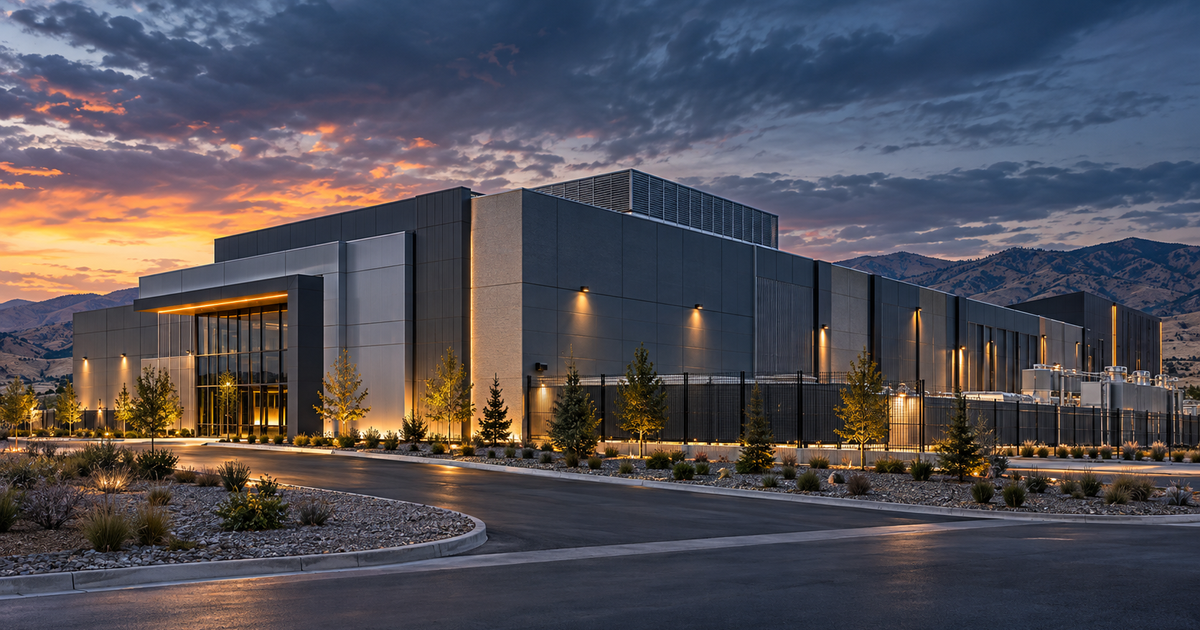
The name in the permit is generic, but the operator is not. ValorC3 identifies BOI-2 as a high-density, build-to-suit facility for a Fortune 50 technology company, with air cooling and direct-to-chip liquid cooling. The company says the facility is fully preleased and on track to open in 2027.
The expansion is a distinct construction record, not a reason to combine every permit at the address into one inflated headline. The first BOI-2 building has its own issued permit and later plan modifications. This spotlight uses only the $22.13 million expansion value for the low-voltage estimate, while treating the earlier building as project context.
| Project | ValorC3 BOI-2 Data Center Expansion |
| Location | 9601 W Emerald Street, Boise, Idaho |
| Expansion Permit | BLD26-01913 |
| Permit Status | Issued September 10, 2026 |
| Expansion Value | $22,129,207 |
| Expansion Area | 31,500 square feet |
| Total Tracked Building Area | 69,200 square feet |
| Signal LV Score | 10/10 |
| Source | Boise High Impact Building Permits |
Scope Boundary: What the Permit Does Not Prove
ValorC3's public BOI-2 materials describe 10 MW of critical IT capacity for the build-to-suit facility, but no source reviewed for this spotlight allocates a separate MW figure to the 31,500-square-foot addition. A capacity-based estimate would therefore manufacture a denominator. The LV value below uses the issued construction value instead.
The Boise permit record for the original structure also says that fire alarm changes require a separate permit. Fire Alarm is consequently excluded from this five-system estimate even though life-safety coordination will matter at the completed facility. Server hardware, tenant network equipment, direct-to-chip cooling hardware, UPS equipment, generators, and other owner-furnished critical infrastructure are also outside this low-voltage floor.
Key Players
Public sources resolve the operator, property entity, and design context, but they do not name the general contractor, electrical contractor, or specialty low-voltage integrators for the expansion. That gap is commercially useful: the project is permitted, the end user profile is defined, and the package holders are still not visible in the reviewed public record.
| Role | Company | Source-Backed Context |
|---|---|---|
| Owner / Operator | ValorC3 Data Centers | Identifies BOI-2 as its 10 MW Boise build-to-suit facility, fully preleased to a Fortune 50 technology customer. |
| Property Owner | BOISE 2 DC LLC | Named by the BoiseDev project tracker for the 9601 W Emerald Street development. |
| Architectural Context | Lombard Conrad Architects | Named as architect on the public project tracker; no separate expansion design award was found. |
| General Contractor | Not publicly identified | No source-backed GC was found for BLD26-01913. |
| LV Package Holders | Not publicly identified | Fiber, cabling, security, CCTV, and DAS awards remain unconfirmed. |
BoiseDev reported in March that ValorC3 applied to nearly double the building before the first phase opened. The later issued permit turns that early planning signal into a much firmer contractor watch item. For business development teams, the next useful document is not another broad project announcement; it is a named GC, electrical subcontractor, bid invitation, plan-room listing, or specialty integrator.
Low Voltage Systems Breakdown
Signal tracks five systems on the expansion: Structured Cabling, Fiber Optic, Access Control, CCTV / Video Surveillance, and DAS. Those are opportunity indicators, not proof that a specific subcontract has been awarded. ValorC3's own Boise materials support the core network and physical-security requirements by emphasizing diverse carrier paths, direct cloud connectivity, controlled access, and continuously staffed operations.
| System | Category | Likely Expansion Scope | Complexity |
|---|---|---|---|
| Structured Cabling | Data / Voice | Horizontal and backbone pathways between the expansion, meet-me-room functions, support offices, controls interfaces, and tenant deployment zones. The work should include labeling, testing, administration, and turnover documentation built for continuous operations. | High |
| Fiber Optic | Data / Voice | Diverse entrances, inter-building backbone, cross-connect extensions, and redundant routing between BOI-2 and the adjacent Boise campus. Splicing plans and OTDR documentation must preserve route diversity instead of creating a common failure point. | High |
| Access Control | Security | Credentialed perimeter and interior access for sensitive operational zones, with door hardware, request-to-exit, monitoring, and identity workflows coordinated to the owner's security standard. | High |
| CCTV / Video Surveillance | Security | Exterior coverage, controlled-entry views, loading and service areas, interior circulation, and operational spaces. Camera placement, PoE switching, storage, analytics, and VMS integration must be coordinated with lighting and physical-security design. | High |
| Distributed Antenna System | Wireless | Coverage validation for public-safety and operational communications across the combined 69,200-square-foot building. The actual requirement depends on code testing, RF conditions, and owner standards; no awarded DAS package was found. | Medium to High |
The shared risk across these systems is commissioning. A data center addition cannot be treated like an isolated tenant improvement because new pathways, security zones, and carrier routes must join an operating standard without introducing a single point of failure. Submittals should show route separation, labeling conventions, test acceptance thresholds, and a cutover sequence that protects the preleased tenant's schedule.
Owner-furnished equipment is another boundary to settle early. ValorC3 may control carrier relationships, network electronics, security platforms, or tenant-specific standards even when a specialty contractor installs pathways and field devices. A clean proposal separates furnished equipment, installation labor, programming, licensing, testing, and recurring services instead of burying them in one allowance.
Estimated Low Voltage Value
The expansion's issued construction value provides the most defensible basis for an early LV floor. Applying a 6% mission-critical base and a 1.15 coordination multiplier for five tracked systems produces a midpoint of about $1.53 million. Because no public source defines the final division between owner-furnished technology and contractor-furnished systems, the publishable range is $1.3 million to $1.8 million.
| Issued Expansion Value | $22,129,207 |
| Base LV Benchmark | 6% of reported construction value |
| Five-System Multiplier | 1.15x |
| Calculated Midpoint | Approximately $1.53 million |
| Estimated LV Floor | $1.3 million to $1.8 million |
This is not a quote and it is not the value of every technology package serving BOI-2. The estimate is scoped to the selected expansion record and the five Signal systems. Fire Alarm is excluded because the city calls for separate permitting, while server, storage, tenant network electronics, power distribution, and cooling equipment are outside the LV contractor floor.
The overall 10 MW BOI-2 capacity remains a useful complexity indicator, but not a valid expansion denominator. If later drawings assign critical IT load specifically to the addition, contractors can run a second capacity-based check. Until then, pricing from the issued permit avoids turning an undisclosed number into fake precision.
Skills and Certifications Required
The expansion calls for technicians who can work inside a mission-critical quality system, not simply install devices. The differentiator will be documented testing, clean turnover, controlled change management, and coordination across network, security, and RF scopes.
| System | Relevant Certifications | Critical Skills |
|---|---|---|
| Structured Cabling | BICSI INSTC, BICSI TECH, RCDD oversight | Cat6A installation, pathway planning, rack and cabinet work, Fluke certification, labeling and closeout |
| Fiber Optic | BICSI INSTF, BICSI RCDD, manufacturer training | Fusion splicing, OTDR and power-meter testing, diverse-route documentation, enclosure and patch-panel management |
| Access Control | Idaho licensing as applicable, ASIS PSP, platform certification | Door hardware coordination, controller wiring, IP networking, credential workflows, alarm integration |
| CCTV | CompTIA Network+, VMS and camera manufacturer certifications | PoE design, camera placement, bandwidth and storage calculation, analytics, VMS commissioning |
| DAS | BICSI RCDD, RF training, carrier or public-safety vendor certification | RF surveys, antenna placement, fiber support, signal testing, AHJ and carrier coordination |
Entry-level technicians can contribute to pathway installation, cable placement, device mounting, labeling, and basic test preparation under supervision. Mid-level technicians should own copper and fiber terminations, device installation, test execution, and punch-list closure. Senior staff should include an RCDD or equivalent design lead, security-platform specialists, an RF lead if DAS is required, and a commissioning manager who can defend every test result.
Contractors should verify current Idaho and City of Boise licensing, permitting, and inspection requirements before bidding. Alarm, life-safety, and communications scopes can cross different authorities, and the project record already shows that Fire Alarm work follows a separate permit path.
Contractor Playbook: What to Watch Next
The permit is issued, but the public package map is incomplete. The most valuable trigger will be a GC or electrical contractor name attached to the expansion, followed by low-voltage bid packages, delegated-design submittals, carrier entrance work, or a security integrator. Local teams should watch City of Boise records by address and permit number rather than relying only on the project nickname.
For outreach, lead with the scope boundary. Ask who owns the diverse fiber entrances, whether structured cabling is tenant-standard or base-building work, which party supplies the access-control and VMS platforms, whether public-safety radio testing has occurred, and how BOI-2 connects to BOI-1. Those questions demonstrate mission-critical fluency and expose package ownership without pretending an award is already available.
The preleased Fortune 50 tenant also changes the sales motion. Standards may be confidential, approved-product lists may be fixed, and commissioning evidence may matter more than a low unit price. Contractors with clean data-center references, documented QA procedures, and the ability to staff an accelerated 2027 opening schedule have the strongest reason to pursue the job.
Market Signal
ValorC3's Boise expansion is an edge-market signal rather than a hyperscale-campus story. The project is small beside the largest AI campuses, but its 10 MW build-to-suit profile, direct-to-chip cooling, and fully preleased status show that high-density enterprise demand is reaching regional markets. That creates packages sized for established regional integrators without removing the reliability expectations of a hyperscale environment.
ValorC3 describes Boise as a carrier-neutral location with diverse on-site paths and direct cloud connectivity. That makes fiber route diversity, cross-connect administration, and operational support central to the business case. Security and network contractors are not decorating the building; they are building the control plane that lets the tenant use the site.
The expansion also compresses the procurement window. ValorC3 applied for the addition before the first phase opened, and the city has now issued the addition permit. Teams waiting for a ceremonial groundbreaking may arrive after the package strategy is locked. The better move is to track the permit, architect, owner, and emerging prime contractors now.
No reviewed source names the GC, electrical contractor, or LV integrators. That is the actionable market signal: the physical scope is real, the permit is issued, the operator is source-backed, and the specialty roster is still opaque. The next named package holder will be more useful to contractors than another round of capacity headlines.
Find Projects Like This on Signal
LVN Signal tracks thousands of construction projects with low-voltage opportunities across the country. Filter by city, system type, and project value to find your next bid.
Join 35,000+ Low Voltage Pros
Get weekly permit updates, tool deals, job opportunities, and industry news. No spam, unsubscribe anytime.