
Join Low Voltage Nation — Find project opportunities and showcase your company to thousands of industry professionals
Galaxy filed $3.5B in permits for Helios Phase 2 in Dickens County, TX — three buildings, 1M+ sq ft at a former bitcoin mine turned CoreWeave AI campus, requiring 10 low voltage systems with an estimated $140M in LV work. LV packages not yet awarded.
Galaxy has filed $3.5 billion in permits for Phase 2 of its Helios AI data center campus in Dickens County, Texas — three new buildings totaling over one million square feet at a site that has already delivered its first 200 MW to CoreWeave. All ten core low voltage systems are in play, with an estimated LV opportunity of roughly $140 million — and per project records, no low voltage, fiber, security, or BAS package awards have been made public yet.
Project Overview
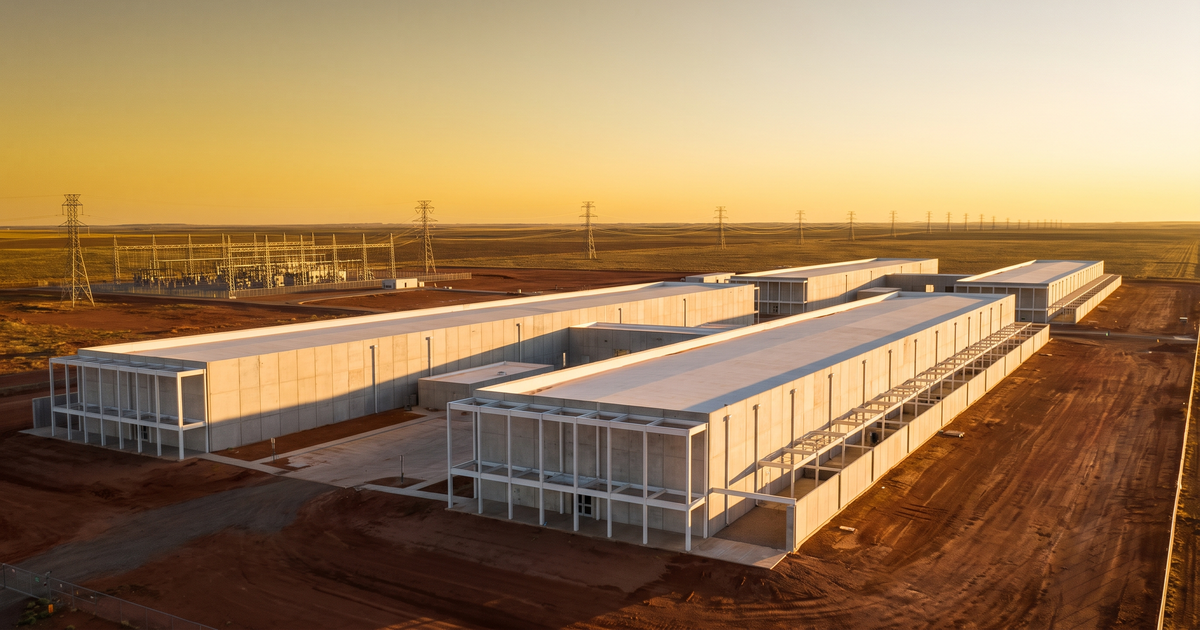
Helios sits on more than 2,200 acres about four miles northwest of Afton in Dickens County, West Texas — roughly an hour from Lubbock. The campus has one of the more remarkable origin stories in American infrastructure: it began as one of North America's largest bitcoin mines, which Galaxy acquired from Argo Blockchain for $65 million in 2022 and is now converting into one of the country's largest AI/HPC campuses.
Texas Department of Licensing and Regulation records lay out Phase 2 in detail:
- Helios 2 — $900 million, 199,124 sq ft
- Helios 3 — $1.3 billion, ~350,000 sq ft
- Helios 4 — $1.3 billion, ~350,000 sq ft
- Combined: $3.5 billion, 1,048,782 sq ft, owner Galaxy Helios II LLC, design firm Stantec Architecture
The timeline is live: Galaxy announced on July 6, 2026 that Phase I delivered approximately 200 MW of gross power — 133 MW of critical IT load — to anchor tenant CoreWeave, and that Phase II civil and structural work is underway with data hall deliveries slated to begin in the first half of 2027. Phase II adds roughly 260 MW of incremental critical IT load, bringing CoreWeave's Helios commitment to about 393 MW; across Phases I–III, CoreWeave has committed to 526 MW of critical IT — the full 800 MW of gross power currently contracted — under 15-year leases with two five-year extension options. ERCOT approved an additional 830 MW for the campus in January 2026, taking total approved power past 1.6 GW with potential to scale toward 3.6 GW. Galaxy expects contracted Helios capacity to generate more than $1 billion in average annual revenue.
Key Players
| Role | Company | Notes |
|---|---|---|
| Owner / Operator | Galaxy (Galaxy Helios II LLC) | Digital infrastructure and financial services firm; converting Helios from bitcoin mining to AI/HPC |
| Anchor Tenant | CoreWeave | 526 MW critical IT committed across Phases I–III; 15-year leases |
| Contractor (Phase I) | Clayco | Initial phase construction |
| Design Firm | Stantec Architecture | Named on Phase II TDLR records |
Notable for subcontractors: reviewed public sources name no GC/EPCM for Phase II and no electrical, low voltage, fiber/OSP, structured cabling, security, fire alarm, BAS/BMS, DAS, grounding, or commissioning packages. On a $3.5 billion phase with civil work already moving and data halls due in early 2027, those packages are being scoped and let now.
Low Voltage Systems Breakdown
| System | Scope at Helios Phase 2 | Complexity |
|---|---|---|
| Fiber / Outside Plant | Campus backbone across 2,200+ acres; long-haul connectivity from a remote West Texas site | High |
| Structured Cabling | Over 1M sq ft across three buildings; GPU-dense AI hall cabling to CoreWeave standards | High |
| Access Control | Perimeter-to-cabinet security on a remote campus; layered tenant requirements | High |
| CCTV / Video Surveillance | Full campus and hall coverage with remote monitoring emphasis | High |
| Fire Alarm / VESDA | Aspirating detection and suppression integration across high-density halls | High |
| BMS / Controls | Liquid-cooling-era controls; power monitoring against a 1.6 GW approved envelope | High |
| Networking | AI/HPC fabric support and meet-me infrastructure | High |
| DAS | Coverage across large-footprint halls in a rural radio environment | Medium |
| Grounding & Bonding | Signal reference grids and lightning protection on the open West Texas plains | High |
Estimated Low Voltage Value: $140M
The project record carries no pre-computed LV value, so we apply Signal's hyperscale data center benchmark of approximately 4% of construction value for low voltage and structured infrastructure scope. Against the $3.5 billion Phase 2 program, that puts the estimated LV opportunity at roughly $140 million across Helios 2, 3, and 4 — with packages unawarded and deliveries starting H1 2027, one of the most actionable large-scale LV pipelines Signal is tracking. The remoteness premium is real: crews willing to mobilize to Dickens County will find a thinner bidder pool than any metro data center market.
Skills & Certifications
- BICSI RCDD and DCDC — data center design credentials at bid time
- BICSI INSTC/INSTF and FOA CFOT — campus-scale fiber installation and testing
- NICET Fire Alarm Level II+ — VESDA/aspirating and clean-agent experience
- Access control / video manufacturer certs — Genetec, Lenel, Software House, Axis
- IEEE/BICSI grounding and bonding — signal reference grids, lightning protection in open-plains exposure
- IEC 62443 awareness — BMS/OT cybersecurity for AI-era campuses
Market Signal: The Bitcoin-to-AI Conversion Wave Is Real
Helios is the flagship example of a trend reshaping rural Texas: bitcoin mining sites with big grid interconnects converting to AI data centers. The power is the asset — Helios came with transmission-scale interconnection that would take years to permit from scratch, and ERCOT's January 2026 approval of another 830 MW shows how fast these sites can scale once converted. Remote West Texas counties like Dickens are hosting multi-billion-dollar campuses because that is where contracted power lives.
For low voltage contractors, conversions carry a distinctive profile: massive greenfield-adjacent buildouts, compressed schedules driven by tenant lease starts, and thin local trade markets that force GCs to import crews. Firms that can field travel teams with data center credentials hold real leverage — and with Phase 2's specialty packages unawarded and Phase III behind it, Helios will be generating LV work into 2028 and beyond.
Find Projects Like This on Signal
LVN Signal tracks thousands of construction projects with low voltage opportunities across the country. Filter by city, system type, and project value to find your next bid.
Join 35,000+ Low Voltage Pros
Get weekly permit updates, tool deals, job opportunities, and industry news. No spam, unsubscribe anytime.