
Join Low Voltage Nation — Find project opportunities and showcase your company to thousands of industry professionals
Nexus Apex DFW HB1 has a $400M TDLR filing, 491,378 sq ft, HDR as design firm, and early low-voltage watch items.
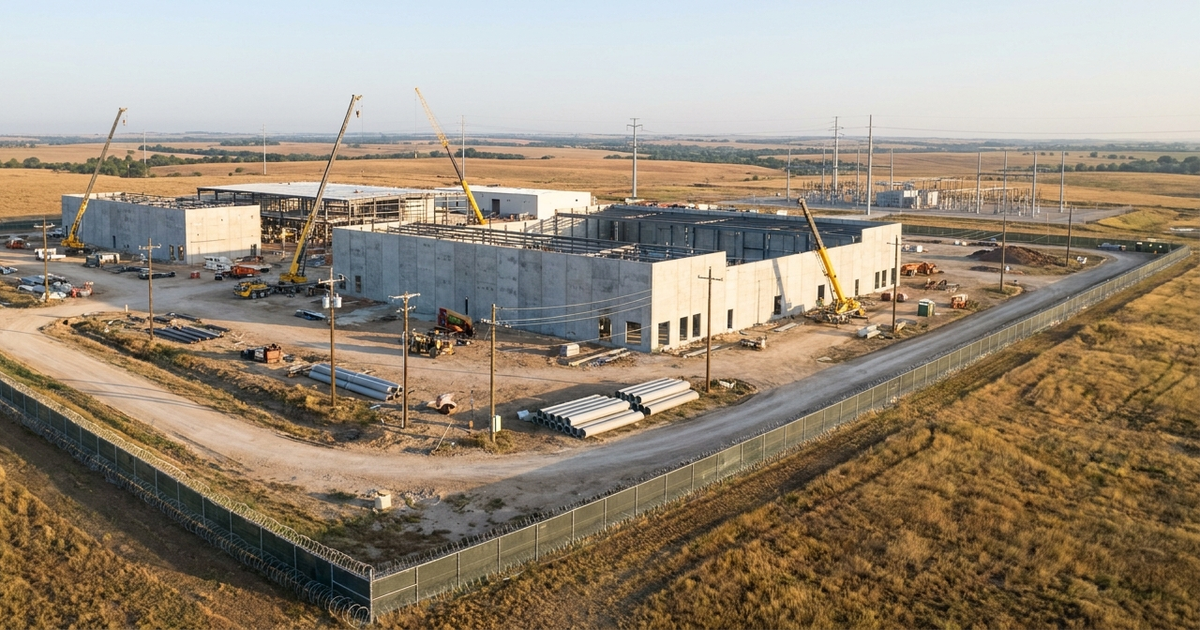
Nexus Apex DFW HB1 is now a source-backed AI data-center construction signal for Hubbard, Texas, not just a rumor around the Dallas-Fort Worth market. The key public record is Texas Department of Licensing and Regulation project TABS2026022673, which lists Nexus - Apex DFW HB1 - Building 1 at 357 HCR 3372 in Hubbard, Hill County. The filing identifies a privately funded new-construction data-center building, a $400 million estimated cost, 491,378 square feet, a January 6, 2026 start date, and an October 29, 2027 completion date. It also names Nexus Data Centers Hubbard LLC as owner and HDR Engineering Inc as the design firm.
For low-voltage contractors, the important part is the combination of specificity and timing. A filed building address, owner entity, design firm, cost, square footage, start date, and completion window means the project has moved into a trackable public-construction phase. It does not mean every specialty package is awarded or visible. The reviewed public sources do not name a confirmed general contractor, EPCM, electrical contractor, low-voltage contractor, fiber or OSP contractor, security integrator, fire alarm contractor, BAS/BMS contractor, DAS provider, network integrator, grounding contractor, or commissioning firm. That gap is the opportunity watch zone.
| Project Fact | Source-Backed Detail | LVN Read |
|---|---|---|
| Location | 357 HCR 3372, Hubbard, Hill County, Texas. | DFW-adjacent central Texas site with its own project family. |
| Building | TDLR lists HB1 / Building 1 at 491,378 sq ft. | Large enough for serious pathways, security, controls, fire alarm, fiber, and commissioning scope. |
| Schedule | January 2026 start and October 2027 completion in TDLR. | Active window for permits, bid signals, job postings, and package movement. |
| Value | $400M estimated cost for the HB1 filing. | Building-level public value, separate from broader campus financing. |
| Known design role | HDR Engineering Inc is named as design firm. | Design is source-backed; specialty trade awards still need public evidence. |
The broader campus signal comes through Nexus and financing evidence. The Nexus Data Centers site frames the company around purpose-built AI data centers with behind-the-meter power, redundant fiber, and large-scale campus development. The Transition Equity / Business Wire financing release says Eagle Point provided the second of two senior secured credit financings to Nexus Apex Holdings LLC, owned by Nexus Data Centers, to support a roughly 2,900-acre campus for behind-the-meter power generation, NeoCloud, and high-density hyperscale infrastructure facilities. That does not replace the TDLR building record, but it explains why HB1 matters as part of a larger power-and-compute campus.
Data Center Dynamics coverage ties the TDLR filing back to Nexus Data Centers, Hubbard/Hill County, Transition Equity backing, Eagle Point financing, and prior reporting that Nexus was targeting a 600 MW natural-gas-powered data-center campus. LVN should treat that 600 MW number as secondary campus context unless Nexus, a utility, a public record, or another primary source confirms building-level load. The source-backed fact for this post is narrower and cleaner: HB1 is a 491,378-square-foot data-center building with a $400 million TDLR estimate and HDR listed as design firm.
The company table should stay disciplined because entity names matter in data-center work. Nexus Data Centers is the developer/operator context. Nexus Data Centers Hubbard LLC is the owner entity listed in the TDLR record. Nexus Apex Holdings LLC is the financing vehicle named in the Eagle Point / Transition Equity financing release. HDR Engineering Inc is the design firm named by TDLR. Primoris, Eutaw, Yates, Tellepsen, EquipmentShare, Industrial Project Innovation, and CorePhase appear in Nexus LinkedIn career-fair evidence as subcontractor or onsite hiring signals, but that is not the same as a public award for electrical, low-voltage, fiber, security, fire alarm, controls, DAS, grounding, or commissioning packages.
| Entity | Source-Backed Role | Evidence |
|---|---|---|
| Nexus Data Centers | Developer / owner-operator context. | Nexus company site. |
| Nexus Data Centers Hubbard LLC | Owner listed for HB1. | TDLR TABS2026022673. |
| Nexus Apex Holdings LLC | Financing vehicle for broader campus work. | Transition Equity financing release. |
| HDR Engineering Inc | Design firm for HB1. | TDLR record and HDR data-center context. |
| Eagle Point / Transition Equity | Credit financing and equity-backer context. | Transition Equity / Business Wire release. |
| Career-fair firms | Hiring signals only, not package awards. | Nexus LinkedIn updates. |
The career-fair evidence is still useful. Nexus LinkedIn company updates show Hubbard hiring/community activity and describe a local Data Center & Power Facility career fair. The post lists Primoris, Eutaw, Yates, Tellepsen, EquipmentShare, IPI, and CorePhase as subcontractors expected onsite to discuss positions. That suggests real field activity around the site, but it should be handled as a workforce and subcontractor-watch signal. A career fair does not tell LVN which firm owns fire alarm, structured cabling, access control, OSP, BAS/BMS, DAS, grounding, or commissioning scope. It tells contractors which names may be worth monitoring for future public job postings, plan-room references, and project updates.
For technicians, HB1 has the usual data-center work zones without the usual certainty around package holders. Large AI and hyperscale facilities need clean low-voltage coordination because every system touches operations: carrier routes, secure entrances, access-control boundaries, CCTV coverage, life-safety interfaces, cooling and facility monitoring, data-hall pathways, network rooms, labeling, test documentation, and commissioning. The behind-the-meter power framing adds another layer. Power-plant, substation, controls, monitoring, site-security, grounding, fiber, and OT-network coordination can pull low-voltage work earlier than crews expect, especially when the campus is being built around power availability as much as building square footage.
| LV System | Why It Matters | Public Signal To Watch |
|---|---|---|
| Fiber / OSP | AI campuses need diverse entrances, carrier routes, vaults, and tested backbone paths. | Carrier, conduit, civil, easement, and fiber-contractor filings. |
| Structured cabling | Data halls and support spaces require disciplined pathways, labeling, and test results. | Tenant fit-out records, tray packages, rack/row scope, and QA roles. |
| Access control / CCTV | Perimeter, building, loading, admin, and secure areas need layered coverage. | Security integrator awards, device schedules, and commissioning jobs. |
| Fire alarm | Life-safety systems must coordinate with suppression, monitoring, and AHJ inspections. | Fire alarm permits, inspection milestones, and specialty contractor names. |
| BAS/BMS controls | Cooling, alarms, power monitoring, and facilities teams depend on controls integration. | Controls integrator roles, point lists, and commissioning specs. |
| DAS / networking | Large hardened buildings often need wireless coverage and IT/OT coordination. | DAS design, public-safety coverage, network integrator, and carrier coordination. |
| Grounding / commissioning | Telecom rooms, racks, pathways, and electrical gear need clean bonding and turnover proof. | Electrical coordination notes, QA checklists, test reports, and punch-list movement. |
There is a practical sequencing point here. The TDLR filing shows a construction start in January 2026 and completion in October 2027, but low-voltage packages often become visible after site, shell, power, long-lead equipment, and design coordination move farther. Contractors should not assume the work is gone because a career fair already happened. They should also not assume a package exists just because a company name appears in a LinkedIn post. The correct read is that HB1 is active enough to track closely and early enough that confirmed specialty awards may still surface.
For small and mid-size low-voltage firms, the skill stack is predictable: fiber cleaning and testing, OSP documentation, copper certification, cable tray coordination, labeling discipline, access-control and camera commissioning, fire alarm interface coordination, BAS/BMS point awareness, DAS and public-safety coverage awareness, grounding and bonding discipline, lift and site-safety compliance, pre-task planning, change-order documentation, and turnover packages that survive owner review. Data-center projects reward crews that can prove the work with photos, test reports, redlines, asset labels, and closeout files.
The watch list should stay source-backed. Monitor TDLR/TABS for HB1, HB2, and related Nexus Apex filings; Hill County and Hubbard records; Nexus Data Centers updates; TCEQ air or generation filings if the behind-the-meter power side becomes more public; Eagle Point and Transition Equity updates; local permits and inspections; job postings; and plan-room or prequalification channels. Also track aliases: Nexus Apex DFW HB1, Nexus Apex HB1, Nexus Hubbard, Nexus Data Centers Hubbard, 357 HCR 3372, Hill County data center, TABS2026022673, Nexus Apex Holdings, and Hubbard Data Center & Power Facility.
The outreach angle should be measured. A project like this can attract a lot of generic vendor noise once the filing circulates, but the better move is to build a source file and wait for the right opening. Track the owner names, design firm, financing parties, public permit IDs, and any contractor pages that start naming Hubbard or Nexus Apex directly. When a confirmed package holder appears, contractors can approach with relevant data-center proof instead of a cold pitch built on speculation.
Keep this separate from other North Texas and central Texas data-center projects. DataBank Red Oak, QTS Fort Worth or Wilmer, Google Midlothian, Galaxy Helios, Prime Lockhart, and other DFW-region or Central Texas projects are different project families. Nexus Apex HB1 has its own TDLR record, owner entity, design firm, financing trail, and Hubbard site. The next useful public update will be a named GC or EPCM, a utility or power milestone, a building or trade permit, a specialty subcontractor posting, or a commissioning-related role tied directly to Nexus Apex Hubbard.
LVN Signal is useful here because it turns a scattered set of construction clues into a contractor-facing watch path. The project is source-backed, the first building is large, and the broader campus financing points to power-intensive AI infrastructure. The contractor stance remains conservative: HDR is confirmed as design firm, Nexus and Nexus Hubbard are confirmed owner/operator context, Eagle Point and Transition Equity are confirmed financing context, and the career-fair names are workforce signals. Electrical and low-voltage package holders remain unknown until public evidence names them.
Join 35,000+ Low Voltage Pros
Get weekly permit updates, tool deals, job opportunities, and industry news. No spam, unsubscribe anytime.