
Join Low Voltage Nation — Find project opportunities and showcase your company to thousands of industry professionals
Microsoft proposes three data-center buildings in Floyd County. The filing defines 422 MW as peak connected load, with regional review and contractor awards still ahead.
Microsoft has filed plans for a three-building data center campus north of Huffaker Road in Floyd County, Georgia. The ATL80 proposal covers 349.03 acres and up to 1,659,000 square feet, with estimated peak connected electrical load of 422 megawatts. Its October 22 regional-review milestone gives contractors a concrete project to research, while construction authorization, utility delivery and specialty trade procurement remain unresolved.
The Georgia development-of-regional-impact record, DRI 4860, shows an application submitted October 20 and certified complete October 22. It also records a determination that regional review is warranted. As checked October 23, the final regional finding is blank. The projected review-process completion date is November 21, 2026; that date describes the review process.
For low-voltage firms, the useful early signal is the combination of a named developer, defined building program, planned electrical infrastructure and identifiable engineering involvement. Those details create a basis for qualification work. They do not establish an open bid, an awarded cabling package or a mobilization date.
What Microsoft filed for the Rome area
The initial DRI form names Microsoft Corporation as developer and places the site north of Huffaker Road. The address field reads “0 Huffaker Road,” a broad location reference that still needs a parcel or approved site plan for precise field use. The filing gives 2032 as the overall completion target. A separate phase-completion field contains only the number 1, which cannot support a usable phase schedule.
| Filed item | Scope | Qualification |
|---|---|---|
| Buildings | 3; up to 1.659M sf | Proposed program |
| Site | 349.03 acres | North of Huffaker Road |
| Power | 422 MW / 444 MVA | Peak connected load |
| Build-out value | $340 million | Filed asset-value estimate |
| Employment | 150 full-time jobs | Forecast |
| Completion | 2032 | Overall target |
Microsoft's Georgia community information supplies regional company context. ATL80-specific quantities and dates in this report come from the Floyd County filing. The application identifies data-center use, but does not disclose a particular AI customer, accelerator deployment or workload. A Microsoft campus can matter to the wider cloud and AI supply chain without a verified project-specific AI configuration.
Reading the power and money figures
The additional DRI form explicitly asks for estimated peak connected electrical load. Its answer is 422 MW / 444 MVA. That definition should travel with the number in every estimate, project brief and sales conversation. The filing does not state critical IT megawatts, current operating load or a date when the full requested service will be available.
It would be premature to translate 422 MW into a rack count, fiber quantity or subcontract value. Those calculations require a design basis: the equipment mix, distribution architecture, redundancy, cooling approach, building phases and division of work among contractors. The gross floor-area ceiling likewise does not identify the portion occupied by computing equipment. A supplier sizing inventory against either headline number would need additional project documents.
The economics section estimates value at build-out at $340 million and annual local tax revenue at $36 million. Both are applicant-filed forecasts with their own definitions. The filing does not provide a verified construction-only budget, executed financing package or record of deployed capital. LVN therefore leaves construction cost and low-voltage contract value unresolved. Applying a generic percentage to the build-out-value field would create an unsupported bid-market estimate.
The practical distinction is about purchasing decisions. A large planned campus can justify spending time identifying the design and procurement teams. Committing labor, purchasing material or promising a delivery window requires stronger evidence: a defined package, an authorized buyer and an agreed schedule. The current record supports the first step in that process.
The named organizations and their actual roles
Three organizations have clear, limited roles in the application. Microsoft is the developer/applicant. Georgia Power is the named energy provider. NV5 is identified as the author of a transportation study. The reviewed sources do not name a general contractor, architect, electrical contractor or low-voltage integrator for ATL80.
| Organization | Filed role | Evidence limit |
|---|---|---|
| Microsoft Corporation | Developer/applicant | Tenant workload undisclosed |
| Georgia Power | Energy provider | Delivery schedule unverified |
| NV5 | Transportation study | No broader design award shown |
| GC and specialty trades | Not identified | Awards and bids unverified |
NV5's traffic-engineering page confirms its corporate capabilities in that discipline. The campus relationship comes from the DRI reference to its study. No evidence reviewed here establishes NV5 as the building's MEP designer, commissioning authority or construction manager. The study itself remains a useful next document because site access and road improvements can influence staging and outside-plant routes.
For business development, a public company name is a starting point for finding the appropriate procurement route. The useful questions are who buys each package, whether procurement is direct or subcontracted, how the campus is phased and what prequalification materials are required. A corporate homepage alone cannot answer those project-specific questions.
Utility and site work still shape the schedule
The energy narrative describes an onsite substation, backup diesel generators and a transmission-line extension. Georgia Power's project-specific engineering and service documents would be needed to establish the delivery sequence and interfaces. The form's infrastructure and onsite-generation responses also require clarification alongside that narrative. This report makes no claim of regular onsite generation or an executed energization schedule.
The filing estimates maximum daily water demand at 0.0135 million gallons, equivalent to 13,500 gallons, and maximum sewage flow at 0.0102 million gallons, or 10,200 gallons. It names Floyd County water sources and the City of Rome for wastewater, while describing onsite treatment and direct discharge because nearby infrastructure is absent. The final arrangement remains a documentation question. These figures do not establish a cooling technology or measured operating water use.
The environmental narrative anticipates 404/401 authorizations for approximately 0.81 acres of wetland impacts and 2,255 linear feet of stream impacts, with private mitigation-bank credits. It describes future permitting and mitigation actions; issuance and purchases were not verified. Approved civil plans and permit conditions would help contractors understand routing constraints, access and areas where work must be coordinated.
These site dependencies matter to low-voltage estimating because pathway location, site access and turnover sequencing can change the labor plan. Before pricing an outside-plant run, a contractor would want the approved route, responsibility for excavation and duct banks, crossing details, restoration obligations and a clear handoff point. The available filing does not provide that package-level information.
Where low voltage could enter the project
The following systems are prospective preparation categories inferred from the proposed data-center use. No quantities, vendor selections or installer awards have been established. The table separates useful technical preparation from the evidence needed to turn it into a priced opportunity.
| System | Potential work | Document to seek |
|---|---|---|
| Fiber and OSP | Routes, splicing, testing | Pathway and carrier plans |
| Structured cabling | Copper/fiber installation | Telecom design and schedule |
| Access and CCTV | Building/perimeter security | Security package boundaries |
| Fire alarm | Detection and interfaces | Approved system design |
| BMS and controls | Integration and testing | Sequences and point lists |
| Commissioning | Records and handoffs | Acceptance requirements |
A fiber contractor can prepare evidence of cleaning, inspection, splicing, testing and traceable labeling. A structured-cabling firm can assemble comparable-project references, documented quality procedures and examples of complete turnover packages. Controls firms can show experience coordinating network interfaces, sequence testing and responsibilities across electrical and mechanical teams. Each capability should be matched to the eventual specifications.
Security and fire specialists should establish who owns device installation, networking, programming and acceptance testing. DAS or public-safety radio coverage could warrant a design inquiry, but no ATL80 requirement has been verified. Grounding and bonding, cable tray, pathways, lift access and electrical coordination belong in package scoping discussions before labor assumptions are finalized.
One useful estimating exercise is to write down exclusions early. Who supplies cabinets and active network equipment? Who terminates carrier services? Who approves test results? Who repairs a pathway that is unavailable at the planned installation date? Answers to these questions affect both schedule and risk, even when a project has a strong headline capacity figure.
Jobs, trades and preparation
The application forecasts 150 full-time employees. It does not provide a verified construction workforce count, current vacancies or a hiring timetable. No ATL80-specific recruiting campaign was established in this review. The forecast should therefore be treated as a planning estimate when discussing the project's employment impact.
Relevant preparation spans fiber technicians, structured-cabling installers, security and fire-alarm specialists, controls technicians, commissioning personnel and electrical coordination. The Fiber Optic Association's workforce resources provide a starting point for fiber career and training research. BICSI offers an official resource for information and communications technology education and credentials. These are general preparation resources; the ATL80 filing does not prescribe either organization's certifications.
Employers and technicians should confirm the actual buyer's requirements for safety orientation, lift operation, site access, insurance, supervision and vendor training. The OSHA Outreach Training Program is a general safety-training resource. Project-specific eligibility, required courses and local licensing need confirmation through the responsible employer and authorities. No single course or certificate is represented here as guaranteeing access to this campus.
For a small contractor, the most useful work today is a concise capability package: relevant references, the systems the team can deliver, available supervision, test equipment, quality documentation and realistic geographic coverage. That package becomes more valuable once a source-backed GC or specialty procurement contact is identified.
The next documents that would change the opportunity
ATL80 is currently a well-defined proposal moving through regional review. The next consequential evidence includes the regional finding and comments, local approvals, an approved site plan, utility delivery documentation, environmental authorizations and named construction partners. The November 21 review target and 2032 overall target should remain attached to their separate purposes until updated records establish actual milestones.
A public solicitation, prequalification notice or verified trade award would materially sharpen the commercial opportunity. Until then, the project supports informed relationship building and technical preparation. It does not support a claim that work is available to bid immediately.
Follow source-backed construction opportunities through LVN Signal. Use the filed project scope to identify promising work, then qualify the buyer, package and schedule before committing estimating or field resources.
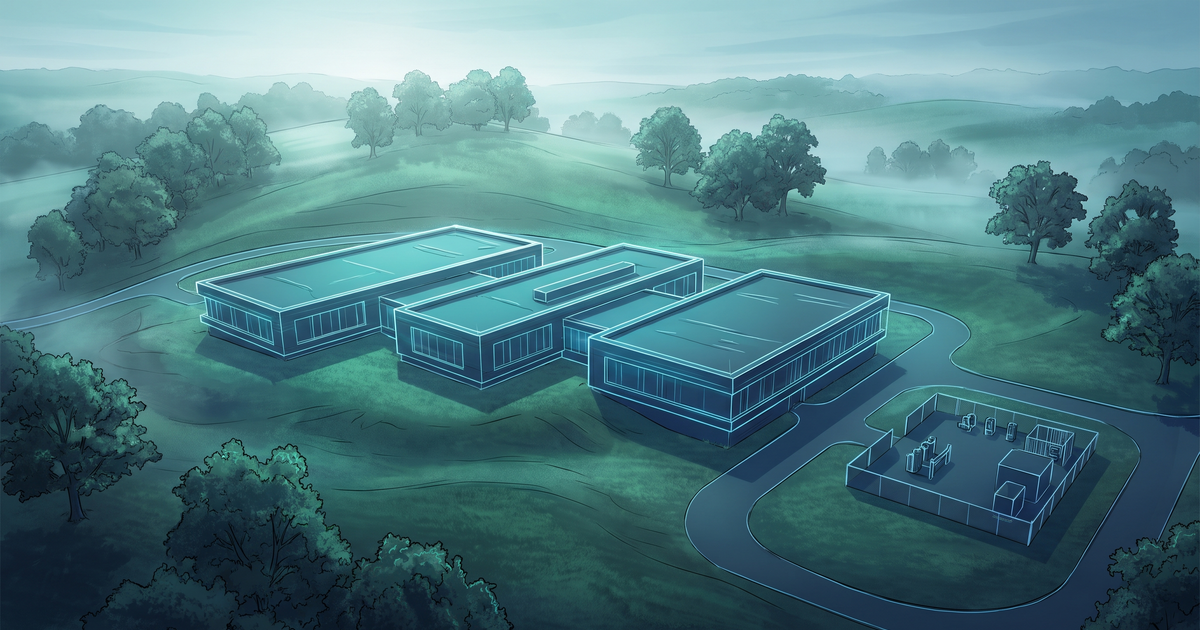
Reporting checked October 23, 2026. Project facts are attributed to Georgia DRI 4860; company and training pages supply context. Generated featured and social artwork are conceptual illustrations, with no verified site geometry or construction progress implied.
Join 35,000+ Low Voltage Pros
Get weekly permit updates, tool deals, job opportunities, and industry news. No spam, unsubscribe anytime.