
Join Low Voltage Nation — Find project opportunities and showcase your company to thousands of industry professionals
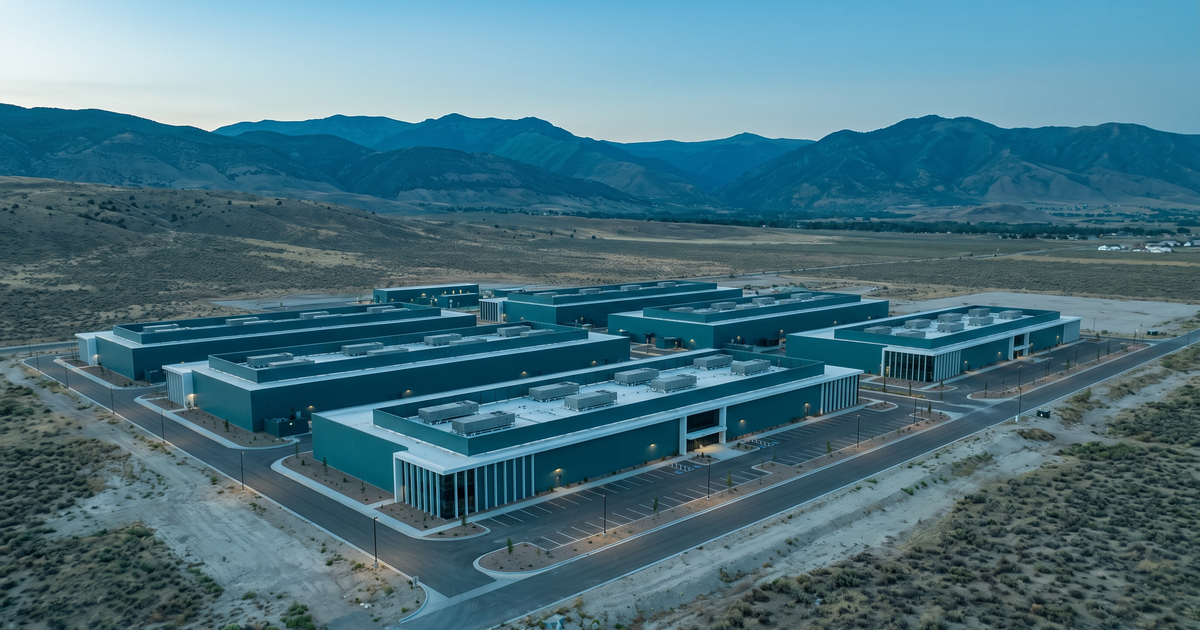
Meta expands Eagle Mountain as Utah investment tops $3B. Explore the campus builder, power approvals, job forecasts and prospective low-voltage work.
Meta’s Eagle Mountain expansion brings its cumulative Utah investment above $3 billion. For contractors, the immediate value is the evidence behind the announcement: an established campus builder, new cooling requirements and a separate power development with unresolved regulatory steps. The expansion’s own budget, computing capacity and delivery dates remain undisclosed.
Meta announced the new buildings on September 14. Eagle Mountain City confirmed the expansion and the cumulative investment basis. That distinction matters when judging the addressable work: a statewide investment total cannot establish the size of a fiber, security or controls package.
What is being built in Eagle Mountain?
The existing campus began serving traffic in 2021, according to Meta’s original operational announcement. The September news adds a new expansion to that operating base. Ongoing campus construction and an operating data center can coexist; neither gives an exact start date for the newly announced halls.
| Item | Reported position | Boundary |
|---|---|---|
| Location | Eagle Mountain, Utah | Expansion parcel unverified |
| Investment | Above $3B in Utah | Cumulative company total |
| New buildings | Expansion announced | Area and MW undisclosed |
| Workforce forecast | 1,200+ peak construction; 300+ operations | Owner forecasts |
| Delivery | No precise dates disclosed | Phase schedule needed |
LVN treats the new expansion as planned until evidence establishes its particular construction milestones. The campus’s earlier milestones remain useful context. They should travel with their original dates whenever contractors use them in a presentation, estimate or project pursuit.
A useful early qualification question is which building or phase a prospective buyer means. Follow that with the contract holder, package boundary and design maturity. These answers determine whether a contractor should prepare a capability statement, review drawings or allocate estimating time. An announcement alone does not identify an open solicitation.
Mortenson’s campus role and the new expansion statement
Mortenson describes its Eagle Mountain work as 28 data halls across multiple phases totaling nearly 300 MW. Its account identifies precast ductbank, prefabricated walls and hot-aisle containment developed through the project, with those products now made by affiliate BLUVera. Those figures describe the historical campus program.
The city’s September announcement also includes Mortenson executive Steve Knighton welcoming the opportunity to continue working in Eagle Mountain through the expansion. That is current evidence of continuing participation. The statement does not disclose an executed September contract, package value, design team or specialty subcontract roster. BLUVera’s historical connection likewise leaves its exact new-building supply scope unresolved.
| Organization | Supported relationship | Scope to verify |
|---|---|---|
| Meta | Campus owner/operator | New-building packages |
| Mortenson | Campus builder; welcomes continued work | Expansion contract scope |
| BLUVera | Historical prefabrication affiliate | New supply awards |
| Williams / Will-Power UT | Aquila power development | Separate power packages |
| Rocky Mountain Power | Existing grid context | New supply boundaries |
| Lydian Energy | Faraday battery owner | Offsite storage context |
| Blackstone, Apollo, KKR | Williams portfolio investors | No campus-only allocation |
The practical lesson from the prefabrication history is coordination. A pathway assembled before arrival leaves less room for improvised routing. A prospective telecom team should ask when sleeve locations, pull access, grounding interfaces and spare capacity become fixed. Bringing those questions into design coordination can clarify the work earlier than waiting for a cable schedule.
New cooling design brings controls questions
Meta says the new buildings will use closed-loop liquid cooling with dry heat rejection. Its stated elimination of operational cooling-system water use still allows domestic use, fire protection and maintenance. The claim applies to the new-building design; it does not establish zero total campus water consumption or a retrofit of every existing hall.
For low-voltage firms, this creates a prospective controls and instrumentation discussion. Ask who owns the equipment interfaces, how alarms reach operations and which team demonstrates complete sequences during commissioning. Cooling equipment selection, communications protocols and integrator assignments have not been disclosed in the reviewed expansion material.
Prepare an interface checklist covering network ownership, sensor responsibilities, points naming, alarm routing and accepted turnover formats. Keep the checklist tied to approved specifications as they become available. Its purpose is to expose responsibility gaps before installation, especially where mechanical, electrical and operational technology teams meet.
Aquila power: preserve the rating and the date
The associated Aquila generation project has its own development history. A February city hearing notice connects Williams’ proposed generation on the Stadion parcel to Meta’s expansion. The notice establishes the project relationship, while approval requires separate evidence.
Williams’ August 4 investor presentation, slide 30, lists Aquila at 520 MW of ISO generation capacity, excluding battery storage, with service targets in the second half of 2027 and first half of 2028. It gives a 12.5-year agreement term. These are generation ratings and forecast power-service milestones.
An earlier Will-Power registration described delivery of up to 286 MW and a planned 20-mile service pipeline. The two capacity figures have different reporting dates and measurement bases. Neither establishes Meta’s IT load, and their difference cannot be used to calculate the September expansion.
In its May 7 amended application, Will-Power reported a February 6 power purchase agreement and proposed electrical separation from Rocky Mountain Power, including no utility backup. The demonstration of that separation remained in progress. The filing also identified a planned Kern River service lateral. Those are applicant disclosures about the power project.
The Utah PSC’s July 8 notice is a key qualification: the parties agreed further action should await a supplemented, complete application, and the commission said it would act again when requested by a party. The public docket showed that notice as its latest entry during today’s research. Final contract approval remains unverified. The notice itself does not announce a construction stop-work order.
Similarly, the applicant’s May permit schedule reported grading and foundation authorizations and an April 17 development agreement, while air, site-plan and later building packages remained pending. September permit status needs current records. A generation-facility permit cannot establish the permit status of a new data hall.
Keep portfolio financing separate from construction value
Williams’ $5.34 billion financing announcement covers five power projects. Blackstone leads the investment, with Apollo and KKR participating, while Williams retains control. The August presentation describes the venture as finalized. The published material does not allocate that sum to Aquila alone or to Meta’s new buildings.
The city separately identifies Lydian Energy’s 150 MW Faraday battery facility as supporting the campus. That offsite storage relationship supplies additional energy context. It does not name a campus installer. For estimating, the useful number remains the defined package value, which has not been disclosed for the low-voltage work.
Where low voltage could enter the project
The following are LVN’s prospective work areas, inferred from the expansion, historical pathway work and cooling interfaces. They are pursuit questions for contractors. Public sources reviewed for this article do not identify low-voltage awards or bid deadlines.
| Work area | Prospective connection | Evidence needed |
|---|---|---|
| Fiber and OSP | Campus/building links | Routes and package owner |
| Structured cabling | Support networks and pathways | Specifications and award |
| Security | Access and video interfaces | Design and integrator |
| Fire alarm | Life-safety coordination | Approved system scope |
| BMS and controls | Cooling and equipment alarms | Points and protocols |
| Commissioning | Testing and turnover | Acceptance responsibilities |
Start with the buyer and physical boundary. An outside-plant package may interface with civil work, while equipment controls may follow a mechanical or specialist integrator. Ask who supplies materials, who installs them, who terminates them and who accepts the test records. Avoid assuming that one introduction covers every system on a campus.
For a fiber package, request route lengths, fiber types, connector requirements, approved test procedures and documentation formats before estimating labor. For security, clarify door hardware interfaces, network responsibilities and commissioning witnesses. For controls, establish which signals and sequences belong to each party. These are preparation steps, not claims about undisclosed Eagle Mountain specifications.
Jobs, trades and practical preparation
Meta forecasts more than 1,200 workers at peak construction and more than 300 operating jobs once complete. Those forecasts do not identify current vacancies, incremental hires or the share allocated to any trade. The Meta jobs search and Mortenson careers page provide starting points; individual Eagle Mountain openings were not validated for this report.
Technicians can prepare around demonstrable work: connector inspection and cleaning, fiber testing, accurate labeling, bonding coordination and complete closeout records. The Fiber Optic Association’s workforce resources offer a training reference. Specific employer credentials and site-access requirements must come from the hiring team or project documents.
Supervisors should assemble examples of completed testing records, coordinated drawings and resolved field issues. Estimators can prepare a concise capability sheet explaining relevant systems, service territory and available supervision. Use verifiable experience and clearly identify any capability that depends on a partner. This makes an initial scope conversation more useful without implying prequalification or access to a bid list.
Milestones worth watching
The next useful evidence is building-specific: a permit decision, issued drawings, an identified procurement contact or a contractor announcement that names its phase. For power, watch the PSC docket for a request to resume action and a substantive decision, then obtain current permit and service milestones. For trade work, seek the actual package owner and tender instructions.
Keep phase labels on every lead. Confirm whether it concerns existing operations, new data halls, Aquila generation or offsite storage. That discipline helps a team spend estimating time on a reachable scope with an identifiable buyer.
Explore LVN Signal for construction intelligence and project context. Use this source-linked Eagle Mountain breakdown to prepare a specific scope conversation, then verify current drawings, procurement requirements and decision makers before committing crews.
Join 35,000+ Low Voltage Pros
Get weekly permit updates, tool deals, job opportunities, and industry news. No spam, unsubscribe anytime.