
Join Low Voltage Nation — Find project opportunities and showcase your company to thousands of industry professionals
Lambda plans an Oklahoma AI data center. Explore the four named partners, forecast jobs, utility questions and potential low-voltage work.
Lambda plans a new AI data center in Mayes County, Oklahoma, adding a development opportunity for contractors serving the MidAmerica Industrial Park. The company’s September 27 announcement forecasts up to 1,000 construction jobs and 100 permanent positions. Its headline financial estimate is $500 million in taxes over ten years, using current rates. The construction budget remains undisclosed.
For low-voltage contractors, the immediate value is an early view of the project team and the questions that will shape procurement. A general contractor, electrical installer, fiber carrier and security or controls integrator have not been identified in the primary material reviewed. That leaves time to prepare qualifications and understand the work, while keeping sales forecasts tied to actual package releases.
What Lambda has announced
The Lambda announcement places the facility in the southern portion of MidAmerica, near Chouteau. It identifies Cloverleaf Infrastructure as the partner selected by the park and Grand River Dam Authority to prepare the site for Lambda. The project remains planned; no construction start or opening date has been announced.
| Item | Current picture | Qualification |
|---|---|---|
| Location | Mayes County, Oklahoma | Southern MidAmerica; parcel unverified |
| Development | New AI data center | Announced and planned |
| Investment | Budget undisclosed | Tax forecast is a separate measure |
| Power capacity | Unconfirmed | No verified MW basis |
| Schedule | Unannounced | Start and opening remain open |
A project at this stage belongs in a contractor’s development pipeline. It cannot yet support a reliable revenue forecast. The missing inputs include package size, contracting party, release date, access conditions and payment terms. Even a credible owner announcement does not answer which company will buy communications infrastructure or whether that purchase will be bundled into a larger electrical contract.
The nearby-community reference also has limits. An approximate Chouteau map location helps readers orient themselves, but it does not locate the campus boundary. Surveyed parcel information, site access and approved plans will be more useful for estimating travel, staging, duct routes and service entrances. The park’s office address should not substitute for the construction site.
The organizations with verified roles
Four organizations are named in the project evidence. Their roles offer a starting point for understanding development responsibility. They do not establish a complete construction team.
| Organization | Supported role | Evidence boundary |
|---|---|---|
| Lambda | Developer / operator | End customer undisclosed |
| MidAmerica Industrial Park | Host and land partner | Parcel closing unverified |
| Grand River Dam Authority | Power planning partner | Detailed service terms pending |
| Cloverleaf Infrastructure | Site-development partner | No GC or trade award established |
For vendors, the useful next conversation concerns procurement ownership: who will issue qualifications, who controls the technical specification, and who approves a subcontractor. A development partner may help establish land and utility readiness while a separate construction manager later handles building packages. Responsibility needs to be confirmed for this project before a sales team routes pricing or assumes an invitation will follow.
Contractors can prepare a short capability statement around completed work, geographic coverage, supervision, testing equipment and turnover examples. Keep it specific enough that a project team can judge fit quickly. A fiber company should show the work it can perform and document; a security integrator should explain its commissioning capability and support coverage. Generic company affiliations do not establish a campus award.
Power and cooling: the information still needed
MidAmerica’s community FAQ says GRDA studied the proposed load and can accommodate it. The park also describes Lambda’s commitment to fund upfront power-delivery infrastructure. The underlying study, service MW, agreement and energization sequence were not available in the reviewed material.
The FAQ describes planned recirculating cooling and says project-specific water details will follow. It also states that MidAmerica offered no incentives or property-tax abatement for its land sale and that Lambda will pay market value. Those statements should retain their attribution and scope. They do not independently establish a completed land closing or the absence of every possible government incentive.
For a controls contractor, the next useful documents would be the equipment schedule, sequence of operations and interface requirements. Questions include who supplies sensors, who programs alarms, who owns the supervisory network and who demonstrates failure recovery. These are analytical preparation points for a future package; the public announcement does not identify those packages or their vendors.
Electrical availability also needs to be translated into a construction sequence. A team estimating communications work should ask when pathways become accessible, when equipment rooms can support testing, and how temporary services transition to permanent operation. Without those dates, a labor plan can look precise while depending on assumptions that have never been agreed.
Cooling terminology alone cannot establish annual water consumption, efficiency or final equipment selection. Similarly, an announced utility relationship cannot establish energized computing capacity. Readers should look for dated project documents that define the measurement and the phase being discussed before comparing this development with other campuses.
Where low voltage could enter the work
The following scope is LVN analysis of potential interfaces at an AI facility. No listed item represents a confirmed bid package, equipment quantity or awarded subcontract for Lambda’s Mayes County project.
| Work area | Potential interface | What to confirm |
|---|---|---|
| Fiber / outside plant | Service entrances and backbone | Routes, carriers, duct ownership |
| Structured cabling | Facility and support networks | Layouts, quantities, test limits |
| Security / access | Controlled areas and monitoring | Device plans and integrator |
| Fire / life safety | Alarm and equipment interfaces | Approved design and duties |
| Controls / networking | Power and cooling visibility | Point lists and network boundaries |
| Commissioning | Testing and turnover | Acceptance records and witnesses |
Outside-plant firms should seek a clear boundary between civil work, duct installation, cable placement, splicing and acceptance testing. An estimator needs to know which party owns crossings and restoration, whether spare capacity is specified, and where the handoff occurs. Missing boundaries create scope gaps that become difficult to price after mobilization.
Inside the facility, cabling teams can ask how support networks relate to the computing environment. Device connectivity for security, building operations and maintenance may have different procurement owners and turnover dates. Avoid assuming that one cabling contractor controls every network simply because the equipment occupies the same building.
Security and controls firms should request interface schedules early enough to price integration work. Reader hardware, door monitoring, camera commissioning, alarm routing and network access each require an assigned owner. Practical bid clarifications can distinguish installation from configuration, configuration from acceptance testing, and initial turnover from ongoing support.
A useful closeout example can show how labels, test files, drawings and equipment identifiers connect. Assemble a small sample before procurement starts. The goal is to demonstrate that a reviewer can trace an installed connection through its inspection and acceptance records without rebuilding the contractor’s filing system.
Jobs, skills and useful preparation
The employment figures are forecasts. They do not identify current vacancies, peak simultaneous staffing, low-voltage headcount, wage rates or an apprenticeship agreement. Workers should use employer postings and verified recruiting contacts to establish what is actually hiring. Contractors should build staffing plans from the eventual schedule and scope.
The Fiber Optic Association’s workforce guide separates planning, construction, installation, splicing, testing and operations. That distinction is useful when evaluating a crew’s readiness: a company can have strong cable-placement experience and still need additional capacity for testing and closeout. Training should address the responsibilities the crew will actually carry.
FOA’s installed-fiber testing reference discusses insertion-loss testing and documentation. For a future project package, ask which methods, reference arrangements, wavelengths and report formats the specification requires. Confirm whether OTDR records are requested in addition to loss testing. A generic promise to “test the fiber” leaves too much room for disagreement at handover.
BICSI training resources offer another place to evaluate communications-infrastructure education. Course availability is a preparation resource, not evidence that Lambda requires a particular credential. The eventual contract and site onboarding documents should establish qualifications, supervision and manufacturer requirements.
OSHA’s Outreach Training Program provides general hazard-awareness education. It does not replace training required for specific work hazards. An employer still needs to establish task training and site rules. No project-specific safety-card, certification or prequalification requirement has been verified for this development.
The milestones that would change the opportunity
The next meaningful releases would identify the parcel, approvals, construction leadership and dated execution plan. Utility-service details would help explain when different phases can operate. A contractor appointment or qualification portal would make the commercial opportunity more concrete than another general project announcement.
GRDA’s public bid-opportunities page is a general utility resource. A solicitation listed there should be tied to Lambda only when its documents establish that connection. There is no verified Lambda bid invitation in the evidence reviewed for this article.
Before committing estimating time, seek a named buyer, a defined scope and a realistic release window. Before committing labor, seek an executable schedule and access conditions. Those checks help a small contractor decide whether to prepare, pursue or wait while preserving capacity for work already under contract.
Explore this development and other construction opportunities in LVN Signal. Use the source-backed project details to prepare questions for the responsible teams and follow the transition from announcement to verified procurement.
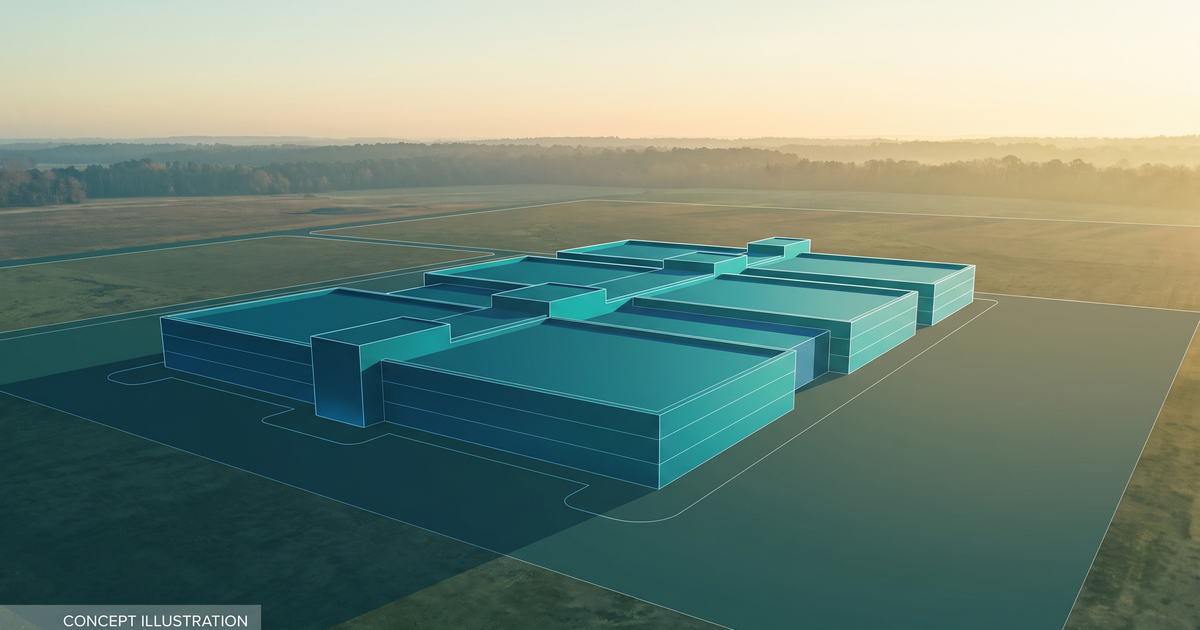
Reporting checked September 29, 2026. Featured and social artwork are AI concept illustrations; they do not show the actual site or approved design.
Join 35,000+ Low Voltage Pros
Get weekly permit updates, tool deals, job opportunities, and industry news. No spam, unsubscribe anytime.