
Knipex 13 72 8 Review: The Forged Wire Stripper That Replaced My Linemans
Join Low Voltage Nation — Find project opportunities and showcase your company to thousands of industry professionals
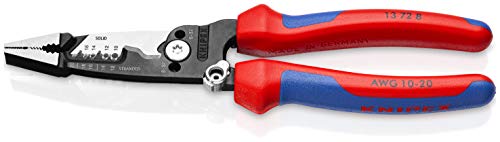
KNIPEX KNIPEX Tools 13 72 8 Forged Wire Stripper, 8-Inch
Screw cutting cuts 6-32 and 8-32 without threading and cut be cut from either the front or the back! Locating ridges - easy to locate stripping holes by using one of the locating ridges Strips both solid and stranded wire from 10 to 20 AWG Shear cutting blades offer 50% higher cutting capacity than competition and 25% cutting power reduction Cuts cable, wires, NM-B, BX and MC
In-depth review of the Knipex 13 72 8 forged wire stripper. 7-in-1 tool with shear-cut blades, threadless screw cutting, and precision stripping. Worth the premium price?

Knipex
KNIPEX - the pliers brand
Knipex 13 72 8 Review: The Forged Wire Stripper That Replaced My Linemans
After years of reaching for Klein wire strippers out of habit, I kept hearing electricians rave about the Knipex 13 72 8. The claims sounded too good: 50% higher cutting capacity, no-thread screw cutting, and a tool that could replace your linemans for most tasks. At $60, it's nearly triple the price of basic strippers.
So is this 7-in-1 German-engineered tool worth the premium, or is it just another overhyped multitool?
Quick Verdict
The Knipex 13 72 8 is the real deal. The shear-cut blades slice through MC cable and NM-B like butter, the threadless screw cutting is genuinely useful (not a gimmick), and the stripping holes are precise enough for daily use. It won't fully replace dedicated linesman pliers for heavy twisting, but for 80% of tasks, this stays in my hand while the linemans stay in the pouch.
Rating: 4.7/5 — Best all-around forged wire stripper available
Who This Is For (And Who Should Skip It)
Buy it if you:
- Work with 10-20 AWG wire regularly (residential and commercial electrical)
- Cut MC, BX, or NM-B cable frequently
- Value having fewer tools on your belt
- Do junction box work where space is limited
- Want precision stripping without damaging conductors
Skip it if you:
- Work primarily with smaller gauge wire (22+ AWG for low voltage data)
- Need a dedicated crimper built into your stripper
- Prefer the lighter weight of stamped strippers
- Regularly twist 4+ conductors together (still want linesmans for that)
Key Features That Actually Matter
Shear-Cut Blades
The cutting geometry is where Knipex invested their engineering. The shear action requires 25% less force than standard wire strippers while delivering 50% more cutting capacity. For techs cutting dozens of cables per day, that reduced effort compounds into less hand fatigue.
Threadless Screw Cutting
This is the headline feature that sounds like a gimmick but isn't. Traditional strippers require threading a 6-32 or 8-32 screw into the hole before cutting. The Knipex lets you slide the screw in from either side and cut clean — no threading. For electricians who carry 2" screws and cut to length, this saves legitimate time.
Locating Ridges
Small detail, big impact. The raised ridges between stripping holes let you find the right gauge by feel without looking. When you're working in a dim junction box or up on a ladder, muscle memory takes over.
Hybrid Nose Design
The flat, wide tips provide enough gripping surface for twisting 2-3 conductors together and bending wire loops for screw terminals. They're not replacing your linemans for heavy twisting, but they handle light work.
Real-World Performance
When stripping 12 AWG Romex in a cramped attic junction box, the precision-ground holes grab the insulation without biting into copper. After hundreds of strips, the edges show no dulling — a testament to the induction-hardened steel.
The MC cable cutting capability genuinely surprised me. Getting through 14/2 MC takes one clean motion instead of the sawing required with standard cutters. The shear action leaves a cleaner cut with less burring on the armor.
One thing that takes adjustment: the tool is larger and heavier than stamped strippers. In tight control panels or packed junction boxes, the bulk becomes noticeable. If you're used to slim Klein 11055s, there's a learning curve for tight-space work.
The gripping jaws have enough knurl to hold wire securely without slipping, but they're smooth enough that you won't mar the conductor. For twisting wire nuts on 2-3 conductors, the nose works fine. For 4+ wires, I still reach for dedicated linemans.
What I Like (Pros)
- 50% higher cutting capacity — Slices through MC, BX, and NM-B cable that would require sawing with standard strippers
- 25% less cutting effort — Noticeable reduction in hand fatigue over a full day of work
- Threadless screw cutting — 6-32 and 8-32 screws cut clean from either side without threading
- Precision stripping holes — Ground profiles that strip cleanly without conductor damage
- Locating ridges — Find the right gauge by feel in low-light conditions
- Built-in conduit reamer — Deburs conduit ends without switching tools
- Ambidextrous lock — Works equally well for left and right-handed users
What Could Be Better (Cons)
- Heavier than stamped strippers — At 0.61 lbs, it's noticeably heavier than basic Klein strippers
- No crimping capability — Some competitors include fork/ring terminal crimpers
- Bulky for tight spaces — Control panels and packed boxes can be challenging
- Premium price — At $60, it's 3-4x the cost of basic strippers
- Limited gauge range — Only covers 10-20 AWG, not ideal for smaller low-voltage wire
- Won't replace linemans — Still need dedicated pliers for heavy twisting work
Specifications
| Specification | Value |
|---|---|
| Model | 13 72 8 |
| Length | 8" (200 mm) |
| Weight | 9.8 oz (0.61 lbs) |
| Stripping Range | 10-20 AWG (solid), 12-20 AWG (stranded) |
| Cable Cutting Capacity | Up to 1/2" (15mm) diameter |
| Screw Cutting | 6-32 and 8-32 UNC (threadless) |
| Material | High-grade tool steel, forged, multi-stage oil-hardened |
| Cutting Blades | Induction hardened, shear geometry |
| Handle | KNIPEXTEND comfort grip (multi-component) |
| Country of Origin | Germany |
| Insulated | No (not rated for live work) |
Is It Worth the Price?
At $60, the Knipex 13 72 8 costs roughly three basic Klein strippers. The question is whether you'll use it enough to justify the premium.
The math works if you:
- Cut MC/BX cable daily — the improved cutting alone saves time and hand fatigue
- Value tool consolidation — this replaces your strippers and supplements your linemans
- Work full-time in the trade — durability means you're not replacing it every year
The math doesn't work if you:
- Only strip wire occasionally for DIY projects
- Work primarily with low-voltage data cable (wrong gauge range)
- Need the lightest possible tool on your belt
For professional electricians doing residential or commercial work, this is a buy-it-for-life tool that earns its spot on the belt.
The Bottom Line
The Knipex 13 72 8 does what it promises: it strips wire precisely, cuts cable effortlessly, and handles screw cutting without the threading hassle. It's not a perfect replacement for every tool on your belt, but it consolidates enough functions to reduce your carry while improving your workflow.
The 15-year electricians switching from Klein aren't going back. That says something.
Check Current Price on Amazon →
Affiliate disclosure: Low Voltage Nation earns from qualifying purchases. This doesn't affect our editorial independence.
Find Projects That Need This Tool
Looking for commercial electrical jobs where quality wire strippers pay for themselves?
LVN Signal surfaces low voltage installation projects from permit data before they hit bid boards.
Join 35,000+ Low Voltage Pros
Get weekly permit updates, tool deals, job opportunities, and industry news. No spam, unsubscribe anytime.