
Klein D2000-28 vs Knipex 74 21 200: Which Diagonal Cutters Win?
Join Low Voltage Nation — Find project opportunities and showcase your company to thousands of industry professionals
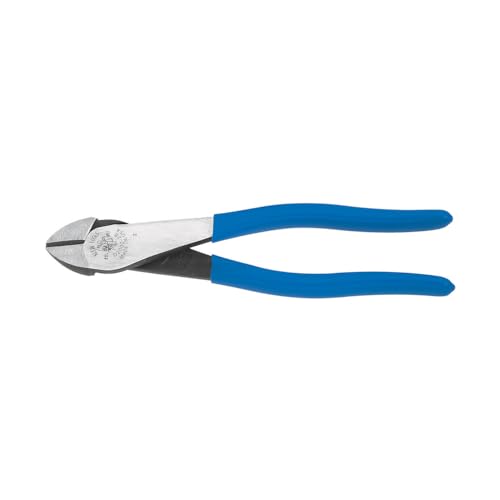
KLEIN TOOLS Klein Tools D2000-28 Pliers, Made in USA, Diagonal Cutting Pliers with Angled Head are Heavy-Duty to Cut ACSR, Screws, Nails, Most Hardened Wire, 8-Inch
Diagonal Cutters cut ACSR, screws, nails and most hardened wire Pliers have high-leverage design, with rivet closer to the cutting edge for 36-Percent greater cutting power than other plier designs Short jaws and beveled cutting edges permit close cutting of wire Induction hardened cutting knives for long life Made in USA with custom, US made tool steel Hot-riveted joint ensures smooth action and no handle wobble Plastic-dipped handles for comfort and ease of identification
Klein D2000-28 vs Knipex 74 21 200 diagonal cutters comparison. Real electrician feedback on cutting performance, durability, and which 8-inch high-leverage cutters to buy.
Klein Tools
Klein D2000-28 vs Knipex 74 21 200: Which Diagonal Cutters Win?
The Klein vs Knipex debate divides electricians and low voltage techs like few other tool discussions. Both the Klein D2000-28 ($34.99) and Knipex 74 21 200 ($39.96) are 8-inch high-leverage diagonal cutters with angled heads—tools you'll reach for dozens of times per job. The $5 price difference is negligible; what matters is which cuts better, lasts longer, and feels right in your hand after eight hours of work.
After extensive research including trade forum discussions, manufacturer specs, and real-world user feedback, here's the breakdown.
Quick Comparison Table
| Feature | Klein D2000-28 | Knipex 74 21 200 |
|---|---|---|
| Price | $34.99 | $39.96 |
| Length | 8 inches | 8 inches |
| Head Angle | Angled | 12° angled |
| Leverage Claim | 36% more cutting power | 20% reduced force required |
| Cutting Edge Hardness | Induction hardened | ~64 HRC induction hardened |
| Steel | US-made tool steel | Chrome vanadium (oil-hardened) |
| Origin | Made in USA | Made in Germany |
| Cutting Capacity (Hard Wire) | ACSR, screws, nails, hardened wire | Up to 1/8" hard wire, 3/32" piano wire |
| Handle | Plastic-dipped | Multi-component grips |
| Our Rating | 4.5/5 | 4.7/5 |
The Quick Verdict
Knipex 74 21 200 edges ahead for most users. The precision cutting edges, lighter weight, and multi-component grips make it marginally better for all-day use. Users consistently report that Knipex cutters feel "like cutting butter" compared to other brands.
But Klein D2000-28 remains excellent—especially if you value American-made tools, prefer the grip profile, or want to save $5 per pair. Many veteran electricians swear by their Klein diagonals and see no reason to switch.
The honest answer from the trade forums: both are professional-grade tools that will serve you well. The difference comes down to hand feel and brand preference.
Klein D2000-28 Overview
The Klein D2000-28 represents Klein's heavy-duty diagonal cutting line. Made in the USA from custom tool steel, these are the cutters you'll see in half the electricians' pouches on any commercial job site.
Why Techs Choose Klein
The 36% leverage advantage is real. Klein positions the rivet closer to the cutting edge than standard diagonal cutters, and you can feel the difference when cutting through #10 solid copper or snipping tie wraps all day. The short jaws and beveled cutting edges let you get flush cuts against surfaces—useful when trimming cable ties in a crowded panel.
One electrician with 38 years in the trade put it simply: "One cannot go wrong with these." After decades of daily use, his Klein tools still perform. That's the kind of longevity that justifies the investment.
Klein's induction-hardened cutting knives handle ACSR, screws, nails, and most hardened wire without rolling the edge. When you're cutting hanger wire or trimming self-tapping screws that missed the stud, you need cutters that won't flinch.
Klein D2000-28 Specifications
| Specification | Value |
|---|---|
| Overall Length | 8 inches |
| Head Style | Angled |
| Leverage Design | High-leverage (rivet closer to edge) |
| Cutting Capacity | ACSR, screws, nails, hardened wire |
| Edge Treatment | Induction hardened |
| Steel Type | Custom US-made tool steel |
| Joint | Hot-riveted (no wobble) |
| Handle | Plastic-dipped |
| Country of Origin | USA |
Knipex 74 21 200 Overview
The Knipex 74 21 200 brings German engineering to the diagonal cutter market. At just $5 more than the Klein, it offers precision cutting edges hardened to approximately 64 HRC—capable of cutting piano wire without dulling.
Why Techs Choose Knipex
The weight difference is noticeable. Users consistently report that Knipex cutters feel "so lightweight in your hands compared to Kleins"—and after a full day of trimming cable and cutting zip ties, that weight savings translates to less hand fatigue. The 12-degree head angle provides hand clearance in tight spaces, letting you cut flush against panels without smashing your knuckles.
What sets Knipex apart is the cutting action. One tech described it as "they cut wire like butter." Coming from other brands, "they feel so much better in my hand and cut amazing." The precision-ground edges maintain their sharpness longer than competitors, and the chrome vanadium steel takes abuse without chipping—assuming you're not twisting the cutters while cutting.
The multi-component grips are a subtle but meaningful upgrade. They're essentially bonded to the handles rather than just dipped on, which means they won't slide off or wear through as quickly. For all-day use, grip quality matters more than most people realize.
Knipex 74 21 200 Specifications
| Specification | Value |
|---|---|
| Overall Length | 8 inches (200mm) |
| Head Angle | 12 degrees |
| Hand Clearance | 2-1/2 inches |
| Leverage Design | High-leverage (20% force reduction) |
| Cutting Edge Hardness | ~64 HRC |
| Medium Wire Capacity | Up to 11/64" |
| Hard Wire Capacity | Up to 1/8" |
| Piano Wire Capacity | Up to 3/32" |
| Steel Type | Chrome vanadium (oil-hardened) |
| Joint | Fixed forged axle rivet |
| Handle | Multi-component grips |
| Country of Origin | Germany |
Head-to-Head: Cutting Performance
Both cutters handle standard low voltage work with ease—Cat6 cable, 18-gauge thermostat wire, zip ties, and 14/2 Romex pose no challenge to either tool.
Where differences emerge:
- Hardened wire: Knipex's 64 HRC edges handle piano wire; Klein's induction-hardened edges handle hardened wire but aren't rated for piano wire specifically
- Flush cutting: Klein's beveled edges excel at close cuts; Knipex's 12° angle provides better hand clearance for flush work
- Heavy use: Knipex's lighter weight reduces fatigue on high-volume days; Klein's mass provides momentum on tough cuts
One honest take from the forums: "It cuts just the same as my Klein's." For most low voltage applications, you won't notice a performance difference in the actual cutting. The differences show up in hand feel, weight, and long-term edge retention.
Head-to-Head: Durability
This is where the debate gets heated.
Knipex's reputation: Multiple users report that after a year of daily use, their Knipex cutters "still looked brand new on the cutting edges" while their previous Kleins were "pretty much shot." The higher hardness (64 HRC) means better edge retention—but also means the edge can chip if you twist while cutting.
Klein's reputation: The hot-riveted joint ensures no handle wobble over time—a common failure point on cheaper cutters. The softer (but still hardened) steel is "tough but softer," meaning it won't chip as easily but may need sharpening or replacement sooner.
The trade-off: Knipex stays sharper longer but requires proper technique. Klein is more forgiving of "horsing around" but may dull faster.
Head-to-Head: Ergonomics
Klein D2000-28: The grip length and width is "near perfect" according to many electricians. The plastic-dipped handles provide adequate cushioning and make the tool easy to identify in a crowded pouch. Some find the overall weight helps with momentum on tough cuts.
Knipex 74 21 200: Lighter overall weight means less fatigue on high-volume days. The bonded multi-component grips are considered "the best available"—they won't slip off the handles like dipped grips sometimes do. The 12-degree angle keeps your hand away from surfaces when cutting flush.
One criticism of Knipex: the tip is "very round and not as pointed as the Kleins." If you're frequently working in tight corners where a pointed tip helps, this could matter.
Pros and Cons
Klein D2000-28
Pros:
- 36% more cutting power than standard diagonal designs—real leverage advantage
- Made in USA with custom tool steel—supports American manufacturing
- Hot-riveted joint eliminates handle wobble for the life of the tool
- Pointed tip profile excels at working into tight corners
- Handle tempering absorbs the "snap" when cutting wire—easier on hands
- $5 cheaper than Knipex—adds up across multiple pairs
Cons:
- Heavier than Knipex—noticeable after all-day use
- Plastic-dipped handles can wear through or slide over time
- Softer steel dulls faster under heavy use compared to 64 HRC edges
- Some users report quality consistency issues in recent years
Knipex 74 21 200
Pros:
- 64 HRC cutting edges maintain sharpness significantly longer than competitors
- Noticeably lighter weight—reduces hand fatigue on high-volume days
- Multi-component grips bonded to handles won't slip or wear through
- 12-degree head angle provides excellent hand clearance for flush cuts
- Cuts through piano wire—handles the hardest materials you'll encounter
- "Cuts like butter" according to multiple trade professionals
Cons:
- Rounded tip less suited for tight corner work than Klein's pointed tip
- Higher hardness means edge can chip if you twist while cutting
- $5 premium over Klein—marginal but exists
- Some traditionalists dislike the "foreign" tools stigma on American job sites
Which Should You Buy?
Choose Klein D2000-28 if:
- You prefer American-made tools (supporting US manufacturing matters to you)
- You frequently work in tight corners where a pointed tip helps
- You tend to be rough on tools—the softer steel is more forgiving
- Your hands are already sized to Klein's ergonomics
- You're buying multiple pairs and the $5/pair savings adds up
Choose Knipex 74 21 200 if:
- You're cutting wire all day and hand fatigue is a concern
- Edge retention matters—you want cutters that stay sharp longer
- You prioritize the cutting action and "butter" feeling
- You do a lot of flush cutting where the 12° angle provides clearance
- You're willing to use proper technique to avoid chipping the hard edges
The Honest Trade Answer
A common recommendation among experienced electricians: "Klein for drivers, Knipex for pliers, Ideal for strippers, Fluke for meters." This suggests Knipex has won the pliers/cutters debate for many professionals, while Klein still dominates in screwdrivers.
That said, many veteran techs still carry Klein D2000s daily and see no reason to switch. Both are professional-grade tools that will outlast cheap hardware store cutters by years.
The Bottom Line
The Klein D2000-28 and Knipex 74 21 200 are both excellent 8-inch high-leverage diagonal cutters. The Knipex offers marginally better edge retention, lighter weight, and superior grips. The Klein offers American manufacturing, a pointed tip, and slightly more forgiving steel.
For most low voltage technicians, either tool will serve you well for years. The $5 difference won't matter in the long run—what matters is finding the tool that fits your hand and work style.
If you've never tried Knipex, it's worth picking up a pair to compare. If you're happy with your Klein diagonals, there's no compelling reason to switch.
Buy the Klein D2000-28 on Amazon: Check Current Price →
Buy the Knipex 74 21 200 on Amazon: Check Current Price →
Disclosure: Low Voltage Nation earns a commission on qualifying purchases through the Amazon links above. This doesn't affect our recommendations—we only feature tools we'd use ourselves.
Find Projects That Need These Tools
Looking for commercial jobs where quality cutting tools pay for themselves?
LVN Signal surfaces low voltage installation projects from permit data before they hit bid boards.
Frequently Asked Questions
Can diagonal cutters damage low voltage cable performance?
For most applications, no. Diagonal cutters can deform the cut end of coaxial cable, but since you're trimming that end off before termination anyway, it doesn't affect post-termination performance. For cleaner coax cuts, consider dedicated cable cutters with concave jaws.
Why do some electricians say Knipex is better for cutting but Klein is better for other tools?
Different tool categories have different design priorities. Knipex has invested heavily in precision cutting edges and leverage geometry, making their pliers and cutters exceptional. Klein's strength is in screwdriver tips, handle ergonomics, and the breadth of their product line. Many professionals mix brands to get the best tool for each job.
Will the 64 HRC Knipex edges chip easily?
Only if you twist while cutting—a common bad habit. The harder steel holds an edge longer but is more brittle under lateral stress. Use proper cutting technique (straight compression, no twisting) and the edges will outlast softer alternatives significantly.
Are Klein tools still made in the USA?
The D2000 series diagonal cutters are made in the USA from US-sourced tool steel. However, not all Klein products are American-made—check individual product listings. The "Made in USA" designation is a selling point Klein emphasizes on qualifying products.
Join 35,000+ Low Voltage Pros
Get weekly permit updates, tool deals, job opportunities, and industry news. No spam, unsubscribe anytime.