
Klein Tools 56333 Fish Tape Review: The 120-Foot Steel Workhorse
Join Low Voltage Nation — Find project opportunities and showcase your company to thousands of industry professionals
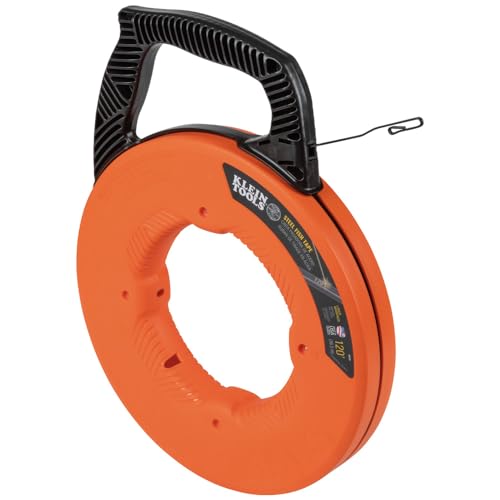
KLEIN TOOLS Klein Tools 56333 Electrical Fish Tape, Steel Wire Puller with Double Loop Tip, Optimized Housing and Handle, 1/8-Inch x 120-Foot
Durable, high-carbon strength 1/8-Inch wide steel fish tapes are firm yet flexible for long runs and large wire pulls Case design decreases payout effort and friction by optimizing the tape payout angle Slip-resistant housing geometry improves winding power and reduces binding Multi-position handle gives you a firm, steady grip as you pull or rewind tape from the case Descending laser etched markings in 1-Foot (0.3 m) increments allow you to more accurately measure conduit runs and the amount of tape left to pay out Protective coating on the steel tape reduces corrosion from non-contact moisture and humidity Polypropylene case and handle offer high impact resistance
The Klein Tools 56333 is a 120-foot steel fish tape with redesigned case geometry for smoother payout. See our hands-on review for low voltage pros.

Klein Tools
Klein Tools 56333 Fish Tape Review: The 120-Foot Steel Workhorse
Pulling wire through conduit is one of those tasks that separates decent tools from great ones. A cheap fish tape binds, kinks, and turns a 20-minute job into an hour of frustration. Klein's redesigned fish tape line aims to fix those annoyances with smarter case geometry and improved tape construction. The Klein Tools 56333 is their 120-foot steel workhorse—built for commercial runs where you need length, durability, and a tape that actually feeds smoothly.
After using this tape on conduit runs ranging from residential retrofits to commercial new construction, here's whether it lives up to the Klein name.
Quick Verdict
The Klein 56333 delivers exactly what serious electrical and low voltage techs need: a high-carbon steel tape that feeds and retracts smoothly, laser-etched markings you can actually read, and a case design that doesn't fight you on long runs. At around $57, it's priced competitively against comparable professional-grade options. The 120-foot length handles most commercial conduit work without carrying an unnecessarily heavy tape.
Rating: 4.5 out of 5
Who This Is For (And Who Should Skip It)
Ideal for:
- Commercial electricians doing regular conduit runs over 50 feet
- Low voltage contractors pulling network cable through existing conduit
- Anyone upgrading from a binding, frustrating fish tape
- Techs who want laser-etched markings to measure runs accurately
Look elsewhere if you:
- Primarily do residential work under 50 feet (the 56331 50-footer is more practical)
- Need a non-conductive tape for live panel work (consider fiberglass)
- Want coax or phone line testing (RJ45 only)
- Prefer polymer tapes for their lighter weight and rust resistance
What Sets the Klein 56333 Apart?
Klein redesigned their entire fish tape line, and the improvements are noticeable in daily use:
- Optimized payout angle: The interior case shape is engineered to reduce friction—tape feeds out with noticeably less resistance than older designs
- Hybrid case geometry: Combines the leverage of square cases with the comfort of round cases. You get better grip for rewinding without the fatigue of pure square housings
- Slip-resistant housing: Interior ridges and textured surfaces help when your hands are sweaty or dusty
- Descending laser-etched markings: Every foot is marked, counting down so you know exactly how much tape is left. No more guessing if you have enough length for the run
- Protective coating: The steel tape has a corrosion-resistant coating for humid environments without feeling oily
Real-World Performance
The first thing you notice is how smoothly this tape pays out compared to older fish tapes. On a recent 80-foot EMT run, the tape fed steadily without the jerky resistance that makes you fight the housing. When you're feeding tape overhead into a ceiling junction box, that consistent payout makes a real difference in control.
The case geometry genuinely works. After pulling back all 120 feet, rewinding felt more natural than with my old Greenlee. The multi-position handle gives you leverage options depending on whether you're cranking in a bunch of slack or carefully feeding back the last few feet. The textured grip holds up when your hands are covered in conduit pulling lube.
The laser-etched markings proved their worth during a retrofit job where I needed to confirm conduit depth before ordering materials. Being able to see "78 feet remaining" as the tape feeds out beats the old method of pulling it all the way back to measure. The markings stay visible even after the tape picks up some grime from conduit work.
Drop-testing wasn't intentional, but the tape survived a 5-foot fall onto a concrete floor without any damage to the case or binding issues afterward. Klein's polypropylene housing seems appropriately tough for job site conditions.
Where It Falls Short
The 120-foot length, while great for commercial work, is overkill for most residential jobs. At 5 pounds, you feel the weight when it's in your tool bag all day. If you're primarily doing home runs under 50 feet, the lighter 56331 (50-foot model) makes more sense.
This is a steel tape—it's conductive. If you regularly work around live circuits or in panels, a fiberglass fish tape is the safer choice. Steel excels at pushing through obstructions and navigating bends, but that trade-off matters in certain environments.
The double-loop tip works well for attaching cables, but some techs prefer swivel ball heads for navigating tight bends. Klein offers different tip styles, but you'd need to buy a separate tape or aftermarket tip.
Specifications Table
| Specification | Value |
|---|---|
| Tape Material | High-carbon tempered steel |
| Tape Width | 1/8 inch (3.2 mm) |
| Tape Thickness | 0.062 inch (1.6 mm) |
| Length | 120 feet (36.6 m) |
| Tip Style | Double loop |
| Case Material | Polypropylene (high impact resistance) |
| Case Dimensions | 12.35" x 16.21" x 1.85" |
| Weight | 5.0 lbs (2.27 kg) |
| Markings | Laser-etched descending in 1-foot increments |
| Coating | Protective anti-corrosion coating |
| Country of Origin | United States |
| Warranty | Klein Tools limited warranty |
What I Like (Pros)
- Smooth payout: Optimized case angle significantly reduces feeding resistance and binding
- Hybrid case design: Combines leverage of square cases with comfort of round—easier rewinding after long runs
- Laser-etched descending markings: Know exactly how much tape is left without measuring
- High-carbon steel: Firm enough to push past obstructions while remaining flexible through bends
- Textured grip surfaces: Multi-position handle and housing ridges work even with sweaty hands
- Corrosion-resistant coating: Handles humid job sites without rusting or feeling oily
- Durable polypropylene case: Survives job site drops without cracking
What Could Be Better (Cons)
- Heavy at 5 pounds: Overkill weight for residential work—consider the 50-footer for lighter jobs
- Steel is conductive: Not safe for work near energized circuits—use fiberglass for live environments
- Double-loop tip only: Some techs prefer swivel ball heads for tight bends
- 120 feet may be excessive: Most residential runs don't need this length
- Slight resistance at full retract: Minor binding when pulling in the last few feet
- Price premium over budget brands: Costs more than generic options, though build quality justifies it
How Does It Compare to Alternatives?
At ~$57 for 120 feet, the Klein 56333 competes directly with professional-grade options:
- vs. Ideal fish tapes: Ideal has made significant improvements with their fiberglass options and swivel ball heads. For steel tapes, Klein's case design is currently smoother. Ideal excels if you need non-conductive for safety.
- vs. Southwire SIMpull: Southwire's polymer tapes are lighter and won't rust, but they lack pushing power through obstructions. Steel tape wins when you need to navigate stubborn bends.
- vs. Greenlee: Klein's rotating-case payout system feels more ergonomic than traditional hand-crank Greenlee models. Less fatigue on long runs.
- vs. Klein 56331 (50-foot): Same excellent design in a lighter, more compact package. Better for residential work where 120 feet is overkill.
Is It Worth the Price?
At $57 for a tool you'll use for years, the Klein 56333 represents solid value. The redesigned case geometry, smooth payout, and laser markings genuinely improve the wire-pulling experience compared to older or cheaper options.
If you regularly run conduit over 50 feet, the 120-foot length saves you from having to tie tapes together. The durability and corrosion resistance mean this isn't a tool you'll be replacing annually. For commercial low voltage work—especially pulling network cabling through existing conduit—the investment pays for itself in reduced frustration.
For residential-focused techs doing mostly short runs, the 56331 50-footer at ~$38 delivers the same design benefits in a more practical package.
The Bottom Line
The Klein Tools 56333 Steel Fish Tape is a thoughtfully redesigned tool that actually improves on the basics. The optimized payout angle, hybrid case geometry, and laser-etched markings aren't just marketing—they translate to smoother operation and less frustration on real conduit runs.
It's a steel tape, so it excels at pushing through obstructions and navigating bends, but that means it's not for work around live circuits. For commercial electricians and low voltage contractors who regularly pull wire through conduit, this is exactly the kind of reliable, well-built tool that makes the job easier.
Check Current Price on Amazon →
Affiliate disclosure: Low Voltage Nation earns a commission on qualifying purchases at no extra cost to you.
Find Projects That Need This Tool
Looking for commercial jobs where a quality fish tape pays for itself?
LVN Signal surfaces low voltage installation projects from permit data before they hit bid boards.
Join 35,000+ Low Voltage Pros
Get weekly permit updates, tool deals, job opportunities, and industry news. No spam, unsubscribe anytime.