
Klein 11045 vs Knipex 13 72 8: Which Wire Strippers Should You Buy?
Join Low Voltage Nation — Find project opportunities and showcase your company to thousands of industry professionals
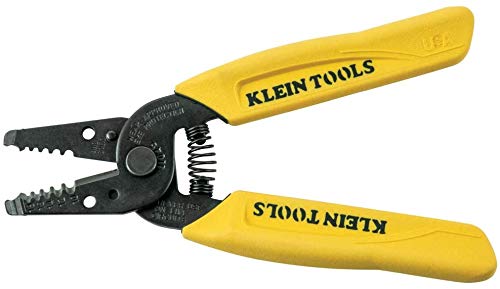
KLEIN TOOLS Klein Tools 11045 Wire Stripper/Cutter (10-18 AWG Solid) (Two Pack)
Professional Klein Tools 11045 Wire Stripper/Cutter (10-18 AWG Solid) (Two Pack) for low voltage work
Klein 11045 vs Knipex 13 72 8 wire strippers comparison. Traditional compact stripper vs forged multi-function tool. Real electrician feedback on which to buy.
Klein Tools
Klein 11045 vs Knipex 13 72 8: Which Wire Strippers Should You Buy?
Wire strippers are the tool you'll reach for most often on any low voltage job. The Klein 11045 (~$21 each) has been the industry standard for decades—a simple, reliable tool that generations of electricians have trusted. The Knipex 13 72 8 ($59) represents the new guard: a forged multi-function tool that strips, cuts wire, cuts MC cable, shears screws, and loops wire all in one.
This isn't a fair fight in the traditional sense. These are different tool philosophies at different price points. But understanding what each offers—and what you actually need—will help you make the right choice for your toolkit.
Quick Comparison Table
| Feature | Klein 11045 | Knipex 13 72 8 |
|---|---|---|
| Price | ~$21 each | $59.51 |
| Type | Traditional wire stripper | Forged multi-function tool |
| Stripping Range (Solid) | 10-18 AWG | 10-20 AWG |
| Stripping Range (Stranded) | Not specified | 10-20 AWG |
| Length | 6.25 inches | 8 inches |
| Wire Cutting | Basic shear cutting | 50% higher capacity shear blades |
| Screw Cutting | No | Yes (6-32, 8-32 threadless) |
| MC/BX Cutting | No | Yes |
| Wire Looping | Yes | Yes |
| Spring Loaded | Yes | Yes |
| Locking | No | Yes (ambidextrous) |
| Origin | USA | Germany |
| Our Rating | 4.4/5 | 4.8/5 |
The Quick Verdict
For most low voltage technicians, the Klein 11045 is all you need. It strips wire cleanly, fits in your pocket, costs a third of the Knipex, and has worked reliably for decades. If you're doing structured cabling, security, or fire alarm work where you're primarily stripping 18-22 AWG wire, the Klein does the job perfectly.
The Knipex 13 72 8 earns its premium if you regularly cut MC/BX cable, need to shear screws, or want one tool that replaces several. Electricians who've switched report they'll "never go back"—but they're also often doing rough-in work where the extra functions shine.
Klein 11045 Overview
The Klein 11045 is the classic wire stripper that's been in electricians' pouches for generations. At 6.25 inches, it's compact enough for a shirt pocket. The precision-ground stripping holes handle 10-18 AWG solid wire without nicking conductors.
Why Techs Choose Klein 11045
It just works. One electrician with 30+ years in the trade put it simply: "These are my favorite pair strippers to work with—easy to hold, comfortable on my hand." That comfort matters when you're stripping wire for eight hours straight.
The spring-loaded action keeps the jaws open, so you're not fighting the tool between strips. The cushioned grips are noticeably wider than cheap alternatives, which makes a real difference in hand fatigue by the end of a long day. When you're terminating 96 network drops in a new office buildout, those comfort details add up.
Build quality remains solid. One user reported their pair lasted 14 years of daily use before accidentally hitting a live circuit. The hardened steel with black-oxide finish resists corrosion, though they will show some rust over time in wet environments—a fair trade for the price point.
The biggest practical complaint: no lock. Stowing these in a tool pouch means they spring open, catching on other tools. Many techs just deal with it; some wrap a rubber band around the handles when not in use.
Klein 11045 Specifications
| Specification | Value |
|---|---|
| Overall Length | 6.25 inches |
| Stripping Capacity | 10-18 AWG solid |
| Cutting Type | Shear cutting |
| Handle | Cushion grip, spring-loaded |
| Edge Treatment | Precision ground, hardened |
| Frame Material | Steel with black-oxide finish |
| Lock | No |
| Country of Origin | USA |
Knipex 13 72 8 Overview
The Knipex 13 72 8 isn't just wire strippers—it's a multi-function tool that Knipex designed specifically for the American market. At $59, it costs nearly three times the Klein, but it also does three times the work.
Why Techs Choose Knipex 13 72 8
The stripping action is noticeably better. Users consistently report that these strip "with such ease it was quite unbelievable" compared to traditional strippers. The 50% higher cutting capacity and 25% less cutting effort aren't marketing fluff—you can feel the difference on the first strip.
One 15-year electrician who'd "always used Klein" said these are "the best strippers I've ever used. I had to get a pair." That's the kind of endorsement that made us pay attention.
The threadless screw cutting is genuinely clever. Traditional screw shears require threading the screw into a hole; the Knipex just slides the screw in from either side and shears it clean. When you're shortening device screws on a panel, this saves noticeable time.
For electricians doing rough-in work, the MC/BX cutting capability eliminates carrying a separate tool. Users call it the "best MC cutters I have ever used—even better than Knipex Linesmans. They blow away all Klein's, Dewalt, and Milwaukee cutters."
The wider stripping range (10-20 AWG for both solid and stranded) matters for low voltage work. The Klein tops out at 18 AWG; if you're regularly working with 20 AWG thermostat wire or smaller security sensor wire, the Knipex covers you without switching tools.
Knipex 13 72 8 Specifications
| Specification | Value |
|---|---|
| Overall Length | 8 inches |
| Stripping Capacity | 10-20 AWG (solid and stranded) |
| Cutting Capacity | Individual wires, NM-B, BX/MC, battery cable |
| Screw Shearing | 6-32, 8-32 (threadless, both sides) |
| Blade Technology | Shear cutting, induction hardened |
| Cutting Advantage | 50% higher capacity, 25% less effort |
| Handle | Multi-component comfort grip, spring-loaded |
| Lock | Yes (ambidextrous) |
| Additional Features | Locating ridges, wire looping groove, pipe gripping area |
| Steel | High-grade tool steel, forged, oil-hardened |
| Weight | 0.61 lbs |
| Country of Origin | Germany |
Head-to-Head: Stripping Performance
Both tools strip wire cleanly without nicking conductors—that's table stakes for professional strippers.
Where they differ:
- Range: Klein handles 10-18 AWG solid. Knipex handles 10-20 AWG solid AND stranded. For low voltage work with smaller gauge wires, Knipex has the edge.
- Effort: Knipex's blade geometry requires measurably less force. After stripping hundreds of wires, that 25% reduction matters.
- Precision: Users report Knipex can "trim a millimeter off 20 AWG stranded without bending or deforming the strands"—important for fine work on data cables.
The locating ridges on the Knipex help you find the right stripping hole by feel—useful in dim spaces where you can't easily see the gauge markings.
Head-to-Head: Cutting Capability
The Klein 11045 has basic wire cutting—adequate for trimming conductors but not much else.
The Knipex 13 72 8 is a different animal entirely:
- Cuts individual wires with 50% higher capacity than standard strippers
- Cuts NM-B (Romex) cleanly
- Cuts BX and MC cable without a separate tool
- Cuts battery cable
If you're doing electrical work where MC cable is common, the Knipex potentially replaces your cable cutters for lighter-duty cutting. For structured cabling work where you're just trimming Cat6 and security wire, the Klein's cutting is perfectly adequate.
Head-to-Head: Ergonomics and Durability
Klein 11045: Compact at 6.25 inches—fits in a shirt pocket. Cushioned grips are comfortable for extended use. Spring-loaded but no lock, which annoys some users. Build quality is consistent, though some recent complaints about Klein quality control have emerged on forums.
Knipex 13 72 8: Larger at 8 inches—won't pocket carry as easily. Multi-component grips are "the best" according to most users. Spring-loaded with an ambidextrous lock that actually works for storage. Forged construction means these should outlast multiple pairs of traditional strippers.
Pros and Cons
Klein 11045
Pros:
- Proven reliability—decades of professional use confirm durability
- Compact size fits in shirt pocket for quick access
- $21 price point makes replacing or buying multiples painless
- Made in USA with quality steel and precision-ground holes
- Cushioned grips reduce fatigue during high-volume stripping
- Spring-loaded action speeds up repetitive work
Cons:
- No lock—springs open in tool pouch, catches on other tools
- Limited to 10-18 AWG solid—no stranded rating, no 20 AWG
- Basic cutting only—no MC/BX capability
- Some quality control concerns in recent forum discussions
- Will show rust in wet environments over time
Knipex 13 72 8
Pros:
- Stripping action requires 25% less effort—noticeable on long days
- Wider range (10-20 AWG) covers more low voltage applications
- Handles both solid AND stranded wire at all gauges
- Cuts MC/BX cable—eliminates carrying a separate tool
- Threadless screw shearing from either side speeds device work
- Ambidextrous lock actually works for pouch storage
- Forged German steel with multi-stage oil hardening outlasts competitors
Cons:
- $59 price is nearly 3x the Klein—significant for a wear item
- 8-inch length won't pocket carry like the compact Klein
- Heavier at 0.61 lbs—adds up across a full tool belt
- Overkill for dedicated structured cabling work
- Learning curve on the multi-function features
Which Should You Buy?
Choose Klein 11045 if:
- You primarily do structured cabling, security, or fire alarm work
- You want a dedicated stripper that does one thing well
- Compact size and pocket carry matters to you
- Budget is a consideration—$21 vs $59 adds up across multiple tools
- You prefer American-made tools
Choose Knipex 13 72 8 if:
- You work with smaller gauge wire (20 AWG and under) regularly
- You cut MC/BX cable and want to consolidate tools
- You need to shear device screws frequently
- Hand fatigue is a concern on high-volume jobs
- You want one premium tool instead of several adequate ones
- You appreciate German engineering and don't mind paying for it
The Honest Answer
A 40-year electrician veteran on the forums put it best: "The right pair of wire strippers for YOU are the ones that YOU like to use." Both tools are professional-grade. The Klein has proven itself over decades. The Knipex offers more capability at a higher price.
For a low voltage tech focused on network cabling and light security work, the Klein 11045 is probably all you need. For someone doing mixed electrical work with MC cable, varied wire gauges, and device installation, the Knipex 13 72 8 consolidates your toolkit meaningfully.
The Bottom Line
The Klein 11045 and Knipex 13 72 8 serve different needs at different price points. The Klein is a proven, affordable workhorse for basic stripping. The Knipex is a premium multi-function tool that earns its price through capability and build quality.
Many professionals own both—a Klein for quick pocket carry and a Knipex for the main tool pouch. That's not a bad approach if your budget allows.
Buy the Klein 11045 on Amazon: Check Current Price →
Buy the Knipex 13 72 8 on Amazon: Check Current Price →
Disclosure: Low Voltage Nation earns a commission on qualifying purchases through the Amazon links above. This doesn't affect our recommendations—we only feature tools we'd use ourselves.
Find Projects That Need These Tools
Looking for low voltage installation jobs where quality tools make a difference?
LVN Signal surfaces structured cabling projects, security installations, and fire alarm jobs from permit data before they hit bid boards.
Frequently Asked Questions
Can wire strippers damage conductors if used improperly?
Yes. Using the wrong gauge hole can nick or cut conductor strands, weakening the connection. Using a smaller hole than needed will shave copper; using a larger hole won't cut through the insulation cleanly. Both tools have clearly marked gauge holes—use the right one for your wire size.
Why doesn't the Klein 11045 have a lock?
Klein designed the 11045 for speed and simplicity. The spring-loaded action keeps jaws open for fast repeated stripping. Adding a lock would require an extra motion to unlock before each use. Some users prefer this; others find the lack of lock annoying for storage. It's a design trade-off, not an oversight.
Is the Knipex 13 72 8 worth 3x the price of the Klein?
Depends on your work. If you regularly cut MC cable, shear screws, and strip both solid and stranded wire across a wide gauge range, the Knipex consolidates multiple tools into one—potentially saving money overall. If you just need to strip 14-18 AWG wire for structured cabling, the Klein does that job perfectly at a third the price.
Will forged wire strippers like the Knipex eventually replace traditional strippers?
Forged multi-function strippers are gaining popularity, but traditional strippers aren't going away. The compact size, lower price, and simplicity of tools like the Klein 11045 still appeal to many professionals. Different job types favor different tools—there's room for both in the market.
Join 35,000+ Low Voltage Pros
Get weekly permit updates, tool deals, job opportunities, and industry news. No spam, unsubscribe anytime.