
Jonard CST-1900 Review: The Triple-Action Cable Stripper for Jacket Removal
Join Low Voltage Nation — Find project opportunities and showcase your company to thousands of industry professionals
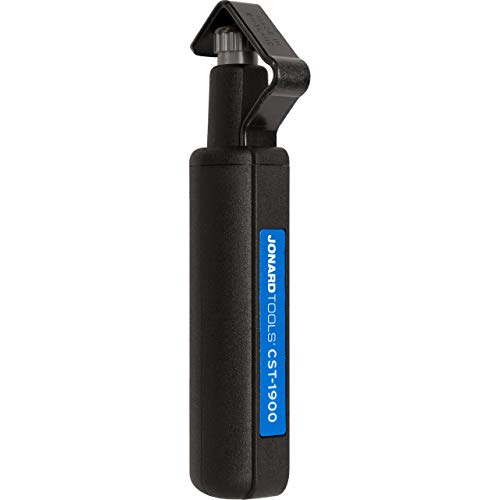
Jonard Tools Jonard Tools CST-1900 Round Cable Stripper for Fast and Precise Jacket Removal, 3/16" to 1 1/8" Diameter, Cable Strip & Ring Tool, Original version
PATENTED DESIGN: Patented stripping mechanism provides a "spiral stripping mode" to strip and remove tough insulations VERSATILE USE: This cable stripper can cut through a variety of jacket materials such as PVC, rubber, PE, and many more TRIPLE ACTION TOOL: Makes longitudinal cuts for end stripping, spiral cuts for end and mid span stripping, and circular cuts for jacket removal ADJUSTABLE BLADE: Blade depth can be adjusted from 0 to 3 mm, making it easy to work with multiple round cable sizes ranging from 3/16” to 1 1/8” (4. 5 mm to 29 mm) in diameter REPLACEMENT BLADE AVAILABLE: Jonard Tools cable strippers are made for high durability and long life, replacement blade part number is CST-7915
A hands-on review of the Jonard CST-1900 round cable stripper, covering its triple-action cutting modes for jacket removal on PVC, rubber, and PE cables.

Jonard Tools
Founded in 1958, Jonard Tools® manufactures tools for the Telecom, CATV, Fiber Optic, Home Automation, Security and Alarm, and Electrical markets. Jonard Tools designs and engineers patented products by utilizing customer partnerships to create innovative solutions for industry needs. New tools are released each month and are all Made For Life® with lifetime warranties. Through quality and innovation Jonard aims to move the industry forward and connect the world.
Jonard CST-1900 Review: The Triple-Action Cable Stripper for Jacket Removal
Stripping jacket from round cables without nicking the conductors inside is one of those tasks that separates professionals from amateurs. A utility knife works, but it's slow and one slip ruins the cable. The Jonard CST-1900 offers a better approach—a rotary stripper with three cutting modes that handles cables from small coax to thick multi-conductor runs. Here's what low voltage techs need to know.
Quick Verdict
The Jonard CST-1900 earns its place in a cable installer's kit. The triple-action design handles longitudinal slits, spiral cuts, and ring cuts on cables from 3/16" to 1-1/8" diameter. At around $60, it's not cheap, but the adjustable blade depth means you can strip PVC, rubber, and PE jackets without gouging the conductors underneath. If you prep multi-conductor cables, control cables, or larger coax runs regularly, this tool pays for itself in time savings and reduced rework.
Who This Is For (And Who Should Skip It)
Ideal for:
- AV installers working with multi-conductor speaker and control cables
- Fire alarm techs stripping FPL and FPLP cable jackets
- Low voltage techs handling composite cables with multiple conductors
- Anyone tired of nicking conductors with utility knives on larger cables
Skip it if:
- You primarily strip small gauge individual wires (standard wire strippers work better)
- You only work with CAT cable (dedicated CAT strippers are faster)
- Your cables are outside the 3/16" to 1-1/8" diameter range
Key Features That Actually Matter
Triple-action cutting modes: The CST-1900 isn't just a rotary stripper. It offers three distinct cutting approaches—longitudinal cuts for end stripping, spiral cuts for mid-span access and tough jackets, and circular ring cuts for clean jacket removal. This versatility handles situations where a simple ring cut won't release the jacket.
Adjustable blade depth (0-3mm): The spring-loaded blade adjusts to match your cable's jacket thickness. Dial it in once, and you can repeatably strip without risking conductor damage. This is the feature that separates it from cheap rotary strippers that either cut too deep or barely score the surface.
Wide diameter range: Covering cables from 3/16" to 1-1/8" (4.5mm to 29mm) hits the sweet spot for low voltage work. That includes everything from RG6 coax through 18/4 security cable up to larger multi-conductor control cables.
90-degree blade rotation: The blade pivots for longitudinal slitting versus rotary cutting. This mechanical switching is more reliable than tools that try to do both with a single blade orientation.
Real-World Performance
The patented spiral stripping mode is where the CST-1900 shines. On thick PVC jackets that want to cling to the conductors, a simple ring cut often leaves you peeling and tugging. The spiral cut creates a continuous strip that releases cleanly without that frustrating fight.
Setting the blade depth takes a few test strips on scrap cable, but once dialed in, the results are repeatable. On a recent speaker wire pull with about 30 cable ends to prep, every strip came out clean after the initial adjustment. No nicked conductors, no incomplete cuts requiring a second pass.
The longitudinal slit function works well for accessing mid-span without fully removing the jacket—useful when you need to tap into a cable run or inspect for damage. The blade tracks straight without wandering, leaving a clean slit that doesn't fray.
Build quality is solid. The body feels substantial without being heavy, and the blade mechanism has a positive click when rotating between positions. After extended use, the spring tension stays consistent and the blade shows no dulling on PVC and rubber jackets. The replacement blade (CST-7915) is available when needed, though the high-carbon steel should last through thousands of strips.
One limitation: very thin-walled jackets can be tricky. The minimum blade depth still scores deeper than ideal on some lightweight plenum cables. For those, a dedicated CAT stripper or careful utility knife work is still the safer choice.
What I Like (Pros)
- Triple-action cutting handles ring, spiral, and longitudinal cuts
- Adjustable blade depth (0-3mm) prevents conductor damage
- Wide 3/16" to 1-1/8" cable range covers most low voltage applications
- Spiral stripping mode releases stubborn jackets that ring cuts can't
- 90-degree blade rotation provides clean mode switching
- Replaceable blade extends tool life
- Patented design unique to Jonard
What Could Be Better (Cons)
- At ~$60, it's a significant investment for occasional cable work
- Minimum blade depth may still score thin-walled plenum cables
- Learning curve to find optimal blade depth for each cable type
- Not ideal for individual wire stripping—this is a jacket tool
- Larger form factor than simple rotary strippers
- Some users report mixed results depending on jacket material
Specifications
| Specification | Value |
|---|---|
| Model Number | CST-1900 |
| Cable Diameter Range | 3/16" to 1-1/8" (4.5-29mm) |
| Blade Depth Adjustment | 0-3mm |
| Cutting Modes | Longitudinal, Spiral, Circular (Ring) |
| Compatible Materials | PVC, Rubber, PE, and other jacket types |
| Blade Rotation | 90 degrees |
| Replacement Blade | CST-7915 |
| Design | Patented (US Patent) |
| Warranty | Lifetime (Made for Life) |
How Does the CST-1900 Compare to Alternatives?
The Jonard CST-4000 is the big brother, handling larger cables from 3/4" to 1-5/8" diameter. If you work with heavy industrial cable or large-gauge power runs, the CST-4000 picks up where the CST-1900 leaves off. For typical low voltage work, the CST-1900's range is sufficient.
Compared to Knipex rotary strippers, some users note the tools look similar—and there's speculation about shared manufacturing. The Jonard typically costs less for equivalent capability. Both deliver quality results; the choice often comes down to brand preference and availability.
Simple rotary strippers from Klein, Ideal, or generic brands cost less but only offer ring cuts. The CST-1900's spiral and longitudinal modes justify the premium if you regularly fight with stubborn jackets.
For CAT cable specifically, dedicated strippers like the Jonard UST-500 or trueCABLE stripper are faster and more precise. The CST-1900 excels on larger multi-conductor cables where those dedicated tools don't fit.
When Is Spiral Stripping Worth It?
The spiral mode sounds like a gimmick until you hit a cable that won't release. Thick rubber-jacketed cables used in industrial environments often grip their conductors tightly. A ring cut scores the surface but the jacket doesn't want to slide off. The spiral creates a continuous strip that you can peel away, revealing clean conductors underneath.
Mid-span access is the other use case. When you need to tap into a cable run without cutting it, a longitudinal slit followed by a spiral strip at each end gives you a removable window. This technique is common in troubleshooting and retrofit work where cutting and re-terminating isn't practical.
The Bottom Line
The Jonard CST-1900 delivers on its triple-action promise. The spiral stripping mode genuinely helps with stubborn jackets, the adjustable blade depth prevents conductor damage once dialed in, and the wide diameter range covers most low voltage cable prep needs. At around $60, it's an investment that makes sense for techs who regularly strip multi-conductor and control cables.
For occasional cable work or those who primarily handle CAT and small coax, simpler tools will suffice. But when you're prepping speaker runs, fire alarm cables, or composite AV cables day after day, the CST-1900 earns its keep.
Check Current Price on Amazon →
Find Projects That Need This Tool
Looking for commercial AV and fire alarm projects where quality cable prep matters?
LVN Signal surfaces low voltage installation projects from permit data before they hit bid boards.
Join 35,000+ Low Voltage Pros
Get weekly permit updates, tool deals, job opportunities, and industry news. No spam, unsubscribe anytime.