
Greenlee 757 Ratcheting ACSR Cable Cutter Review: Heavy-Duty Lineman Tool
Join Low Voltage Nation — Find project opportunities and showcase your company to thousands of industry professionals
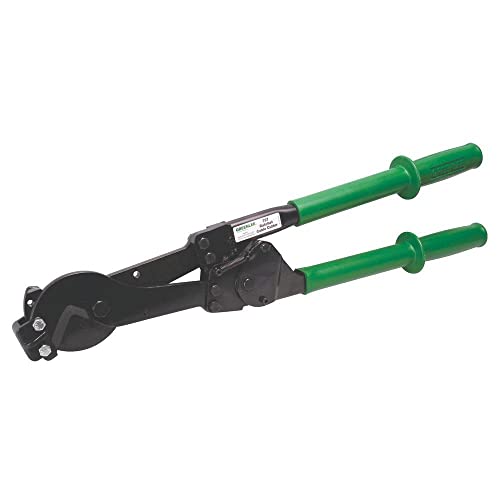
Greenlee Greenlee 757 Ratcheting ACSR Cable Cutter
Leading manufacturer of high-quality tools Trusted and used by experts, professionals and those who know quality Proven and Tested for durabilty and function in real world job site conditions Seven US Based Manufacturing Facilities United States Workforce
A professional review of the Greenlee 757 ratcheting ACSR cable cutter, covering its 954 kcmil capacity and dual-action cutting mechanism for utility lineman work.
Greenlee 757 Ratcheting ACSR Cable Cutter Review: Heavy-Duty Lineman Tool
Cutting ACSR (Aluminum Conductor Steel Reinforced) cable requires a tool built specifically for the job. Regular cable cutters will be destroyed by the steel core—ask any apprentice who learned that lesson the hard way. The Greenlee 757 is a professional lineman-grade ratcheting cutter designed to handle the toughest aluminum-steel conductors. Here's what you need to know before investing in this serious tool.
Quick Verdict
At around $750-800, the Greenlee 757 is a significant investment reserved for professionals who cut heavy ACSR cable regularly. The dual-action mechanism—scissor cutting for small cable, automatic ratchet for larger sizes—delivers clean cuts through conductors up to 954 kcmil ACSR. Extra-thick ground blades resist the breakage that plagues cheaper cutters on steel-reinforced cable. For utility linemen and electricians working distribution-level infrastructure, this is the tool that handles the job without destroying itself.
Who This Is For (And Who Should Skip It)
Ideal for:
- Utility linemen cutting ACSR on distribution and transmission work
- Industrial electricians handling heavy aluminum feeder cables
- Contractors working on substation and switchgear installations
- Anyone who regularly cuts ACSR up to 954 kcmil
Skip it if:
- You rarely encounter ACSR cable—cheaper cutters handle pure copper/aluminum
- You work residential or light commercial where max wire is 4/0
- Budget is a concern—the Klein 63607 offers similar capability for less
- You need insulated tools—the 757 is non-insulated
Key Features That Actually Matter
954 kcmil ACSR cutting capacity: The 757 handles the largest ACSR conductors found in utility distribution work. The 1.18-inch (30mm) jaw opening accommodates big cable, and the tool is rated for 1/2-inch soft steel rod—handling the steel core that destroys ordinary cutters.
Dual-action cutting mechanism: For smaller cables, the 757 functions as a fast scissor cutter—quick, direct cuts without the slower ratchet cycling. When you hit larger cable, the mechanism automatically converts to ratchet mode, multiplying your force for the heavy cuts. This dual approach saves time across varying cable sizes.
Extra-thick ground blades: Greenlee grinds the blades flat and uses extra thickness to resist the breakage that occurs when cutting steel-reinforced cable. The shear-type cutting action creates clean edges rather than crushing the conductor.
Anti-slip ratchet mechanism: The positive ratchet action prevents slippage mid-cut—critical when you're applying serious force to heavy cable. A rubber boot protects the mechanism from debris and weather on outdoor job sites.
29-1/4 inch overall length: The long handles provide the leverage needed for large cuts while keeping your hands clear of the cutting zone. The length also improves reach in awkward positions common in lineman work.
Real-World Performance
The Greenlee 757 earns its price on utility-scale cable work. Cutting 636 ACSR or larger, where cheaper tools would bind, jam, or shatter blades, the 757 works through the conductor with controlled ratchet strokes. The automatic transition from scissor to ratchet mode means you're not manually switching mechanisms or wasting time on small cable that doesn't need the ratchet force.
The extra-thick blades are the key differentiator. ACSR's steel core concentrates cutting stress in ways that crack thinner blades over time. Greenlee's design distributes that stress, and the flat grinding provides clean contact without stress risers. After extended use on steel-reinforced cable, the blades stay sharp and intact where budget cutters would need replacement or repair.
The 29+ inch length provides serious leverage but also means this is a two-handed tool. For bucket work or tight spaces, the size can be a challenge. The weight is substantial—this is industrial tooling, not something for a residential electrician's belt.
One consideration: the 757 is non-insulated. For any work near energized conductors, you need insulated tools or different procedures. This is a cable prep tool for de-energized work, not a live-line cutting tool.
What I Like (Pros)
- 954 kcmil ACSR capacity handles utility-scale conductors
- Dual-action mechanism auto-switches between scissor and ratchet modes
- Extra-thick ground blades resist breakage on steel core
- Anti-slip ratchet provides positive cutting action
- Rubber boot protects mechanism from elements
- 150+ year Greenlee reputation for lineman tools
- USA manufacturing with domestic workforce
What Could Be Better (Cons)
- Premium price around $750-800
- Non-insulated—not for near live conductors
- 29+ inch length limits use in tight spaces
- Heavy weight not suitable for belt carry
- Overkill for residential/light commercial work
- Blade replacement requires Greenlee parts
Specifications
| Specification | Value |
|---|---|
| Model Number | 757 |
| ACSR Cutting Capacity | 954 kcmil (MCM) |
| Soft Steel Rod Capacity | 1/2 inch (12.7mm) |
| Jaw Opening | 1.18 inches (30mm) |
| Overall Length | 29-1/4 inches |
| Cutting Action | Scissor + Auto Ratchet |
| Blade Type | Extra-thick, flat ground, shear-type |
| Insulation | Non-insulated |
| Country of Origin | USA |
How Does the 757 Compare to Alternatives?
The Klein Tools 63607 offers similar ACSR cutting capability with a patented two-step ratchet mechanism at roughly $450—about 40% less than the Greenlee. Klein's selectively-hardened blades and reduced hand force make it a solid alternative. For budget-conscious professionals, the Klein delivers comparable performance.
The Jonard RC-336ACSR targets a lower capacity (336 MCM ACSR) but includes a ball-bearing ratchet design that reduces hand stress. At lower price points, it suits electricians who encounter ACSR occasionally rather than daily.
Burndy cable cutters offer competitive pricing and solid performance—field reports confirm they handle 750 copper without complaints. Worth considering if Greenlee and Klein pricing exceeds your budget.
For battery-powered options, Milwaukee M18 ACSR Cable Cutters eliminate manual effort entirely but add battery system investment and weight. For high-volume cutting, the productivity gain may justify the cost.
Important: Don't Use Regular Cutters on ACSR
A critical note for anyone new to ACSR: using standard cable cutters—even quality ones—on ACSR will destroy them. The steel reinforcement in ACSR concentrates stress in ways that crack and chip blades designed for pure copper or aluminum. One cut through ACSR on the wrong tool can ruin a $200 pair of cutters instantly. Always use tools specifically rated for ACSR when working with steel-reinforced conductors.
The Bottom Line
The Greenlee 757 is a professional lineman tool built for the specific challenge of ACSR cable. The dual-action mechanism, extra-thick blades, and 954 kcmil capacity handle utility distribution work that destroys lesser tools. At $750-800, it's an investment that makes sense for utility crews and industrial electricians who cut heavy ACSR regularly.
For occasional ACSR work or tighter budgets, the Klein 63607 offers solid performance at lower cost. But when you need maximum capacity and proven durability on steel-reinforced cable day after day, the Greenlee 757 delivers.
Check Current Price on Amazon →
Find Projects That Need This Tool
Looking for utility and industrial electrical projects where heavy-duty cable cutters pay for themselves?
LVN Signal surfaces electrical infrastructure projects from permit data before they hit bid boards.
Join 35,000+ Low Voltage Pros
Get weekly permit updates, tool deals, job opportunities, and industry news. No spam, unsubscribe anytime.