
Join Low Voltage Nation — Find project opportunities and showcase your company to thousands of industry professionals
TDLR Project Rise 1A puts Google's Wilbarger County data-center path into the public construction record: $500M, 991,000 sq ft, Planton Investments as owner, AES power context, and open low-voltage package names.
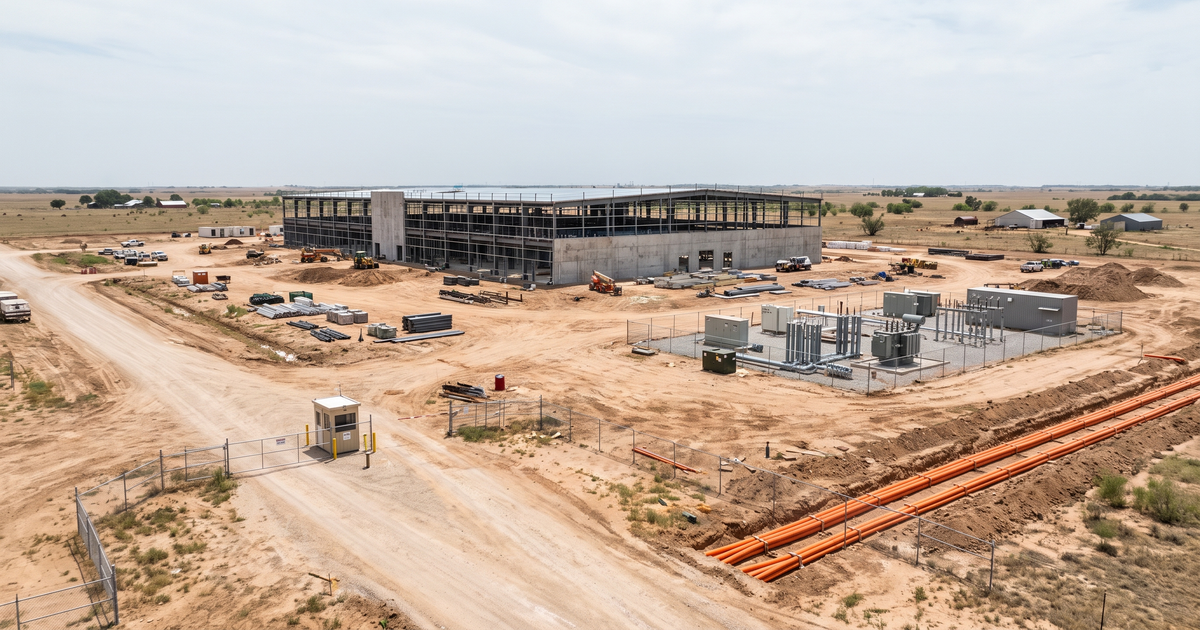
Google's Wilbarger County project family now has a specific building record for LVN Signal to track. The public anchor is TDLR TABS2026025053, which registers Project Rise 1A on FM 2897 S in Vernon / Wilbarger County, Texas as a new data center with associated mechanical and electrical yards, fire lanes, a security entrance, and utilities. The filing lists Planton Investments LLC as owner, a $500 million estimated cost, 991,000 square feet, a March 31, 2026 start date, and a March 31, 2028 completion date.
The owner/operator context comes from Google. Google's Wilbarger County announcement says the new data center will be co-located with clean power and generation capacity from AES and will use an air-cooled design. Google's PDF announcement adds that the facility supports growing demand for Google's AI-powered services, and Google's Texas data-center page lists Wilbarger County as an in-development location inside the company's larger Texas cloud and AI infrastructure investment.
| Item | Source-backed detail | LVN read |
|---|---|---|
| Project | Project Rise 1A / Google Wilbarger County | First current public building record in this project family. |
| Location | FM 2897 S, Vernon / Wilbarger County, TX | Specific enough for permit, utility, plan-room, and job-post monitoring. |
| Filed scope | $500M; 991,000 sq ft; new data center plus yards, fire lanes, security entrance, and utilities | Large early data-center package with multiple low-voltage watch lanes. |
| Schedule | March 31, 2026 start; March 31, 2028 completion | Current public record indicates an active 2026-2028 construction window. |
| Capacity | MW / IT critical load not disclosed in reviewed public sources | Do not infer building-level load from power-project context. |
AES is source-backed as the power and generation partner for Google's Texas agreements, including the Wilbarger development path. That makes Project Rise more than a generic data-center filing. It is a power-first AI infrastructure watch item where data-center building work, generation, substations, controls, interconnection records, site security, and fiber routes may move through different public channels. LVN should track the data-center record and the power record together without merging their capacity claims.
Capacity discipline matters here. The current public filing supports $500 million and 991,000 square feet for Project Rise 1A. Google and AES support the broader Wilbarger power/data-center project family. The reviewed sources do not disclose building-level MW, critical IT load, a named utility provider, full campus building count, general contractor, EPCM, electrical contractor, low-voltage contractor, fiber/OSP contractor, security integrator, fire alarm contractor, BAS/BMS contractor, DAS/networking contractor, grounding contractor, or commissioning provider. Those blanks are the business-development watch list, not facts to fill in by assumption.
| Company | Role | Evidence |
|---|---|---|
| Owner/operator project-family context | Wilbarger announcement | |
| Planton Investments LLC | Owner on TDLR filing | TDLR Project Rise 1A |
| AES | Power / generation partner | AES Google Texas agreements |
| Kimley-Horn | Medium-confidence normalized design-firm context from TDLR spelling | TDLR filing / company site |
| TDLR | Public building record source | TABS2026025053 |
| Zabalist | Secondary project-index context | Wilbarger project index |
The TDLR design-firm field deserves careful wording. The filing spells the design firm as "Kimberly - Horn." The import normalizes that to Kimley-Horn as medium-confidence context because the name, public company identity, and Austin office context align, but LVN should keep the confidence label visible until another public record corrects or confirms the spelling. That is different from the Planton Investments owner field, which is directly stated in the filing.
For low-voltage contractors, Project Rise is useful because the public record names the site and building scope before specialty packages are visible. A 991,000 square foot AI data-center building with mechanical and electrical yards, fire lanes, a security entrance, and utilities should create watch lanes around OSP/fiber, carrier entrances, duct banks, manholes, MMR planning, structured cabling, access control, CCTV, intrusion, fire alarm, BAS/BMS or EPMS integration, network pathways, DAS, grounding and bonding, construction access systems, site cameras, temporary networks, and commissioning documentation.
| System | Why it matters | Watch signal |
|---|---|---|
| Fiber / OSP | Power-first data-center campuses need diverse routes, entrances, and documented test results. | Carrier, conduit, duct-bank, handhole, MMR, splicing, and OTDR language. |
| Structured cabling | Large data halls need disciplined pathway, labeling, row, rack, and certification work. | Fit-out permits, rack/row scopes, test reports, and closeout requirements. |
| Access control / CCTV | The filing already names a security entrance, and data centers need layered physical security. | Gate, badging, camera, VMS, perimeter, and visitor-management packages. |
| Fire alarm | Life-safety scope must coordinate with yards, buildings, AHJ review, and acceptance testing. | Fire alarm permits, inspection logs, submittals, and acceptance-test records. |
| BAS/BMS / networking | Cooling, power, alarms, and facility systems depend on reliable controls networks. | Controls integrator, EPMS/BMS, network, trend-log, and commissioning records. |
| Grounding / commissioning | Power-dense campuses punish weak bonding, documentation, and handoff discipline. | Grounding specs, commissioning agent notices, QA/QC roles, and turnover packages. |
The practical sales move is not to blast a generic data-center pitch. Contractors should build a watch file around Project Rise, Planton Investments LLC, Google Wilbarger, AES, TDLR/TABS, Kimley-Horn, Wilbarger County, Vernon-area permits, ERCOT/PUCT records, TCEQ records, plan-room notices, job postings, and county-level infrastructure agendas. Then the outreach can be specific: here is the filed Project Rise 1A record, here are the systems we support, here is our mission-critical safety and QA package, and here is what we can do when the package holder becomes public.
The jobs and skills angle is also specific. Reviewed sources do not publish a Project Rise construction labor peak or permanent operations headcount. That means LVN should not invent job numbers. What can be said is that the filed scope points toward familiar data-center readiness needs: OSHA/site onboarding, lift certifications, hot-work and electrical-safety coordination, fiber cleaning and inspection, OTDR and power-meter documentation, copper certification, pathway coordination, cable tray discipline, labeling standards, grounding and bonding, access-control commissioning, CCTV/VMS setup, fire alarm acceptance, BAS/BMS point verification, network documentation, redlines, turnover binders, and clean change-order discipline.
The source stack is strong enough for a published Signal breakdown because it combines primary records and owner/operator context. TDLR gives the building record. Google and the Google PDF give the Wilbarger project-family and AI-demand context. AES gives the power-partner context. Google Data Centers lists Wilbarger as an in-development Texas location. Zabalist is useful secondary indexing, but LVN should anchor hard construction claims in the public and owner/operator sources.
Alias tracking is important. This project can surface as Google Wilbarger, Google Vernon, Project Rise, Project Rise 1A, Planton Investments LLC, FM 2897 S, TABS2026025053, Wilbarger County data center, and AES Google Texas. It should stay distinct from Google / Intersect Meitner near Pampa, Google / Housebound Journey Haskell, Google Project Spade in Missouri, Google West Memphis Project Pyramid, Google Jackson County Alabama, and other Google-linked data-center projects. Similar sponsor names and Texas geography are not enough to merge records.
The next evidence to watch is straightforward: additional TDLR/TABS filings, inspection movement, owner or design-firm changes, local building permits, site-work packages, utility/substation records, ERCOT or PUCT references, TCEQ filings, AES generation milestones, plan-room activity, prequalification notices, job postings, and contractor pages naming the project. The first public specialty names may appear in job descriptions or subcontractor portfolio pages before they appear in a clean bid announcement.
Bottom line: Project Rise 1A belongs in LVN Signal because it has crossed the line from broad AI infrastructure announcement into a public construction record. The known facts are strong: a $500 million, 991,000 square foot data-center filing in Wilbarger County, Planton Investments LLC as filing owner, Google project-family context, AES power/generation context, and a 2026-2028 construction schedule. The open fields are equally important: MW, IT load, utility provider, GC/EPCM, electrical, low-voltage, security, fire alarm, controls, DAS/networking, grounding, and commissioning package holders remain unnamed. That is the watch window.
Join 35,000+ Low Voltage Pros
Get weekly permit updates, tool deals, job opportunities, and industry news. No spam, unsubscribe anytime.