
Join Low Voltage Nation — Find project opportunities and showcase your company to thousands of industry professionals
Google and Intersect have a construction-stage Texas Panhandle AI data-center signal. Here is the LVN low-voltage watchlist.
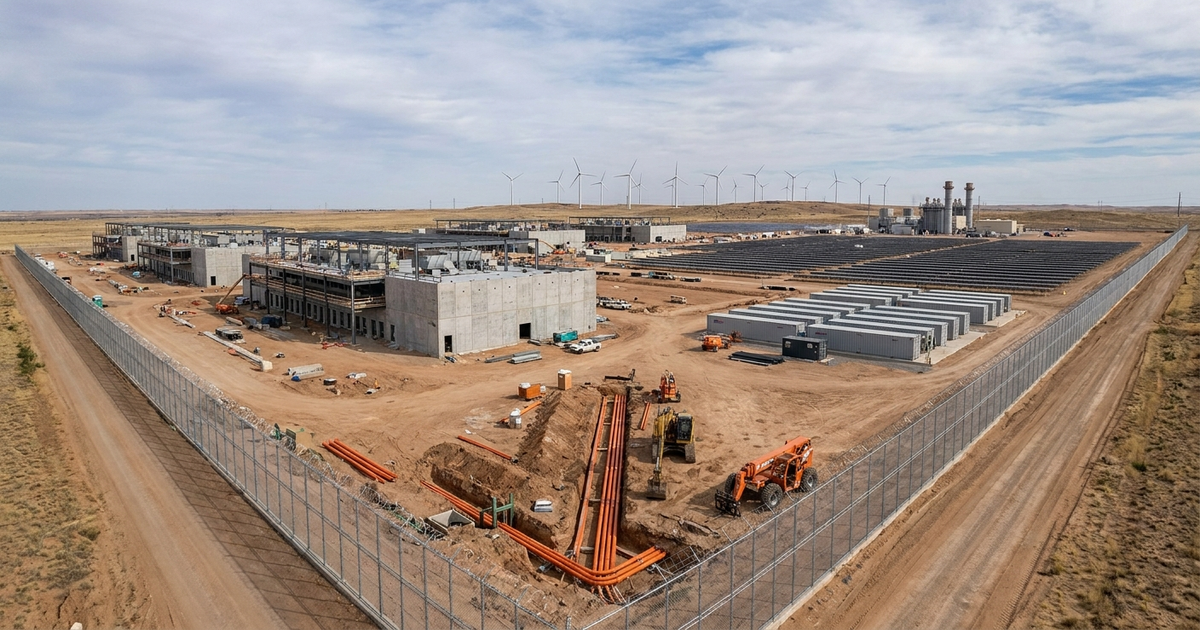
Google and Intersect have moved the Meitner Energy Center from rumor and permit tracking into a public construction-stage AI data-center signal. In its June 2026 announcement, Google said the Meitner Energy Center includes a new data center built directly alongside new energy generation in Gray and Roberts Counties, Texas. The company framed the project around three things that matter to LVN readers: power capacity, water-conscious cooling, and thousands of construction-linked regional jobs.
The official Google / Intersect announcement is stronger than a generic economic-development release. The paired Google and Intersect PDF says Meitner will pair the data center with more than a gigawatt of wind, solar, and battery storage systems, plus on-site gas firming for reliability. It also says the data center will use air cooling to limit water consumption to small domestic uses such as restrooms. That matters because the low-voltage story on AI campuses is not isolated from power, cooling, security, operations, and commissioning. The systems all meet in the same pathways, controls networks, documentation sets, and turnover schedule.
The public-record trail gives the project a concrete building hook. The Texas Department of Licensing and Regulation Project Pumpkin 2A record lists a new 761,000-square-foot Data Center Building 2A at 8830 Co. Rd. 21 near Miami, Texas. The record shows a $400 million estimated construction cost, a February 6, 2026 start date, a December 14, 2027 completion date, IP Meitner Land LLC as owner, and HDR Engineering Inc. as the design firm. That is the core source-backed building record for this LVN watchlist.
The broader project is still larger than the one TDLR record. Intersect's announcement names Gray and Roberts Counties, describes Google and Intersect deepening their Texas roots, and ties the data center to the energy-development platform. Local KCBD / KFDA coverage reported construction activity near Pampa before the June announcement, including slab timing and broader building estimates. POWER Magazine added useful power-sector context around the more-than-1-GW generation mix, gas firming, and air-cooling approach. Industrial Info reported additional building and load context, but LVN should keep those larger values secondary until Google, Intersect, TDLR, county records, or utility filings confirm them directly.
Project Snapshot
| Item | Public Evidence | LVN Takeaway |
|---|---|---|
| Project | Google / Intersect Meitner Energy Center data center and energy campus. | A source-backed AI infrastructure project with a clear construction, power, and workforce trail. |
| Location | Gray and Roberts Counties, Texas; TDLR places Project Pumpkin 2A at 8830 Co. Rd. 21 near Miami. | Track Pampa, Miami, Gray County, Roberts County, Wheeler County, and Project Pumpkin aliases together. |
| Building record | TDLR lists Data Center Building 2A at 761,000 sq ft and $400 million estimated cost. | This is the cleanest primary construction record for the current building watchlist. |
| Schedule | TDLR lists February 6, 2026 start and December 14, 2027 completion for Building 2A. | 2026-2027 should produce permits, package awards, inspection activity, utility work, and commissioning signals. |
| Power context | Official sources describe more than 1 GW of wind, solar, and battery storage plus gas firming. | Power, controls, monitoring, grounding, OSP, and commissioning will be central to the trade story. |
| Cooling / water | Google and Intersect describe air cooling and limited domestic water use. | Controls, alarms, metering, facility networks, and documentation still matter even without a water-heavy cooling plant. |
Named Companies And Public Roles
| Company / Agency | Public Role | Evidence |
|---|---|---|
| Data-center owner/operator and public project announcer. | Google's June 2026 Meitner announcement and official PDF. | |
| Intersect | Energy infrastructure partner and Meitner energy-development platform. | Intersect press release and official Google / Intersect PDF. |
| IP Meitner Land LLC | Owner listed on the TDLR Project Pumpkin 2A building record. | TDLR TABS2026011989 public record. |
| HDR Engineering Inc. | Design firm listed for Data Center Building 2A. | TDLR TABS2026011989 public record and HDR public site. |
| Gray County, Texas | Host county for the data-center construction account. | Official Google / Intersect location language and local reporting. |
| Roberts County, Texas | Host county for the energy-generation context. | Official Google / Intersect location language. |
| Wheeler County, Texas | Host area for the Caprock Workforce Hub. | Official Google / Intersect PDF. |
| Pampa Chamber of Commerce | Local business and workforce context. | Intersect community and announcement context. |
The named-company table is useful because it shows how early the specialty layer still is. No reviewed source names the general contractor, EPCM, electrical contractor, low-voltage contractor, fiber/OSP contractor, structured cabling contractor, security/access-control/CCTV integrator, fire alarm contractor, BMS/BAS controls integrator, DAS/networking contractor, grounding/bonding team, or commissioning agent. HDR is source-backed as design firm on the TDLR record. Google, Intersect, IP Meitner Land LLC, Gray County, Roberts County, Wheeler County, and Pampa are source-backed in the public trail. Anything beyond that needs evidence before it becomes a public contractor claim.
The workforce signal is also real, but it needs careful wording. The official PDF says the Caprock Workforce Hub is an 800-acre managed residential facility for up to 3,500 construction workers in nearby Wheeler County. Google and Intersect also describe local work categories such as maintenance, security, landscaping, HVAC repair, electrical work, and construction trades. Local reporting includes additional estimates around Pampa and Gray County jobs, but LVN should keep those as local estimates rather than turning them into a Google staffing commitment. For contractors and techs, the actionable point is that the project is being organized like a major remote construction program, not a small local commercial build.
That changes the low-voltage readiness standard. A 761,000-square-foot data-center building with co-located generation and a worker hub will likely reward firms that can handle documentation, safety, badging, site logistics, test records, labeling, QA, and commissioning discipline. Fiber contractors need to think about diverse routes, carrier handoffs, duct banks, vaults, equipment yards, and demarc spaces. Security teams need to think about perimeter, access control, cameras, badging, visitor workflows, and operations handoff. BAS/BMS and facility-network teams need to coordinate with cooling, power, monitoring, alarms, metering, and DCIM or operations platforms. Fire alarm and life-safety teams need clean interface documentation and AHJ coordination. The opportunity is big, but the bar is not casual.
Where Low Voltage Shows Up
| Scope | Why It Matters | Evidence To Watch |
|---|---|---|
| Fiber / OSP | Large AI campuses need diverse routes, carrier coordination, campus duct banks, vaults, and clean test records. | Fiber permits, easements, carrier clues, utility crossings, duct-bank work, MMR language, and OTDR/closeout requirements. |
| Structured cabling | Data halls, support spaces, operations areas, and security/controls systems depend on disciplined pathways and labeling. | Interior buildout packages, cable tray, rack/row scope, copper/fiber testing, labeling, and as-built requirements. |
| Security systems | Remote high-value AI infrastructure needs perimeter, building, access-control, CCTV, visitor, and badging systems. | Security integrator awards, camera/VMS jobs, access-control permits, gate/perimeter work, and turnover testing. |
| Fire alarm / life safety | Massive buildings require careful fire alarm, suppression interfaces, monitoring, inspections, and documentation. | FA permits, AHJ inspections, special inspections, monitoring setup, interface testing, and commissioning records. |
| BMS / BAS controls | Air-cooled data centers still require facility controls, monitoring, alarm routing, metering, and integration with operations. | Controls integrator roles, trend logs, sequence documentation, equipment networks, and commissioning scripts. |
| DAS / networking | Large secure buildings and worker logistics often need public-safety radio, operations networks, and IT/OT coordination. | DAS design, public-safety coverage, facility VLANs, network gear, acceptance testing, and jurisdictional requirements. |
| Grounding / bonding | Telecom rooms, pathways, racks, equipment yards, and networked systems require clean bonding discipline. | Grounding tests, telecom bonding records, pathway inspections, electrical coordination, and QA documentation. |
The public watchlist should stay practical. Search by Meitner Energy Center, Project Meitner, Project Pumpkin, Project Pumpkin 2A, TABS2026011989, IP Meitner Land LLC, Pampa data center, Miami Texas data center, Gray County data center, Roberts County data center, and Caprock Workforce Hub. Watch Google, Intersect, HDR, TDLR, Gray County, Roberts County, Wheeler County, ERCOT, Xcel / Southwestern Public Service context, appraisal records, county tax-abatement records, and local permit portals. The useful signals will be contractor awards, prequalification pages, job postings, inspection movement, service/substation records, interconnection steps, energization milestones, and commissioning language.
For LVN contractors, the near-term move is not to claim a package that has not been awarded publicly. The move is to map the account: which aliases each record uses, which county or state system shows the next permit, which firms begin hiring mission-critical field roles, and which utility or interconnection filings point toward energization. That is where early low-voltage intelligence usually appears.
Jobs, Skills, And Contractor Readiness
| Skill Area | Why It Fits | Useful Resource |
|---|---|---|
| Fiber testing and documentation | Carrier entrances, OSP routes, MMRs, data halls, and turnover packages reward clean fiber handling and repeatable test records. | BICSI fiber training |
| Structured cabling discipline | Pathway, labeling, copper, fiber, as-built, and QA practices matter more as data-center scale rises. | BICSI copper training |
| Fiber workforce basics | Growing teams need shared basics around cleaning, testing, labeling, safety, and standards. | FOA workforce resources |
| Site safety and access | Remote mission-critical construction requires orientations, PPE, lift discipline, badging, access control, and closeout habits. | OSHA outreach training |
The conservative read is the useful read. Meitner is source-backed, under construction, tied to Google and Intersect, backed by a primary TDLR building record, and large enough to matter for fiber, OSP, structured cabling, security, fire alarm, BAS/BMS, DAS/networking, grounding, documentation, and commissioning. The specialty contractor names are not public yet. That is exactly why it belongs on the LVN low-voltage watchlist now, while the public evidence is still early enough for contractors, vendors, recruiters, and techs to map the account before the obvious names are everywhere.
LVN Signal is tracking Meitner as part of the AI/data-center construction intelligence layer so the LVN community can follow source-backed company names, public records, workforce signals, and low-voltage scope movement while the opportunity is still forming.
Join 35,000+ Low Voltage Pros
Get weekly permit updates, tool deals, job opportunities, and industry news. No spam, unsubscribe anytime.