
Join Low Voltage Nation — Find project opportunities and showcase your company to thousands of industry professionals
Glendale approved land use for the planned Eagle/Baccara campus. Track three proposed data centers, qualified power and cost figures, and prospective low-voltage work.
Glendale has approved a land-use step for Project Eagle, also known as Baccara, a proposed data-center and power-generation campus on roughly 160 acres in Arizona. The city's October 29 FAQ reports a 6–1 council vote on October 27. For low-voltage contractors, the project presents a substantial planning lead: three proposed data-center buildings, secured campus access, fiber infrastructure and power-system interfaces. General-contractor selection, specialty awards and a construction start remain unverified.
The scale needs careful definition. A September fiscal study models $1.3 billion of construction and $1.4 billion of initial equipment for the data center and power plant. Those are separate estimates supplied for a fiscal analysis. The reviewed evidence does not establish a financing close or an available subcontract budget. The useful next step for a prospective trade partner is identifying who will buy each package and which design and approval milestones must precede it. Sources: Glendale's project FAQ and September fiscal study.
What Glendale approved
The council package pairs annexation case AN-273 with rezoning case ZON26-05. Ordinance O26-38 concerns annexation; O26-39 provides conditional Planned Area Development zoning. The current city description covers up to three data-center buildings totaling about 1.1 million square feet, with associated natural-gas generation and an APS substation. The site is north of Olive Avenue between Reems Road and Litchfield Road, near Luke Air Force Base. The city describes land previously under county jurisdiction. Sources: annexation attachment and council rezoning item.
| Measure | Reported scope | Qualification |
|---|---|---|
| Stage | Land-use approval | Construction start unverified |
| Site | About 160 gross acres | 153.76 net acres on plan |
| Buildings | Three proposed data centers | About 1.1 million sq. ft. |
| Generation | 700.2 MW proposed | Generation nameplate |
| Construction | $1.3 billion modeled | Campus and power plant |
| Equipment | $1.4 billion modeled | Separate initial purchases |
| Employment | 160 operating jobs modeled | No verified vacancies |
Conditions matter to project sequencing. The zoning attachment addresses traffic review, Luke compatibility, emissions monitoring, fuel arrangements, secondary fire access, standpipes, fire flow and inspections. It also requires an agreement concerning specialized emergency-service costs before the first certificate of occupancy. These requirements create coordination questions across civil, electrical, controls and life-safety work. They do not identify an installer or establish that final permits have been issued. The reviewed ordinance is an agenda attachment; the city FAQ corroborates passage, while a signed recorded copy and legal effective date were not independently retrieved. Source: conditional rezoning attachment.
Read the power and schedule figures with their scope
The Arizona Corporation Commission reports that it approved a Certificate of Environmental Compatibility on February 4 for Baccara Power's proposed 700.2 MW natural-gas generation plant. Its release describes the certificate as one step among further approvals. The 700.2 MW figure measures proposed generation nameplate. Critical IT capacity, delivered power and energized campus load remain unknown in the reviewed material. Source: ACC approval announcement.
Montera Infrastructure's current PHX1 portfolio describes a 160-acre Glendale campus for AI and cloud workloads, lists 500 MW under its “OSG Utility” label and gives a Q2 2028 in-service target. The conceptual site plan identifies Montera and Project Eagle alongside the Baccara Power turbine yard. This supports the project association, but the marketing measure is not reconciled to the 700.2 MW generation proposal. The two figures should never be added. Sources: Montera's portfolio and Olsson's conceptual plan.
Schedule language also differs by source. Montera provides a Q2 2028 target; the applicant's PAD narrative anticipates an APS substation in 2030; the fiscal study assumes roughly five years of construction for the power plant and three buildings. Those statements cover different components and assumptions. They do not establish a single verified campus completion date. Montera's page also carries an operational label alongside its future target. Without corroborating commissioning evidence, the campus remains a planned development in this reporting.
Named companies and their documented roles
The development team is more visible than the construction procurement team. The PAD identifies the property owner, civil engineer and entitlement representative. Its infrastructure discussion attributes floodplain work to Colliers, while the appended earlier military-compatibility narrative identifies KP Environmental. These are specific professional roles. None establishes a general-contractor appointment or a low-voltage installation award. Source: PAD narrative and development team.
| Organization | Documented role | Evidence |
|---|---|---|
| Baccara Eagle Land, LLC | Filed property owner | PAD team |
| Takanock, LLC | Developer in earlier records | Project website |
| Montera Infrastructure | Named on conceptual plan | Site plan |
| Baccara Power, LLC | Power-project applicant | ACC release |
| Olsson | Civil engineering | PAD team |
| Colliers Engineering & Design | Drainage / floodplain work | PAD infrastructure |
| Burch & Cracchiolo | Entitlement counsel | PAD team |
| KP Environmental | Earlier environmental team | PAD appendix |
| EPCOR | Intended water / sewer utility | City FAQ |
| Arizona Public Service | Future substation described | Applicant narrative |
| Electrical District No. 7 | Modeled power counterparty | Fiscal study |
Two identity details affect research. The earlier Baccara website still refers to two data buildings and a future environmental certificate, so the newer city and ACC records control those points. KP Environmental's current website says it is now Spheros Environmental and that the older site is no longer actively updated. Retain the filing-era name when describing that assignment. The relationship between the named development entities is not evidence of an unreported ownership transfer. Source: KP Environmental's identity notice.
Utility descriptions deserve equal care. EPCOR is the intended water and sewer provider identified by the city. The APS substation date is an applicant forecast. The fiscal model assumes the generator would sell wholesale power to Electrical District No. 7, which would resell it to the data center. Executed utility agreements and energized service were not independently obtained. A contractor should confirm the actual interface owner before relying on any of these descriptions for design or commercial scope.
The city FAQ adds a more specific permit distinction: it says the power plant has an air-quality permit, while the data center is still obtaining its own. The permit instrument and conditions were not independently retrieved. It also describes APS infrastructure as the campus power source, with 18 turbines supplying an APS substation and the grid. That account differs from the fiscal study’s ED7 resale assumption and earlier dedicated-power framing. The final supply arrangement remains unresolved. Source: city FAQ, page 2.
Where low-voltage work could develop
The following opportunities are LVN's trade analysis of the proposed campus. They are prospective work areas, with no verified tender or specialty award. Three separate data buildings make interbuilding pathways and documentation important planning questions; secured access and power infrastructure suggest additional security and controls interfaces. Final system choices, quantities, equipment and acceptance criteria require issued project documents.
| System | Potential work | Verify before pricing |
|---|---|---|
| Fiber / outside plant | Entrances, backbone, splicing | Route, diversity, buyer |
| Structured cabling | Support networks, labels | Issued specifications |
| Pathways / bonding | Tray and grounding interfaces | Trade boundaries |
| Access / CCTV | Perimeter and building links | Security design, award |
| Controls / OT networks | Power and cooling interfaces | Architecture, ownership |
| Fire-system interfaces | Monitoring and integration | Approved sequence, installer |
| Testing / turnover | Acceptance records, as-builts | Test plan, signoff lead |
For fiber firms, the early questions concern carrier entrances, physical route diversity, civil crossings and the division between outside plant and building packages. For security integrators, the questions concern gate and guard-facility interfaces, network ownership, device locations and access policies. Controls specialists should establish who owns monitoring points and how power, cooling and facility networks will exchange information. These are preparation questions, not a claim that a particular product or topology has been selected.
Life-safety conditions also require disciplined scope boundaries. A requirement for emergency access, standpipes or specialized response funding does not name the fire-alarm contractor. Review the approved design, authority requirements, monitoring connections and commissioning sequence before assigning installation responsibility. Across every package, agree on test records, labeling, as-built deliverables and final acceptance ownership early enough for those requirements to shape the estimate.
Jobs, trades and preparation
The fiscal analysis assumes 160 operating jobs across the data center and power plant. It does not verify 160 open positions, a construction workforce count or hiring dates. Construction work would involve different employers and durations from long-term operations. No current campus vacancy list was verified for this report. Treat project employment forecasts as context and check any specific opportunity directly with the named employer.
Useful preparation includes fiber inspection and cleaning, splicing, optical testing, structured-cabling quality control, pathway coordination, bonding, labels and turnover documentation. The Fiber Optic Association's workforce resources provide a general training reference, while BICSI offers an ICT training and credentialing reference. Neither link establishes an Eagle/Baccara hiring program or mandatory site credential. Confirm an employer's actual training and prequalification requirements before paying for a course.
Site readiness also includes safety orientation, equipment authorization, access procedures and coordination around active electrical work. OSHA's construction resources are a general reference; the project's own contractor onboarding requirements remain unverified. Foremen and project managers can prepare by assembling sample test reports, quality procedures, relevant project histories and clear documentation of their crews' experience.
What to watch next
The next useful milestones are issued design and permit documents, a named general contractor, identified specialty-package buyers, an established power-delivery sequence and evidence of financing or tenant commitments. Each would answer a different commercial question. A procurement announcement should specify its phase and scope before being treated as a campus-wide award. A site mobilization update should identify actual work underway before the development is described as under construction.
Location precision matters too. The map reference used for this report is the Hatcher Road and Reems Road intersection west of the campus. It is an approximate access-area reference, not a surveyed parcel center or confirmed gate. Contractors planning a visit should obtain the current site-access instructions from the project team.
Project Eagle/Baccara now has a documented city land-use milestone and a substantial set of planning records. Its commercial opportunity will become clearer as design, procurement and construction evidence arrives. Read the linked sources and use LVN Signal to follow construction projects, named organizations and potential low-voltage scopes. Confirm the buying entity and issued package before committing an estimate or crew.
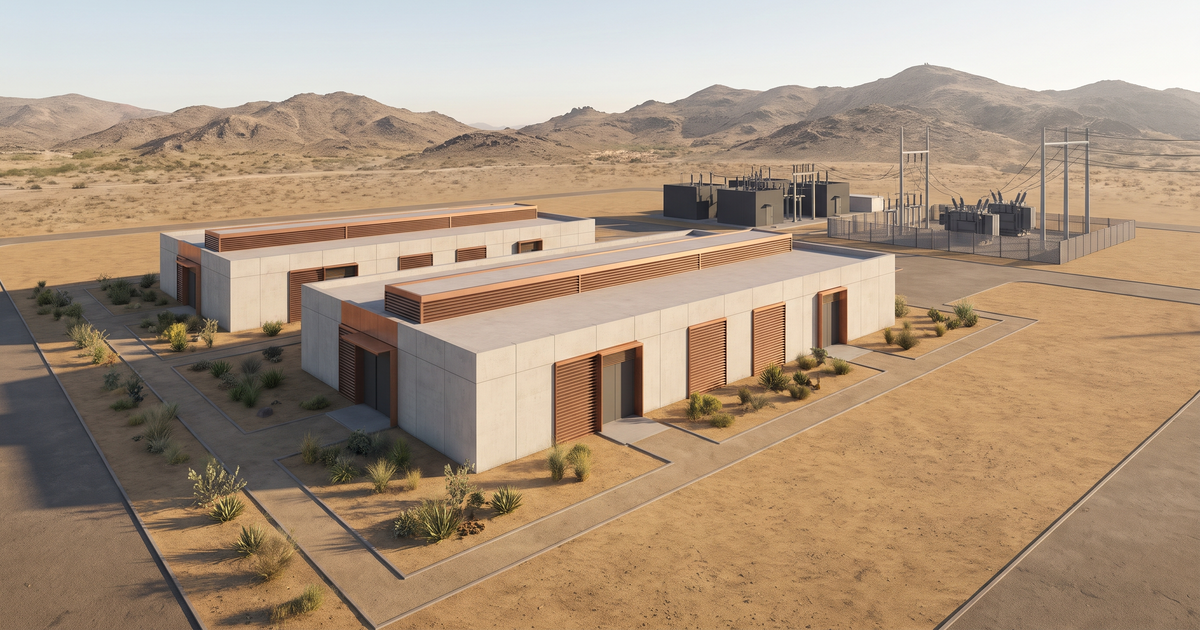
Reporting updated October 30, 2026. Featured and social images are AI-generated concepts, not site photographs or verified design renderings. The city's full FAQ was retrieved and rechecked before publication; permit statements are attributed to the city.
Join 35,000+ Low Voltage Pros
Get weekly permit updates, tool deals, job opportunities, and industry news. No spam, unsubscribe anytime.