
Fluke TiS20+ MAX Review: A Rugged Thermal Imager Built for the Field
Join Low Voltage Nation — Find project opportunities and showcase your company to thousands of industry professionals
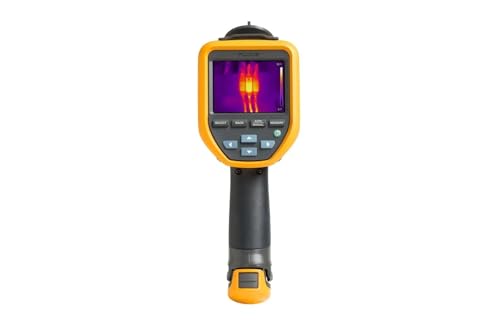
Fluke Fluke TIS20+ MAX 9HZ, Thermal Imager
Fluke IR-Fusion - Simply slide your finger across the screen to adjust the level of infrared that you need. Battery life - Over 10 hours of battery life. Rugged reliable tool - Engineered to withstand a 2 meter drop, water and dust resistant (IP54). Fluke Connect Asset Tagging - Scan a QR code and automatically sort your thermal images by asset.
Detailed review of the Fluke TiS20+ MAX thermal imaging camera. Covers specs, real-world performance, pros and cons, and whether the Fluke premium is worth it for electrical and HVAC contractors.
Fluke TiS20+ MAX Review: A Rugged Thermal Imager Built for the Field
Is Fluke's entry-level professional thermal camera worth the premium over budget options? We break down the specs, real-world performance, and who should consider this 120x90 imager.
Quick Verdict
The Fluke TiS20+ MAX is a solid entry-level professional thermal camera that prioritizes durability and ease of use over resolution. At around $2,100, you're paying a Fluke premium for rugged construction, 2-meter drop rating, and IP54 dust/water resistance—features that matter when your camera lives in a van between job sites. The 120x90 resolution is modest by 2025 standards, but the extended temperature range (-4°F to 752°F) handles most electrical and HVAC inspection scenarios.
Best for: Electrical contractors, HVAC technicians, and maintenance pros who need a durable thermal camera for routine inspections rather than detailed diagnostic work.
Check Current Price on Amazon →
Who This Is For (And Who Should Skip It)
Perfect for:
- Commercial electricians – Scan panels, switchgear, and connections for hot spots
- HVAC/R technicians – Identify insulation gaps, airflow issues, and compressor problems
- Maintenance technicians – Routine predictive maintenance inspections
- Low voltage contractors – Quick checks on electrical systems during installations
Skip it if:
- You need high resolution – At 120x90 (10,800 pixels), you won't catch subtle temperature gradients. For detailed diagnostic work, look at 320x240 or higher.
- Budget is tight – Competing cameras offer similar resolution at half the price. The Fluke premium buys durability, not image quality.
- You do building envelope work – Moisture intrusion and insulation analysis benefit from higher resolution cameras.
Key Features That Actually Matter
Extended Temperature Range (MAX Model)
The "MAX" designation gets you -20°C to 400°C (-4°F to 752°F) versus -20°C to 150°C on the standard TiS20+. That upper range matters when you're inspecting motors running hot, transformers under load, or industrial equipment. The standard model tops out at 302°F—fine for most HVAC work but limiting for electrical inspections where connections can exceed that threshold.
2-Meter Drop Rating + IP54
This is where Fluke earns its premium. The TiS20+ MAX survives a 2-meter drop onto concrete—Fluke actually tests this, unlike most competitors who just claim "rugged." The IP54 rating means dust and water splashes won't kill it. After years of thermal cameras dying from one bad drop or getting moisture inside during humid attic inspections, the peace of mind is worth something.
IR-Fusion Technology
IR-Fusion overlays the thermal image onto a visible light photo so you can see exactly where the hot spot is relative to the actual equipment. Slide your finger across the touchscreen to adjust the blend from 0% to 100% thermal. In practice, this makes reports cleaner—clients understand a fused image showing a hot breaker better than a pure thermal blob.
Asset Tagging with QR Codes
Scan a QR code on equipment before capturing images, and Fluke Connect automatically sorts your thermal images by asset. This eliminates the post-job task of renaming files and organizing folders. If you inspect the same equipment quarterly, this feature alone saves hours over a year.
Fluke Connect Integration
The camera syncs wirelessly to Fluke Connect cloud storage and desktop software. Generate professional PDF reports with radiometric data, temperature readings, and fused images. Whether this matters depends on your workflow—if you just snap images for your own reference, the software is overkill. If you provide inspection reports to clients, it's useful.
Real-World Performance
The first thing you notice when picking up the TiS20+ MAX is the weight. It feels substantial without being heavy—the kind of density that suggests it'll survive being thrown in a tool bag with wrenches and screwdrivers. The rubber overmold provides solid grip even with sweaty hands, and after bouncing around in my truck for six months, the camera shows scuffs but no functional damage.
The 3.5-inch touchscreen is bright enough to see in direct sunlight, though I'd recommend shading it with your body for the clearest view. Touch response is acceptably quick—not smartphone smooth, but responsive enough that you're not jabbing at buttons multiple times. The interface follows typical Fluke logic: straightforward once you learn it, but the manual is worth skimming first.
Image quality is where expectations need calibration. At 120x90 resolution, you're getting roughly what a smartphone camera delivered a decade ago. This is fine for identifying obvious hot spots—a 200°F breaker connection stands out clearly against surrounding 90°F equipment. But distinguishing between two adjacent terminals running 140°F versus 160°F? The pixels start to merge together. The 60 mK thermal sensitivity helps detect small temperature differences, but the low resolution limits how precisely you can locate them.
The fixed focus simplifies operation but creates limitations. Everything from 20 inches to infinity is "in focus," which really means nothing is perfectly focused. For close-up work on small components, you'll wish for manual focus or macro capability. For scanning panels and general equipment surveys, fixed focus works fine.
Battery life genuinely impressed me. Fluke claims 4+ hours continuous; I've gotten closer to 5 hours in practice with moderate use and WiFi off. The camera wakes from sleep mode almost instantly, which encourages actually using it throughout the day rather than babying the battery.
What I Like (Pros)
- Truly rugged construction – The 2-meter drop rating is tested, not marketing. IP54 handles real job site conditions.
- Extended temperature range – 752°F upper limit handles hot electrical work that cheaper cameras can't measure
- Excellent battery life – 5+ hours of actual use means all-day availability without charger hunting
- IR-Fusion for clear reports – Blended thermal/visible images communicate issues to clients instantly
- Asset tagging workflow – QR code organization saves hours of file management on recurring inspections
- Fluke reliability – The brand's reputation exists for a reason; support and warranty actually mean something
What Could Be Better (Cons)
- Resolution is dated – 120x90 pixels was acceptable in 2015; in 2025, budget cameras offer 256x192 or higher for less money
- Price-to-resolution ratio – You're paying ~$2,100 for 10,800 pixels. Competitors offer 3-4x the resolution for less.
- Fixed focus limitations – No close-up capability for small components; everything is "acceptably" focused
- IR-Fusion blend options limited – Only one true blend level (50/50); FLIR's MSX technology offers more flexibility
- 9 Hz refresh rate – Scanning moving equipment shows some lag; fine for static inspection targets
Specifications Table
| Specification | Value |
|---|---|
| IR Resolution | 120 x 90 (10,800 pixels) |
| Temperature Range | -4°F to 752°F (-20°C to 400°C) |
| Accuracy | ±2°C or 2% (whichever is greater) |
| Thermal Sensitivity (NETD) | ≤60 mK at 30°C |
| Field of View | 50° H x 38° V |
| Focus | Fixed (minimum 20 inches) |
| Refresh Rate | 9 Hz |
| Display | 3.5" touchscreen LCD (320 x 240) |
| Visual Camera | 5.0 megapixel |
| Battery Life | 4+ hours continuous |
| Drop Rating | 2 meters |
| Ingress Protection | IP54 (dust/water resistant) |
| Connectivity | WiFi 802.11 b/g/n, USB |
| Weight | ~0.3 kg (0.7 lbs) |
| Warranty | 2 years |
Is It Worth the Price?
At roughly $2,100, the TiS20+ MAX sits in an awkward spot. You're paying professional-tier prices for entry-level resolution. The value proposition isn't image quality—it's Fluke's rugged construction, reliable support, and workflow integration.
The TiS20+ MAX makes sense if:
- You need a camera that survives rough treatment and harsh environments
- Your inspections are primarily pass/fail (hot vs. not hot) rather than detailed analysis
- You value the Fluke ecosystem (Connect software, consistent interface across tools)
- You've killed cheaper thermal cameras and want something that lasts
Look elsewhere if:
- Resolution matters more than durability for your applications
- Budget is the primary concern—FLIR, Hikmicro, and others offer more pixels per dollar
- You do specialized work (building diagnostics, moisture detection) that demands higher detail
The honest assessment: this is a $1,200 camera wrapped in $900 worth of Fluke durability and ecosystem. That trade-off is worth it for some users, not for others.
The Bottom Line
The Fluke TiS20+ MAX delivers exactly what Fluke is known for: a reliable, durable tool that does its job without drama. The rugged construction is genuinely impressive—this camera will outlast cheaper alternatives that crack on the first drop. The extended temperature range handles real electrical work. The workflow features (asset tagging, Fluke Connect) save time on recurring inspections.
What it won't do is compete on image quality. The 120x90 resolution is functional but dated, and competitors offer significantly more detail at lower prices. If your work involves identifying obvious hot spots on electrical panels and HVAC equipment, the TiS20+ MAX does that job well in a package that survives the field. If you need the detail to diagnose subtle issues or create detailed thermal reports, the resolution will limit you.
Rating: 3.8/5 – Excellent durability and ease of use, but the resolution-to-price ratio is hard to justify unless you specifically need Fluke's ruggedness.
Check Current Price on Amazon →
Disclosure: This post contains affiliate links. If you purchase through these links, Low Voltage Nation may earn a commission at no additional cost to you.
Find Projects That Need This Tool
Looking for commercial jobs where a thermal camera like this pays for itself in inspection work?
LVN Signal surfaces electrical and HVAC inspection projects from permit data before they hit bid boards.
Join 35,000+ Low Voltage Pros
Get weekly permit updates, tool deals, job opportunities, and industry news. No spam, unsubscribe anytime.