
Fluke Networks DSX2-8000MI Review: Is the $26K Price Tag Worth It for Cat 8 Certification?
Join Low Voltage Nation — Find project opportunities and showcase your company to thousands of industry professionals
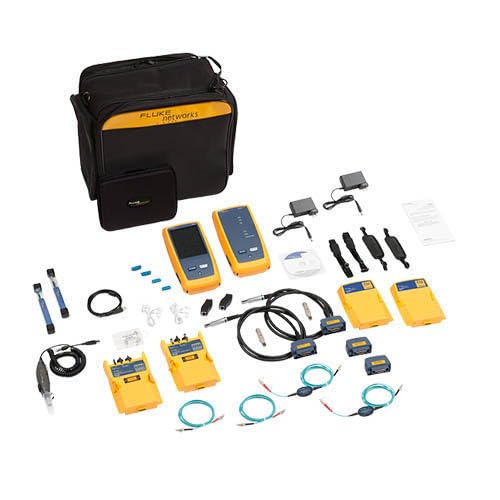
Fluke Networks Fluke Networks DSX2-8000MI CableAnalyzer Copper Cert., MM, OLTS, WiFi
Professional Fluke Networks DSX2-8000MI CableAnalyzer Copper Cert., MM, OLTS, WiFi for low voltage work
Comprehensive review of the Fluke Networks DSX2-8000MI CableAnalyzer for Cat 8 certification. Covers specs, real-world performance, pricing, and whether it's worth the $26K investment for structured cabling contractors.
Fluke Networks
Fluke Networks
Fluke Networks DSX2-8000MI Review: Is the $26K Price Tag Worth It for Cat 8 Certification?
The Fluke Networks DSX2-8000MI CableAnalyzer isn't just expensive—it's the kind of investment that makes you calculate exactly how many Cat 8 certification jobs it'll take to pay off. At roughly $26,000 for the full kit with multimode fiber and OLTS capabilities, this is the flagship certifier that data center contractors either dream about or have sitting on their truck.
After researching extensively and gathering feedback from technicians who use this tester daily, here's whether the DSX2-8000 deserves a spot in your toolkit—or if you should rent one instead.
Quick Verdict
Buy it if: You're a structured cabling contractor bidding on data center work, 25G/40G installations, or any project requiring Cat 8 certification. The 8-second Cat 6A tests and Cat 8 capability will pay for itself faster than you think.
Skip it if: Your bread-and-butter is Cat 5e/6 office builds. The DSX-5000 handles up to Cat 6A for significantly less, and rental makes more sense for occasional Cat 8 jobs.
Who This Is For (And Who Should Skip It)
This tester makes sense for:
- Data center cabling contractors – Cat 8 certification is becoming table stakes for hyperscale and enterprise builds
- Large structured cabling companies – The Versiv platform reduces overall certification costs by up to 2/3, potentially adding 10% to the bottom line of every job
- Contractors chasing enterprise warranties – Many manufacturers require Level 2G certification for their 25-year warranties
- Teams testing 50+ cables per day – The speed advantage compounds quickly
You can probably skip this if:
- Your projects max out at Cat 6A (the DSX-5000 handles this at lower cost)
- You do certification occasionally (rental is $500-800/week)
- You're a solo technician focused on residential or small commercial
Key Features That Actually Matter
2 GHz Bandwidth for Cat 8 / Class I/II Certification
The DSX2-8000 is the first field tester independently certified by Intertek to meet all Category 8 requirements. This isn't marketing fluff—it's the only way you're getting 40GBASE-T certified installations signed off by owners and manufacturers.
The electrically centered test plug delivers Level 2G/VI accuracy that exceeds IEC Level VI and TIA Level 2G specifications. When you're testing $800 Cat 8 patch panels, you need that precision.
8-Second Cat 6A Certification
Full 2-way Autotest of Cat 6A in 8 seconds. That's not a typo. On a 500-drop data center build, you're saving hours compared to older testers running 20-30 second tests. The DSX-8000 completes Cat 8 / Class I/II testing in about 15 seconds.
Shield Fault Distance Reporting
The DSX series is the first field tester to report distance to shield integrity issues. When a shielded cable fails, you're not left guessing—the tester tells you exactly how far down the run the problem is. In data center hot aisles where you can't easily retrace cable paths, this feature alone can save a job from going sideways.
LinkWare Live Cloud Integration
Built-in WiFi lets you upload test results directly from the job site. No more trucking back to the office to transfer files. Your project manager can set up testers remotely, monitor progress, and even locate units in the field from their phone.
ProjX Management System
Save job-specific details under project names so you're not re-entering cable IDs and test parameters every morning. When you're bouncing between multiple active projects with different customer requirements, this eliminates the "wrong test limit" mistakes that cause rework.
Real-World Performance
The touchscreen interface operates almost like using a phone—techs who grew up on smartphones will feel at home immediately. Test results display clearly, and the graphical failure analysis shows exactly where crosstalk or return loss issues are occurring along the cable run.
That said, the on-screen keyboard feels cramped when entering cable IDs. If you're documenting hundreds of drops, consider using the barcode scanner attachment or importing test names from LinkWare PC to speed things up.
At 2.82 pounds for the main unit, it's not pocket-sized. After a full day of ladder work in a hot plenum space, you'll feel it. Most techs keep one unit at the patch panel end and hand the remote to their partner at the work area outlet.
Battery life holds up through a full shift—Fluke rates 8+ hours for the lithium-ion pack, and real-world use backs that up. The quick chargers get you back to 80% during lunch.
Build quality is what you'd expect from Fluke at this price point. The rubber overmold survives drops onto concrete, and the hinged battery door actually feels solid—a detail many manufacturers cheap out on.
What I Like (Pros)
- ✓ Only Level 2G certified tester for Cat 8 field certification—required for many data center specs
- ✓ 8-second Cat 6A tests make high-volume jobs significantly more profitable
- ✓ Shield fault distance display eliminates guesswork when troubleshooting failed runs
- ✓ WiFi uploads mean results go to LinkWare Live before you leave the site
- ✓ Taptive touchscreen is intuitive enough for new techs with minimal training
- ✓ Stores 12,000 Cat 6A results with full graphics—enough for large projects
- ✓ Modular Versiv platform supports fiber OLTS, OTDR, and inspection with the same mainframe
What Could Be Better (Cons)
- ✗ $26,000 price tag requires serious job volume or data center focus to justify
- ✗ On-screen keyboard is cramped—slow for manual data entry
- ✗ 2.82 lb main unit gets heavy during all-day ladder work
- ✗ Annual calibration adds ongoing cost (~$500-700)
- ✗ Overkill for contractors who rarely see Cat 8 jobs
- ✗ LinkWare software requires Windows—no native Mac support
Specifications
| Specification | Value |
|---|---|
| Bandwidth | 2000 MHz (2 GHz) |
| Cable Certifications | Cat 5e, 6, 6A, 8 / Class C through FA, I/II |
| Cat 6A Test Time | 8 seconds (full 2-way Autotest) |
| Cat 8 Test Time | 15 seconds |
| Accuracy Standard | TIA Level 2G / IEC Level VI |
| Result Storage | 12,000 Cat 6A tests with full graphics |
| Display | 5.7" LCD touchscreen (Taptive interface) |
| Connectivity | WiFi, USB |
| Battery | 7.2V Lithium-Ion, 8+ hour runtime |
| Dimensions | 11" × 5.3" × 2.6" |
| Weight | 2.82 lbs (main unit) |
| Included Adapters | Cat 8/Class I Permanent Link and Channel adapters |
| Warranty | 1 year (extendable with Gold Support) |
Is the DSX2-8000 Worth the Price?
Let's do the math. At $26,000 for the full MI kit, you need to justify that investment. Here's how it breaks down:
Time savings: Testing 100 Cat 6A drops at 8 seconds vs. 20 seconds on older equipment saves 20 minutes per 100 cables. On a 2,000-drop data center, that's 6.6 hours saved—roughly $500-1,000 in labor depending on your billing rate. Over 10 similar projects, the tester has partially paid for itself in labor alone.
Job access: If Cat 8 certification is required for a bid, you either have this tester, rent one, or don't win the work. Data center RFPs increasingly specify Cat 8 / 40GBASE-T capable testing.
Rental alternative: At $500-800/week through companies like JM Test Systems or Electro Rent, renting makes sense if you hit Cat 8 requirements 4-6 times per year. Beyond that, ownership starts winning.
Resale value: Fluke certifiers hold value. Used DSX-8000 units trade at $7,000-12,000 depending on calibration status and accessories. Your exit strategy isn't terrible.
DSX-8000 vs DSX-5000: Which Should You Buy?
| Feature | DSX-5000 | DSX-8000 |
|---|---|---|
| Price (approx) | $15,000-18,000 | $22,000-26,000 |
| Bandwidth | 1000 MHz (1 GHz) | 2000 MHz (2 GHz) |
| Max Certification | Cat 6A / Class FA | Cat 8 / Class I/II |
| Cat 6A Test Time | 10 seconds | 8 seconds |
| Level 2G Accuracy | No | Yes |
| Best For | Commercial office, education, retail | Data centers, 25G/40G networks |
Bottom line: The DSX-5000 handles 90% of structured cabling work. The DSX-8000 is for the 10% where Cat 8 capability is mandatory—but that 10% often represents your highest-margin projects.
The Bottom Line
The Fluke Networks DSX2-8000MI is the certifier that data center contractors either need or don't. There's no middle ground at this price point.
If Cat 8 certification, 25G/40G testing, and Level 2G accuracy requirements appear in your RFPs, this is the tool that wins those bids. The 8-second Cat 6A tests, shield fault distance reporting, and cloud integration make it the most capable copper certifier on the market.
If your work caps out at Cat 6A, save $8,000+ and get the DSX-5000. It handles everything up to 10GBASE-T and still integrates with the Versiv platform for fiber testing.
Our rating: 4.6/5 – The best Cat 8 certifier available, but the price limits its audience to data center-focused contractors.
Check Current Price on Amazon →
Affiliate disclosure: Low Voltage Nation may earn a commission from purchases made through the links above at no additional cost to you.
Find Projects That Need This Tool
Looking for commercial data center and structured cabling projects where a certifier like the DSX-8000 pays for itself?
LVN Signal surfaces data center, enterprise network, and fiber infrastructure projects from permit data before they hit bid boards.
Frequently Asked Questions
Can the DSX-8000 test fiber optic cables?
The DSX2-8000MI kit includes multimode fiber OLTS (Optical Loss Test Set) capability. For full fiber certification including OTDR testing, you'd add the OptiFiber Pro modules to the same Versiv mainframe.
How often does the DSX-8000 need calibration?
Fluke recommends annual calibration to maintain accuracy and warranty compliance. Cost is typically $500-700 through authorized service centers. Some manufacturers require current calibration certificates for warranty certification.
Is the DSX-8000 worth it for a one-person operation?
Probably not at $26,000. For occasional Cat 8 jobs, renting makes more financial sense. The DSX-8000 becomes cost-effective when you're testing 5,000+ drops per year or Cat 8 certification is a regular requirement.
What's the difference between DSX-8000 and DSX2-8000?
The DSX2-8000 is the Versiv 2 generation—same testing capability as the original DSX-8000 but with improved WiFi, faster processor, and better integration with LinkWare Live. If buying new, you'll get the DSX2 version.
Can I use the DSX-8000 for electrical testing?
No. The DSX-8000 is strictly a data cable certifier. It has no voltage measurement, insulation resistance testing, or RCBO testing capabilities. For general electrical work, you need an MFT (Multi-Function Tester).
Join 35,000+ Low Voltage Pros
Get weekly permit updates, tool deals, job opportunities, and industry news. No spam, unsubscribe anytime.