
Fluke FI-500 vs FI2-7000: Which Fiber Inspection Scope Is Right for You?
Join Low Voltage Nation — Find project opportunities and showcase your company to thousands of industry professionals
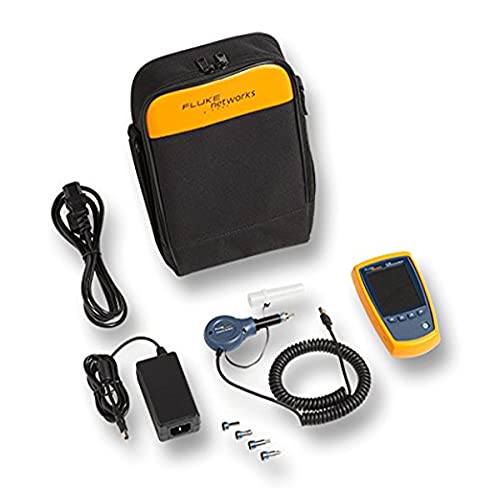
Fluke Networks Fluke Networks FI-500 FiberInspector Micro-Fiber Optic Endface Inspection Scope Camera with PortBright Illumination
Fiber inspection scope camera to verify that fiber end faces are not contaminated or damaged, works even in low light and high cable density situations, generates high resolution end face images on a large, 320 x 240 backlit display, probe camera 5 megapixel 1/4 inch cmos sensor Includes: Fiberinspector micro with probe, display, 4 UPC tips (lc bulkhead, sc bulkhead, 1.25 millimeter end face adapters and 2.50 millimeter end face adapters), magnetic strap attachment, case, rechargeable batteries and universal power adapter Use in dark areas and dense patch panels with portbright built in flashlight, activated by a button on the probe itself, allows you to find the port and then connect the probe tip to view fiber bulkhead and endfaces Auto focus for precise fiber ferule inspection and stable images in 3 to 5 seconds, autocenter feature activates as soon as you pause the image, pause button freezes the image, magnification of 200x with 1x, 2x, and 4x zoom settings Small probe, only 23 millimeter (0.95") wide and 51 millimeter (2") thick, gets into tight patch panels with less disruption of nearby fibers, and features pushbutton controls for simple operation
Detailed comparison of Fluke FI-500 vs FI2-7000 fiber inspection scopes. Learn which fiber optic end face inspector is best for troubleshooting vs certification work.

Fluke Networks
Fluke Networks
Fluke FI-500 vs FI2-7000: Which Fiber Inspection Scope Is Right for You?
Dirty fiber end faces are the leading cause of fiber network failures. Whether you're troubleshooting a problematic link or certifying a new installation, the right inspection scope makes the difference between confident results and costly rework.
Fluke Networks offers two popular options: the FI-500 FiberInspector Micro for quick manual inspection, and the FI2-7000 FiberInspector Pro for automated certification. Both carry the Fluke name, but they're built for very different workflows—and budgets.
After comparing specifications, real-world usability, and total cost of ownership, here's what low voltage contractors need to know before investing.
Disclosure: This article contains affiliate links. If you purchase through these links, we may earn a commission at no extra cost to you.
Quick Comparison Table
| Feature | Fluke FI-500 | Fluke FI2-7000 |
|---|---|---|
| Price | $2,571 | $4,815 |
| Inspection Type | Manual with autofocus | Automated PASS/FAIL |
| Certification | Visual only | IEC 61300-3-35 |
| Sensor | 5MP CMOS | 2MP |
| Focus Time | 3-5 seconds | 1-2 seconds |
| Display | 3.2" TFT LCD (320x240) | Versiv mainframe touchscreen |
| Battery Life | 3-6 hours | 11 hours |
| WiFi/Cloud | ✗ | ✓ LinkWare Live |
| Platform Integration | Standalone | Versiv ecosystem |
| Probe Width | 23mm (0.95") | 35mm (1.38") |
| Best For | Troubleshooting | Certification jobs |
| Our Rating | 4.3/5 | 4.7/5 |
The Quick Verdict
Choose the FI-500 if you primarily troubleshoot existing fiber installations, work as a solo tech, or need a dedicated inspection tool that won't break the budget. It's the right scope when you need to quickly verify a connector is clean before making a connection.
Choose the FI2-7000 if you bid on jobs requiring documented certification, work with enterprise clients who demand IEC-compliant reports, or already own Versiv equipment. The automated pass/fail eliminates subjective judgment calls and generates the paper trail corporate IT departments expect.
Fluke FI-500 FiberInspector Micro Overview
The FI-500 fills the gap between a basic manual scope and a fully automated inspection system. It gives you advanced features like autofocus and digital zoom without the complexity—or cost—of enterprise certification gear.
What Sets It Apart
The standout feature is PortBright illumination—a built-in flashlight on the probe itself. When you're working in a dark data center or cramped telecom closet, finding the right port among dozens of identical connectors is half the battle. The PortBright LED lets you locate your target port, then immediately inspect without fumbling for a separate flashlight.
The probe design deserves mention. At just 23mm wide and 51mm thick, it squeezes into dense patch panels where bulkier scopes won't fit. During a recent structured cabling job with 48-port panels stacked three high, the compact profile let me inspect connections without removing adjacent cables—something that would've added hours to the job with a larger scope.
Real-World Performance
Autofocus locks onto the fiber end face in 3-5 seconds, which feels instantaneous compared to manual focus scopes. The 200X magnification with 1X, 2X, and 4X zoom gives you enough range to spot contamination without overwhelming detail on clean connectors.
Battery life is the main limitation. Fluke rates it at 3 hours continuous or 6 hours typical use. On a full day of fiber work, you'll want to keep the charger in your truck. The rechargeable NiMH batteries are convenient but can't match lithium-ion endurance.
The 320x240 backlit display is adequate but not exceptional. It's readable in most lighting conditions, though direct sunlight can wash it out. For critical inspections in bright environments, you may need to shade the screen.
FI-500 Specifications
| Specification | Value |
|---|---|
| Sensor | 5MP 1/4" CMOS |
| Magnification | 200X (1X, 2X, 4X zoom) |
| Display | 3.2" TFT LCD, 320x240 |
| Frame Rate | ≥12 fps |
| Battery | NiMH rechargeable, 2x 1.2V |
| Battery Life | 3 hrs continuous / 6 hrs typical |
| Charge Time | 4 hours minimum |
| Dimensions | 5.5" x 3.2" x 1.5" |
| Weight | 9.7 oz (275g) |
| Probe Width | 23mm (0.95") |
| Operating Temp | 32°F to 122°F (0°C to +50°C) |
| Drop Test | 1 meter |
| Included Tips | LC, SC, 1.25mm, 2.5mm UPC |
Fluke FI2-7000 FiberInspector Pro Overview
The FI2-7000 is Fluke's professional-grade answer for contractors who need documented, defensible certification results. It's part of the Versiv platform, which means it integrates with the DSX CableAnalyzer, CertiFiber Pro, and OptiFiber OTDR modules.
What Sets It Apart
Automated PASS/FAIL certification is the killer feature. Instead of relying on your judgment to determine if an end face is clean enough, the FI2-7000 analyzes the image against IEC 61300-3-35 standards and delivers an objective result in 1-2 seconds.
This matters when you're certifying hundreds of connections and need defensible documentation. Enterprise customers—especially in finance, healthcare, and government—increasingly require certification reports. The FI2-7000 generates that documentation automatically, with graphical indication of any problem areas due to contamination, pits, chips, or scratches.
The Versiv ecosystem integration amplifies productivity. If you already own the DSX-5000 for copper certification, adding the FI2-7000 module means you're using one familiar interface for all testing. The ProjX management system tracks job requirements and progress from setup to acceptance, ensuring you don't miss any required tests.
Real-World Performance
The 1-2 second automated analysis is genuinely fast. On a recent data center project with over 500 fiber connections, the speed difference compared to manual inspection added up to hours saved. More importantly, the consistent pass/fail criteria eliminated second-guessing—after 200 connections, your eyes get fatigued and judgment calls become inconsistent. The automated system maintains the same standard from the first connector to the last.
LinkWare Live integration via built-in WiFi lets you upload results to the cloud immediately. For multi-tech teams working on large installations, this real-time visibility prevents duplicate work and catches problems before they compound. The project manager can see certification progress without visiting the site.
Battery life is exceptional at 11 hours with the inspection probe attached. You can work a full day—and then some—without charging. The larger Versiv mainframe adds weight and bulk, but the tradeoff is power endurance that the compact FI-500 can't match.
The 35mm probe is noticeably wider than the FI-500's 23mm design. In extremely dense patch panels, this can require more careful maneuvering. However, the speed advantage of automated analysis typically outweighs any ergonomic penalty.
FI2-7000 Specifications
| Specification | Value |
|---|---|
| Sensor | 2MP |
| Analysis Speed | 1-2 seconds automated |
| Certification Standard | IEC 61300-3-35 |
| Light Source | Blue LED |
| Field of View | 425µm x 320µm |
| Min Detectable Particle | 0.5µm |
| Battery | Lithium-ion 7.2V |
| Battery Life | 11 hours |
| Charge Time | 4-6 hours (10% to 90%) |
| Mainframe Dimensions | 2.6" x 5.25" x 11" |
| Weight (with battery) | 3 lbs 5 oz (1.28 kg) |
| Probe Width | 35mm (1.38") |
| WiFi | 802.11 a/b/g/n dual-band |
| Included Tips | LC, FC/SC, 1.25mm, 2.5mm |
Head-to-Head: Inspection Speed and Workflow
For occasional troubleshooting—checking a suspect connection here and there—the FI-500's 3-5 second autofocus is perfectly adequate. You'll spend more time connecting the probe tip than waiting for focus.
For high-volume certification work, the FI2-7000's automated analysis changes the equation. That 1-2 second pass/fail result isn't just faster—it removes the cognitive load of interpreting what you're seeing. After 200 connections, your eyes get fatigued and judgment calls become inconsistent. The automated system maintains the same standard from the first connector to the last.
On a recent enterprise installation with 600+ terminations, using the FI2-7000 meant completing fiber inspection in about a third of the time the same job would have taken with manual tools. The automated documentation eliminated an additional hour of report generation.
Head-to-Head: Documentation and Reporting
This is where the price difference becomes more justifiable. The FI-500 is a visual inspection tool—you look, you decide, you move on. If a customer asks for documentation, you're taking screenshots or manually logging results.
The FI2-7000 generates IEC-compliant certification reports automatically. Each pass/fail result is stored with a graphical image of the end face, timestamped, and organized by the ProjX project management system. Export to LinkWare PC creates professional PDF reports that satisfy the most demanding IT departments.
For service calls and break/fix work, this documentation capability is overkill. For new construction, tenant improvements, or enterprise installations where the customer expects a certification binder, it's essential.
Head-to-Head: Portability and Ergonomics
The FI-500 wins on portability. At under 10 ounces with a compact probe, it fits in a tool pouch and works one-handed in tight spaces. The PortBright flashlight means you don't need a headlamp to find your target port.
The FI2-7000 trades portability for capability. The Versiv mainframe isn't heavy by test equipment standards, but it's definitely a two-handed tool. The benefit is that same mainframe can accept copper certification, fiber loss, and OTDR modules—so you're carrying one device that does everything instead of multiple separate tools.
For the tech who bounces between jobs in different buildings, the FI-500's grab-and-go size has real value. For the tech who sets up in a single location and works methodically through a punch list, the FI2-7000's integration advantage matters more.
What We Like About the FI-500
- PortBright illumination eliminates fumbling for a flashlight in dark spaces
- Compact 23mm probe fits into dense patch panels without disturbing adjacent cables
- 5MP sensor with 200X magnification provides clear detail for contamination detection
- Sub-$3K price makes fiber inspection accessible for smaller operations
- Standalone operation means no platform lock-in or additional purchases required
- Drop-tested durability survives the realities of job site use
What Could Be Better on the FI-500
- NiMH batteries limit endurance compared to lithium-ion alternatives
- No automated pass/fail means certification requires subjective judgment
- 320x240 display resolution feels dated compared to modern screens
- No WiFi or cloud connectivity for remote result sharing
- Manual documentation adds time on jobs requiring certification reports
What We Like About the FI2-7000
- 1-2 second automated PASS/FAIL eliminates subjective inspection decisions
- IEC 61300-3-35 certification satisfies enterprise documentation requirements
- 11-hour battery life handles full-day certification projects
- Versiv platform integration combines copper, fiber loss, OTDR, and inspection
- LinkWare Live WiFi enables real-time result uploads and team coordination
- ProjX management ensures complete testing coverage on complex jobs
What Could Be Better on the FI2-7000
- $4,800+ price is a significant investment for occasional fiber work
- 35mm probe width is bulkier than the FI-500 in tight panels
- Versiv mainframe required adds weight and complexity
- Learning curve for software features can slow initial adoption
- 2MP sensor has lower resolution than the FI-500's 5MP sensor
Price vs Value Analysis
The $2,244 price gap between these tools is substantial—but the value calculation depends entirely on your work mix.
For troubleshooting-focused work: The FI-500 at $2,571 delivers everything you need. Visual inspection confirms cleanliness, and you're not paying for automation features you won't use. ROI comes from avoiding return trips caused by contaminated connectors you didn't catch.
For certification-focused work: The FI2-7000 at $4,815 pays for itself on enterprise jobs. If you're bidding projects that require IEC-compliant documentation, the automated certification eliminates hours of manual reporting and protects against callbacks. One avoided warranty dispute can justify the price difference.
For Versiv platform owners: If you already own the DSX-5000 or CertiFiber Pro, adding the FI2-7000 module extends your existing investment. You get a unified workflow across all testing types and consistent reporting through LinkWare.
Which Fiber Inspection Scope Should You Buy?
Buy the Fluke FI-500 if:
- You primarily troubleshoot existing fiber installations
- Your customers don't require formal certification documentation
- You work in tight spaces where the compact probe matters
- Budget is a primary concern and $2,500 is your ceiling
- You want a dedicated inspection tool that's always ready to grab
Check FI-500 Current Price on Amazon →
Buy the Fluke FI2-7000 if:
- You bid on jobs requiring IEC-compliant certification reports
- You work with enterprise clients who demand documented pass/fail results
- You already own Versiv equipment and want platform integration
- High-volume certification work justifies automated analysis
- Long battery life matters more than compact size
Check FI2-7000 Current Price on Amazon →
Frequently Asked Questions
Can I use the FI-500 for certification work?
Technically yes, but it requires manual judgment and documentation. The FI-500 shows you the end face clearly—you decide if it passes. For customers who accept visual confirmation, this works. For customers requiring IEC 61300-3-35 compliance reports, you'll need the FI2-7000 or equivalent automated system.
Does the FI2-7000 require the Versiv mainframe?
Yes. The FI2-7000 is a module that connects to the Versiv mainframe. If you don't already own Versiv equipment, the FI2-7000 kit includes the mainframe. This is part of why it costs more—you're buying the platform, not just the probe.
Which probe tips are included with each model?
Both include LC, SC/FC bulkhead, 1.25mm, and 2.5mm universal tips. APC tips and MPO adapters are available separately. Check your fiber connector types before purchasing to ensure you have the right tips for your work.
How often do fiber inspection scopes need calibration?
Neither scope requires regular calibration like loss testers or OTDRs. The FI2-7000's automated analysis is factory-configured to IEC standards. Keep the probe tips clean and inspect for damage, but formal calibration isn't necessary.
Can I upgrade from the FI-500 to the FI2-7000 later?
Not directly—they're completely different systems. The FI-500 is standalone while the FI2-7000 requires the Versiv mainframe. If you anticipate needing certification capability, it's more cost-effective to start with the FI2-7000 than to buy the FI-500 now and replace it later.
Find Projects That Need Fiber Inspection Tools
Looking for commercial fiber installation projects where professional inspection equipment pays for itself?
LVN Signal surfaces data center, enterprise network, and structured cabling projects from permit data before they hit bid boards—giving you early access to jobs that require documented fiber certification.
Join 35,000+ Low Voltage Pros
Get weekly permit updates, tool deals, job opportunities, and industry news. No spam, unsubscribe anytime.