
Fluke 117 Review: The Electrician's Multimeter That Eliminates Ghost Voltage Headaches
Join Low Voltage Nation — Find project opportunities and showcase your company to thousands of industry professionals
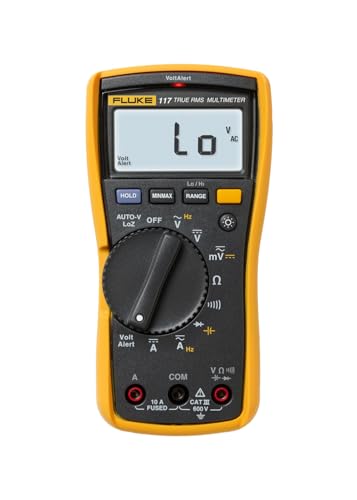
Fluke Fluke 117 Digital Multimeter, Non-Contact AC Voltage Detection, Measures Resistance/Continuity/Frequency/Capacitance/Min Max Average, Automatic AC/DC Voltage Selection, Low Impedance Mode
VoltAlert technology for non-contact voltage detection AutoVolt automatic AC/DC voltage selection. DC millivolts - Range : 600.0 mV, Resolution : 0.1 mV Low input impedance: helps prevent false readings due to ghost voltage Large white LED backlight to work in poorly lit areas True RMS for accurate measurements on non-linear loads. Operating temperature: -10°C to +50°C. Battery life: 400 hours typical, without backlight
Comprehensive review of the Fluke 117 True RMS multimeter. Covers LoZ ghost voltage elimination, AutoVolt, True RMS, pros and cons, and who should buy this electrician's meter.
Fluke 117 Review: The Electrician's Multimeter That Eliminates Ghost Voltage Headaches
Why the Fluke 117 has become the go-to multimeter for commercial and residential electricians, and whether its premium price is justified.
Quick Verdict
The Fluke 117 is the electrician's multimeter. At around $220, it costs more than budget alternatives but delivers True RMS accuracy, non-contact voltage detection, automatic AC/DC selection, and—most importantly—a Low Impedance (LoZ) mode that eliminates false readings from ghost voltages. For commercial and residential electrical work, these features save time and prevent misdiagnosis.
Best for: Electricians doing commercial, residential, and light industrial work who need a reliable, purpose-built meter that solves real-world electrical testing problems.
Check Current Price on Amazon →
Who This Is For (And Who Should Skip It)
Perfect for:
- Commercial electricians – Ghost voltage elimination is critical in buildings with dense wiring
- Residential electricians – AutoVolt speeds up troubleshooting in homes
- Low voltage technicians – Verify voltage presence/absence safely during installations
- Maintenance technicians – Reliable measurements on existing electrical systems
Skip it if:
- You need milliamp ranges – The 117 lacks mA and µA measurements needed for electronics and sensor work
- You work in industrial/high voltage environments – The 87V offers higher voltage range (1000V vs 600V) and temperature measurement
- Budget is the primary concern – Quality budget meters exist for basic home use
Key Features That Actually Matter
Low Impedance (LoZ) Mode
This is the feature that makes the Fluke 117 worth its premium for electricians. Ghost voltages—those phantom readings caused by capacitive coupling between adjacent wires—plague measurements in commercial buildings. Standard high-impedance meters pick up these induced voltages and display misleading readings that can cause incorrect diagnoses or, worse, convince you a circuit is de-energized when it isn't.
The LoZ mode presents approximately 3kΩ input impedance instead of the typical 10MΩ. This low impedance causes ghost voltages to dissipate, giving you the real voltage or near-zero when testing an open circuit. When you're verifying lockout/tagout or troubleshooting phantom readings in conduit-packed raceways, this feature removes the guesswork.
AutoVolt (Automatic AC/DC Selection)
Position the dial to Auto-V/LoZ and the meter figures out whether you're measuring AC or DC. In practice, this speeds up troubleshooting because you're not constantly rotating the dial. When checking circuits where you're not certain what you'll find—control wiring, older installations, mixed systems—AutoVolt eliminates one source of user error.
VoltAlert Non-Contact Voltage Detection
The meter's tip lights up and beeps when it detects AC voltage without touching the conductor. This is your first-line safety check before making contact measurements. The VoltAlert function works on the Fluke 117 by pressing a button, alerting you to energized circuits from a safe distance.
True RMS Accuracy
True RMS (Root Mean Square) provides accurate readings on non-linear loads—the distorted waveforms produced by variable frequency drives, switching power supplies, LED drivers, and other modern equipment. Non-True RMS meters assume pure sine waves and can be off by 20-40% on these loads. For modern electrical work, True RMS is no longer optional.
Large Backlit Display
The white LED backlight illuminates the 6,000-count display for working in dim electrical panels, ceiling spaces, and basements. The backlight is bright enough to be useful without washing out the display in dark conditions.
Real-World Performance
After years of reaching for the Fluke 117 as my primary meter, the design choices Fluke made for electricians become obvious in daily use. The Auto-V/LoZ position lives where you need it—one dial position handles most voltage measurements. When I'm moving from circuit to circuit, I'm not constantly switching between AC, DC, and LoZ. The meter figures it out.
The LoZ mode genuinely solves a real problem. In commercial buildings with packed conduit runs, I've seen ghost voltages confuse experienced electricians into thinking dead circuits were live or vice versa. The 117's low impedance mode makes those phantom readings disappear. When the meter reads 0V in LoZ mode, you can trust it. That confidence is worth the price difference over basic meters.
The 400-hour battery life (without backlight) is essentially "forget about it" territory. I replace the 9V battery maybe once a year with regular professional use. The meter just works when you need it.
Build quality is trademark Fluke. The yellow rubber boot absorbs drops, the holster protects the display, and the leads are robust. After three years of van life, my 117 shows wear but functions identically to day one. The three-year warranty exists because Fluke expects these meters to last longer than that.
The display viewing angle limitation is real but minor. Looking at the display from extreme angles washes out the contrast. In normal use—holding the meter in front of you—it's perfectly readable. But if you're trying to read it while it sits on a surface at an awkward angle, you might need to reposition.
What I Like (Pros)
- LoZ mode eliminates ghost voltages – The single most useful feature for commercial electrical work
- AutoVolt speeds troubleshooting – Automatic AC/DC detection reduces dial switching and user error
- VoltAlert non-contact detection – First-line safety check before contact measurements
- True RMS accuracy – Correct readings on non-linear loads from modern equipment
- 400-hour battery life – Rarely think about batteries during a year of professional use
- Fluke build quality – Survives real job site abuse with three-year warranty backing
What Could Be Better (Cons)
- No milliamp/microamp ranges – Electronics and sensor work (4-20mA loops) require workarounds or a different meter
- 600V maximum – Industrial electricians may need the 1000V capability of the 87V
- No temperature measurement – Requires a separate meter or accessory for HVAC work
- No auto-hold – Both hands on probes means you can't easily press the hold button
- Display viewing angle – Some users report difficulty reading from certain angles
- Counterfeit concerns – Buy from authorized dealers to avoid fake units
Specifications Table
| Specification | Value |
|---|---|
| Display | 6,000 counts, updates 4/second |
| True RMS | Yes |
| DC Voltage | 600mV to 600V (±0.5% + 2) |
| AC Voltage (True RMS) | 6V to 600V (±1.0% + 3) |
| Auto-V/LoZ | 600V (±2.0% + 3) |
| Resistance | 600Ω to 40MΩ |
| Capacitance | 1nF to 9,999µF |
| Frequency | 5Hz to 50kHz |
| AC Current | 10A (20A overload 30 sec) |
| Safety Rating | CAT III 600V |
| Battery Life | 400 hours (without backlight) |
| Battery Type | 9V Alkaline (6LR61) |
| Operating Temp | -10°C to +50°C |
| Weight | 550g with holster |
| Warranty | 3 years |
Is It Worth the Price?
At around $220, the Fluke 117 costs 2-3x more than basic meters. The question is whether the features justify the premium.
The Fluke 117 is worth it if:
- You work in commercial environments where ghost voltages cause misreadings
- You value time—AutoVolt and LoZ reduce troubleshooting steps
- You need True RMS for modern electrical loads
- You want a meter that will last years of professional use
- You're willing to pay for Fluke's reliability and warranty support
Consider alternatives if:
- You need mA ranges for electronics or sensor work (look at Fluke 87V)
- You work primarily in industrial 1000V environments (look at Fluke 87V)
- You're a homeowner with occasional electrical testing needs (basic meters suffice)
For the electrician who spends their day troubleshooting and verifying electrical systems, the Fluke 117 is the right tool at a reasonable professional price point. The LoZ mode alone—eliminating false readings from ghost voltages—justifies the premium over basic meters.
The Bottom Line
The Fluke 117 earned its reputation as "the electrician's multimeter" because Fluke designed it specifically for the problems electricians actually face. The Low Impedance mode eliminates ghost voltage confusion that wastes time and creates safety concerns. AutoVolt reduces dial switching during troubleshooting. True RMS provides accurate readings on modern non-linear loads. The build quality survives years of professional use.
It's not the right meter for everyone. Electronics technicians need mA ranges. Industrial electricians may need higher voltage capability. Homeowners probably don't need this level of tool. But for commercial and residential electricians, the Fluke 117 hits the sweet spot of capability, reliability, and price.
Rating: 4.5/5 – The best general-purpose electrician's multimeter, limited only by the deliberate omission of mA ranges.
Check Current Price on Amazon →
Disclosure: This post contains affiliate links. If you purchase through these links, Low Voltage Nation may earn a commission at no additional cost to you.
Find Projects That Need This Tool
Looking for commercial jobs where quality test equipment like this pays for itself?
LVN Signal surfaces low voltage installation projects from permit data before they hit bid boards.
Join 35,000+ Low Voltage Pros
Get weekly permit updates, tool deals, job opportunities, and industry news. No spam, unsubscribe anytime.