
Join Low Voltage Nation — Find project opportunities and showcase your company to thousands of industry professionals
Wythe County confirms grading and micropile preparation at Fluidstack’s Progress Park campus. Review the contractor history, job forecasts and prospective LV work.
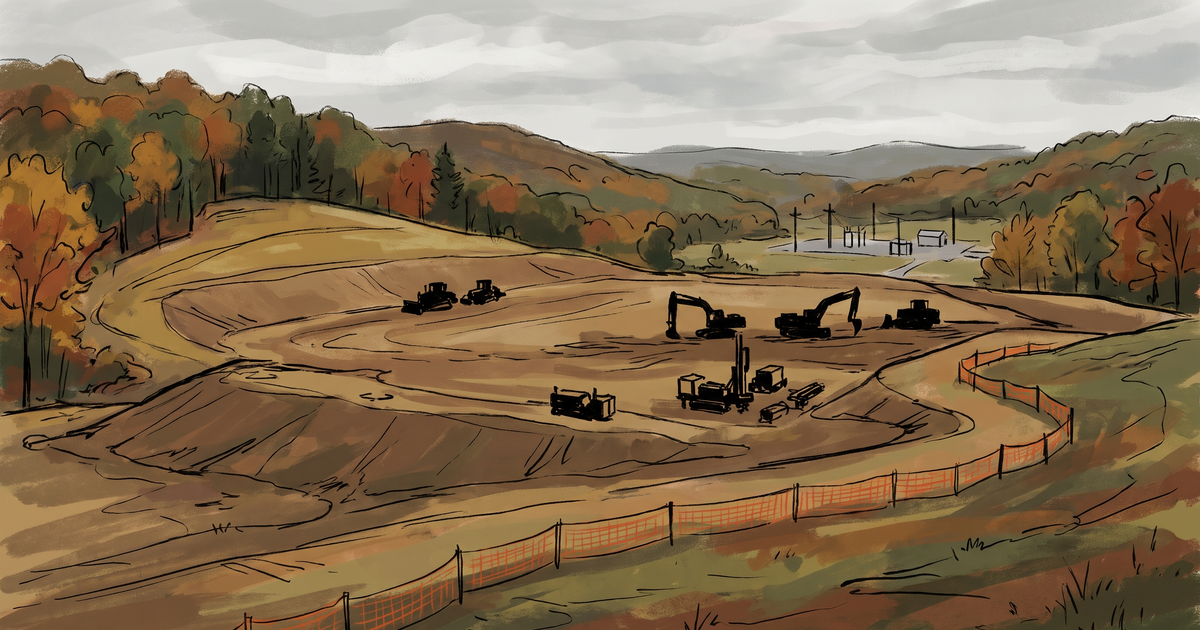
Fluidstack’s Progress Park data center in Wythe County, Virginia, has a concrete construction update: grading is continuing, with preparation for micropiles serving the building and substation. For low-voltage contractors, that makes the project worth studying now. The useful questions concern underground routes, the current buying team and the timing of future systems packages.
The strongest recent evidence is the county administrator’s report in the October 27, 2026 Board of Supervisors packet, PDF pages 122–123. It supports an early site-work story. Installed foundations, completed buildings, energized capacity and low-voltage contract awards remain unverified.
What is taking shape at Progress Park
Fluidstack’s project website describes a 99-acre tract in southeastern Progress Park and a plan for one building. It identifies Appalachian Power as the energy provider and says Fluidstack will fund upgrades to the existing Gradient substation. The public description gives the project a recognizable physical and utility context, while leaving its critical IT load and delivered power undisclosed.
| Project fact | Current evidence | Qualification |
|---|---|---|
| Location | Progress Park, Wythe County | 99-acre owner description |
| Building plan | One building | Current owner description |
| Site activity | Grading; micropile preparation | County October 27 report |
| Utility interface | Appalachian Power / Gradient | Owner-described upgrades |
| Power capacity | Undisclosed | IT, utility and energized MW unknown |
| Construction budget | Undisclosed | Historical investment has broader scope |
The October county report also describes erosion and sediment control plans submitted for Lot 32 to receive excess fill from Lot 35. Plans for temporary parking, a laydown yard and construction trailers on Lot 30 were being developed. These details help explain site logistics. They do not establish final approval of every plan. A separate TAC data-center discussion appears immediately afterward; its permitting language belongs to that other development.
For prospective suppliers, access roads, staging areas and earthwork sequencing can influence when materials arrive and where crews can work. Early preparation should focus on understanding those interfaces. Any estimate still needs issued drawings, quantities, acceptance requirements and a named purchasing authority.
The ownership transition changes the contractor question
The campus was originally announced under Solis Arx. Wythe County’s June 9 meeting minutes, pages 14–17, report Fluidstack’s purchase and record a 6–0 vote on an estoppel concerning industrial-park covenants. The discussion separately addresses subsequent site-plan approval and building permits. That vote alone cannot establish final construction authorization.
Cadence’s own announcement identifies the company as general contractor and describes early mobilization alongside Solis Arx. This provides a source-backed historical contractor name. The reviewed evidence does not establish whether that contract continued unchanged after Fluidstack acquired the project, or identify a new Fluidstack award.
| Organization | Documented role | Useful qualification |
|---|---|---|
| Fluidstack | Current developer/operator | Owner site and county minutes |
| Solis Arx | Original developer | Historical project identity |
| Cadence, LLC | Previously announced GC | Current contract continuity unverified |
| Appalachian Power | Owner-named utility | Delivery terms and MW unknown |
| Wythe County | Local authority | Public project records |
A contractor approaching this opportunity should first confirm who controls the relevant package. Ask whether the inquiry belongs with the owner, a construction manager, an electrical contractor or a specialist integrator. Clarify whether the work concerns civil pathways, building infrastructure or later technology installation. Each can have a different buyer and schedule.
Cadence’s public contact page offers a way to ask about its current involvement. Its company identity should be checked carefully: this source is the Charlotte-based business using cadencenow.com. Similar company names are insufficient evidence of a relationship. No current electrical, fiber, security, controls or fire-alarm subcontractor has been verified for this campus.
Where prospective low-voltage work could emerge
The following opportunities are construction analysis. They describe work a low-voltage business could prepare to discuss, subject to the eventual design and procurement structure. They are not announced bid packages, assigned quantities or confirmed subcontract scopes.
| System | Potential work | Information to request |
|---|---|---|
| Outside plant / fiber | Routes, entrances and testing | Civil plans and carrier boundaries |
| Structured cabling | Pathways, bonding and labeling | Fit-out standards and quantities |
| Access control / CCTV | Security device integration | Security design and buyer |
| Fire-alarm interfaces | Monitoring and acceptance coordination | Approved design and responsibility |
| Controls / OT networks | Connectivity and documentation | Architecture and point lists |
| Commissioning support | Test records and turnover | Acceptance plan and schedule |
Underground coordination deserves early attention because grading and utility preparation are already documented. A prospective fiber team can ask how telecom entrances, duct routes and crossings will be coordinated with civil and power work. Those questions help identify drawing dependencies before anyone commits to a cable count or an installation price.
Inside the eventual building, a useful capability statement can explain pathway planning, labeling discipline and the test records the team can deliver. Separate campus and building communications from any customer-specific computing installation. The public evidence does not identify a tenant, rack count, network architecture or cabling vendor. Inferring those details from the phrase “AI data center” would produce an unreliable estimate. Estimators should keep allowances explicit, identify exclusions and request a drawing revision date so that a later scope change can be discussed against a documented baseline.
Security and controls specialists can prepare interface questions: who supplies devices, who provides their power and connectivity, who configures them, and who witnesses acceptance? A clear responsibility matrix helps a bidder explain its boundaries. The answers must come from the actual project team and issued documents.
Power and investment figures need defined boundaries
Fluidstack describes closed-loop cooling and three backup generators. Those statements do not disclose the mechanical equipment schedule, generator ratings or operating configuration. The same caution applies to the substation: identifying Gradient and a funding commitment does not establish an executed delivery schedule or an energized campus. No utility MW, critical IT MW or current energized MW was verified.
The county’s historical Solis Arx FAQ projects investment exceeding $1 billion across property improvements, power infrastructure, IT equipment, furniture and equipment, and workforce. That is a broad investment forecast. A construction-only budget and financing close remain undisclosed, so applying a low-voltage percentage to the headline figure would suggest precision the evidence cannot support.
The county FAQ also discusses historical land-conveyance incentives, while Fluidstack’s current site says it receives no local property-tax incentives. These describe different categories and periods. The underlying agreements were not independently reconciled for this report. Owner statements about ratepayer protection and environmental compliance likewise remain attributed claims.
For a contractor, the practical financial questions are narrower: which legal entity will sign the purchase order, what scope is funded for release, what payment terms apply, and what conditions must be met before mobilization? A large investment announcement cannot answer those package-level questions.
Jobs, trades and useful preparation
Fluidstack currently projects hundreds of construction jobs and 75 full-time operating roles. The June county minutes contain an earlier 200–500 employee projection. These forecasts differ and should remain distinct. Neither establishes a current vacancy, an actual hire or the number of low-voltage technicians required.
SWVA Sun’s October 28 account of the latest presentation reports approximately 1,000 construction workers at peak and a target of completing most construction by the end of 2027. Those are secondary-reported forecasts. A verified operating date, detailed phase schedule and hiring plan remain open.
The owner’s work-interest form and Cadence’s careers page are useful starting points for an inquiry. Applicants should verify the employer, location, trade, start date and hiring status before treating any general careers resource as a Wythe County opening. Businesses should similarly confirm whether a submission is for vendor qualification or a live procurement.
For skill preparation, the Fiber Optic Association’s workforce resources offer a general starting point, and BICSI provides ICT education resources. These links are not evidence that either credential is required here. Project-specific qualifications must be confirmed with the hiring or contracting organization.
A useful readiness package can include examples of fiber inspection and testing records, as-built documentation, labeling conventions and coordination with other trades. Crews can explain their experience with site access, lifts, material handling and controlled work areas without claiming a campus requirement that has not been released. Supervisors can prepare realistic staffing and travel assumptions for southwest Virginia.
What would make the opportunity more actionable
The next valuable evidence would identify the current construction team, issued building and utility plans, specialty procurement contacts, a delivery schedule and actual job listings. Those details would let contractors move from general preparation to a defined estimate. Final permitting and the disposition of historical enforcement matters also remain unverified in this reporting.
Location deserves the same care. The available Signal map point is a Wytheville city locator. It is not a verified campus parcel point, gate or delivery entrance. Confirm the site address and access instructions directly before planning a visit, shipment or crew mobilization.
Progress Park already has a useful combination of current government construction reporting, an identified owner and a historical GC announcement. That is enough to support focused research and qualification questions. Explore LVN Signal for construction intelligence and browse the data-center map to follow projects with their source context. For this campus, the immediate value is understanding the early work and finding the correct buyer for a future low-voltage package.
Reporting checked November 2, 2026. Generated illustrations are conceptual and do not document the actual site, equipment, progress or layout.
Join 35,000+ Low Voltage Pros
Get weekly permit updates, tool deals, job opportunities, and industry news. No spam, unsubscribe anytime.