
Join Low Voltage Nation — Find project opportunities and showcase your company to thousands of industry professionals
What is your protocol for attic work when it hits 130 degrees?
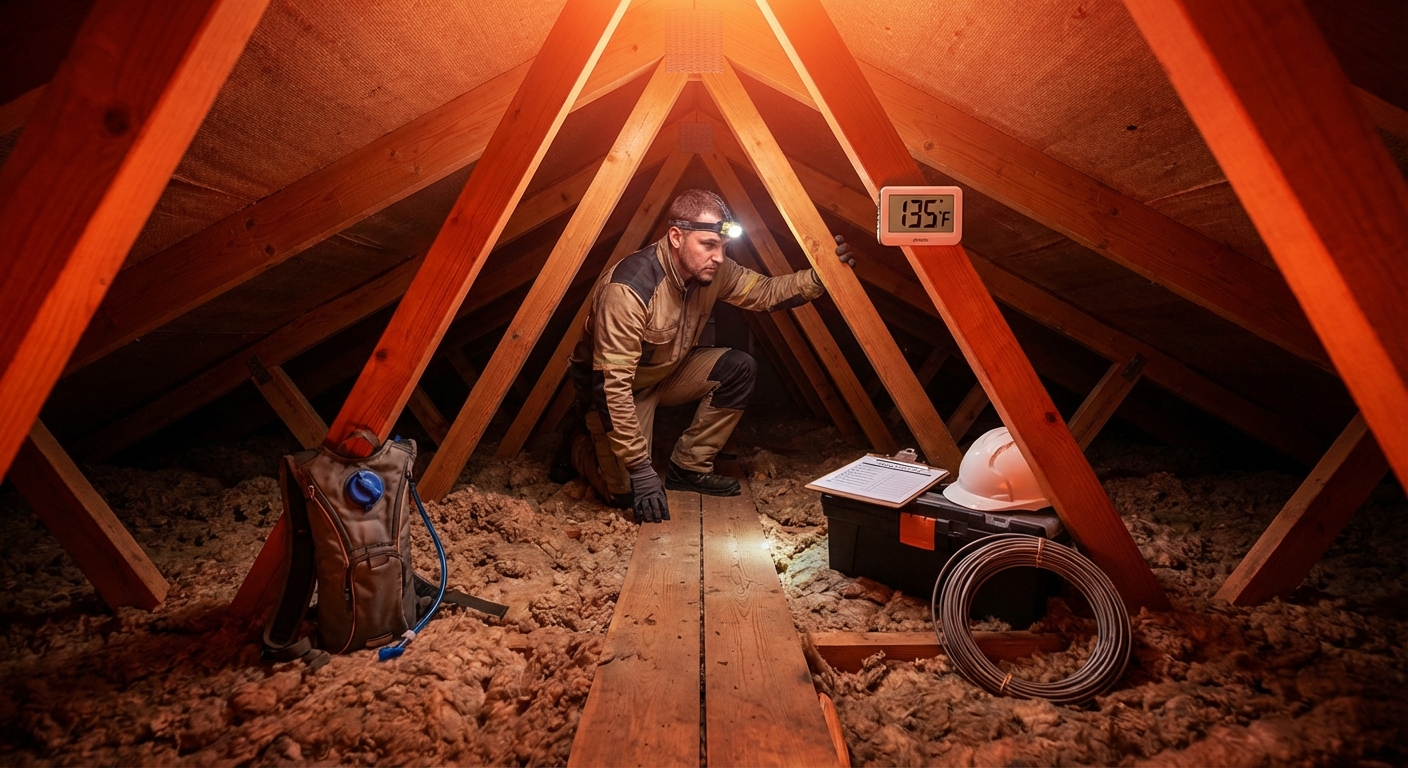
Unconditioned attics regularly exceed 130 degrees in summer. Heat illness does not announce itself with obvious symptoms. It hits fast, and the consequences are serious. Every tech who works overhead needs a plan.
Why Attic Work Is Dangerous
An attic with no ventilation or HVAC traps heat from the roof and the building below. Temperatures can be 40 to 60 degrees higher than the outside air. On a 95-degree day, you are working in 140-degree conditions. Your body can only regulate core temperature for so long before it starts failing.
Heat exhaustion leads to confusion, dizziness, and nausea. Heat stroke happens when your core temperature hits 104 degrees and your body stops sweating. At that point, you need emergency medical attention. The transition from "I feel fine" to "I am in trouble" can happen in minutes.
Prevention Protocol
| Practice | Why It Matters |
|---|---|
| Hydrate before going up | If you wait until you feel thirsty, you are already behind. Drink 16 oz of water 30 minutes before entering the attic. |
| Set a timer | Work in 20-minute intervals with 10-minute cool-down breaks. Do not rely on how you feel to decide when to come down. |
| Tell someone | Never work in an attic without another person on site knowing you are up there and checking on you. |
| Wear the right gear | Light-colored, moisture-wicking clothing. A headlamp that does not generate heat against your head. Knee pads for crawling on joists. |
| Know the signs | Heavy sweating that suddenly stops, confusion, rapid heartbeat, or skin that feels hot and dry. Any of these means get down immediately. |
Early Morning Strategy
Experienced techs schedule attic work for the first two hours of the day during summer months. An attic at 7 AM is tolerable. The same attic at 2 PM is dangerous. If the job requires multiple attic runs, do them all before 10 AM and spend the afternoon on termination and trim-out work at floor level.
OSHA Requirements
OSHA does not set a specific temperature limit for indoor work, but the General Duty Clause requires employers to provide a workplace free from recognized hazards. Heat illness in an attic is a recognized hazard. If your employer does not have a heat illness prevention plan, they are exposed to citations.
As a tech, you have the right to stop work if conditions are immediately dangerous. No cable pull is worth a hospital visit.
Gear That Helps
- Cooling towels that activate with water and drape around your neck
- Portable fans that clip to a joist and run on a battery pack
- Hydration packs so you can drink without climbing down
- Headlamps with rear battery packs that keep heat away from your forehead
Key Takeaways
- Hydrate before you go up, not just while you are up there
- Work in timed intervals. Do not trust how you feel.
- Tell someone on site before entering any attic
- Schedule hot attic work before 10 AM in summer
- If symptoms hit, get down and cool off immediately
Stay ahead of the work. LVN Signal monitors construction permits and bid opportunities so you never miss a project.
Join 35,000+ Low Voltage Pros
Get weekly permit updates, tool deals, job opportunities, and industry news. No spam, unsubscribe anytime.