
Join Low Voltage Nation — Find project opportunities and showcase your company to thousands of industry professionals
Equinix DA12 is rising in Dallas. Explore its dated $837M phase-one estimate, separate building and fit-out scopes, named firms and potential low-voltage work.
Equinix’s DA12 data center is taking shape at 1550 West Mockingbird Lane in Dallas. A September 30 Dallas Business Journal report describes construction underway near the Medical District. The public preview gives the project a 2028 completion expectation. LVN reviewed that preview; the full subscriber article was unavailable.
The financial anchor comes from Equinix’s FY2025 Form 10-K: approximately $837 million in total capital expenditure for DA12 phase one, 3,700 sellable cabinets and a target opening in the second quarter of 2028. That disclosure describes projects under construction as of December 31, 2025, and says estimates can change. It provides a dated baseline rather than an updated October construction contract value.
For low-voltage contractors, the useful detail is the sequence: a new multistory building, a substantial interior fit-out and a larger campus proposal. Those scopes create different design, procurement and commissioning questions. The reviewed records establish a serious construction project; they leave individual cabling, security, controls and carrier awards unresolved.
What phase one includes
| Item | Reported scope | Basis |
|---|---|---|
| Address | 1550 W. Mockingbird Lane, Dallas | Texas registrations |
| DA12-1 building | Four stories; 372,517 sf | New-construction filing |
| DA12-1 estimate | $542,809,034 | Filed package estimate |
| DA12-2 fit-out | 158,293 sf; floors one and two | Work inside that building |
| DA12-2 estimate | $293,692,007 | Filed package estimate |
| Owner phase-one plan | About $837M; 3,700 cabinets | FY2025 disclosure |
| Target opening | Q2 2028 | Dated owner target |
The DA12-1 registration describes the building, mechanical and electrical equipment, twenty generators and five generator pads. Its filed schedule runs from February 19, 2026, through October 12, 2027. Those dates describe the submitted plan; they do not establish the exact day work began or a verified completion commitment.
The DA12-2 registration describes interior work on the first two floors within the same four-story structure. It lists September 29, 2027, through March 30, 2028. The two filing names therefore need careful reading: the second registration covers fit-out space already inside the first building’s gross area. Adding the two floor-area numbers would overstate the physical building.
The two estimates add to $836,501,041. That arithmetic is useful for comparing the filings with the approximate owner disclosure, but possible overlap between scopes remains unresolved. The figures cannot establish an audited total, a single executed award or additional spending on top of the owner’s phase-one estimate.
Both registrations show completed accessibility review. That status addresses the Texas accessibility process. Building permits, inspection milestones and the final construction schedule require their own evidence. The chronology of early construction activity and the filed start date also remains unresolved.
The wider campus has a different boundary
A January 15 Dallas staff report for case MZ-25-000037 describes a proposed 32.293-acre campus with three four-story data-center buildings totaling approximately 1.14 million square feet, an attached substation and five generator equipment yards. The document records a staff recommendation. Final commission action and issued building permits were not verified in this review.
That wider proposal helps explain the long-term land-use context. It does not extend phase-one economics, cabinet counts or delivery dates to every future building. A contractor examining the campus should first establish which building, floor and enabling package a conversation concerns. Shared site infrastructure can have a different buyer, design release and acceptance schedule from the rooms it eventually serves.
The city report identifies DA12, LLC as property owner and traces its ownership through Equinix, LLC to Equinix, Inc. Equinix’s July 2026 quarterly filing separately lists DA12, LLC and Equinix (DA12) LLC among subsidiaries. Similar legal names deserve checking before procurement, invoicing or account research.
The companies with documented connections
| Organization | Connection | Evidence limit |
|---|---|---|
| DA12, LLC / Equinix | Property owner / parent operator | City record and owner disclosure |
| Margulies Hoelzli Architecture | Registered design firm | Both Texas filings |
| Masterplan Consultants | Land-use representative | Wider-campus application |
| HSE Contractors | Project-controls consultant | Self-reported project services |
| Morley-Moss | GC named by HSE | Prime scope uncorroborated |
Margulies Hoelzli Architecture is the design firm named in both registrations. Masterplan Consultants appears through representative Karl Crawley in the city application. These establish design and planning relationships; neither source identifies the eventual low-voltage installation team.
HSE’s DA12 project page reports scheduling and cost/time analysis services and identifies Morley Moss as general contractor. Its description also treats DA12-1 and DA12-2 as two buildings and gives a $835 million value. Those details differ from the state scope descriptions and owner estimate. LVN is therefore attributing the contractor label to HSE while leaving the exact prime contract unconfirmed.
Morley-Moss’s services page confirms electrical, cabling, controls and mission-critical capabilities. A company’s capabilities help identify a relevant contact. They do not establish that it holds a specific DA12 electrical, fiber or security package. An owner announcement, contractor project statement or issued procurement document would materially strengthen that lead.
Power and AI claims still need definition
The Business Journal preview reports 67 megawatts of capacity at buildout. The reviewed primary records do not clarify whether that means IT load, total facility demand or another power basis. Current energized capacity, the utility service agreement, committed connection dates and named tenants remain unverified.
Likewise, a generator count cannot be converted into usable IT megawatts without equipment ratings, redundancy assumptions and the operating design. A planned substation establishes a planning element, not a live connection. DA12 belongs in the broader data-center construction picture; this review found no basis to assign it a named AI tenant or a particular GPU deployment.
Where low-voltage work could enter
The following opportunities are LVN’s analysis of the disclosed building and fit-out scopes. They are preparation and qualification topics. No open bid window, device quantity, selected platform or low-voltage subcontract award was verified.
| System | Potential work | Confirm before pricing |
|---|---|---|
| Fiber / outside plant | Entrances, risers and testing | Routes, carriers and package buyer |
| Cabling / networking | Pathways, terminations and records | Issued layouts and tenant scope |
| Access control / CCTV | Security interfaces and acceptance | Platform, integrator and device list |
| Fire alarm | Life-safety interfaces | Approved design and test authority |
| BMS / controls | Monitoring and integrated tests | Points, sequences and IT/OT ownership |
For a fiber specialist, a useful first discussion would establish entrance ownership, routing constraints and how exterior pathways connect to vertical distribution. The estimating questions include duct-bank responsibility, access to shared pathways, splice locations, test limits and the required handover format. A clean route drawing and an agreed acceptance method make a scope easier to price than a campus headline.
Interior teams should establish who controls pathway coordination and when design information becomes stable enough for takeoff. Ask how communications routes interact with mechanical systems, power distribution and maintenance access. Identify the boundary between owner systems and tenant installations. Changes at that boundary can affect labor, material release, labeling and the timing of turnover.
Security, controls and life-safety firms should seek a clear responsibility matrix. Who provides network ports? Who owns the addressing plan? Who witnesses interface tests and signs off deficiencies? Those questions are particularly useful when several trades must demonstrate a working system together. They are general procurement advice, not claims about DA12’s chosen architecture.
Jobs, trades and practical preparation
No verified construction headcount, permanent-job total or DA12-specific vacancy was identified. The disclosed cabinet count measures planned commercial capacity. It should not be presented as a workforce figure.
Technicians interested in this category of work can prepare around repeatable field skills: connector inspection and cleaning, fiber testing, pathway installation, grounding and bonding coordination, accurate labels and complete turnover records. Controls and security technicians can add disciplined point checks, network troubleshooting and interface documentation. Supervisors can build stronger closeout routines by checking test files and drawing revisions before crews leave a work area.
The Fiber Optic Association’s workforce resources provide a starting point for fiber training. BICSI’s training catalog offers communications-infrastructure learning paths. OSHA Outreach information covers general safety awareness. None of those links establishes a DA12 credential requirement; employers and the project team must confirm onboarding, access and task-specific requirements.
Morley-Moss’s careers page is a general corporate hiring resource. Applicants should verify location and project assignment directly. Businesses can prepare a concise qualification package with comparable work, supervisor experience, testing equipment, safety history and available capacity. That preparation remains useful while the buyer and bid process are being confirmed.
For a small subcontractor, the initial decision is whether the likely package fits crew size, supervision and cash flow. Ask about payment terms, retainage, material procurement responsibility and mobilization timing before committing estimating hours. These are questions for the actual contracting party.
What would make the opportunity more actionable
The next consequential evidence is specific: current owner budget and schedule guidance; building and site permits; utility service milestones; confirmed prime and trade partners; and issued procurement packages. For each package, the buyer, scope boundary, bid date and acceptance requirements matter more than broad construction momentum.
Until those details are public, DA12 is a source-backed construction lead with meaningful follow-up questions. Keep phase one separate from the wider campus, preserve the qualifications around power and contractor roles, and check the date attached to every estimate.
Explore LVN Signal for sourced construction projects and company context. Use the DA12 Phase 1 record as the starting point for researching the teams and packages relevant to your trade.
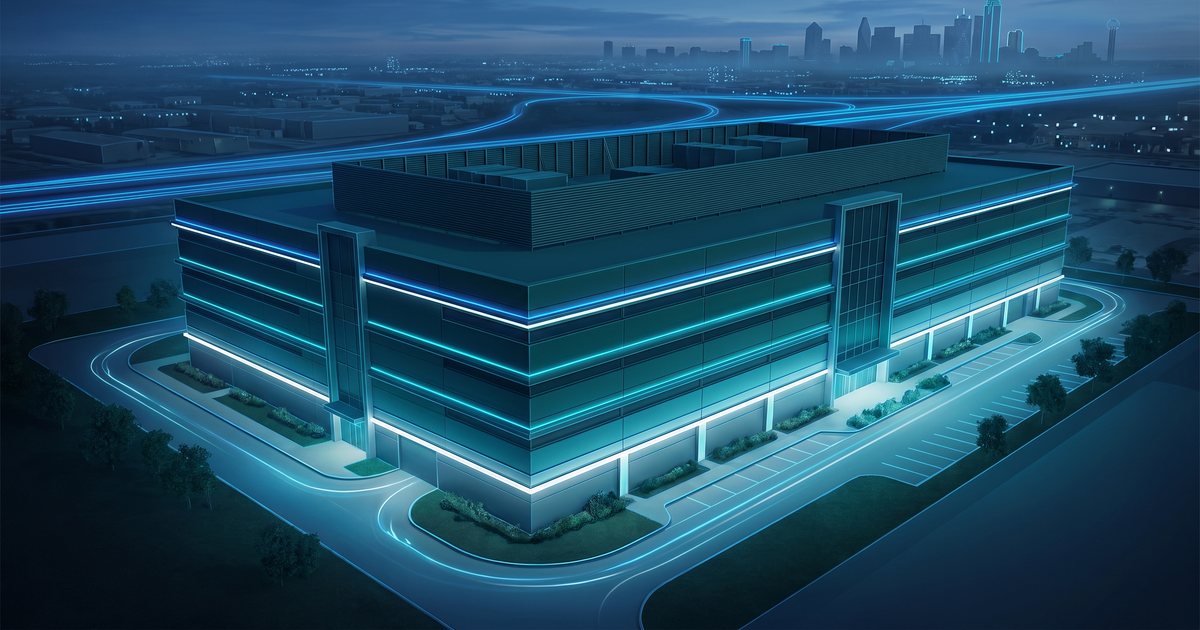
Reporting checked October 5, 2026. Featured and social artwork are AI concept illustrations; actual architecture, progress and equipment are not depicted as verified facts.
Join 35,000+ Low Voltage Pros
Get weekly permit updates, tool deals, job opportunities, and industry news. No spam, unsubscribe anytime.