
Join Low Voltage Nation — Find project opportunities and showcase your company to thousands of industry professionals
A new Georgia filing proposes ATL1-C at Atlanta West. Primary records clarify the 2029 estimate, campus power, original construction team and prospective low-voltage work.
DC BLOX has a new planning milestone at its Atlanta West campus: an initial Georgia filing for ATL1-C, a proposed 500,000-square-foot data center in Douglasville. The DRI 4882 application history records submission on November 16, 2026. The filing gives contractors a defined building, address and forecast to investigate, while leaving the expansion's construction team and procurement timetable unresolved.
For low-voltage firms, the useful starting point is the relationship between that proposed building and the campus around it. Atlanta West has documented fiber connections and an identifiable original construction team. Those facts help frame questions about future work. They do not establish an ATL1-C subcontract, an open bid package or a current hiring campaign.
What the new filing establishes
The initial information form identifies DC BLOX as developer and places ATL1-C at 1800 N River Road, parcel 01730150014. Douglasville submitted the form. The proposed building area is 500,000 square feet, and estimated completion is December 2029. The selected local action requests a permit. The record does not demonstrate that one has been issued.
| Item | Detail and scope |
|---|---|
| Proposal | ATL1-C; 500,000 SF filed |
| Address | 1800 N River Road |
| Submitted | November 16, 2026 |
| Completion | December 2029 estimate |
| Campus plan | 200 critical MW committed / planned |
| Remaining offer | 80 critical / 120 total MW |
The application history showed an initial form, with no determination or review findings recorded when checked. No verified Building C construction start, general-contractor award, project cost or workforce count accompanies this report. December 2029 remains a planning estimate. Mobilization, shell completion, commissioning and tenant occupancy would each require their own evidence.
Read the building and campus figures separately
The current Atlanta West offering describes three buildings, 100 acres and 1.37 million square feet, with 200 critical MW committed and planned. It markets the remaining building at 498,000 square feet, 80 critical MW and 120 total MW. The filed 500,000-square-foot figure and marketed 498,000-square-foot figure should retain their source labels.
Critical load and total load describe different power categories. Neither a marketed capacity nor a committed-and-planned campus total establishes energized capacity. A contractor sizing a package needs the applicable building drawings, load basis and delivery phase. Dividing the campus power figure by a generic cabling allowance would create a speculative estimate with little procurement value.
The campus contact address is 1701 North River Road in Lithia Springs; the expansion filing uses 1800. Older tour copy on the owner page also retains a smaller acreage figure. Site planning should follow the current parcel and approved documents. A map pin is useful for locating the opportunity, but it cannot establish an entrance, staging area or construction boundary.
Who is named, and for which phase?
DC BLOX's October 31, 2023 campus announcement names Evans General Contractors as design-builder and identifies DLB Associates, Corgan, Thomas & Hutton, and Bennett & Pless as design partners. That is an original-campus team announcement. An assignment to ATL1-C would need separate confirmation.
| Company | Known role |
|---|---|
| DC BLOX | Developer / operator |
| Evans | ATL1-A design-builder |
| DLB Associates | Original design team |
| Corgan | Original design team |
| Thomas & Hutton | Original design team |
| Bennett & Pless | Original design team |
| GreyStone Power | Campus utility |
Evans' ATL1-A project page independently confirms its design-build role. It describes a first phase with 10 MW of critical-power fit-out inside a two-story 80 MW shell, plus future substation and building work. That historical description explains why Evans belongs in the campus account map. It supplies no verified Building C award.
The owner names GreyStone in its power information; GreyStone Power's corporate website establishes the utility's identity. A utility relationship still leaves the building's service date, energization sequence and testing responsibilities to be confirmed. The named design partners likewise should not be assigned a particular expansion discipline or package based solely on their general capabilities.
Financing and review history carry their own dates
In an August 11, 2025 release, DC BLOX announced that it had closed a $1.15 billion green loan supporting a 120 MW development and an additional 80 MW campus expansion. The release discussed availability as early as 2027. That is a historical financing announcement with its own capacity description and forecast.
The loan amount does not identify Building C's construction budget, committed subcontract value or dollars spent. The November 2026 filing supplies a December 2029 estimate for its proposed scope. Contractors evaluating timing should seek the latest building schedule and procurement sequence, keeping the financing date attached to the financing claim.
The Atlanta Regional Commission's April 10, 2024 final report concerns an earlier scheme: DRI 4112, two buildings totaling 761,852 square feet on 56 acres at the 1701 address. It documents regional land-use, water, forest and transportation concerns. Its completed review does not approve ATL1-C. The earlier review is useful context for questions about infrastructure interfaces and changing campus boundaries.
Where low-voltage work could emerge
Atlanta West's owner describes diverse entrances, meet-me rooms and dark fiber to Atlanta exchanges and Myrtle Beach. Its facility information also describes security and mechanical interfaces. These documented features support investigation of the following work areas. The table is practical scope analysis; quantities, specifications, buyers and awards for ATL1-C remain unverified.
| Work area | Confirm before bidding |
|---|---|
| Fiber / OSP | Routes, entrances, test owner |
| Cabling | Pathways and tenant handoff |
| Security | Door, camera and network buyers |
| Controls | Points, networks and test scope |
| Fire interfaces | Approved design and witness tests |
| Commissioning | Acceptance and turnover owner |
For an outside-plant contractor, the first useful deliverable would be a clear route and responsibility boundary. Separate entrances only provide meaningful diversity if the upstream paths, shared crossings and building penetrations are understood. Ask which party owns duct-bank inspection, conduit proving, innerduct, vault labeling and restoration. Then establish who supplies route records and how changes during civil construction will reach the telecommunications drawings.
For a fiber or structured-cabling team, scope definition should reach beyond cable counts. Identify who provides racks, pathways, bonding and cable management; who terminates each side of a handoff; and which test results establish acceptance. An agreed naming convention can connect panel labels, test files and as-built drawings. Without that convention, a completed installation can still create substantial turnover work.
Controls and security contractors should clarify network ownership early. Device addressing, switch ports, credentials, alarm routing and time synchronization can sit across several organizations. A responsibility matrix should assign each interface to a buyer and an acceptance authority. Integration testing also needs access to the relevant systems and a sequence that respects operational areas elsewhere on the campus.
Life-safety coordination depends on the approved design and the authority having jurisdiction. Fire alarm interfaces, monitoring and any in-building radio requirements should be established from those documents. A large building area alone cannot establish a DAS package or a specific coverage obligation. Keep optional systems separate from contracted work until requirements and buyers are documented.
An expansion at an existing campus also calls for careful separation of construction access and operational access. Before pricing work, ask how deliveries, temporary routes and cable pulls will be coordinated with occupied areas. Establish the process for an outage request, an approved work window and restoration if a test fails. These questions affect staffing and supervision even when the physical installation looks straightforward.
Suppliers should align quotations to a defined revision of the scope. Connector types, fiber counts, spare capacity and test requirements can change as the design develops. Record assumptions and exclusions so that a later revision can be evaluated clearly. A headline capacity figure cannot substitute for a bill of materials or approved submittals.
Jobs, trades and useful preparation
No project-specific construction headcount, permanent-job forecast or current vacancy was verified for ATL1-C. The DC BLOX positions page is an employer resource, but the reviewed page did not expose a verifiable Atlanta West listing. A third-party job reference should be checked against a current employer posting before anyone treats it as an application opportunity.
Technicians preparing for mission-critical work can build transferable skills now. Fiber preparation includes connector inspection and cleaning, instrument setup, loss-budget awareness, repeatable testing and clear documentation. The Fiber Optic Association's workforce resources provide a starting point for training research. No particular credential has been verified as an ATL1-C hiring requirement.
Field supervisors also need a practical plan for lift access, material control, daily coordination and protection of completed work. The OSHA Outreach Training Program is a general safety-education resource. Outreach completion does not replace task-specific training or an employer's site requirements. Applicants should confirm prerequisites with the actual hiring employer and construction manager.
A useful capability package would include relevant project experience, available supervision, equipment and test capabilities, example turnover documents, and the ability to work within a coordinated schedule. The goal is to show how a team controls quality and resolves interfaces. Avoid presenting generic data-center experience as evidence of an existing relationship with this project.
What would make the opportunity more actionable?
The strongest next evidence would be an ATL1-C review outcome, issued permits, a confirmed construction team and a dated package schedule. Named electrical, telecommunications, security or controls buyers would help contractors identify the correct route into procurement. Utility milestones and building-specific commissioning dates would help distinguish early site work from fit-out demand.
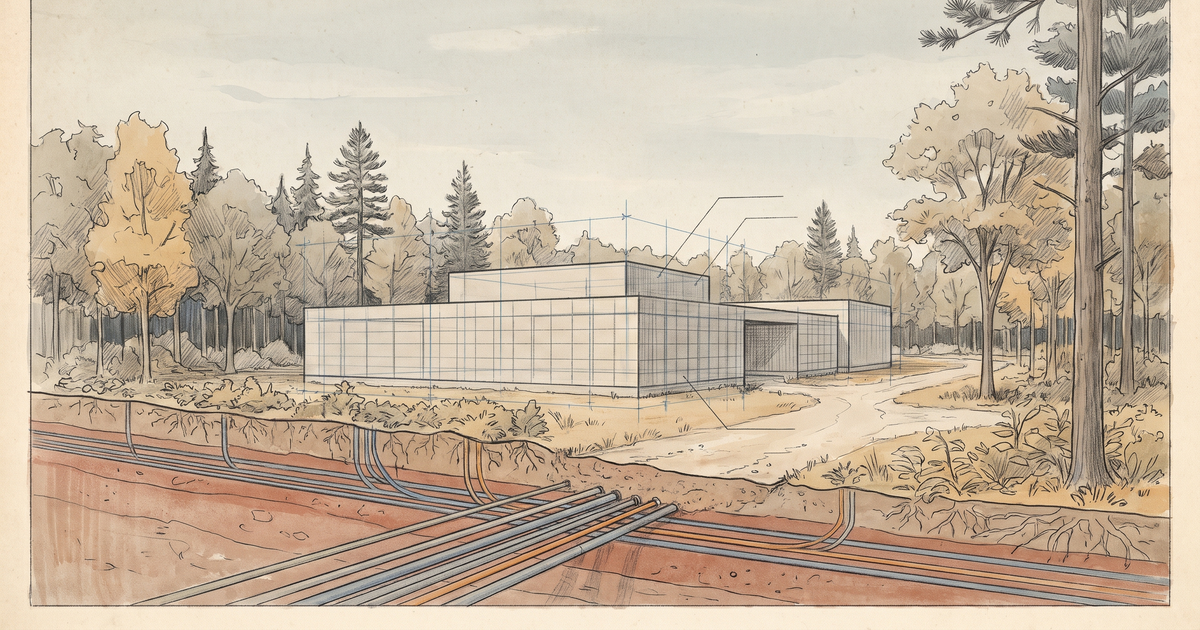
Until those records emerge, Atlanta West is a qualified expansion opportunity with meaningful campus context. Use the source links to check the latest scope, and ask phase-specific questions when evaluating a relationship. Follow LVN Signal for construction intelligence and related projects, and explore the LVN data-center map for geographic context. The featured artwork is an AI-generated concept illustration; source screenshots document the underlying reporting.
Join 35,000+ Low Voltage Pros
Get weekly permit updates, tool deals, job opportunities, and industry news. No spam, unsubscribe anytime.