
Join Low Voltage Nation — Find project opportunities and showcase your company to thousands of industry professionals
A conditional HES power agreement advances a proposed 50 MW Hopkinsville AI facility. Permits, utility construction, customers and trade awards remain unresolved.
A proposed AI data center in Hopkinsville, Kentucky, now has a conditional agreement for up to 50 megawatts of electricity demand. DarkHorse Technologies calls the new development Project Truckstop. Its power arrangement creates a concrete utility construction lead for contractors, while the data-center buildings, customers and trade packages remain in development.
DarkHorse announced the agreement on October 6; its Hopkinsville community website dates signing to September 30. The planned facility would be separate from the company's existing Bitcoin operation at Holland Substation, which it proposes converting under the name Project Brickyard. Keeping those two locations distinct is essential when evaluating capacity, schedules and potential work.
The construction opportunity starts with power
According to DarkHorse's power announcement, subsidiary Pennyrile Holdings, LLC is the customer under the agreement with Hopkinsville Electric System, or HES. HES would deliver a new substation connected to TVA's 161-kilovolt transmission network. The announcement attributes capacity approval to TVA; the underlying approval document and executed service agreement were not independently reviewed for this article.
| Project measure | Reported scale | Current qualification |
|---|---|---|
| Truckstop demand | Up to 50 MW | Conditional utility service |
| New substation | At least 65 MW | Planned HES facility |
| Other HES customers | About 15 MW | Prospective extra capacity |
| Permit contingency | 18 months | Local approvals required |
| Facility investment | Undisclosed | Financing unresolved |
| Construction stage | Planned | Start unverified |
The company says it must advance the substation's actual construction cost and transfer its site to HES. HES would handle design, construction, ownership and operation. The release describes uncapped funding exposure, conditional service and a ten-year initial service term. Those obligations establish a development framework; suppliers still need a funded scope, purchasing authority and an issued schedule before committing resources.
The community site explains that an earlier $8 million–$10 million figure concerned the substation alone. It is a historical estimate. A total Truckstop facility budget has not been established in the reviewed material. Applying a generic low-voltage percentage to that utility estimate would produce a misleading estimate of the building trades opportunity.
Four power figures with different meanings
Truckstop's 50 MW figure describes maximum electricity demand. An IT-load figure has not been disclosed. A developer's illustrative power-usage model cannot establish the capacity actually committed to servers, the final cooling design or the amount of usable customer space.
The proposed substation has a different boundary: it would support Truckstop and additional HES demand. Separately, the company describes a roughly 65 MW Hopkinsville footprint across Truckstop and Brickyard, and approximately 100 MW contracted across its broader TVA-region portfolio. Each figure needs its own label whenever it appears in a headline, sales conversation or project estimate.
That distinction matters for cable planning. Utility capacity alone does not reveal rack counts, network architecture, pathway density or fiber quantities. A contractor evaluating the announcement should first identify the delivery phase and design basis. Pricing a complete data-hall network from the megawatt headline would conceal too many assumptions.
Truckstop and Brickyard have separate development paths
The developer's corporate material describes its transition from Sphere 3D to DarkHorse and a strategy around power and computing infrastructure. The Hopkinsville community page identifies Brickyard as the proposed conversion of an existing approximately 15 MW Bitcoin facility. Truckstop is the separate new-build proposal. Existing operations at the first location provide no evidence that construction has begun at the second.
A conversion can require investigation of existing equipment, pathways and service constraints. A new facility can require entirely new utility entrances, site distribution and building systems. Those are practical planning differences, not confirmed package descriptions for either DarkHorse project. Contractors should use the project name and location together in every scope discussion.
In an October 6 WKDZ interview, HES general manager Jeff Hurd said a potential groundbreaking had no date. He also described a possible location on Pembroke Road near Stanley Engineered Fastening, while qualifying that he was not speaking for the company. That provides a location lead. A verified parcel, street address and site-specific approval remain necessary before treating a map point as the construction entrance.
Named organizations, with their roles kept specific
The power announcement identifies the project customer and utility. A separate September 23 partner announcement identifies advisers serving DarkHorse's TVA-region program. That portfolio relationship gives useful context for future procurement, but a Truckstop assignment needs its own evidence.
| Organization | Reported relationship | Evidence boundary |
|---|---|---|
| DarkHorse Technologies | Developer parent | Parcel ownership unverified |
| Pennyrile Holdings | Power customer | Named subsidiary |
| HES | Utility/substation delivery | Planned utility work |
| TVA | Upstream power | Approval developer-reported |
| Barge Design Solutions | Portfolio design services | Truckstop role unconfirmed |
| Empirix Partners | Portfolio procurement advice | Truckstop award unconfirmed |
| Covectis | Market/capital advice | Portfolio relationship |
| Perpetual Grid | Power/utility advice | Portfolio relationship |
| EA Advisors | Technical/operating advice | Developer website attribution |
Barge's data-center practice provides company background. The partner release describes schematic design work for an unnamed portfolio site, leaving its applicability to Truckstop unresolved. Empirix has an owner-representation and procurement-planning relationship at the program level. Neither statement establishes a Truckstop general contractor or a specialty subcontract award.
The same discipline applies to HES and its internet business. A utility's corporate service offerings cannot identify a project's awarded fiber carrier. For a low-voltage firm, the useful next question is who will buy each package and under what contract. The organizations that advise, design, purchase and install can be different.
Where low-voltage work could develop
The following opportunities are LVN's analysis of a proposed AI facility. They are preparation categories, with no verified Truckstop bid package, system quantity, preferred vendor or award attached.
| Potential package | Useful capability | Evidence to seek |
|---|---|---|
| Fiber and outside plant | Routes, splicing, testing | Carrier and entrance plans |
| Structured cabling | Pathways and labeling | Issued network design |
| Access control/CCTV | Device integration | Security specifications |
| Fire alarm interfaces | Life-safety coordination | Approved system design |
| Controls and networks | Telemetry and testing | Integrator and scope split |
| Commissioning support | Records and turnover | Acceptance requirements |
Outside-plant firms can prepare examples of route coordination, utility crossings, entrance protection and fiber test documentation. Before estimating, they would need to establish where the utility scope ends, where customer-owned infrastructure begins and who controls the civil work. Those interfaces can change the labor plan and sequencing substantially.
Inside the facility, pathway coordination should connect rack layouts, cooling equipment, electrical distribution and maintenance access. Fiber cleanliness, bend-radius control, labeling and traceable test results become useful evidence of delivery capability. Security and controls firms can prepare integration examples, including how they document network dependencies and resolve responsibilities between equipment suppliers.
For life safety and commissioning, the first task is understanding the approved design and acceptance process. A scope described simply as “low voltage” can hide several buyers and inspection requirements. Separating cabling installation, equipment programming, functional testing and final documentation helps a small contractor identify a package it can actually deliver.
Community questions will shape the next milestones
September reporting on the zoning hearing describes resident questions about water, sound, setbacks and utility costs. The hearing concerned data-center rules; it does not demonstrate approval of this facility. Current planning documents and site-specific decisions should be checked through Community and Development Services.
The developer lists closed-loop cooling, battery-first operation and no requested tax abatements among its commitments. Truckstop's water budget, equipment selection and battery sizing remain unconfirmed. Its website presents early concept alternatives, which should be read as design exploration. They do not establish an approved layout or completed installation.
Contractors can turn those open questions into a practical qualification checklist: confirm the site, approval status, service milestones, procurement contact and design revision. Request enough information to distinguish a preliminary capability inquiry from an invitation to price. That avoids assigning crews or ordering material against a concept that is still changing.
Jobs, trades and skills to prepare
No verified Truckstop construction-job count, permanent staffing number or project-specific vacancy was found in the reviewed sources. The opportunity is currently to prepare relevant capabilities and identify future buyers. Workforce forecasts from other data centers would add false precision here.
Technicians can review FOA workforce resources for fiber training and BICSI for information and communications technology education. OSHA Outreach offers construction safety training information. These are general resources; the project has not announced them as hiring requirements or partnerships.
For employers, a useful readiness file would include applicable training records, safety documentation, test-equipment calibration, representative closeout packages and references for similar work. Crews should be able to demonstrate careful grounding and bonding coordination, cable-tray installation, lift practices, change control and clean turnover records. The eventual buyer will determine the actual qualifications.
What would make this lead actionable?
Watch for a site-specific application or approval, a documented utility delivery schedule, a confirmed construction manager, issued designs and identifiable trade procurement. Customer commitments and funding evidence would also clarify the development path. Each milestone answers a different contractor question: where the work is, when it can proceed, who controls it and how to qualify.
Explore LVN Signal for construction projects, named organizations and the source evidence behind emerging opportunities. For Project Truckstop, the current lead is a conditional power agreement with a defined utility role. The next useful step is following the permits and package buyers as the facility develops.
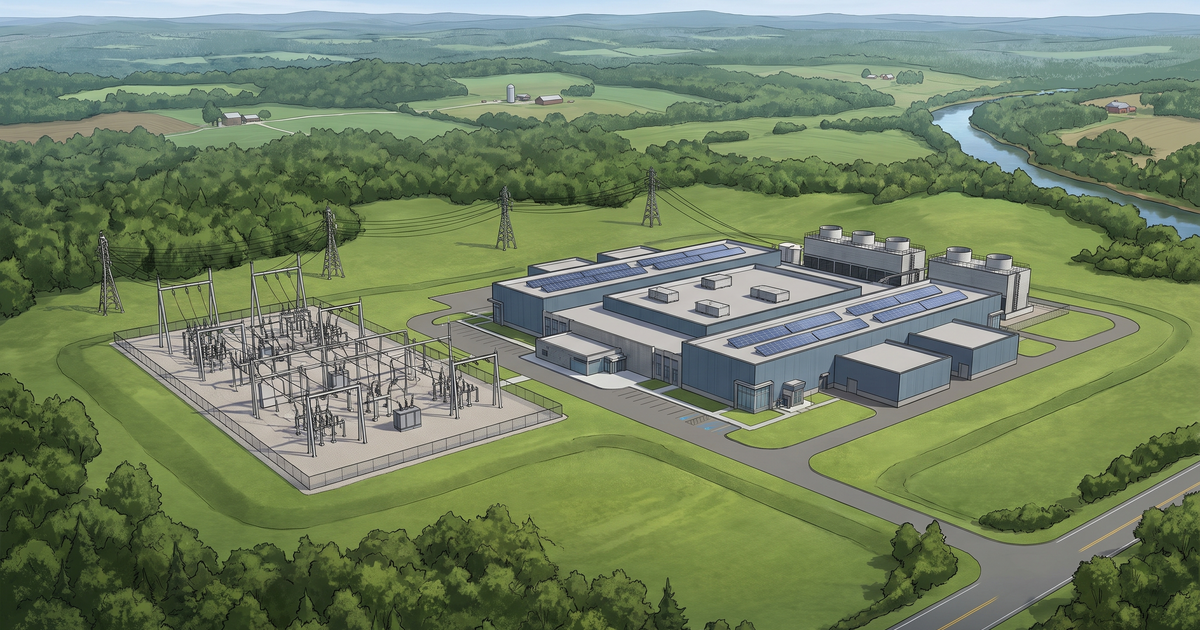
Research checked October 7, 2026. Featured and social artwork are AI-generated illustrative concepts. Project design, capacity basis and construction status should be confirmed against current owner, utility and permitting documents.
Join 35,000+ Low Voltage Pros
Get weekly permit updates, tool deals, job opportunities, and industry news. No spam, unsubscribe anytime.