
Join Low Voltage Nation — Find project opportunities and showcase your company to thousands of industry professionals
CyrusOne SAT14A is a $500M, 460,000 sq ft Castroville data-center filing with CyrusOne LP as owner and Corgan as design firm.
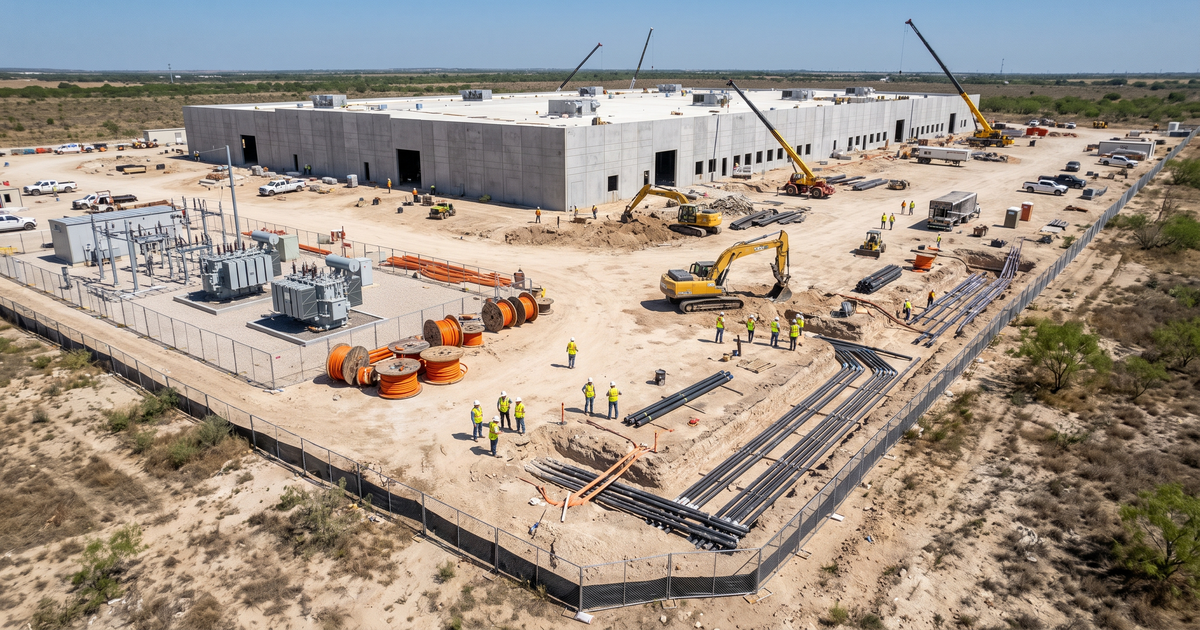
CyrusOne SAT14A is the latest clean Castroville data-center filing for LVN to track. The Texas Department of Licensing and Regulation TABS2026025457 record lists a new one-story insulated precast data-center building at 3397 US HWY 90 W in Castroville, Medina County, Texas. The filing names CyrusOne LP as owner, Corgan Architects Inc as design firm, 460,000 square feet of scope, a $500 million estimated cost, a January 12, 2026 start date, and a June 1, 2027 completion date.
That is enough to publish, but it is not enough to overstate the contractor stack. Reviewed public sources do not yet name the general contractor, EPCM, electrical contractor, low-voltage contractor, fiber/OSP contractor, structured cabling firm, security integrator, fire alarm contractor, BAS/BMS/EPMS controls vendor, DAS/networking firm, grounding contractor, utility provider, tenant/customer, or commissioning agent. For LVN, the value is the precise public-record watch point: a mappable project, a named owner, a named design firm, a construction window, and open specialty packages.
Local and regional coverage helps frame why the record matters. Hoodline summarized the filing as a $500 million Castroville data-center project with local power, fiber, traffic, and tax-watch implications. The San Antonio Express-News tied the filing to CyrusOne's first Medina County / Castroville project and distinguished it from nearby Microsoft activity and CyrusOne's existing San Antonio campus footprint.
| Item | Source-backed detail | LVN read |
|---|---|---|
| Project | CyrusOne SAT14A | Building-level data-center filing in Castroville. |
| Location | 3397 US HWY 90 W, Castroville, TX 78009 | Specific address for permit, utility, fiber, and inspection monitoring. |
| Scope | New one-story insulated precast data-center building; 460,000 sq ft | Large enough for major MEP, fiber, security, controls, fire alarm, and commissioning work. |
| Estimated cost | $500M TDLR estimate | Current public-record capex signal for SAT14A. |
| Schedule | Start Jan. 12, 2026; completion June 1, 2027 | Active 2026-2027 construction window for package signals. |
The county context is useful, too. A Medina County Commissioners Court agenda packet ties CyrusOne LP to roughly 245 acres in a Chapter 312 / reinvestment-zone context. That does not prove a low-voltage award, but it does create a local paper trail to monitor for site-plan, road, utility, tax-abatement, water, power, and public-hearing movement.
CyrusOne is source-backed as the owner/operator family through its official company page. Its existing San Antonio pages for SAT1 and SAT2-SAT4 show the company's regional operating footprint and campus style, including mission-critical facility operations, security, high-density/HPC context, and water-conscious cooling references. Those pages do not name SAT14A directly, so the SAT14A building facts should stay anchored to TDLR and Medina County evidence.
| Company / source | Role | Evidence |
|---|---|---|
| CyrusOne LP | Owner / operator / developer | TDLR owner record and CyrusOne company page |
| Corgan Architects Inc | Design firm | TDLR design-firm record and Corgan data-center page |
| Medina County | County incentive / local record context | Commissioners Court agenda packet |
| TDLR | Public project record | TABS2026025457 |
| Hoodline / Express-News | Current local and regional context | Hoodline and Express-News |
Corgan is the only design-side firm named directly in the filing. The Corgan data-center market page source-backs mission-critical design capability, but it does not name CyrusOne SAT14A directly. LVN should describe Corgan as the TDLR-listed design firm, not as a confirmed holder of every engineering discipline or specialty package.
For low-voltage contractors and integrators, SAT14A is a watch item because the facility type implies systems that usually surface later than the initial TDLR filing. Fiber entrance pathways, OSP duct banks, vaults, MMR/IDF routes, structured cabling, security, access control, CCTV, fire alarm, BMS/BAS/EPMS controls, DAS/networking, grounding, bonding, labeling, testing, and commissioning all need coordination. None of those package holders are public yet in the reviewed sources.
The one-story insulated precast description is also worth noting. It points to a substantial shell and site package where the low-voltage path is likely shaped by building entrances, equipment-yard adjacency, fire lanes, secure checkpoints, utility corridors, and interior support-space layout. Contractors watching only for a final structured-cabling bid can miss the earlier work that determines pathway capacity, handhole placement, telecom-room routes, access-control rough-in, camera coverage, and coordination with electrical rooms.
The best LVN read is therefore sequence-based. Early public records establish owner, site, design firm, size, and schedule. Later records may reveal utility service, generator yards, substation work, water or drainage constraints, road improvements, and inspections. After that, job postings, plan-room notices, subcontractor portfolio pages, and vendor mentions can expose the practical package holders. SAT14A is at the point where the first layer is strong and the later layers are still open.
| System | Why it matters | Watch signal |
|---|---|---|
| Fiber / OSP | US 90 campus access will need carrier entrance paths, duct banks, vaults, handholes, and tested backbone fiber. | Carrier, vault, duct bank, splicing, OTDR, MMR, entrance-facility, and utility-road language. |
| Structured cabling | Data halls and support spaces require pathway planning, rack/row routes, labeling, and closeout documentation. | Cable tray, ladder rack, fiber/copper certification, labeling, test reports, and redlines. |
| Access control / CCTV | Data-center campuses require secure perimeter, gate, building, equipment-yard, and visitor-management systems. | Gate controls, card readers, VMS, cameras, perimeter detection, and badging package references. |
| Fire alarm | Large data-center buildings require AHJ coordination, suppression interfaces, monitoring, and acceptance testing. | Fire alarm permits, submittals, acceptance tests, monitoring, and inspection activity. |
| BMS/BAS / EPMS | Cooling, power, alarms, and facility monitoring need controls integration and commissioning records. | Point lists, control panels, EPMS/BMS, trend logs, alarms, and commissioning references. |
| Grounding / commissioning | Mission-critical turnover depends on bonding discipline, test records, QA/QC, and clean documentation. | Grounding specs, commissioning-agent notices, prefunctional checks, test reports, and turnover packages. |
The workforce angle should stay practical. TDLR does not list construction headcount or permanent jobs for SAT14A. Medina County context makes this a real local economic-development watch item, but LVN should not invent job counts. The better contractor-readiness list is data-center safety, OSHA/site onboarding, lift access, electrical-room coordination, fiber cleaning and inspection, OTDR and power-meter testing, copper certification, pathway discipline, cable tray coordination, grounding and bonding, access-control commissioning, CCTV/VMS setup, fire alarm acceptance, controls point verification, redlines, and turnover documentation.
That list is not generic filler. Data-center owners and GCs tend to penalize poor documentation, loose labeling, dirty fiber handling, failed test reports, missed access-control door coordination, and late commissioning paperwork. A contractor that wants to be useful on SAT14A should be ready to show data-center safety discipline, test equipment, certified technicians, clean closeout examples, and the ability to coordinate with electrical, mechanical, fire/life-safety, security, and commissioning teams without slowing the critical path.
For local shops, the opportunity may not start as the prime low-voltage package. It can start through OSP support, pathway installation, camera/access rough-in, fire alarm support, documentation labor, fiber testing, labeling, lift work, punch-list cleanup, or staffing support under a larger integrator. That is why the record belongs in Signal even before named specialty firms are visible. It gives LVN members a concrete project name and address to attach to relationship-building instead of a vague San Antonio data-center rumor.
Vendors should read SAT14A the same way. The public record does not name the vendors, but the facility type suggests demand categories: fiber consumables, fusion splicing, test gear, labeling systems, pathway materials, racks and cabinets, cameras, readers, locks, door hardware interfaces, fire alarm devices, controls hardware, facility-network switches, grounding materials, commissioning documentation tools, lift rental, safety training, and closeout support.
The Medina County angle may also matter for business development. County incentive and reinvestment-zone records can lead to meeting agendas, public presentations, infrastructure updates, road or drainage references, and utility coordination details. Those documents often appear before a project is visible in the normal contractor marketing stream. For an LVN member, watching the county trail is not about politics; it is about finding the first public signs of power, civil, security, access, fiber, and inspection movement.
Alias control matters in Castroville and the San Antonio region. SAT14A should be tracked under CyrusOne SAT14A, SAT14A, CyrusOne Castroville, CyrusOne Medina County, 3397 US HWY 90 W, US 90 data center, TABS2026025457, and CyrusOne Reinvestment Zone 1. It should stay distinct from Microsoft SAT82 at 18844 FM 1957 in Castroville, Vantage TX22 in San Antonio, CyrusOne Freestone County, PointOne/CyrusOne Lee County, and CyrusOne's existing SAT1/SAT2-SAT4 operating campuses.
The capacity stance also needs discipline. Current public records support 460,000 square feet and a $500 million estimated project cost. They do not disclose MW, critical IT load, utility provider, tenant/customer, generator count, water demand, GC, electrical contractor, or specialty low-voltage package awards. That missing information is exactly what makes the project worth watching now.
The next public signals are straightforward: TDLR status changes, amended SAT14A records, inspection movement, Medina County and Castroville permit references, CPS Energy or regional utility records, ERCOT/PUCT references if applicable, Corgan updates, CyrusOne updates, plan-room notices, job postings, and subcontractor portfolio pages. When a named GC, electrical contractor, fiber/OSP firm, security integrator, fire alarm contractor, controls integrator, DAS/networking firm, grounding contractor, or commissioning agent appears, this Signal record should be updated.
Bottom line: CyrusOne SAT14A belongs in LVN Signal because it is a large, source-backed, mappable, new-construction data-center filing with a specific address and active 2026-2027 window. The public facts are strong enough to publish. The specialty package names are still open enough to matter.
Join 35,000+ Low Voltage Pros
Get weekly permit updates, tool deals, job opportunities, and industry news. No spam, unsubscribe anytime.